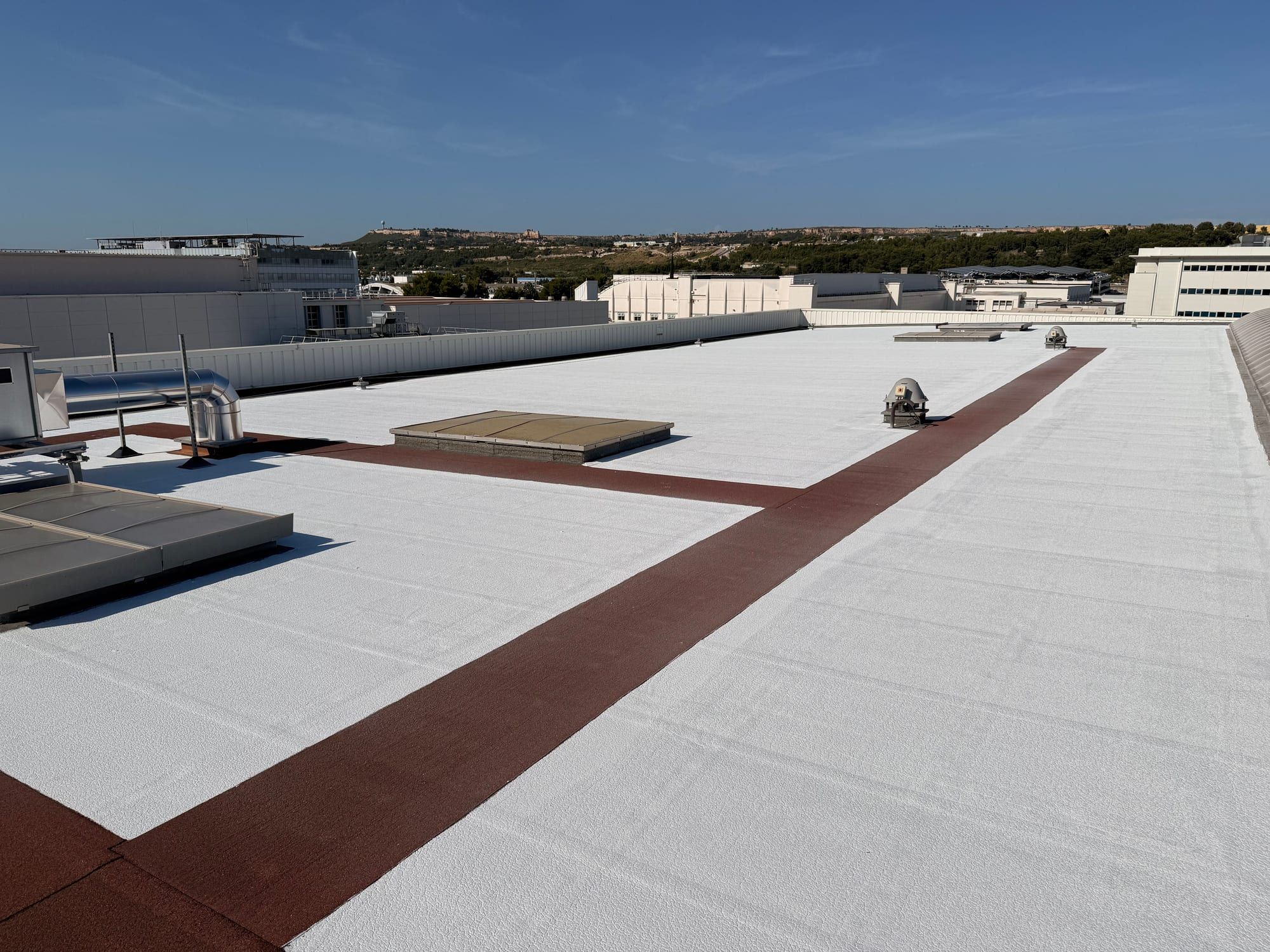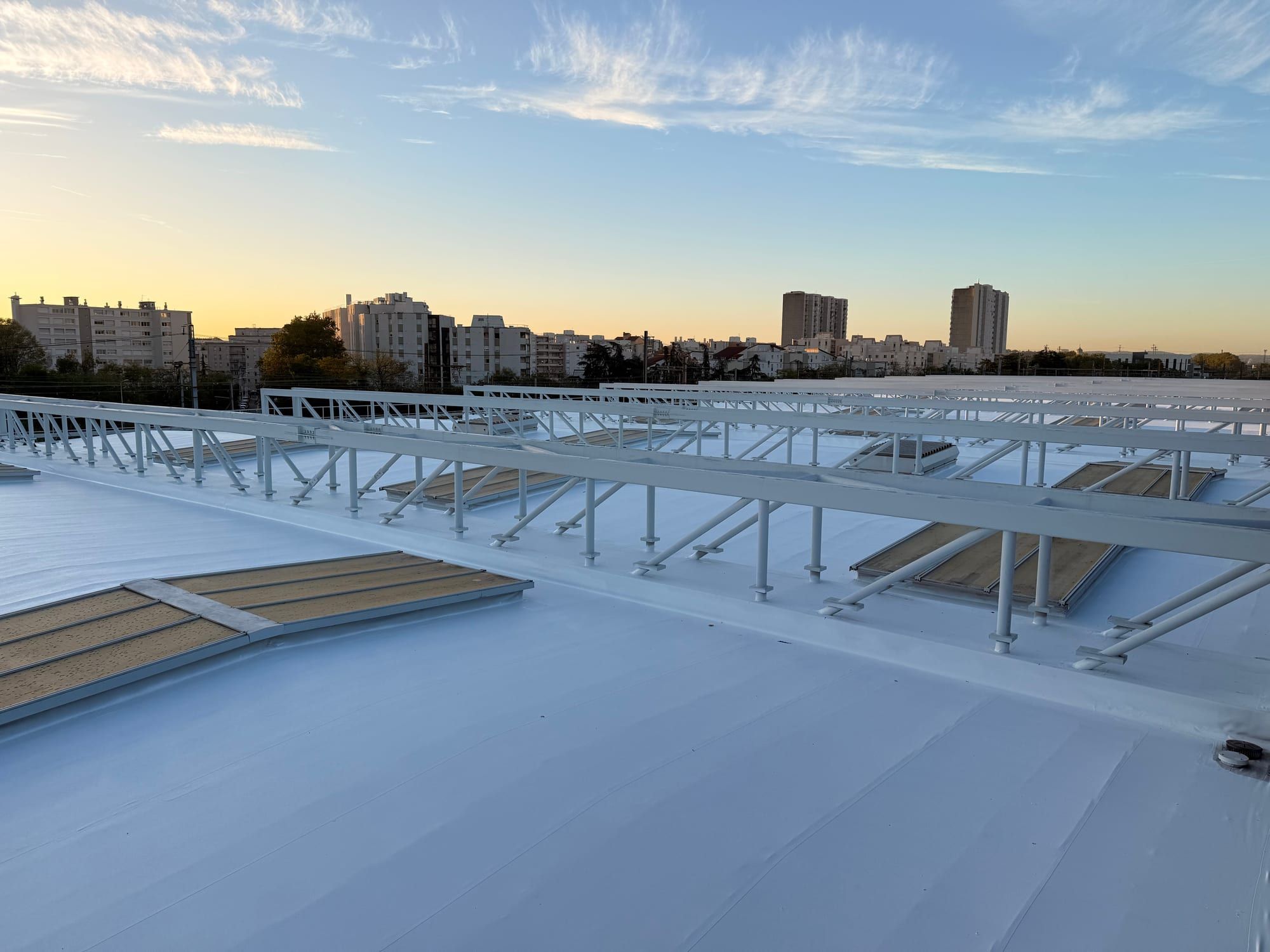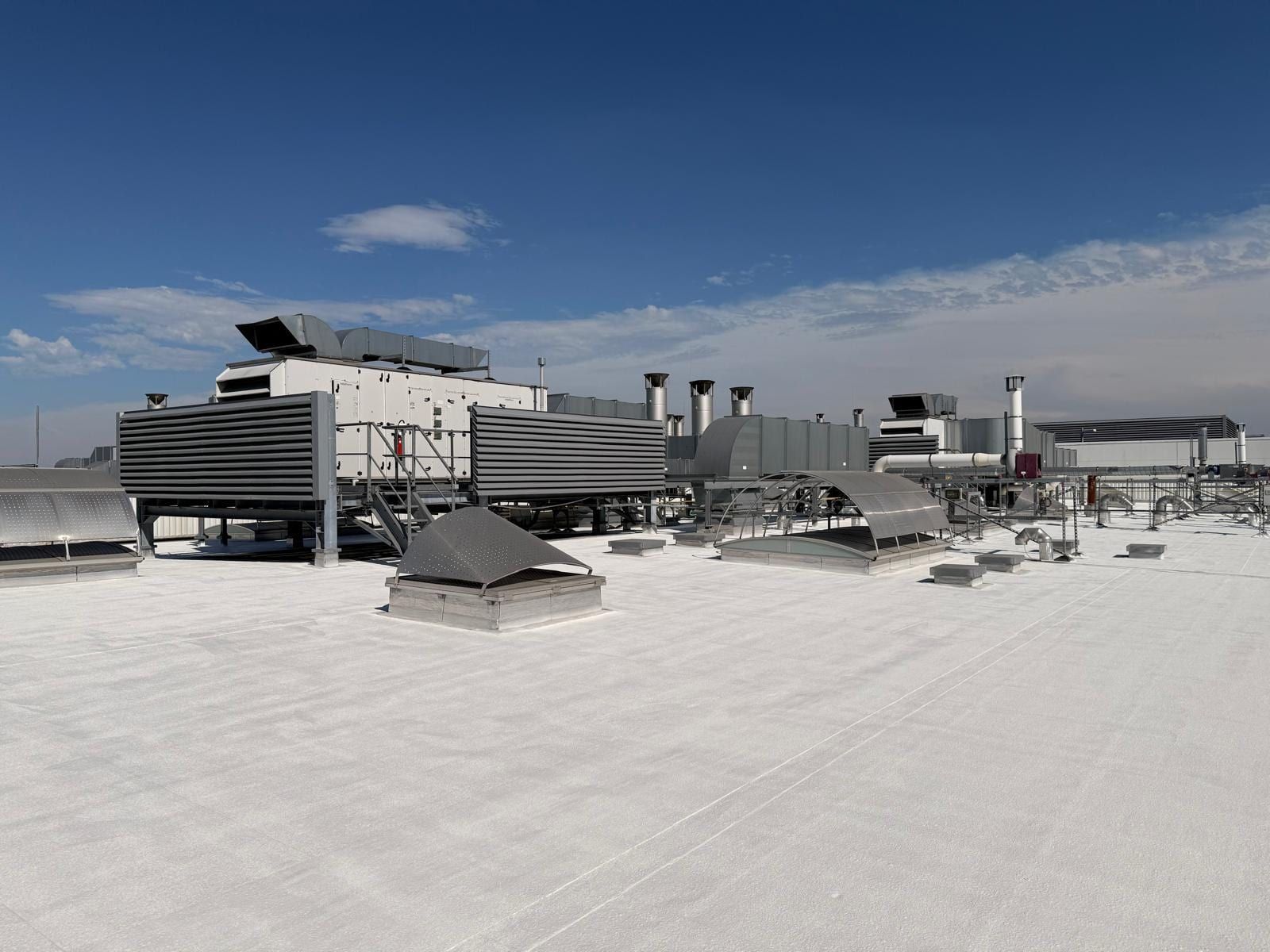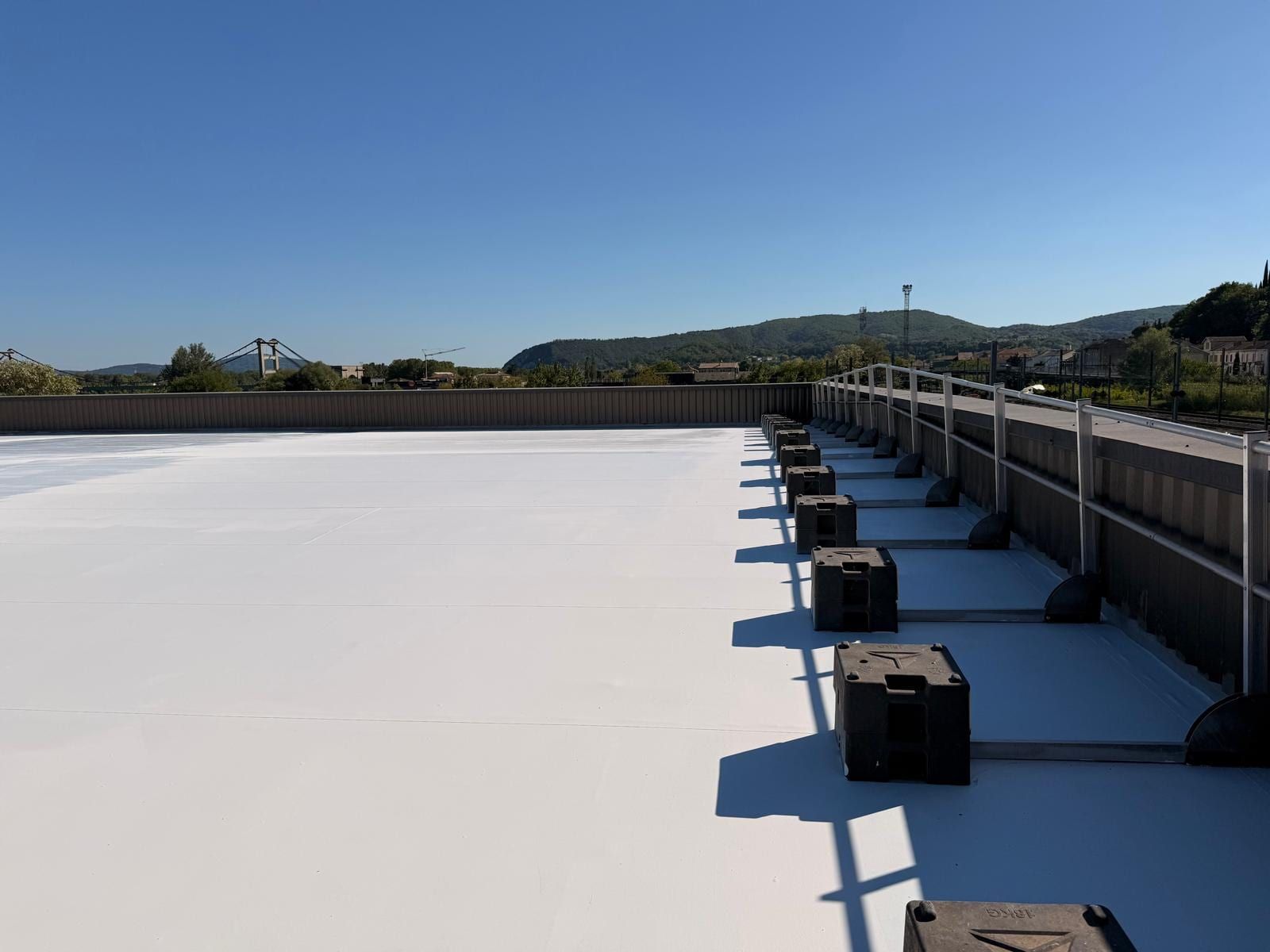
Measured result: −30 °C on the surface (60.3 → 29.6 °C, infrared reading)
The context
In Le Teil, in the Ardèche, opposite Montélimar in the Rhône valley, the workshop of Pneumatic 2000, a Eurotyre network centre and tyre and vehicle-maintenance specialist for cars, vans and trucks, is covered with a PVC membrane laid more than ten years ago. French climate zone H2, long and very sunny summers: the light-grey membrane exceeded 60 °C on the surface in the hottest hours, and the workshop below felt it. Hélios treated its 600 m² in spring 2026 with the PrimaTherm® reflective system.
A roof type of its own: the PVC membrane
A PVC membrane is not treated like bitumen. Hélios only accepts it when it has been in place for more than ten years, once the plasticisers have stabilised, and after an adhesion test. The system is then specific: the PH107PVC bonding base replaces the primer, followed by one pass of PH107 reflective base coat and the PH107TCL anti-soiling topcoat. Drums and pump stay on the ground, only the hoses go up: no lifting, no interruption of activity.
Measured results
With an infrared thermometer, at the same time of day and on the same roof: 60.3 °C on the untreated membrane, 29.6 °C on the treated zone, i.e. −30 °C on the surface. The membrane, now white, is also protected from the UV and thermal cycles that age it.
Read next
- Cool roof on waterproofing membranes — bitumen, EPDM and PVC over ten years old.
- Cool roof for industrial buildings — sites in operation, prevention plans.
- Airbus Marignane case study — 5,900 m², −29 °C measured.