Quick facts — Cool roof on waterproofing membranes: bitumen, EPDM, PVC — what can and cannot be done
- Membranes treated
- SBS/APP bitumen, EPDM after an adhesion test, PVC installed more than 10 years ago; TPO: ask us
- Bitumen
- PH169 blocking primer — 6 m²/L, long-pile roller 20–22 mm
- EPDM
- Cleaning and degreasing, adhesion test, PH169 primer, standard 4-layer system
- PVC over 10 years old
- PH107PVC bonding base instead of the primer, PH107 in 1 pass, PH107TCL topcoat — test on 3 zones of 30 m² observed over 1 year
- Base coat and topcoat
- PH107 in two passes — 2 m²/L; PH107TCL — 10 m²/L
- Preparation
- Cleaning below 130 bar, spot repairs, 24 to 72 h drying, moisture below 5 %
- What the cool roof does not do
- It does not replace an end-of-life waterproofing layer; renewal first, protection afterwards
- Reference
- 5,900 m² of bitumen membrane, −29 °C measured (June 2026)
Why the sun wears out your waterproofing membrane
A waterproofing membrane — bitumen, EPDM, PVC or TPO — is the first line of defence of a flat roof against water. It is also the most exposed surface of the building. A dark membrane in full sun reaches 60 to 70 °C, drops back to 20 °C at night, and starts again the next day: 150 to 200 cycles of 50 to 60 °C in amplitude per year. Each cycle expands and contracts the membrane, fatigues the seams and upstands, drives out plasticisers and oils. UV attacks the binder at the same time.
The signs arrive after 8 to 12 years: blisters, surface cracks, detachment at the upstands, then leaks. A complete waterproofing renewal is a heavy project: removal or overlay, lifting equipment, partial interruption of operations. A cool roof on a waterproofing membrane aims precisely to push that moment back, by removing the main cause of ageing: heat.
What the PrimaTherm® cool roof changes on a membrane
The PrimaTherm® system reflects 95 % of solar radiation (ASTM E903-12), with an emissivity of 0.89 (ASTM C1371-15) and an SRI of 120 (ASTM E1980), maintained at 119 after 4,000 h of accelerated QUV ageing. It is classified Broof(t3) for external fire performance (CSTB report RA23-0010).
| Indicator | Untreated dark membrane | Membrane + PrimaTherm® |
|---|---|---|
| Surface temperature (35 °C outside) | 60 to 70 °C | 25 to 35 °C |
| Day/night thermal swing | 40 to 50 °C | 5 to 15 °C |
| Solar reflectance | 5 to 15 % (bitumen, EPDM) | 95 % |
| Exposure of the binder to UV | direct | blocked by the PH107TCL topcoat |
| Waterproofing function | membrane | membrane — the cool roof protects it, does not replace it |
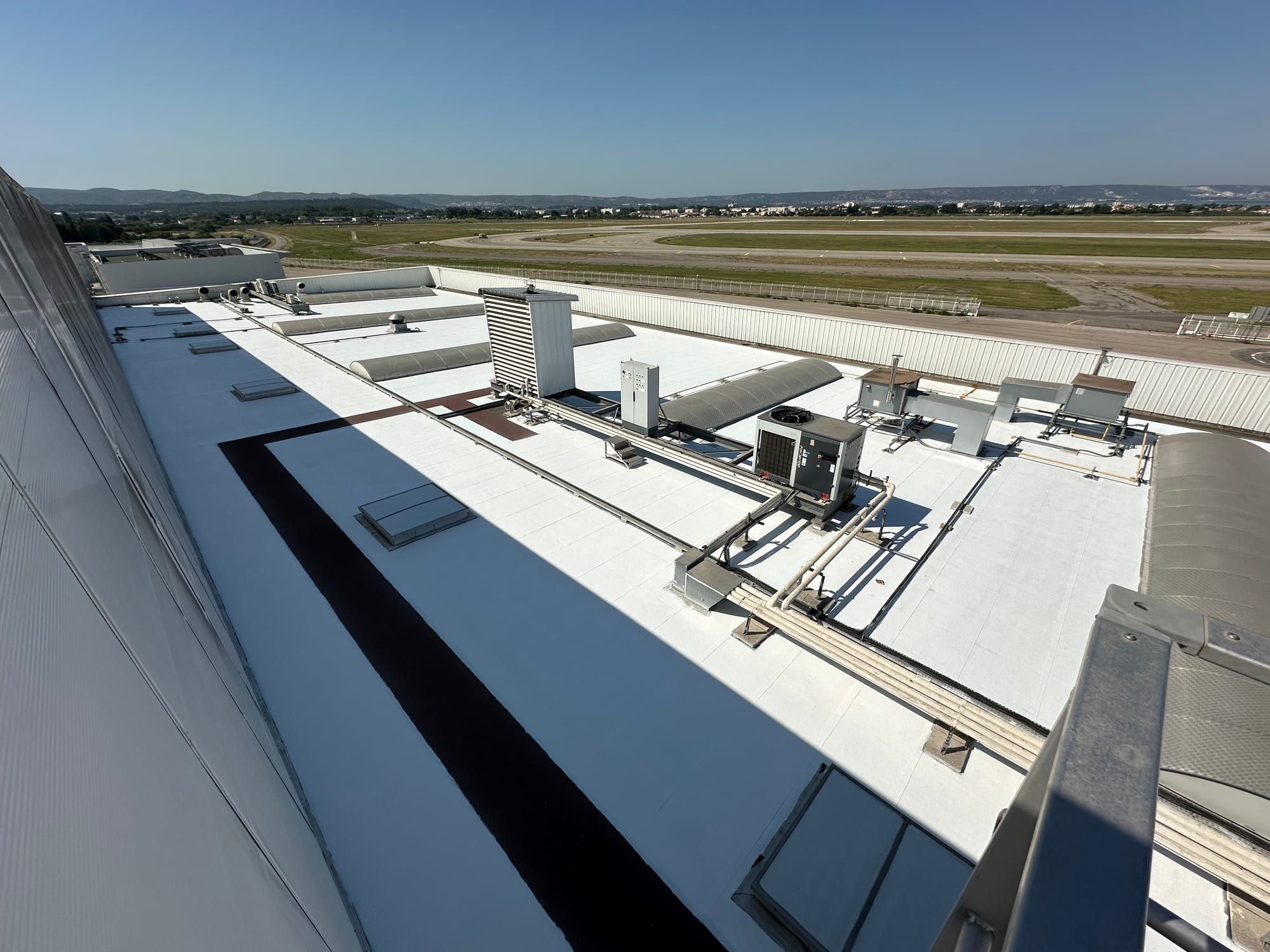
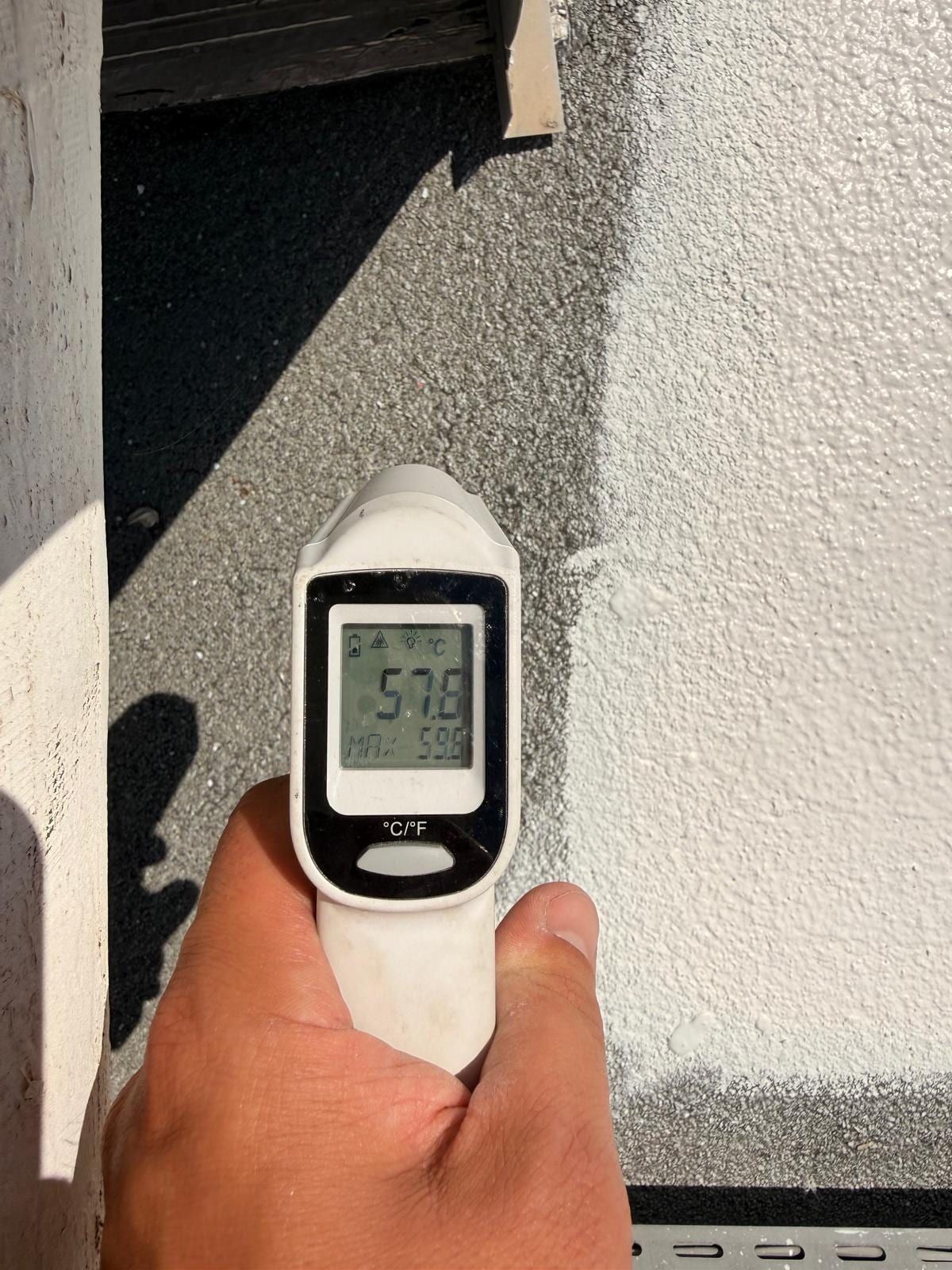
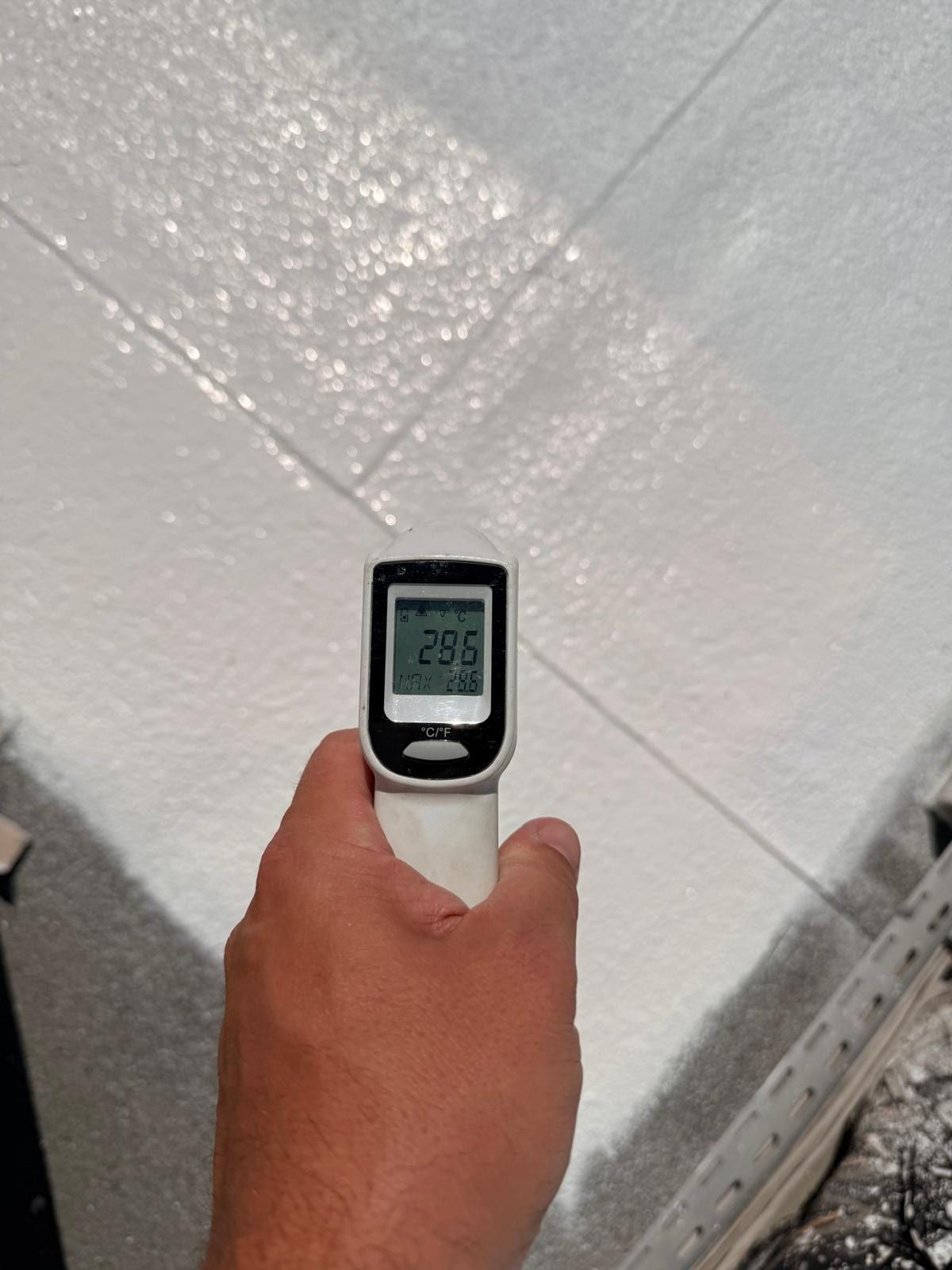
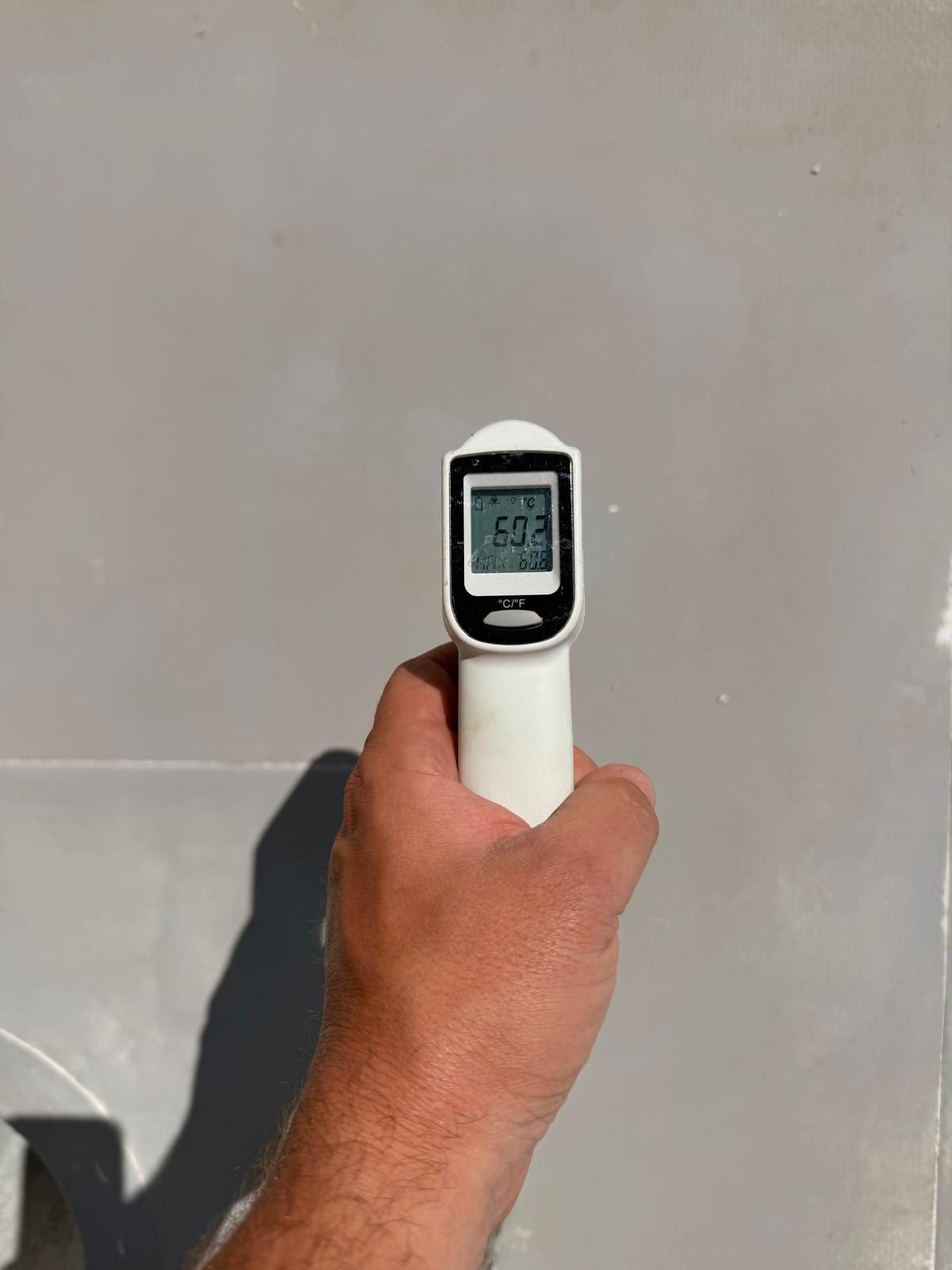
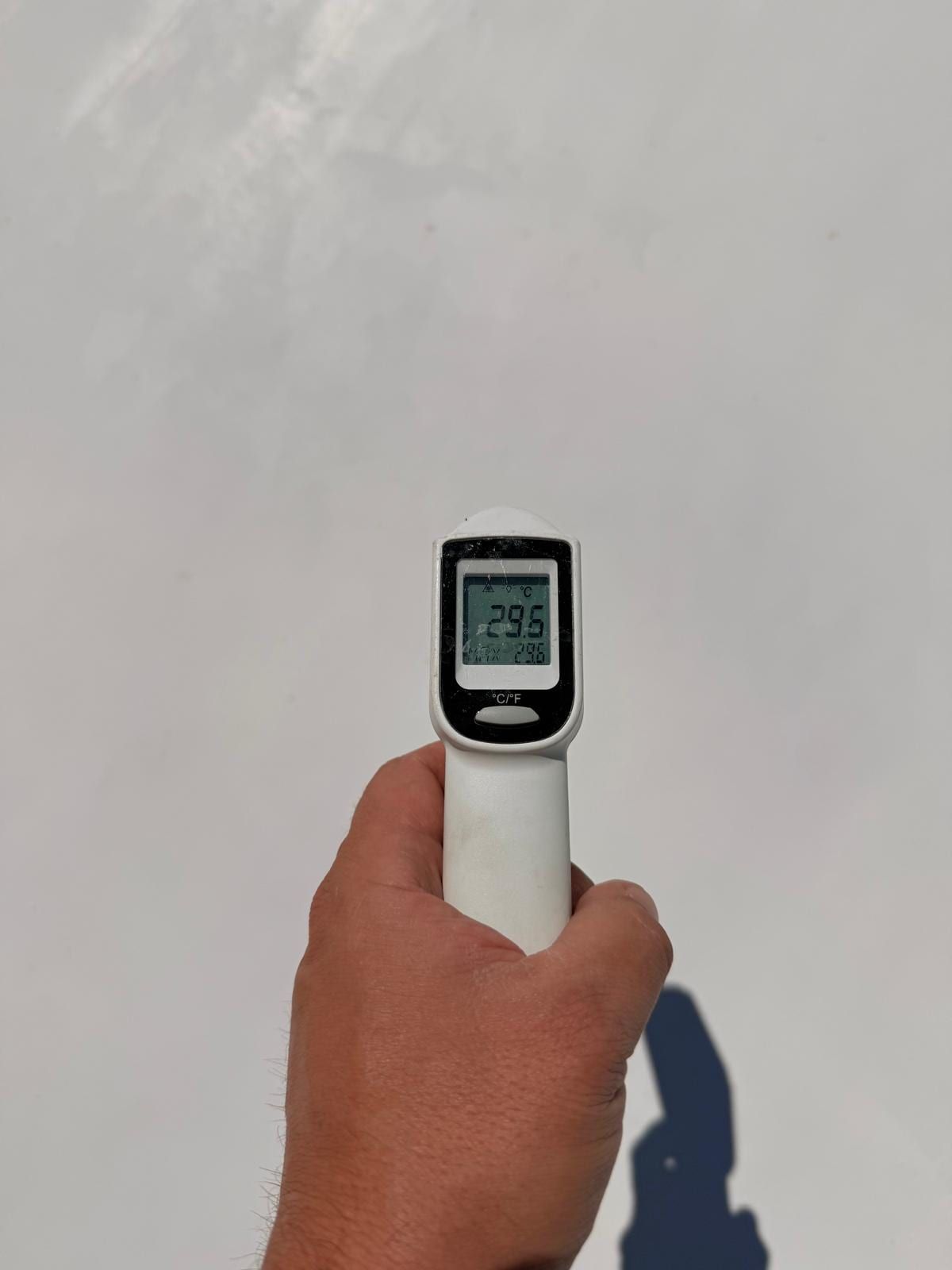
On the 5,900 m² of bitumen membrane of three buildings on an aerospace site, treated from April to June 2026, the infrared handover measurement showed 57.8 °C on the control zone against 28.6 °C on the treated zone: −29 °C. See the Airbus Marignane project.
Three benefits follow: a membrane that ages more slowly (less expansion, no UV), a cooler building (up to −6 °C felt inside depending on insulation), and relief for the air conditioning (up to −40 % depending on the climate zone). The third is quantified in the return-on-investment study from your consumption data.
Membrane by membrane: what can be done, and how
Bitumen membrane (SBS, APP, reinforced bitumen)
This is the most common and best documented case. Bitumen migrates under heat and yellows any light-coloured coating: the PH169 bleed-blocking primer is mandatory, applied at 6 m²/L with a 20 to 22 mm long-pile roller. Then come the PH107 base coat in two cross passes (2 m²/L in total) and the PH107TCL topcoat (10 m²/L). Slate-surfaced, aluminium-faced or bare membranes: the guide cool roof on bitumen roofs details each variant.
EPDM membrane
EPDM is a black, highly elastic synthetic rubber that reaches 70 °C in summer. Its surface, often talc-coated at manufacture, must be cleaned and degreased carefully; an adhesion test is carried out before any commitment. The standard system is then applied: PH169 primer, base coat in two passes, topcoat. The sensitive points are the glued seams between sheets, examined one by one. Reference: offices of 1,500 m² in La Rochelle on EPDM, a Hélios project.
PVC membrane: only beyond 10 years
PVC contains plasticisers that migrate to the surface for years. As long as they migrate, no coating holds durably. We therefore only work on a PVC membrane installed more than 10 years ago, and with a specific system:
- PH107PVC bonding base instead of the PH169 primer;
- PH107 reflective base coat in one pass;
- PH107TCL topcoat.
Before any proposal, an adhesion test on three zones of 30 m², representative of the roof, is carried out and observed over one year. This period cannot be shortened: it protects your investment as much as our liability. On more recent PVC, the answer is no — and we will point you towards a white membrane if it has reached the end of its life.
TPO membrane: ask us
TPO is often installed white or light grey, but it greys, gets dirty and loses its reflectance within a few years. Its adhesion varies with the manufacturer, the surface treatment and the age. We have no standard protocol: a prior adhesion test is mandatory, and we only commit on its result.
Resins, asphalt
Waterproofing resins (polyurethane, polyester) require a compatibility test and degreasing. Gravel-surfaced asphalt requires removing the loose gravel and a higher primer consumption. In every case, the diagnosis decides.
The common protocol
Whatever the type of membrane, the installation process follows the same steps:
- Free study within 48 h, then a technical survey: nature and age of the membrane, blisters, cracks, upstands, seams, rainwater outlets, ponding, rooftop equipment; adhesion tests if needed.
- Preparation: chlorine-free anti-moss treatment, medium-pressure cleaning below 130 bar, spot waterproofing repairs, protection of singular points, 24 to 72 h drying with substrate moisture below 5 %.
- Application of the 4 layers without lifting equipment: drums and pumps on the ground, 80 m hoses on the roof, application by zones of 60 to 100 m² with consumption tracking.
- Inspection and handover: thicknesses, infrared measurements of the treated zone against the control zone, as-built file with test reports and ten-year insurance certificate.
The weather conditions are the same everywhere: 12 to 35 °C, relative humidity below 80 %, no rain within 4 h of each layer.
The cool roof protects the waterproofing, it does not replace it
This is the sentence we repeat at every diagnosis, and it deserves to be precise.
What the cool roof brings to your membrane: a surface temperature almost halved, thermal cycles three times less wide, a UV barrier, an elastic film (elongation above 300 %) that is rainproof and covers surface micro-cracks. A sound membrane that has been treated ages markedly more slowly.
What the cool roof does not bring: the primary waterproofing function. It does not repair a punctured membrane, does not re-bond a detached upstand, does not replace an end-of-life waterproofing layer. A leaking roof is repaired or renewed first. When the membrane has to be redone, two options: a conventional renewal followed by a cool roof, or a new white membrane. The coating versus membrane comparison puts the two side by side; our honest answer depends on the condition of your roof, not on what we sell.
As for warranties, our ten-year insurance covers the work carried out (the applied system); the existing waterproofing remains covered by its own warranty. We document the initial condition in the as-built file so that there is no ambiguity.
Reading the condition of your membrane before deciding
Three questions are enough to steer the diagnosis, and you can answer them even before our visit.
- How old is the membrane? Under 10 years on PVC: no cool roof. Between 8 and 15 years on bitumen or EPDM: the ideal window, the membrane is still sound and the gain in service life is maximal. Beyond 20 years: a serious examination is required, renewal may be more reasonable.
- Are there any leaks? Damp marks on the ceiling, water-filled blisters, wet insulation: the membrane has already failed. Repair or renewal first.
- How does the surface behave? Bitumen that chalks slightly, talc-coated EPDM, PVC that has become rigid and crazed: each of these signs steers the preparation, the adhesion test or the refusal.
The free diagnosis records these observations, with photos, in a report that you keep whatever your decision.
Cool roof or white membrane: how to decide
The question comes up on every roof terrace. Here is the rule we apply.
| Condition of the membrane | Our recommendation |
|---|---|
| Sound, under 15 years old, a few spot repairs | PrimaTherm® cool roof: 4 layers, no lifting equipment, in a few days |
| Ageing but watertight, 15 to 20 years old | Cool roof after repairs, to push back the renewal |
| Active leaks, widespread blisters, detached upstands | Waterproofing renewal first; cool roof afterwards on the new membrane, or white membrane |
| PVC under 10 years old | Wait, or white membrane if a renewal is planned |
| TPO | Mandatory adhesion test, case-by-case answer |
A new white membrane has an SRI in the region of 90 to 100; PrimaTherm® reaches 120. But a cool roof on a dead waterproofing layer remains a cool roof on a dead waterproofing layer: the order of the works matters more than the product.
Roof terraces, upstands and singular points
A waterproofing membrane lives with its singular points: parapet upstands, rainwater outlets, rooflight kerbs, equipment plinths. Each one is prepared by hand and receives the system with a roller or a cutting-in brush. Polycarbonate rooflights can receive the PrimaTherm® LT lacquer (one coat: about −25 % heat gain; two coats: about −50 %). Ponding areas are identified: the system tolerates temporary standing water, but a permanent puddle signals a slope defect to be corrected. The guide cool roof on flat roofs covers these topics in detail.
For which buildings
Waterproofing membranes cover the roof terraces of the tertiary sector, public buildings, hospitals, shopping centres, co-owned residential buildings and many industrial sites. For the roof terrace of a house, the online shop (in French) sells the system with the quantity calculation.
Incentives, regulations, maintenance
The French energy-savings certificates (CEE), sheet BAT-EN-112, apply under conditions (tertiary-sector building for commercial use, volume heated and cooled by heat pump; 160, 170 or 270 kWh cumac per m² depending on the French climate zone H1, H2 or H3); MaPrimeRénov’ does not cover cool roofs; the reduced 10 % VAT applies to supply and installation on a French home over 2 years old; changing the colour may require a prior declaration to the town hall (Article R. 421-17 of the French planning code). The details are on the page cool roof incentives in France 2026.
On the maintenance side: annual inspection, cleaning with clear water or low pressure (100 bar maximum) every 12 to 15 months, check of the outlets. The SRI is maintained after 4,000 h of accelerated QUV ageing — conventional service life of 20 years (French CEE sheet).
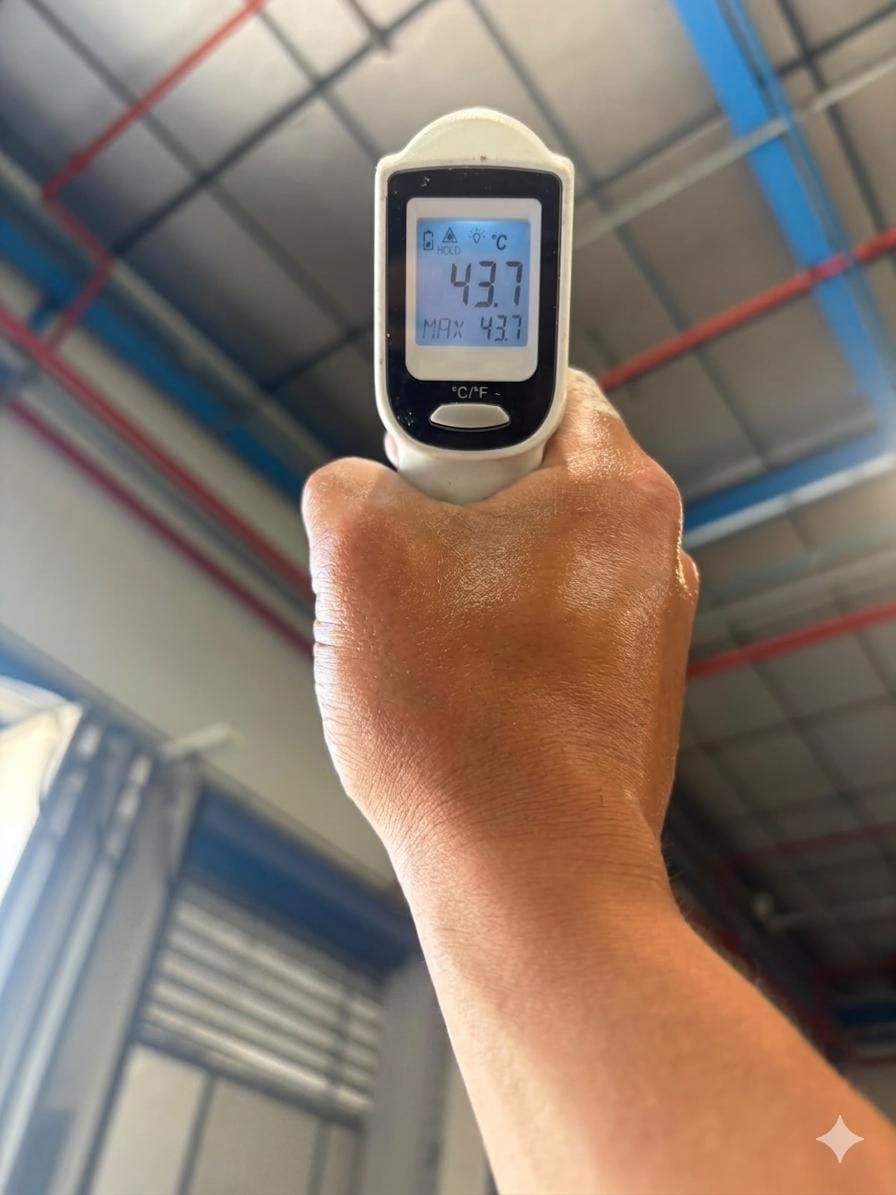
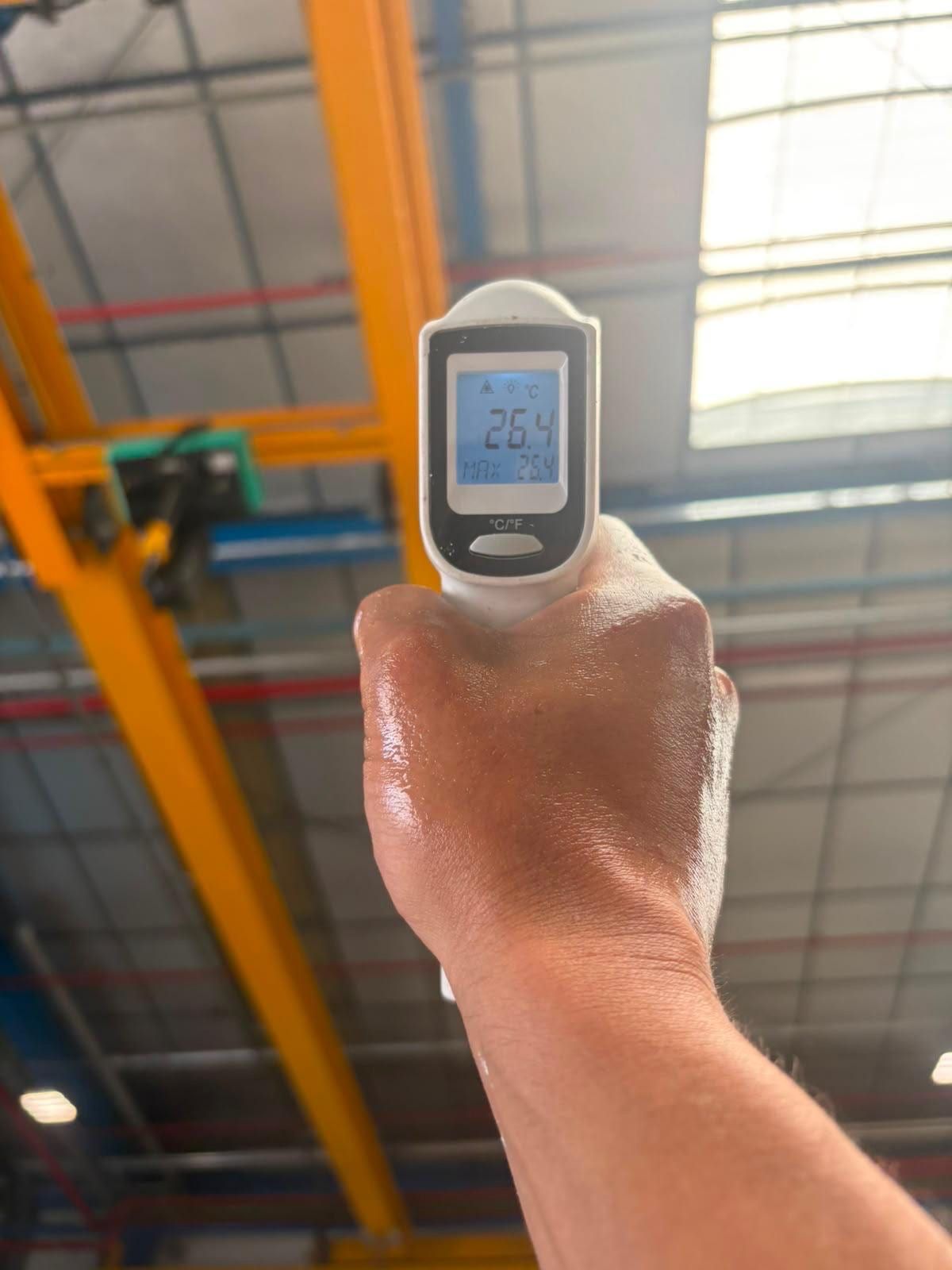
The thermometer, same time of day, before and after.
Frequently asked questions
Does the cool roof replace the waterproofing?
No. The cool roof is a thermal and UV protection applied over a sound membrane: it forms an elastic, rainproof film, but it does not perform the primary waterproofing function within the meaning of the French DTU standards. A leaking membrane is repaired or renewed first. The cool roof then extends the life of that waterproofing by keeping it below 35 °C.
Can a cool roof be applied to a PVC membrane?
Only on a PVC membrane installed more than 10 years ago, whose plasticisers have finished migrating. The primer is then replaced by the PH107PVC bonding base, followed by one pass of PH107 and the PH107TCL topcoat. An adhesion test on three zones of 30 m², observed over one year, precedes any commitment. On recent PVC, the answer is no.
And on an EPDM membrane?
Yes, after an adhesion test. EPDM is a black rubber that reaches 70 °C in summer; its surface, often talc-coated, is cleaned and degreased before the PH169 primer. Offices of 1,500 m² in La Rochelle on EPDM were treated by Hélios with the PrimaTherm® system.
What about a TPO membrane?
Ask us. TPO is often light-coloured from the start but greys and loses its reflectance over time; its adhesion depends on the manufacturer and the age of the membrane. A prior adhesion test is mandatory before any proposal.
Can a cool roof be applied to a degraded membrane?
If it is still watertight, yes: blisters, surface cracks and detached upstands are repaired before application, then the cool roof stabilises the ageing. If leaks are active or the membrane has reached the end of its life, it must be renewed; our comparison of coating versus white membrane helps you choose.
By how much does the cool roof extend a waterproofing layer’s life?
We do not promise a figure: it depends on the age and condition of the membrane. What is established is the mechanism: a membrane that cycles between 20 and 35 °C instead of 20 and 70 °C undergoes expansion stresses two to three times lower, and the UV that degrades the binder is blocked by the PH107TCL topcoat.