Roofs transformed, results measured.
Every project is handed over with a before/after infrared reading, thickness checks and an as-built file. Two case studies in detail, and all our references below.
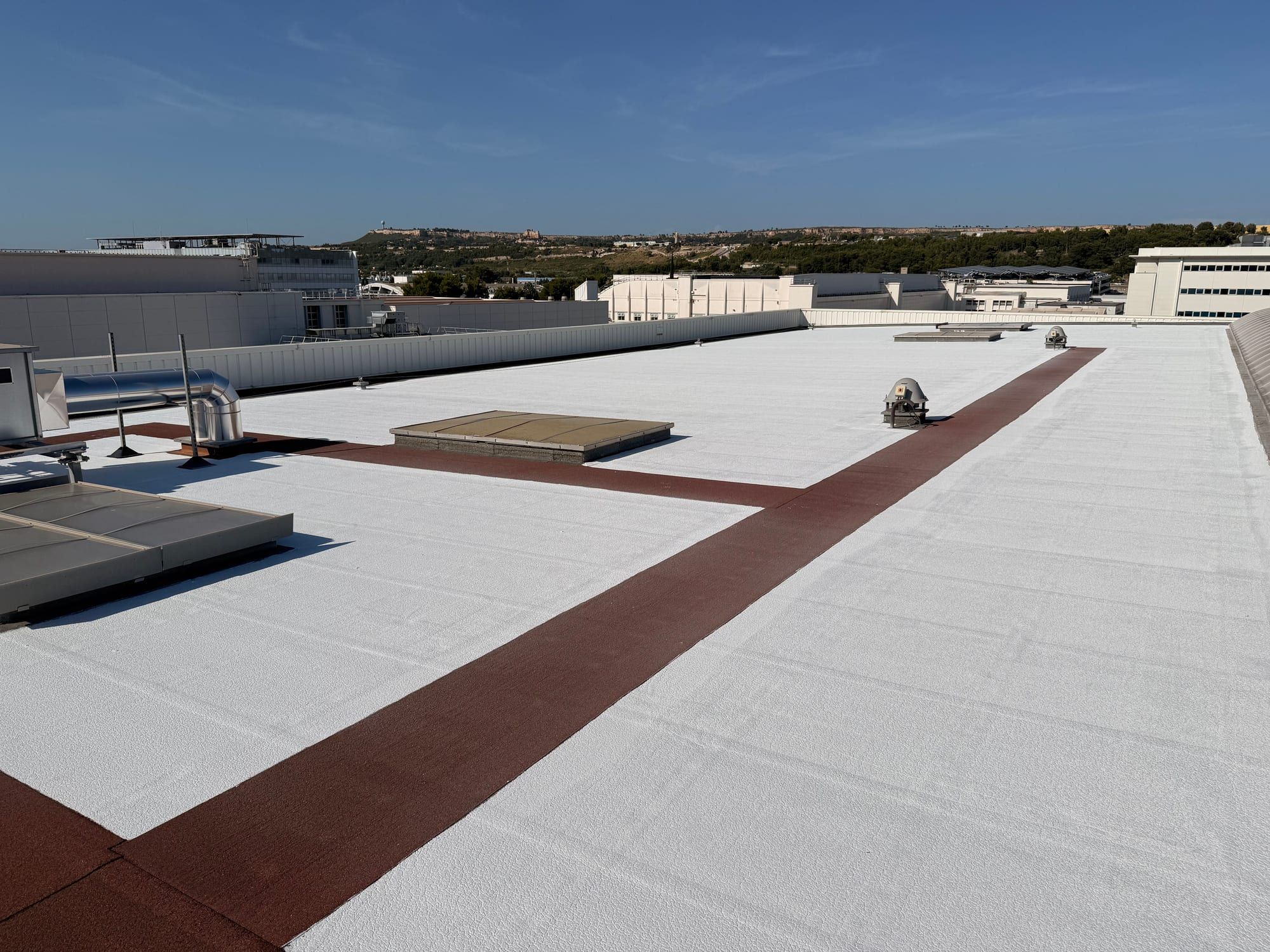
Airbus Marignane: 5,900 m² of roofs, −29 °C measured on the surface.
On the Airbus Operations site in Marignane (Bouches-du-Rhône), several workshop and office buildings covered with dark bitumen membranes suffered every summer from overheated volumes, hard-working air conditioning and waterproofing exposed to violent thermal cycles. From April to June 2026, Hélios treated three buildings: about 5,900 m² of membrane, on an aerospace site in full operation.
The application followed the site’s prevention plan, with badges and work-at-height certificates for every applicator, marked-off zones, protection of sensitive equipment (air-handling units, rooflights, cabling) and phasing building by building. Drums and pumps stayed on the ground; only hoses went up. the largest building alone, 3,100 m², was treated in one week.
At reception on 19 June 2026, the infrared reading gave 57.8 °C on the untreated control zone against 28.6 °C on the treated zone, at the same time of day: −29 °C on the surface. Polycarbonate rooflights received the PrimaTherm® LT lacquer to cut solar gains through the skylights while keeping daylight.
Full case study: Airbus Marignane.
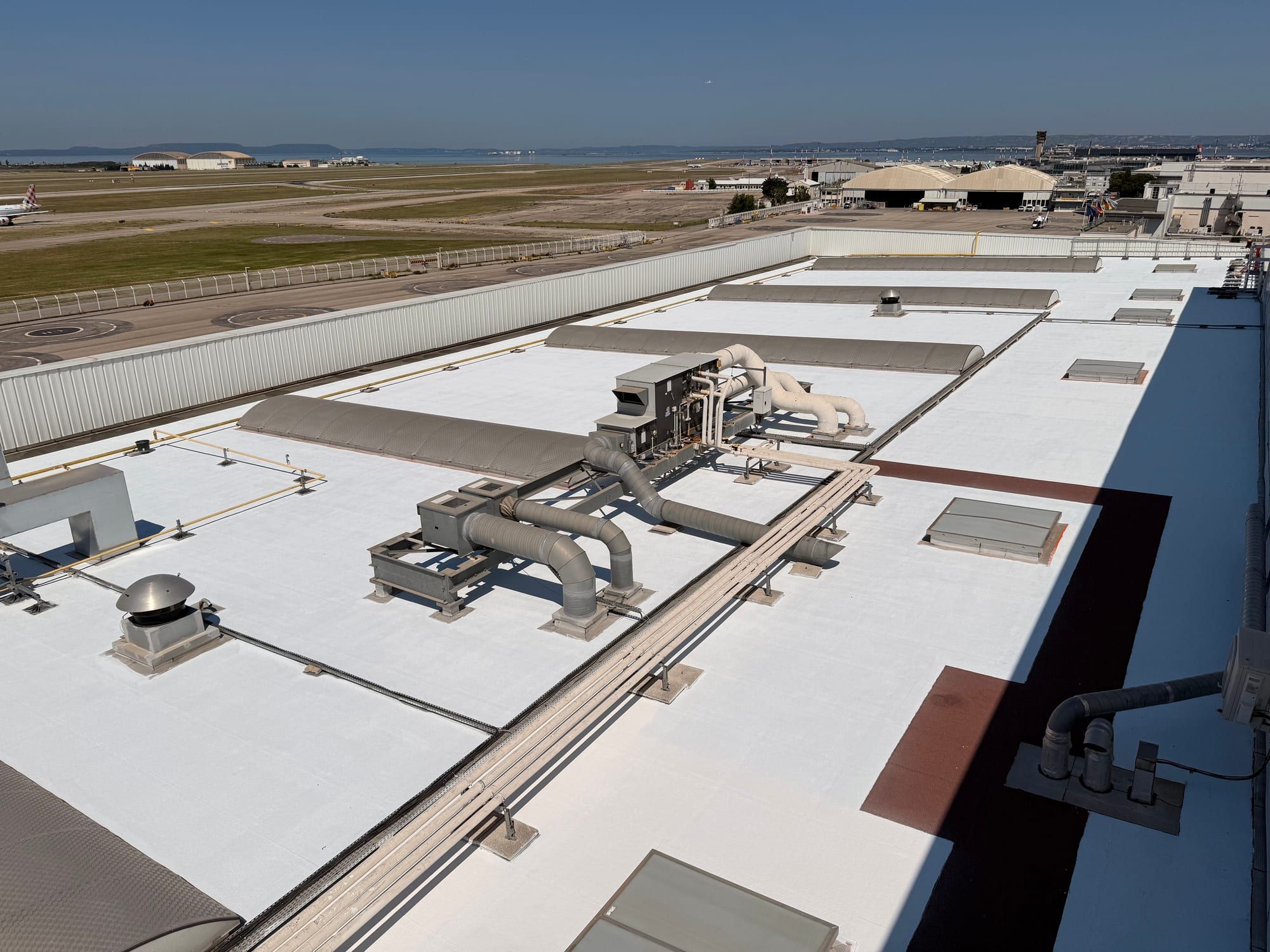
3 buildings · 5,900 m² · −29 °C
Bitumen membrane, site in operation, no lifting.
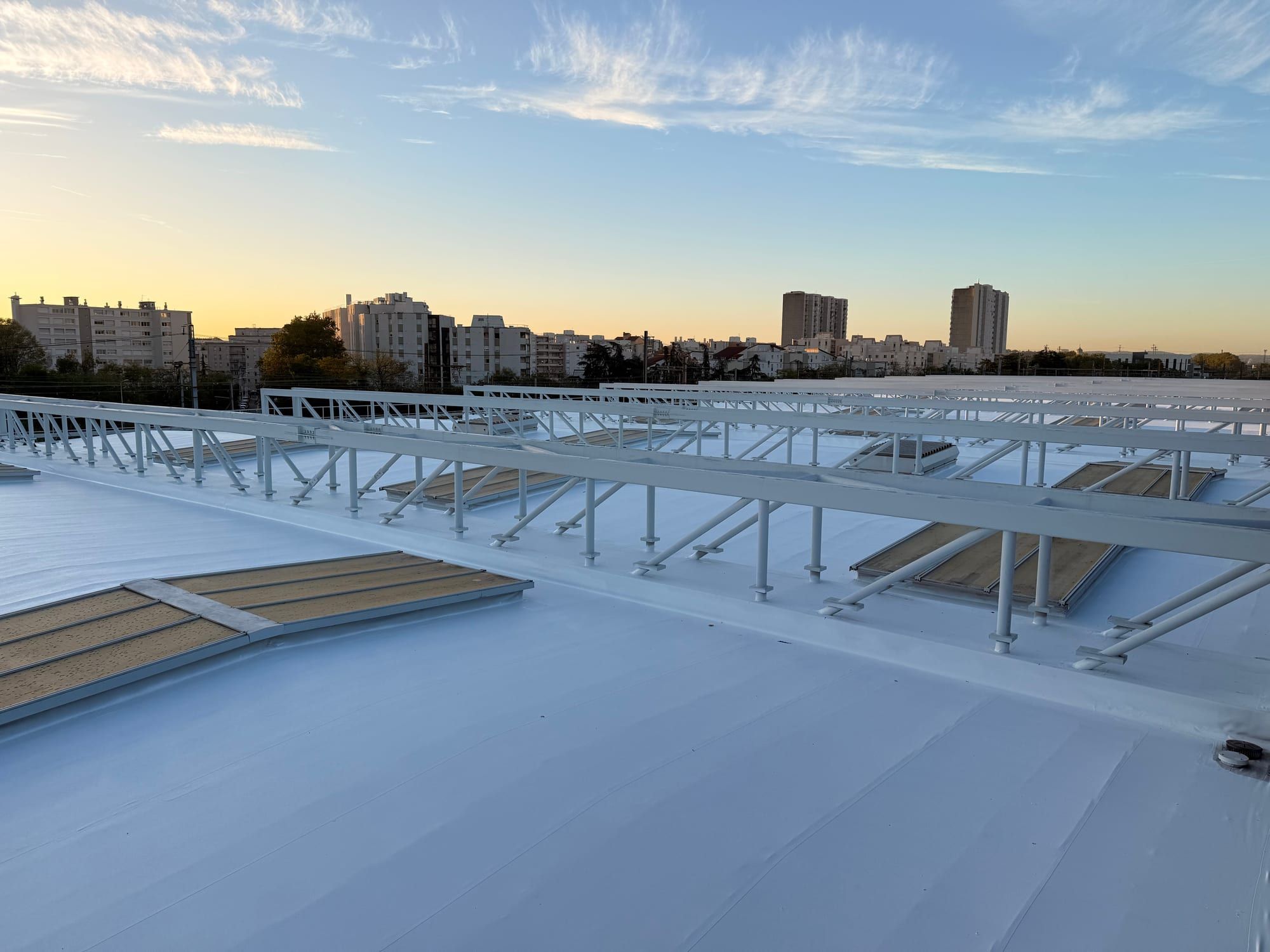
SNCF, TGV maintenance centre in Lyon: athermal coating on halls in operation.
Rail maintenance halls
Secured site, continuous operation.
At the TGV maintenance centre in Lyon Gerland, maintenance halls under PVC membrane were treated with the PrimaTherm® system while trains kept coming in and out. The constraints of a secured rail site, access, escort, phasing around operations, are the ones we meet on most industrial sites.
The coating brings the roof surface from 50 to 70 °C down to 25 to 35 °C in summer and shields the membranes from thermal shocks, without any structural work and without lifting.
Full case study: SNCF Lyon.
Our projects in France.
Airbus Operations — Marignane
5,870 m² · Bitumen membrane · 2026
SNCF Voyageurs — Lyon Gerland
10,453 m² · PVC membrane · 2026
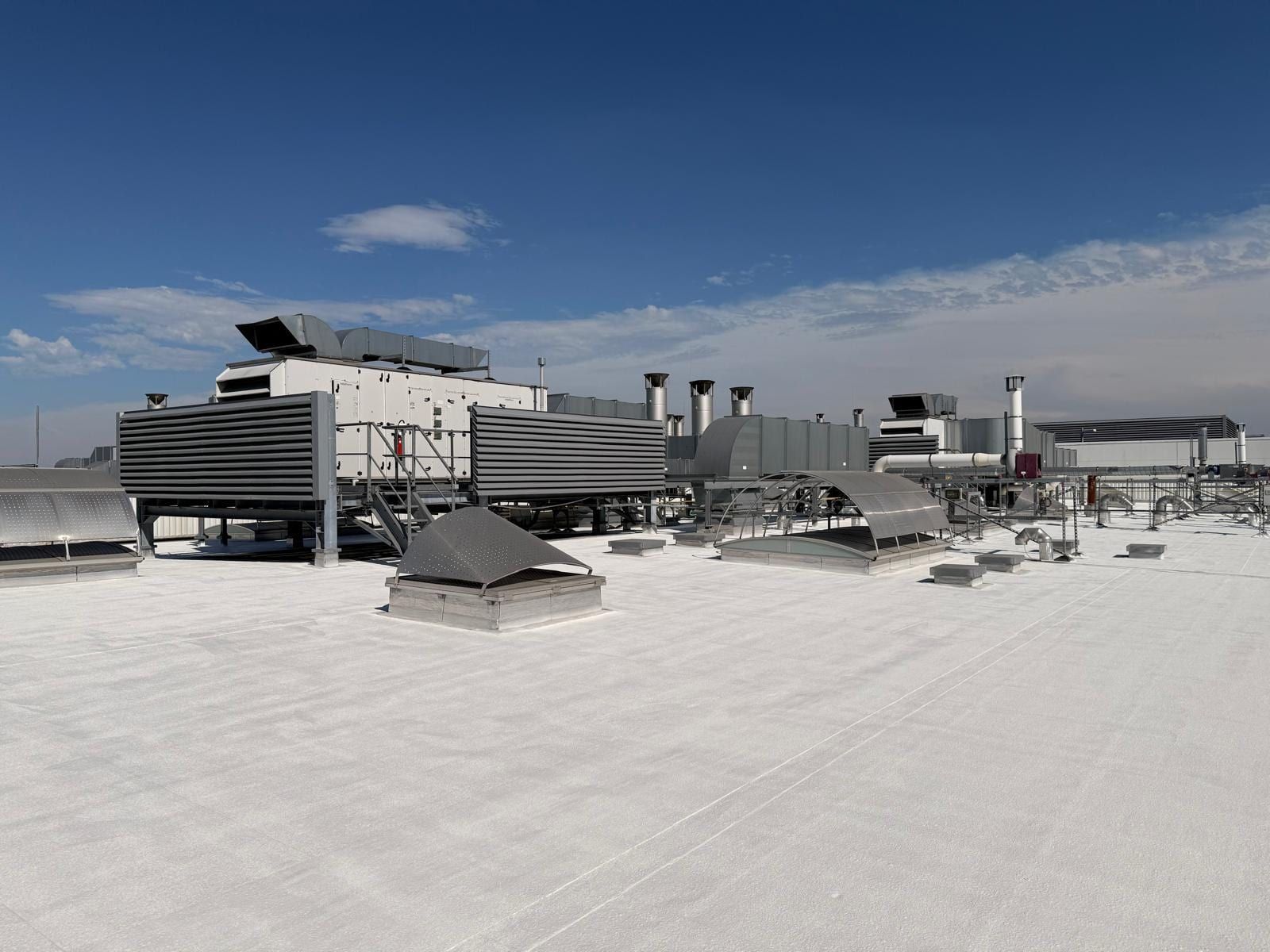
Airbus — Paris-Le Bourget (Dugny)
1,500 m² · Waterproofing membrane (flat roof) · 2025
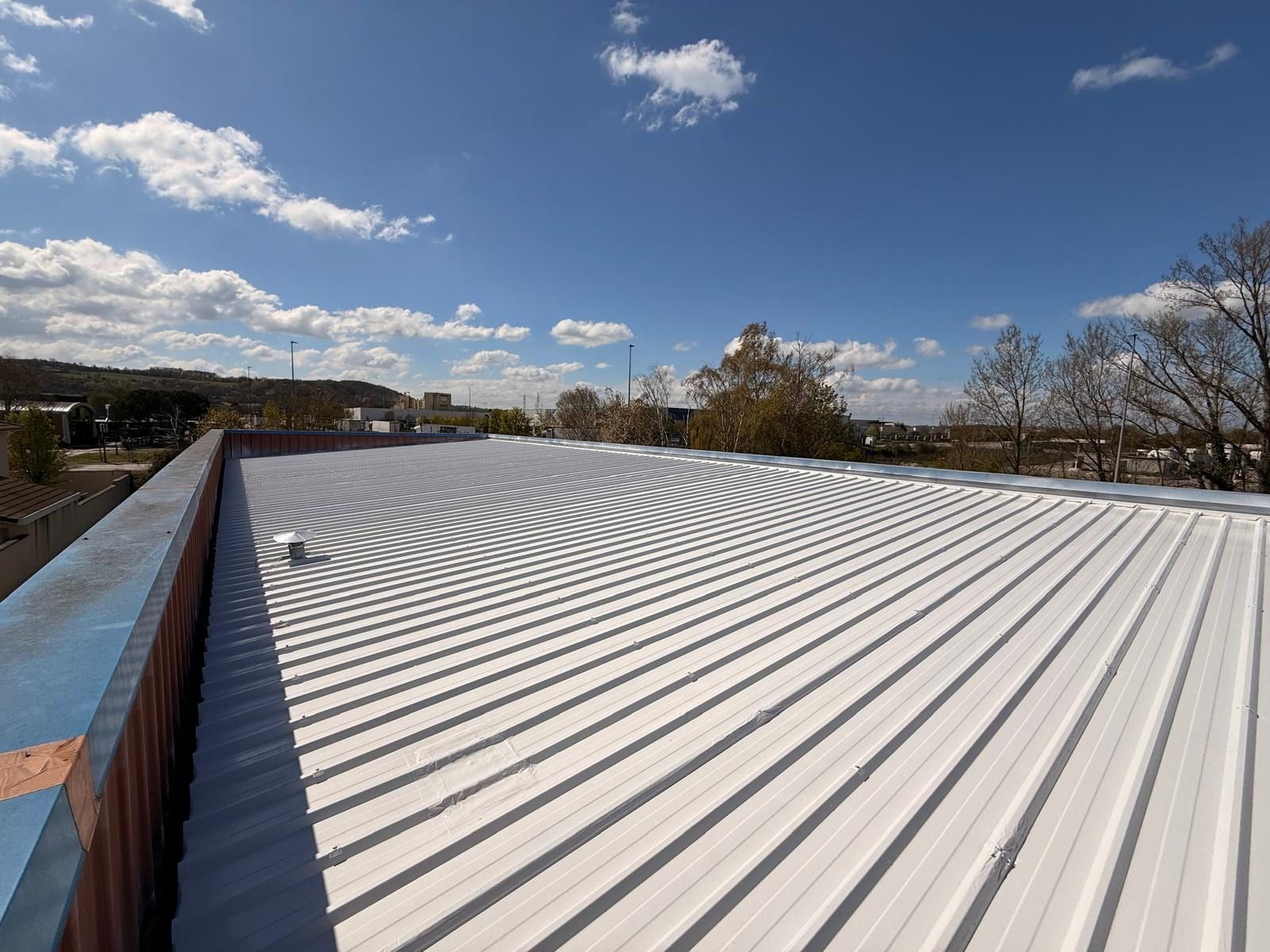
EGGER Pompes — La Verpillière
400 m² · Steel deck · 2026
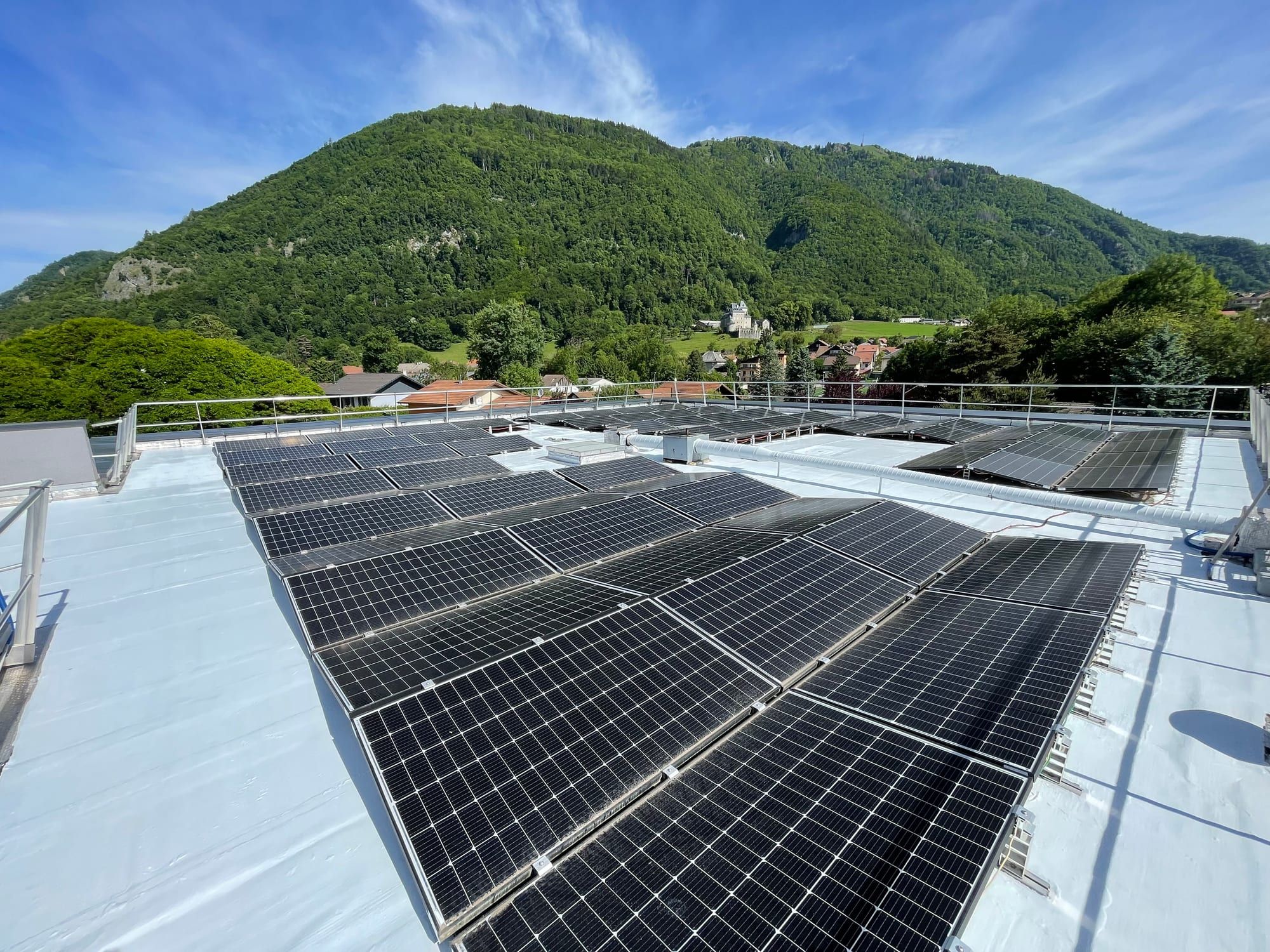
SET Corp — Saint-Jeoire
1,500 m² · Bitumen membrane under photovoltaic panels · 2025
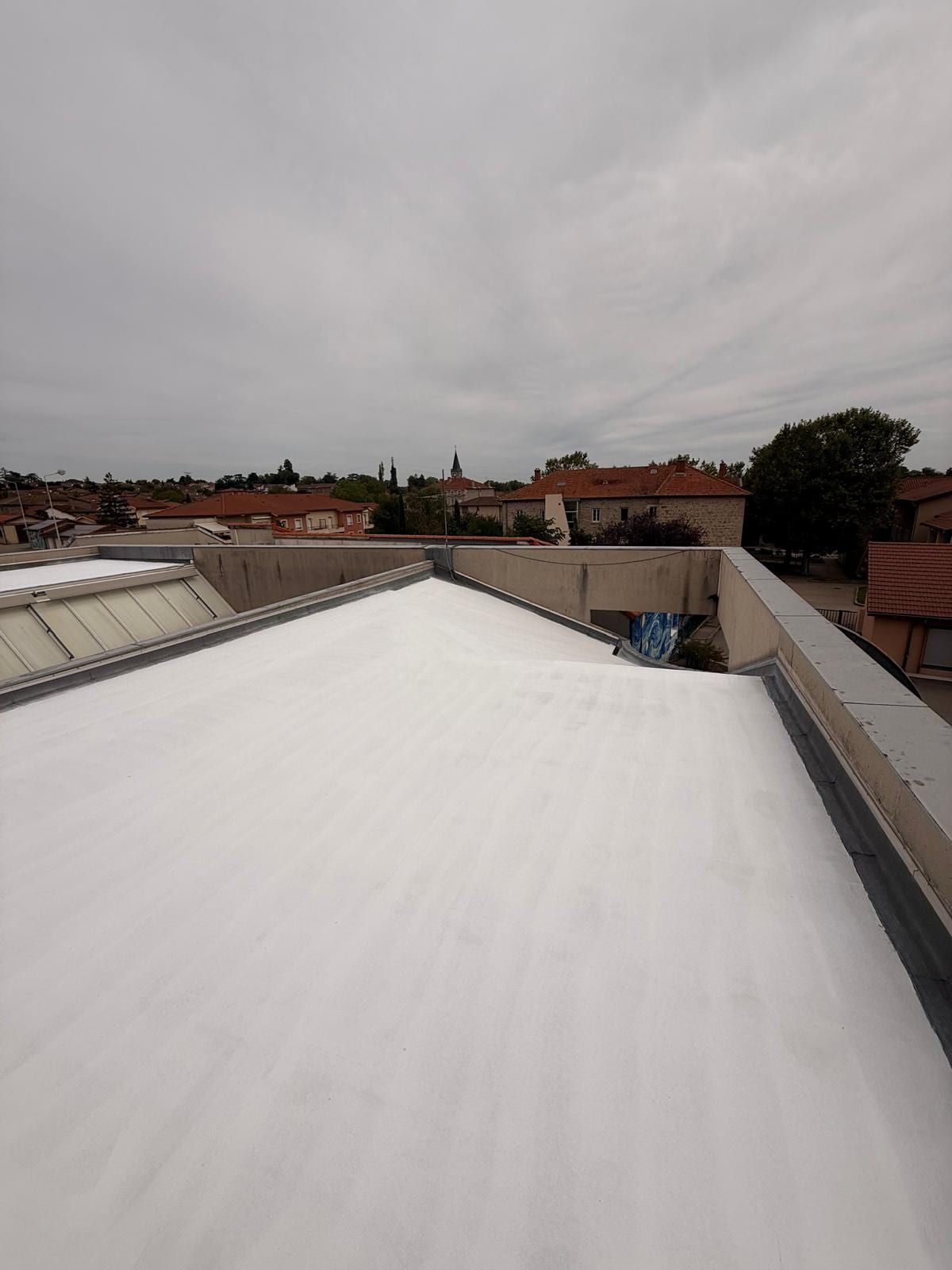
Municipality of Saint-Laurent-d’Agny — Saint-Laurent-d’Agny
600 m² · Bitumen membrane · 2026
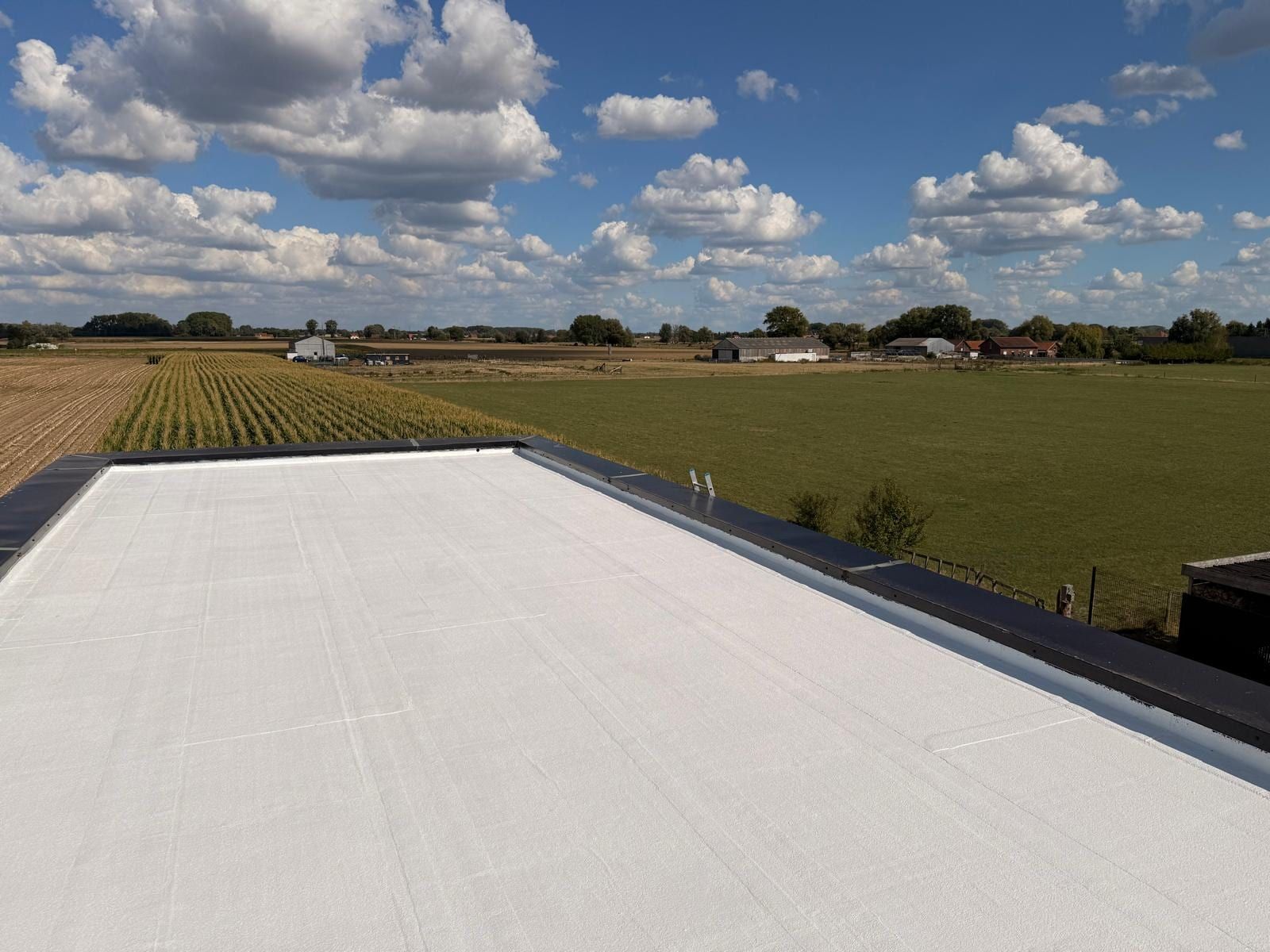
Private homeowner — Lille
200 m² · Flat roof, waterproofing membrane · 2026
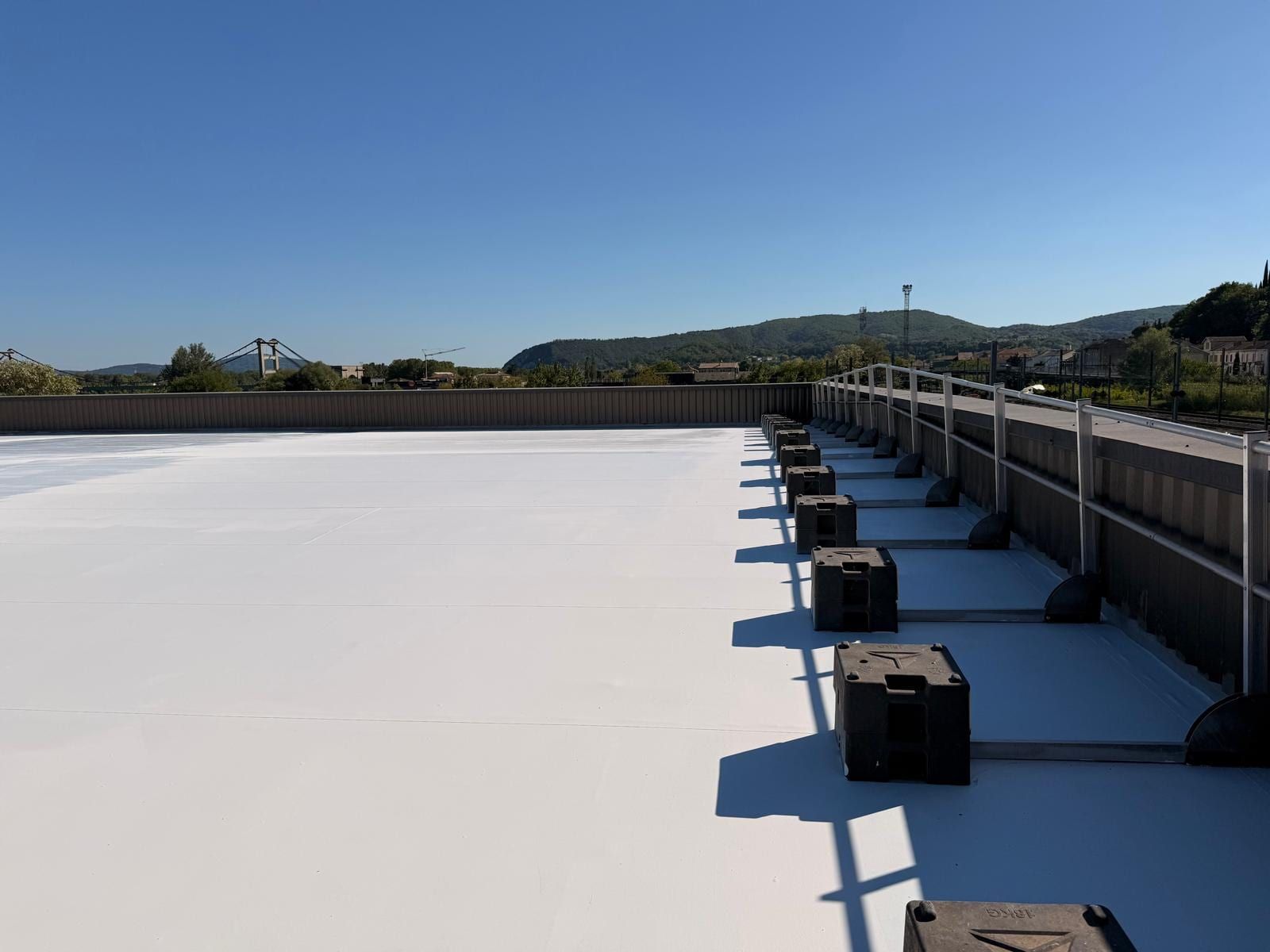
Eurotyre Pneumatic 2000 — Le Teil
600 m² · PVC membrane · 2026
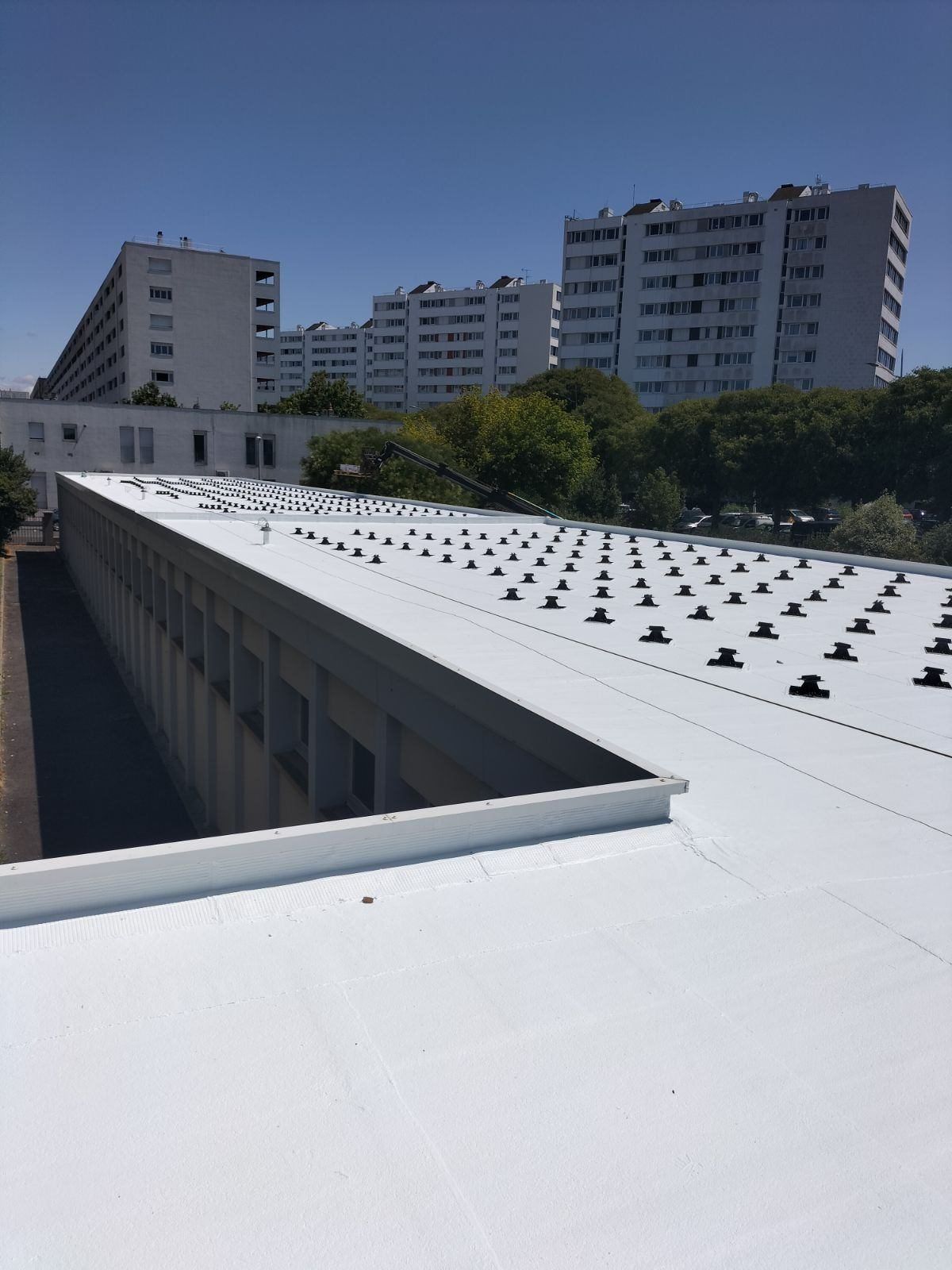
School — La Rochelle
1,000 m² · Bitumen membrane · 2024
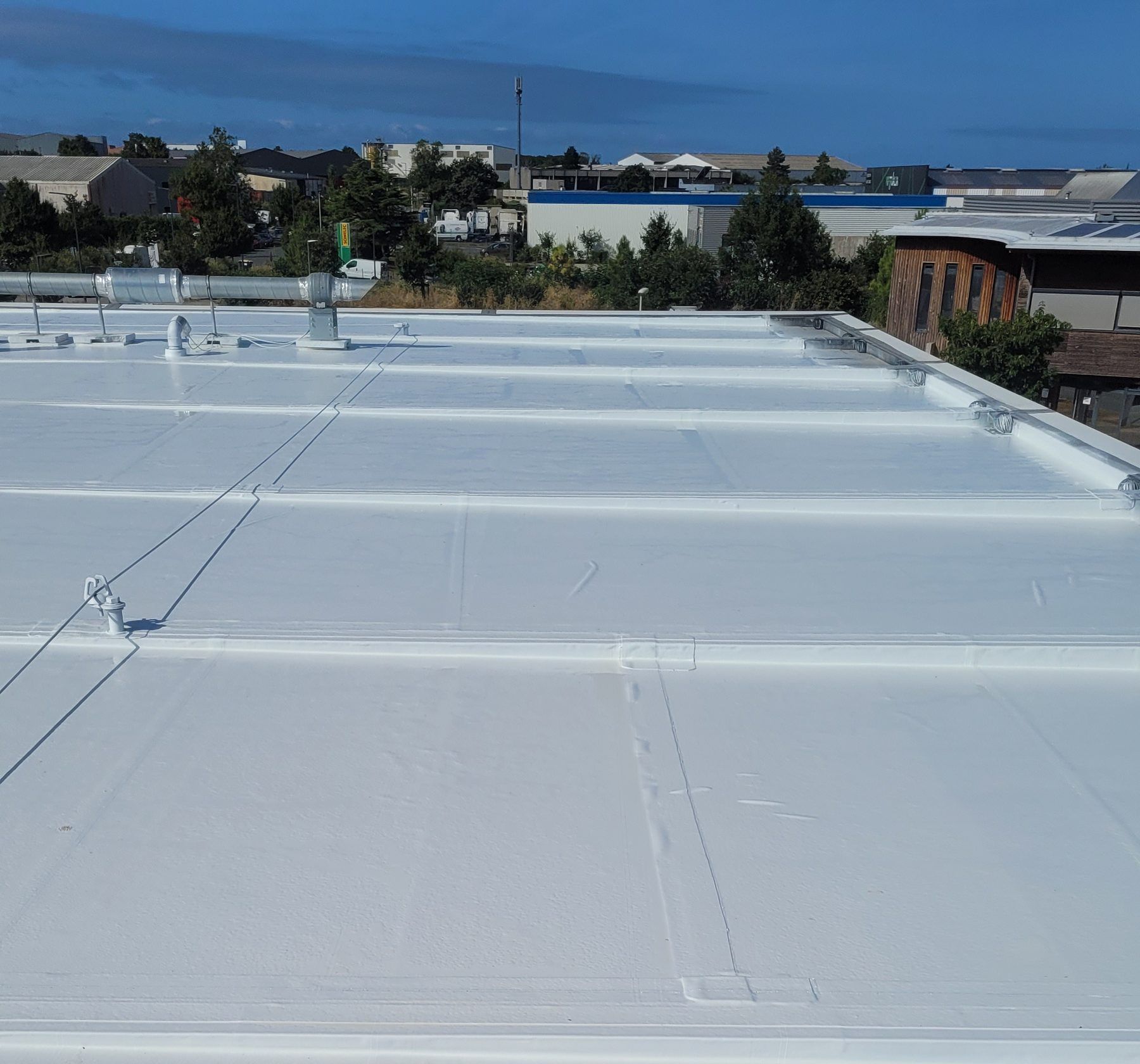
Modular office buildings — La Rochelle
1,500 m² · EPDM membrane · 2024
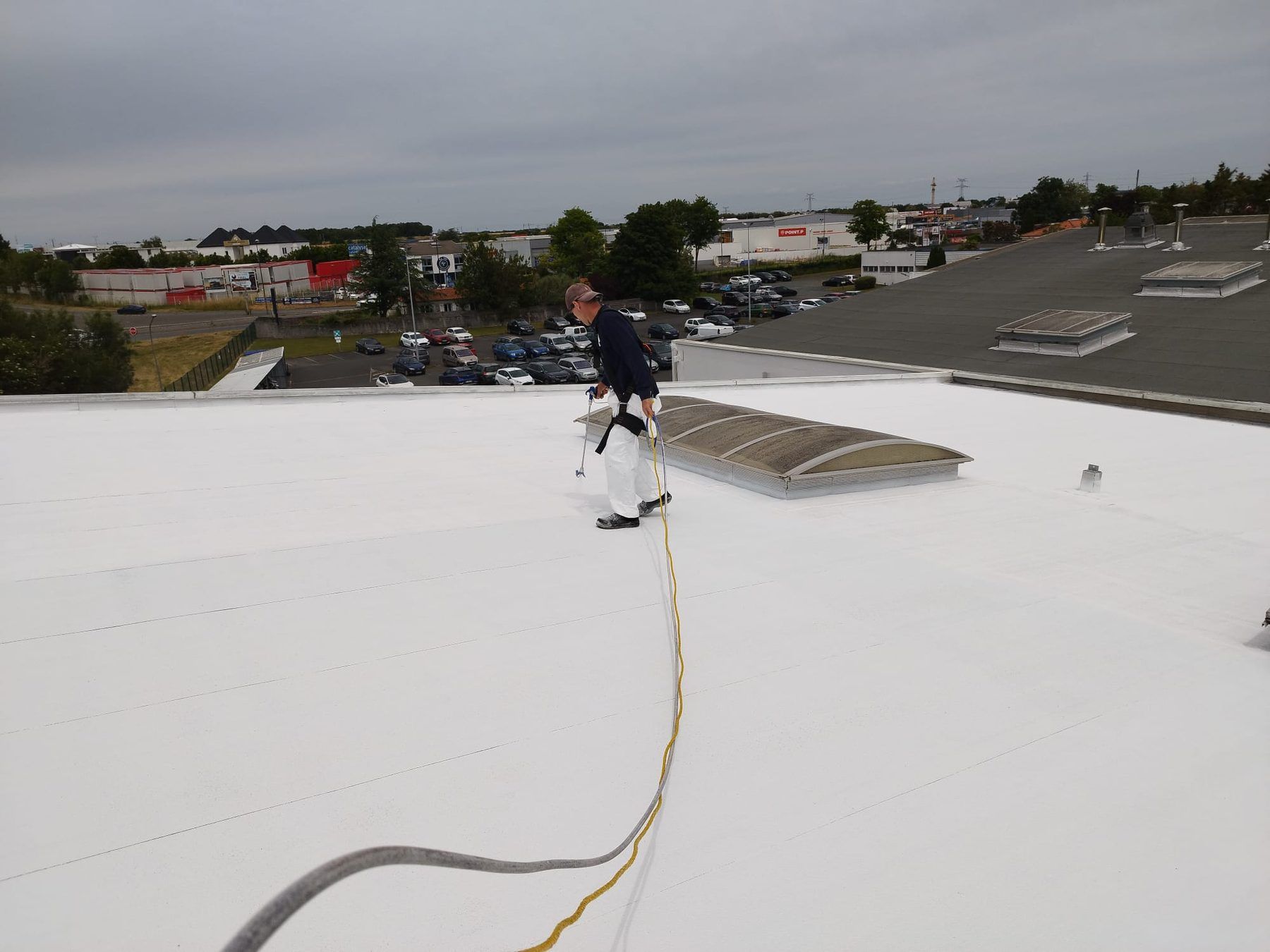
Food-processing plant — La Rochelle area
3,000 m² · Industrial roof · 2024
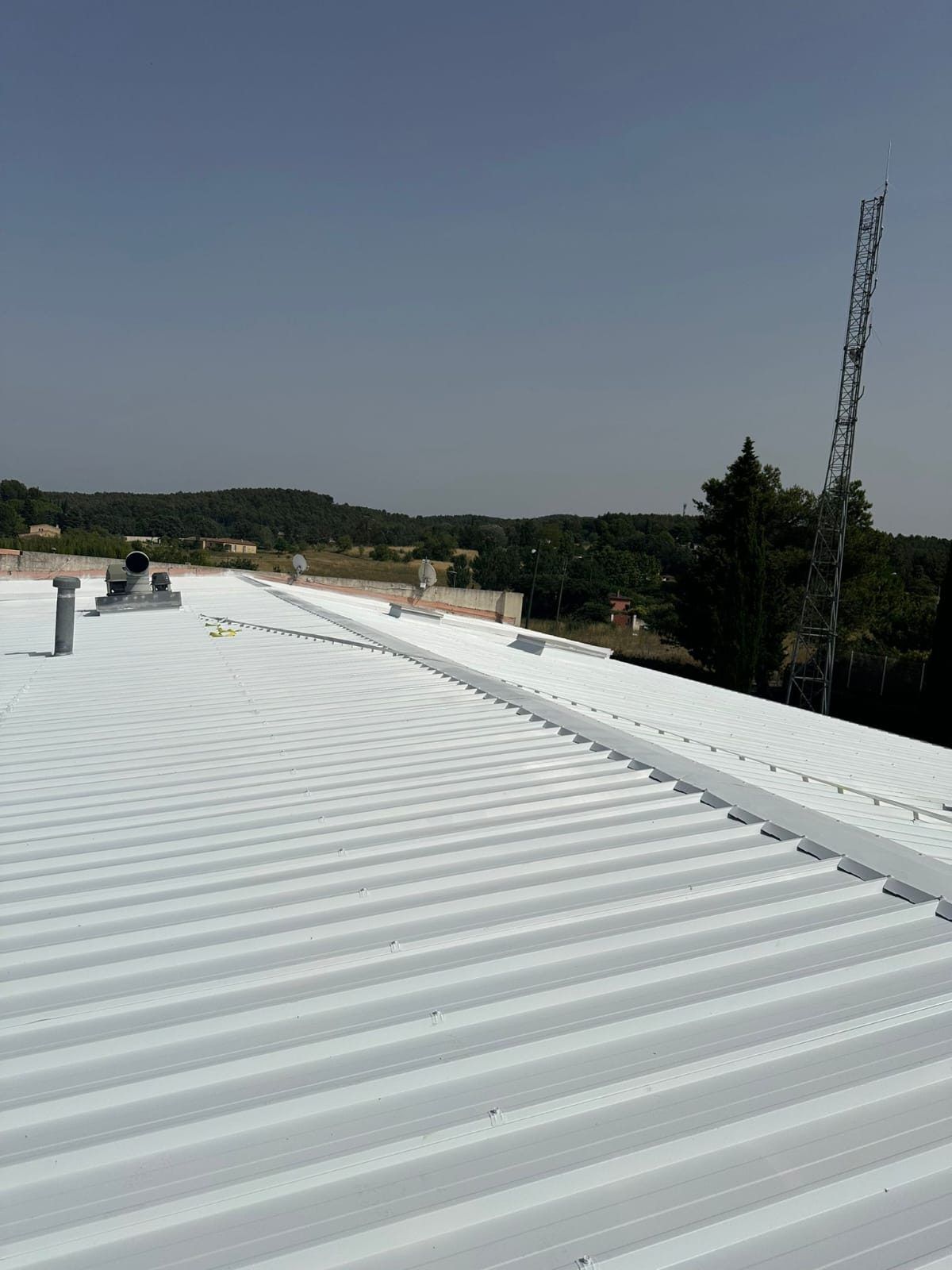
Warehouse — Marseille
1,000 m² · Steel deck · 2024
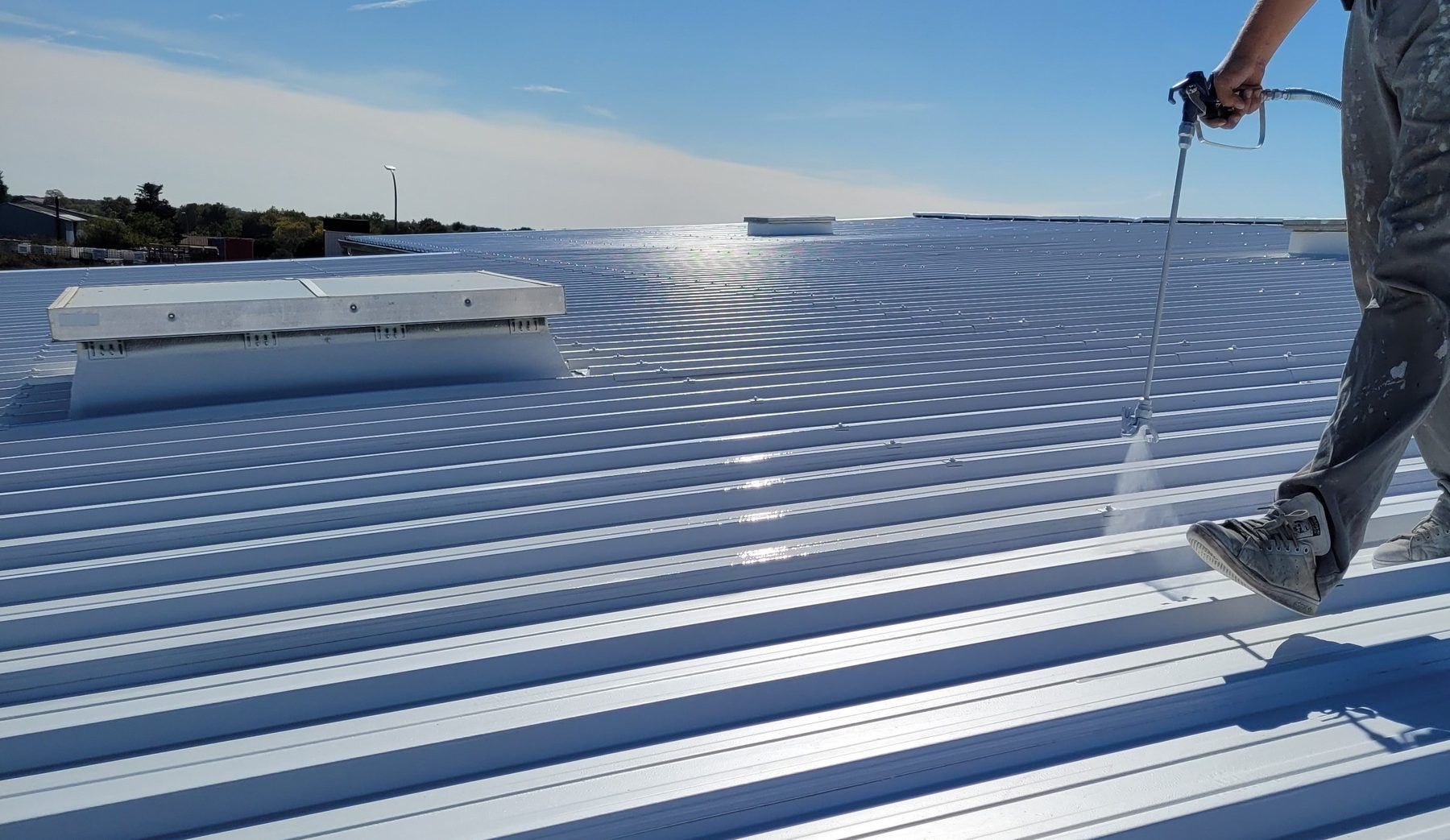
Industrial cured-meat producer — Périgny
2,000 m² · Steel deck · 2024
Your free roof study, answered within 48 hours.
Satellite measurement, thermal potential, available incentives: an expert calls you back with facts, never with a catalogue price.