Why offices overheat through the roof
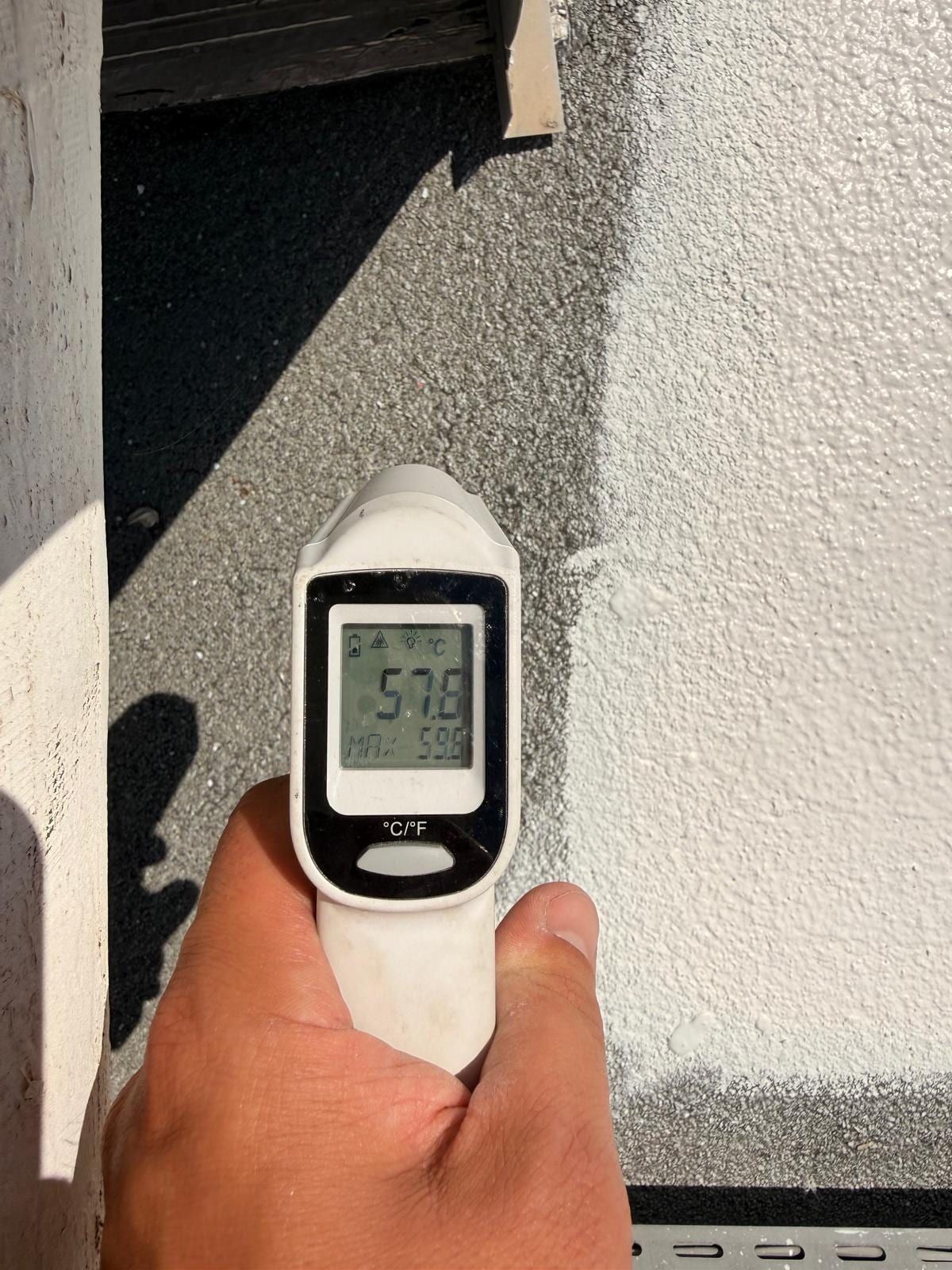
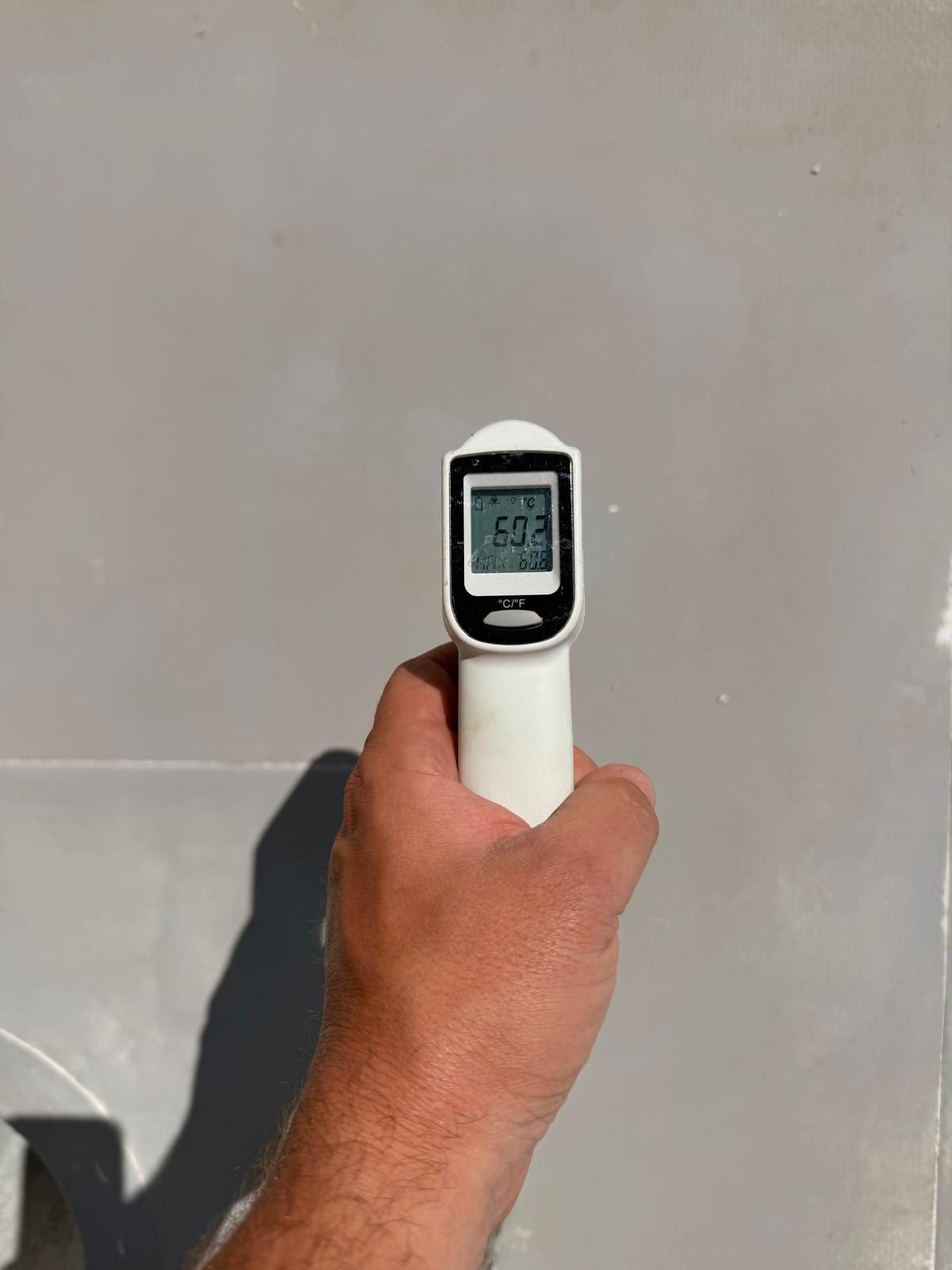
A commercial building is a stack of floors under a flat roof. This roof, in bitumen or dark synthetic membrane, absorbs up to 90 % of solar radiation and exceeds 60 °C in high summer. The heat passes through the insulation by conduction and radiates into the top level, where the executive offices, the meeting rooms and the IT rooms are often located.
Comfort that deteriorates floor by floor
The ground floor stays temperate, the intermediate floors hold up, the top floor gives way. Above 28 °C, concentration drops and the INRS (French occupational health institute) recommends adapting the organisation of work. In an air-conditioned building, the plant compensates by running longer; in a naturally ventilated building, the occupants close the blinds and switch on fans.
An energy item that contradicts the French tertiary-sector decree
The French Éco Énergie Tertiaire scheme requires a 40 % drop in final energy consumption by 2030, 50 % by 2040 and 60 % by 2050 compared with a reference year. Summer air conditioning is the item that grows fastest with heatwaves. Reducing the heat received by the roof acts on the cause, without changing a single piece of equipment.
What the PrimaTherm® system changes on an office building
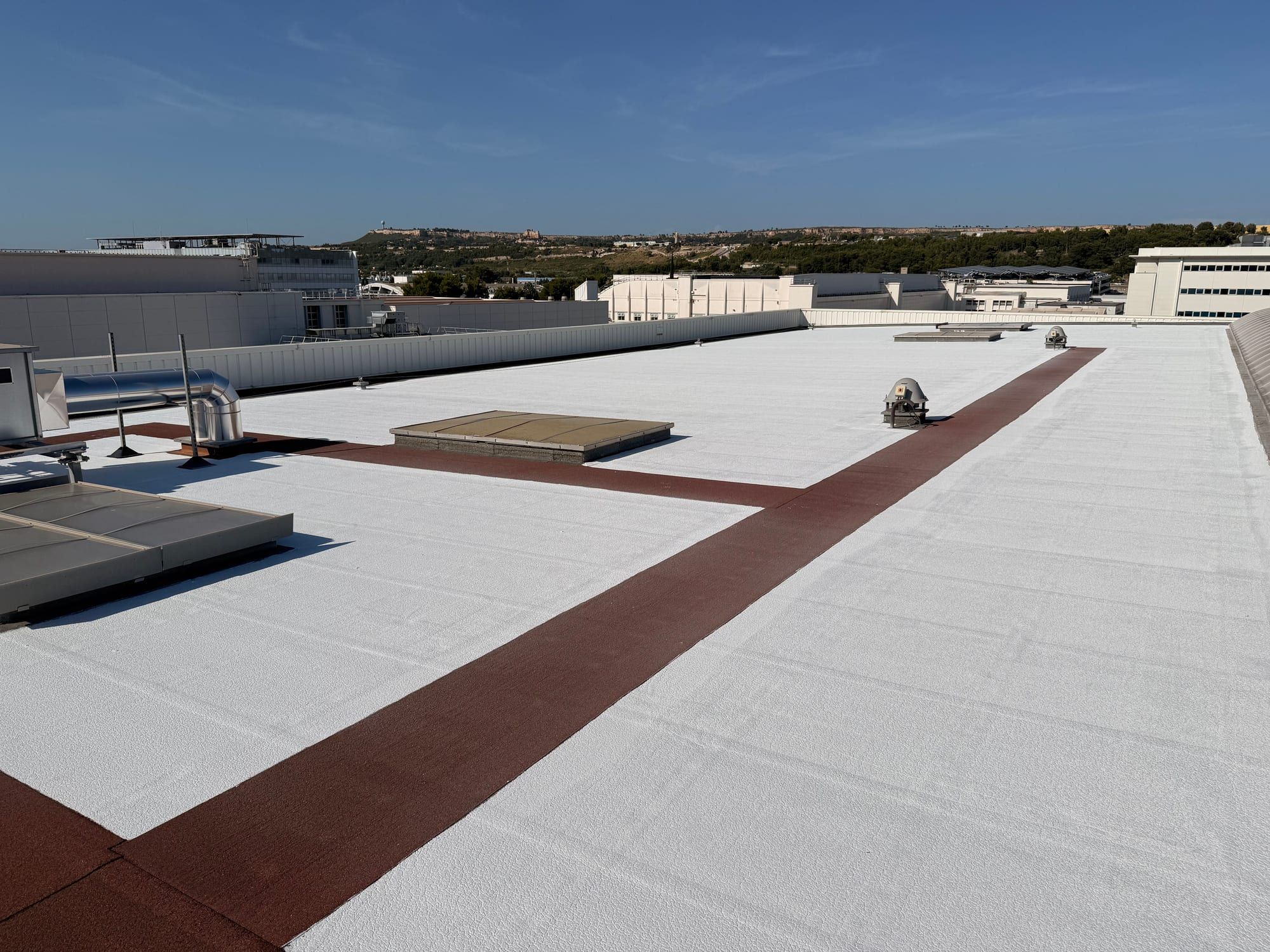
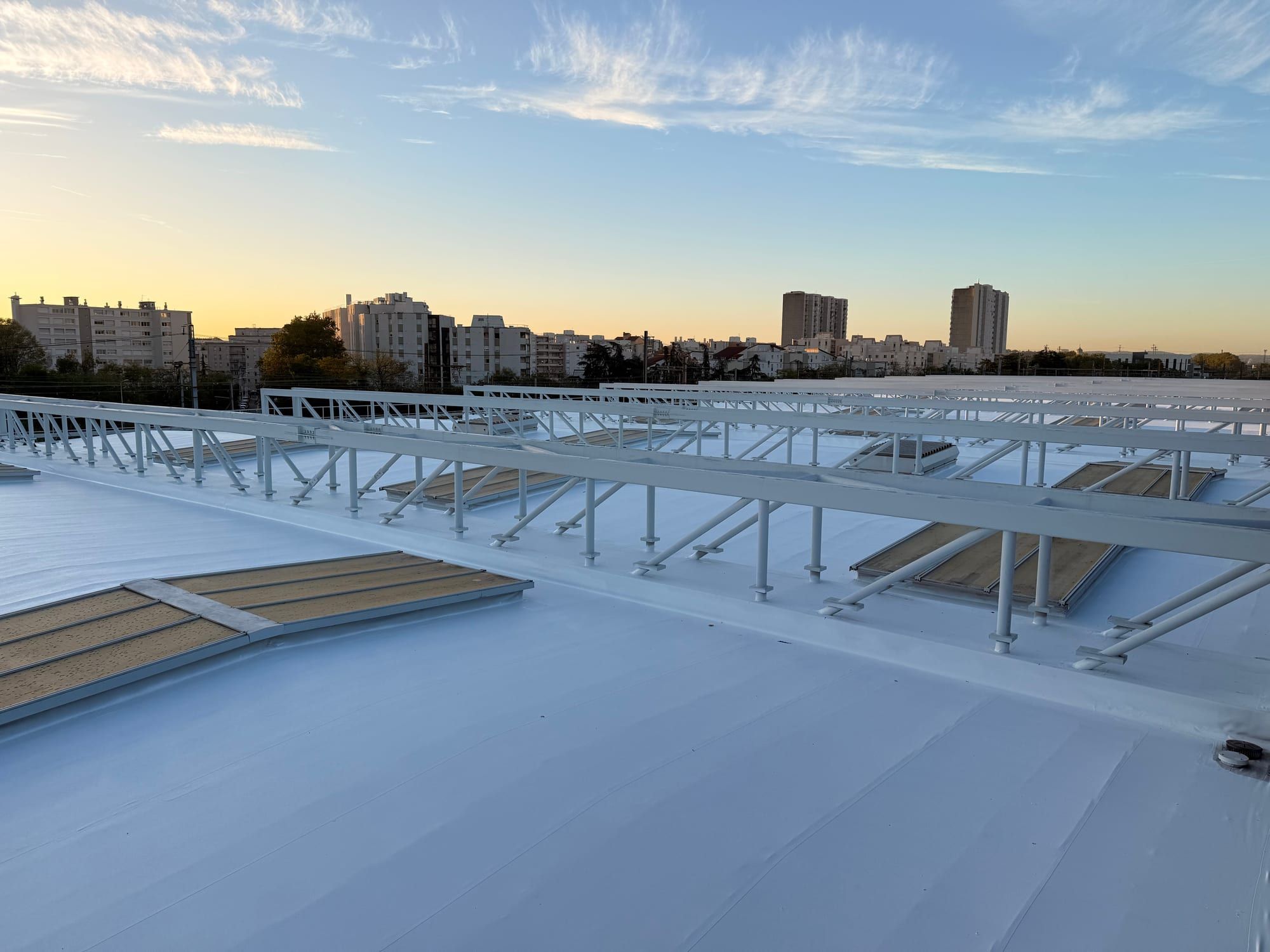
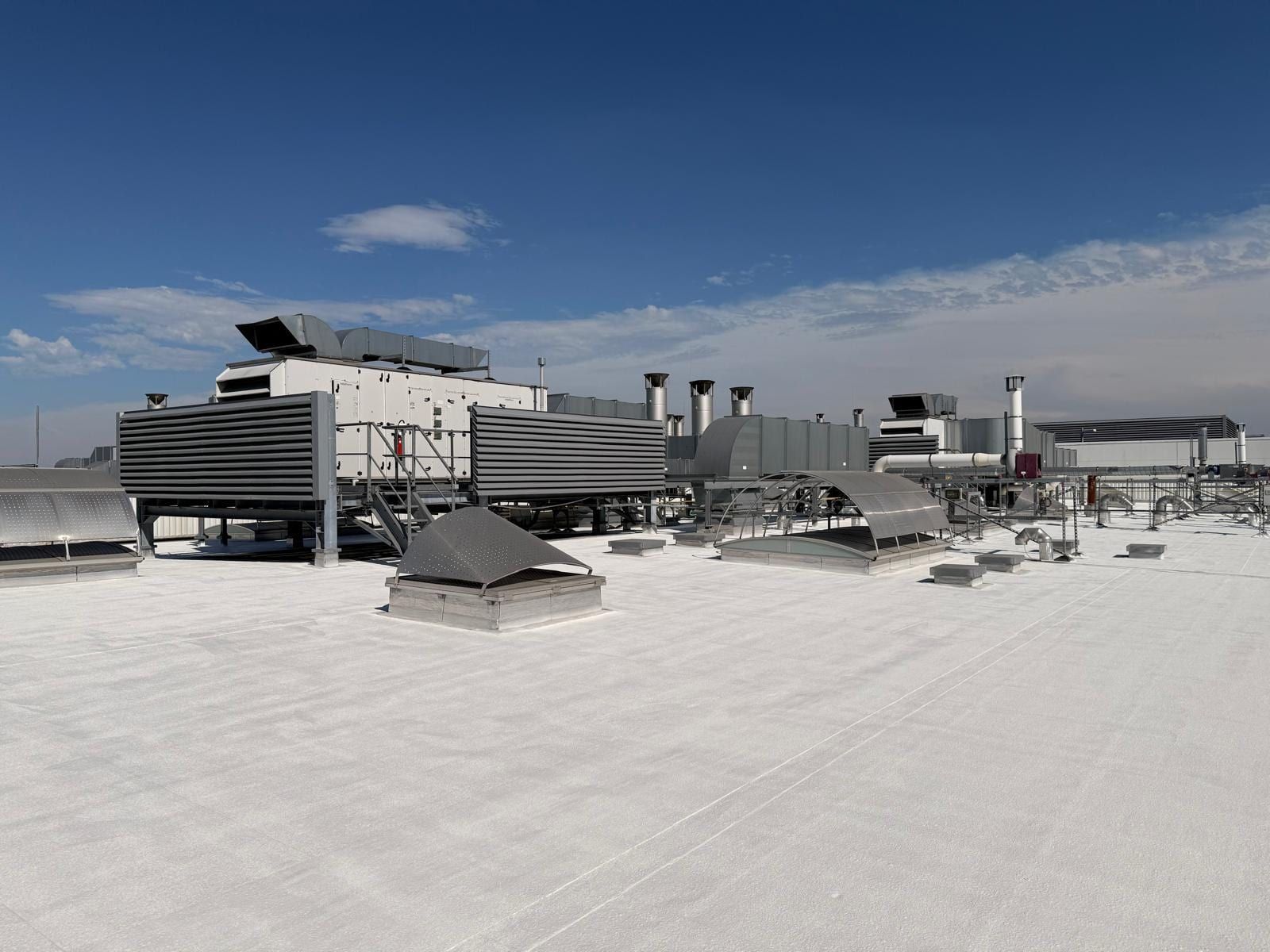
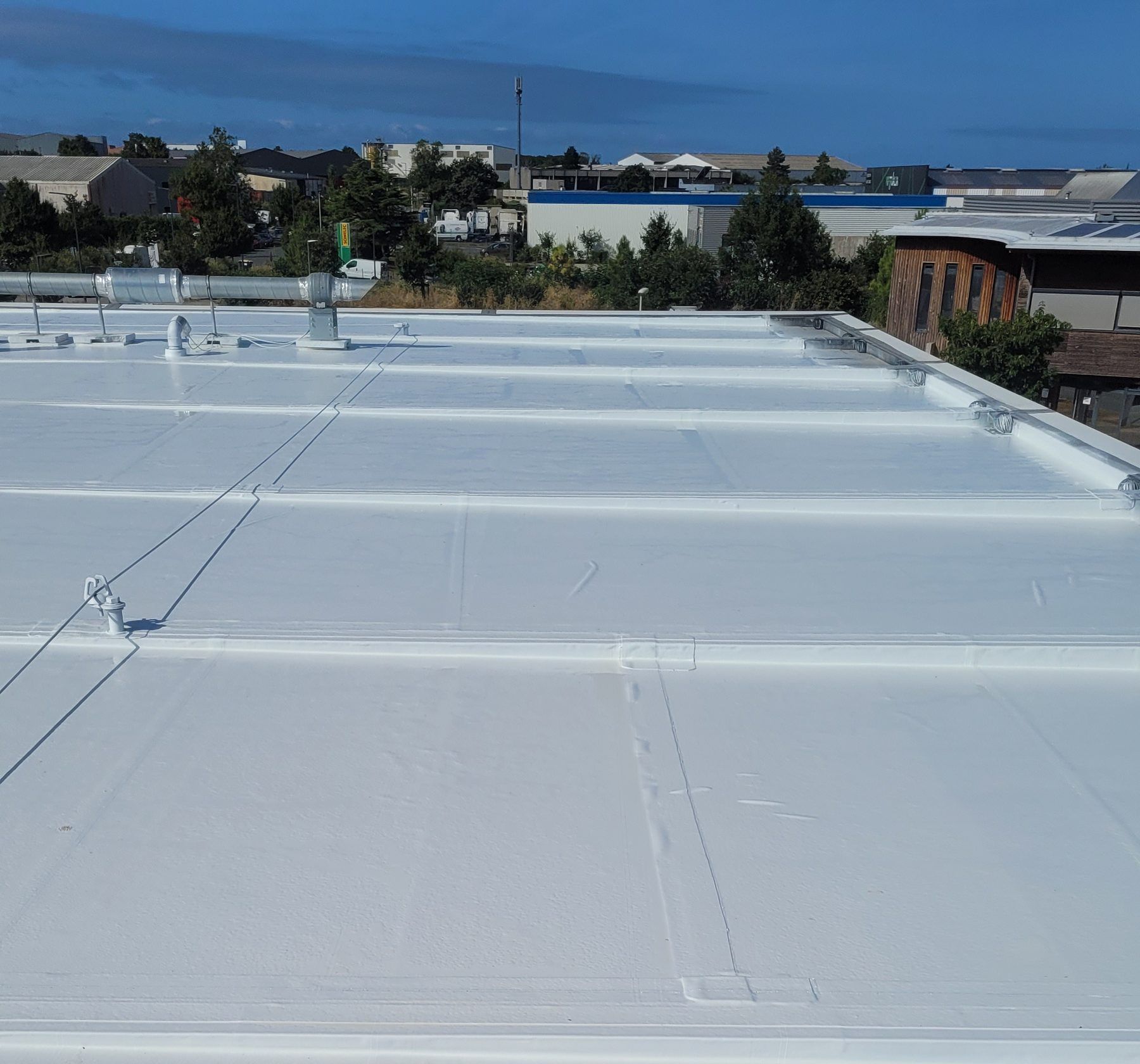
Hélios applies the PrimaTherm® system, made by Primacoating in La Rochelle, in 4 layers: PH169 primer suited to the substrate, PH107 reflective base coat in two passes, PH107TCL anti-soiling topcoat. The coating reflects 95 % of solar radiation (ASTM E903-12) with an emissivity of 0.89 and an SRI of 120, maintained at 119 after 4,000 hours of accelerated QUV ageing.
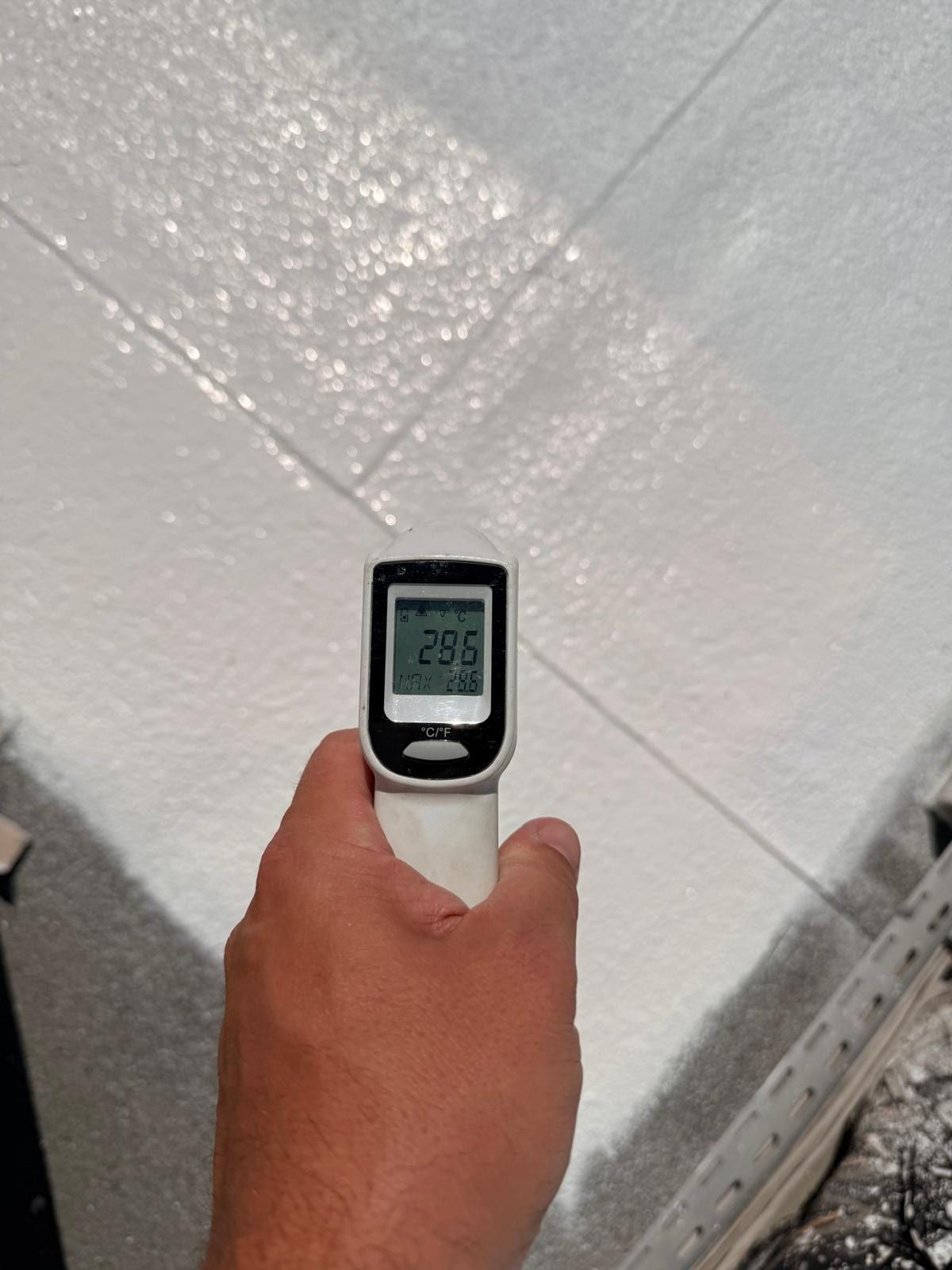
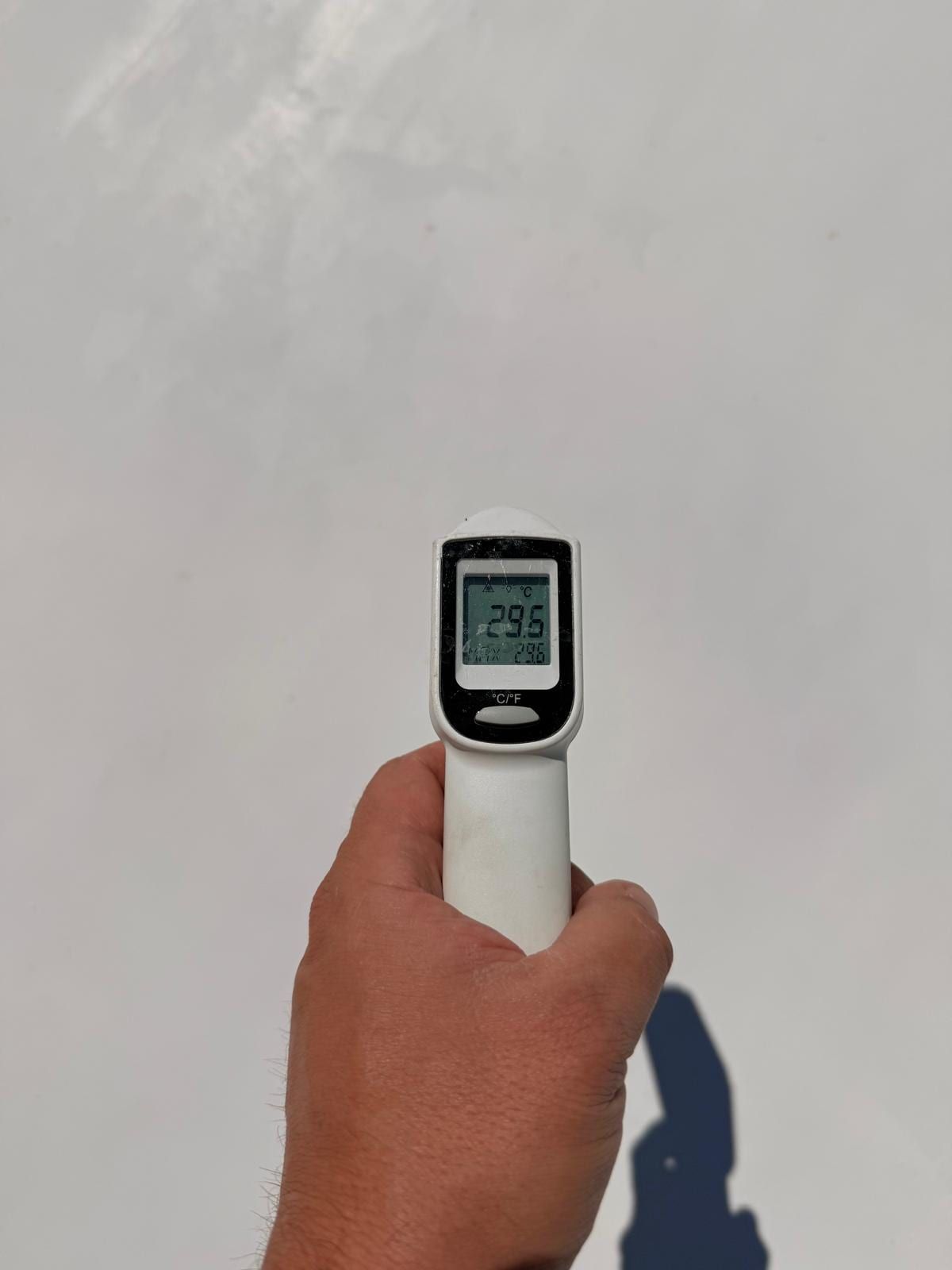
- Roof surface: up to −30 °C, from 50–70 °C down to 25–35 °C, measured with an infrared thermometer at handover.
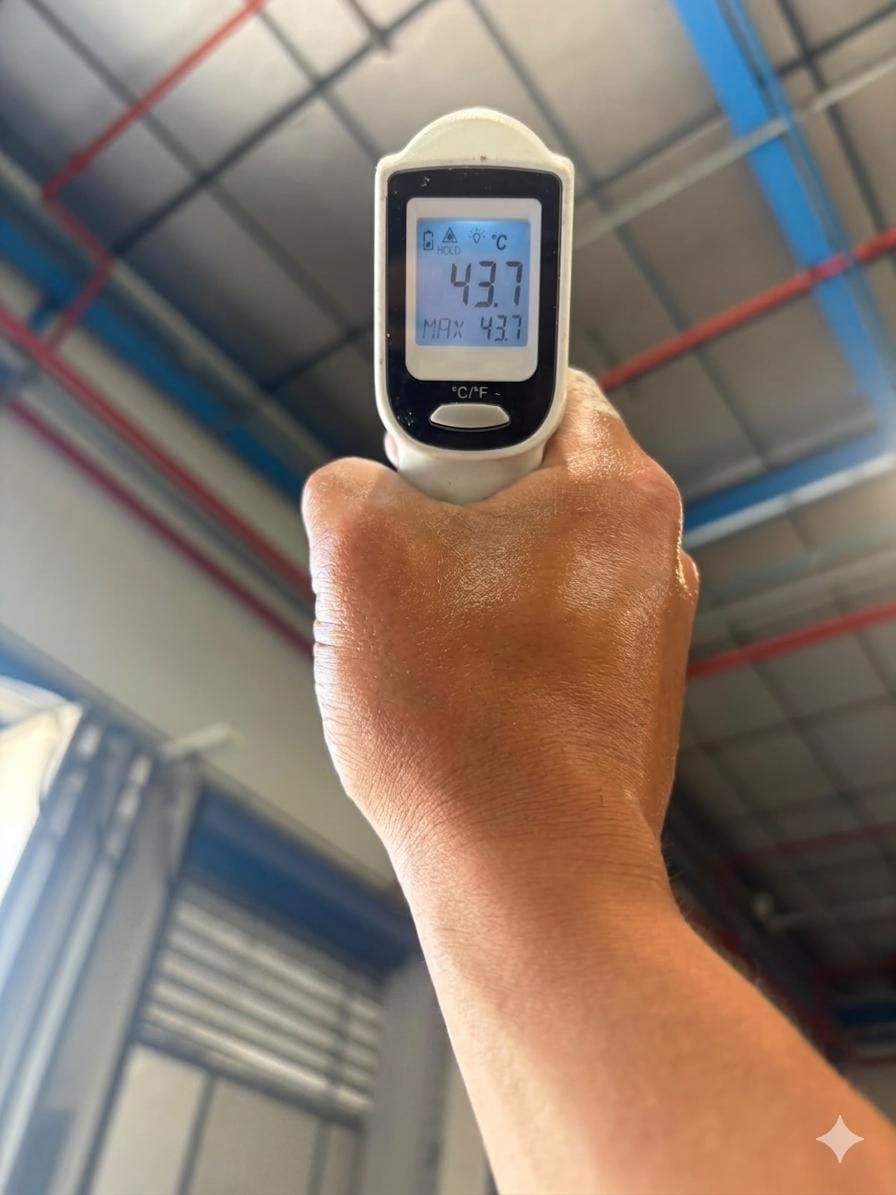
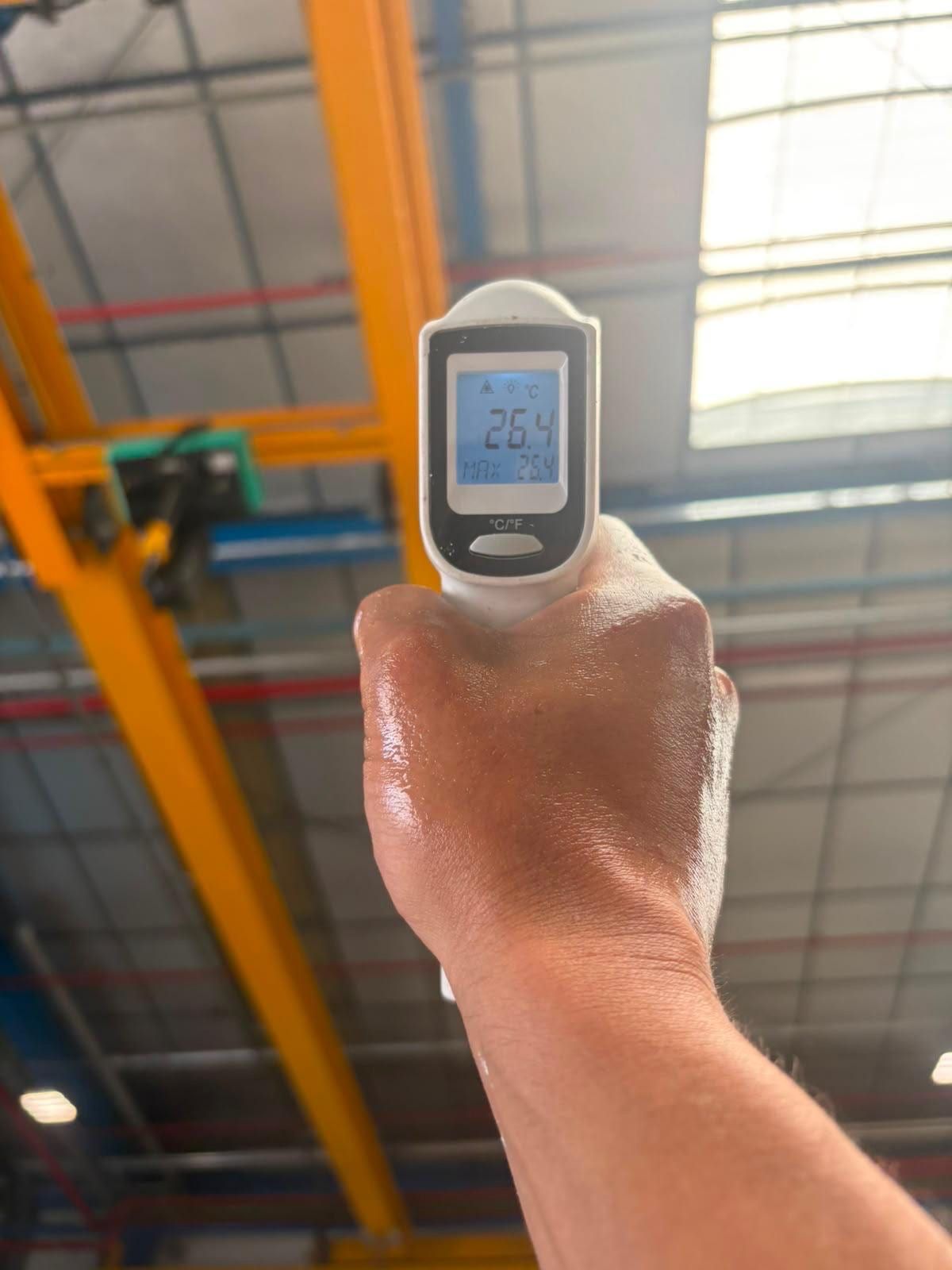
- Top floors: up to −6 °C felt under the roof depending on insulation and ventilation.
- Air conditioning: up to −40 % consumption on air-conditioned buildings in a hot zone, quantified in the study from your bills.
- Waterproofing: fewer thermal shocks on the membrane, hence a re-roofing pushed back.
Occupied offices: work that is invisible from the floors
Our teams install neither crane nor scaffolding. The drums and the airless pump stay on the ground in a cordoned-off area of a few square metres; only the hoses go up to the roof. The coating is water-based: no solvent, no odour in the corridors, no shutdown of the air handling units, whose intakes are protected during application. A 2,000 m² floor plate is treated in a few days, in coordination with the technical manager and the maintenance contractors.
The singular points of a commercial flat roof are covered in the protocol: parapets, waterproofing upstands, paving on pedestals, lifeline anchors, air-conditioning and ventilation plinths, rooflights. Technical walkway areas can receive an anti-slip finish.
French tertiary-sector decree, CEE, labels: what the cool roof brings to the file
The cool roof is an energy-sobriety action that can be declared in your Éco Énergie Tertiaire action plan: the drop in the air-conditioning load shows directly in the kWh declared on OPERAT. For offices heated and cooled by heat pump, the French CEE incentive, sheet BAT-EN-112 can apply, under conditions, with a scale of 160, 170 or 270 kWh cumac per m² depending on the climate zone. In an HQE Exploitation, BREEAM In-Use or LEED O+M approach, the reflective roof contributes to the summer comfort and heat island reduction credits: the details are in our guide cool roofs and environmental certifications (in French).
How a commercial property project unfolds with Hélios
- Free study within 48 h: satellite measurement of the flat roof, analysis of the substrate and the consumption, CEE pre-qualification.
- Technical visit: condition of the waterproofing, adhesion tests if necessary, survey of the singular points, prevention plan with the manager.
- Application in 4 layers, without lifting equipment, offices occupied, in phases if the building is multi-tenant.
- Documented handover: infrared measurements before/after, thickness checks, as-built file, ten-year liability certificate, maintenance plan.
Why Hélios for your commercial property portfolio
We apply the same system as on the hangars of Airbus Marignane, with the same checks. We turn down roofs whose waterproofing is at the end of its life and we say so from the visit. Every figure stated in our proposals comes from a test report or a site measurement, never from a catalogue. For a multi-site portfolio, we offer a roof audit prioritised by expected gain, in order to plan the work over several financial years.
Frequently asked questions
Do the offices have to be evacuated during the application?
No. The application takes place entirely on the roof, with no crane and no scaffolding: the drums and the pump stay on the ground in a cordoned-off area, only the hoses go up. The occupants notice neither building-site noise on the floors nor odour: the PrimaTherm® system is water-based. We coordinate access with the technical manager and avoid sensitive time slots.
Is my office building eligible for the French CEE incentive, sheet BAT-EN-112?
Under conditions. The sheet targets commercial-use tertiary buildings whose volume is heated and cooled by heat pump. Offices air-conditioned by reversible heat pump can come under this framework; a non-air-conditioned building cannot. The scale is 160, 170 or 270 kWh cumac per m² depending on French climate zone H1, H2 or H3. We check eligibility during the study and put the file together before the work is signed.
What gain can be expected in the top-floor offices?
On the roof surface, up to −30 °C: from 50–70 °C down to 25–35 °C. Inside, up to −6 °C felt under the roof depending on the existing insulation and the ventilation. On an air-conditioned floor, the gain shows mainly in consumption, up to −40 % on air conditioning in a hot zone. We quantify the range from your consumption readings.
Does the cool roof count for the French tertiary-sector decree?
Yes, as a consumption-reduction action declared on the OPERAT platform: the drop in the air-conditioning load translates into the measured kWh. It is not insulation and does not replace a complete action plan, but it is one of the fastest levers to implement on an existing building, without heavy work.
Bitumen flat roof, EPDM, PVC: which substrate is compatible?
Bitumen membrane and EPDM are our most common substrates. A PVC membrane is only treated if it was laid more than ten years ago, with a specific PH107PVC adhesion base. The diagnosis checks the condition of the waterproofing: the cool roof protects sound waterproofing, it does not repair waterproofing at the end of its life.
What about my roofing contractor’s warranty?
PrimaTherm® is a protective coating applied on the existing waterproofing; it does not pierce it and does not alter it. We supply the manufacturer’s technical opinion, our ten-year liability certificate for the application and an as-built file at handover. If your waterproofing is still under warranty, we inform the roofing contractor before the work.