Heat under the roof: the problem every general meeting puts off to next year
In an apartment building, summer discomfort is not shared out fairly. The top-floor flats, under a bitumen flat roof, receive all the heat the roof absorbed during the day and give it back at night. The other floors get by. As a result, a minority of co-owners ask for works, a majority cannot see why it should pay, and the subject comes back on the agenda every year without being settled. A cool roof changes the terms of the debate because it is not only a comfort solution for the top floor: it protects the waterproofing, a common part whose refurbishment everyone pays for.
Top floors, converted lofts, flat roofs
Under a flat roof from the 1960s to 1990s, often without summer insulation, the temperature in the flats exceeds 30 °C during a heatwave and stays above 26 °C at night. Bedrooms become unusable, elderly people and young children are exposed, tenants leave. Converted lofts under steel deck or zinc face the same constraint, with even lower thermal inertia.
Individual air conditioning, a false collective solution
The spontaneous answer is the individual air conditioner. It creates three problems: an outdoor unit on the façade or the roof terrace that alters the appearance of the building and generally requires authorisation from the general meeting, noise nuisance for the neighbours, and consumption that dumps into the street the heat removed from the flat. A co-ownership that lets air conditioners multiply ends up regulating them. Our comparison of cool roofs and air conditioning, published in French, puts the two options side by side.
Waterproofing, the item everyone dreads
A bitumen membrane that cycles between 20 and 70 °C every summer day cracks, blisters and comes away at the upstands. A complete waterproofing refurbishment is one of the heaviest votes in a co-ownership, often preceded by leaks into the top-floor flats. A roof that no longer exceeds 35 °C ages far more slowly: a cool roof pushes that deadline back, and that is the argument that interests the ground floor too.
What PrimaTherm® changes on an apartment building
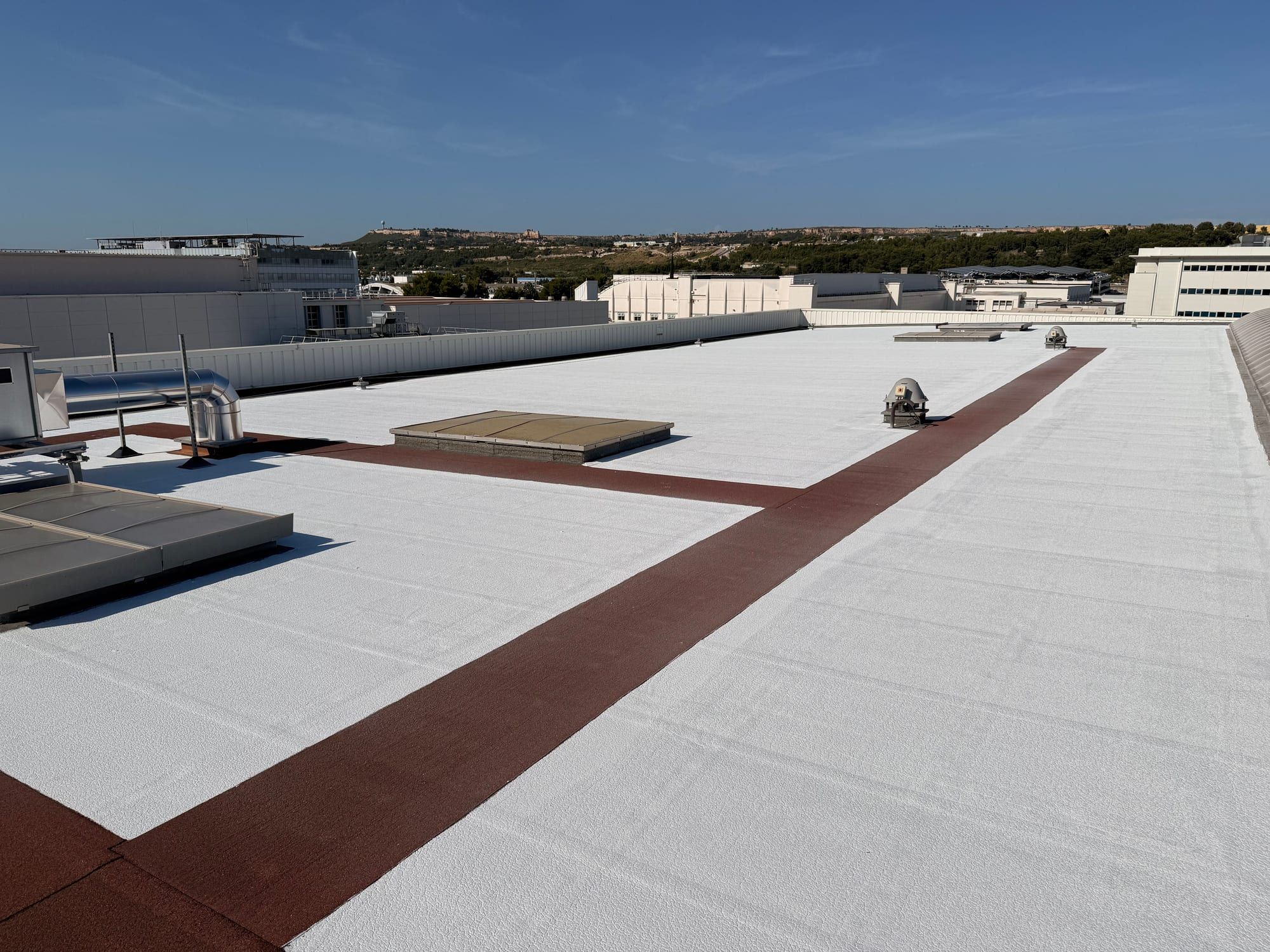
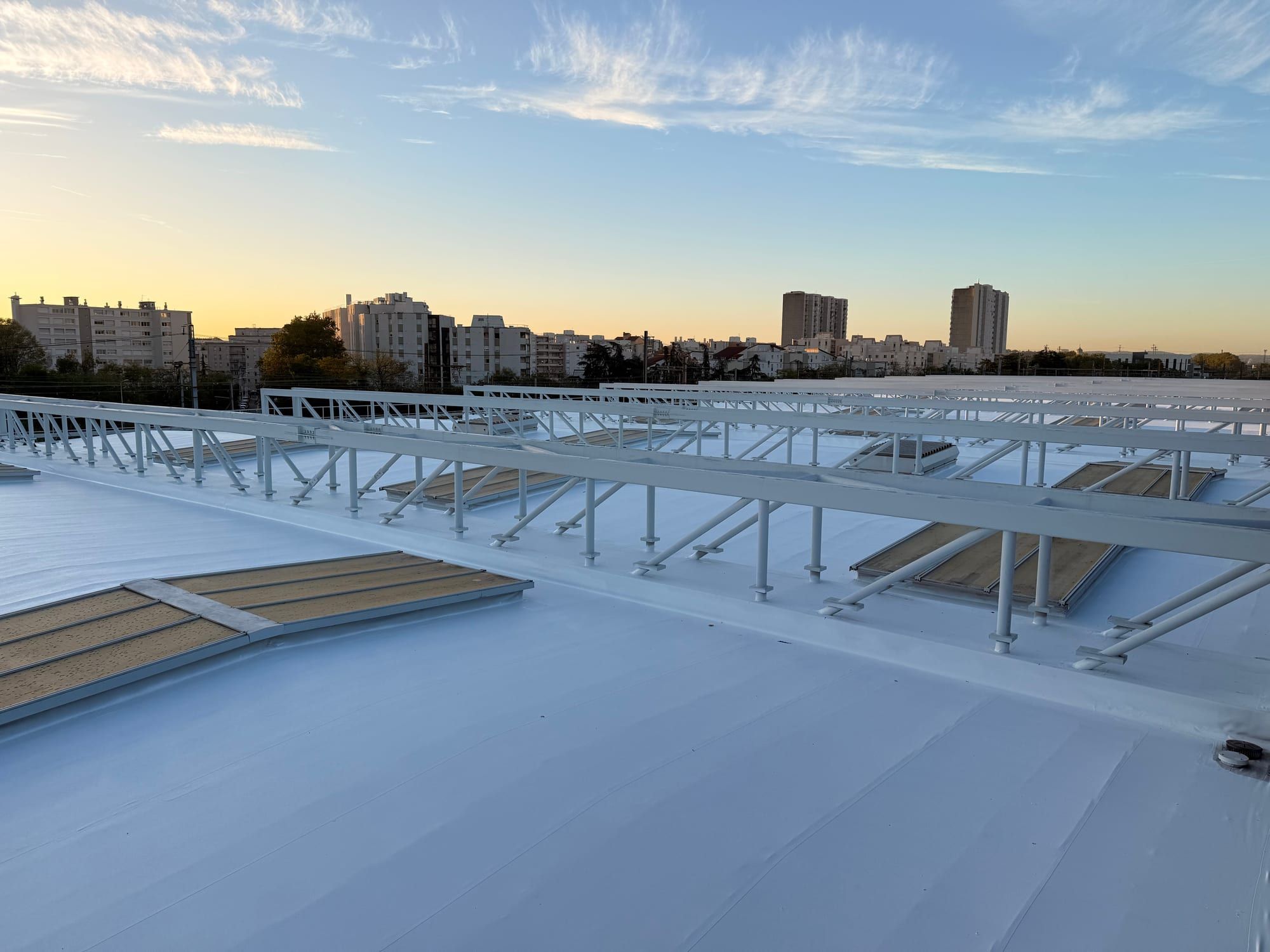
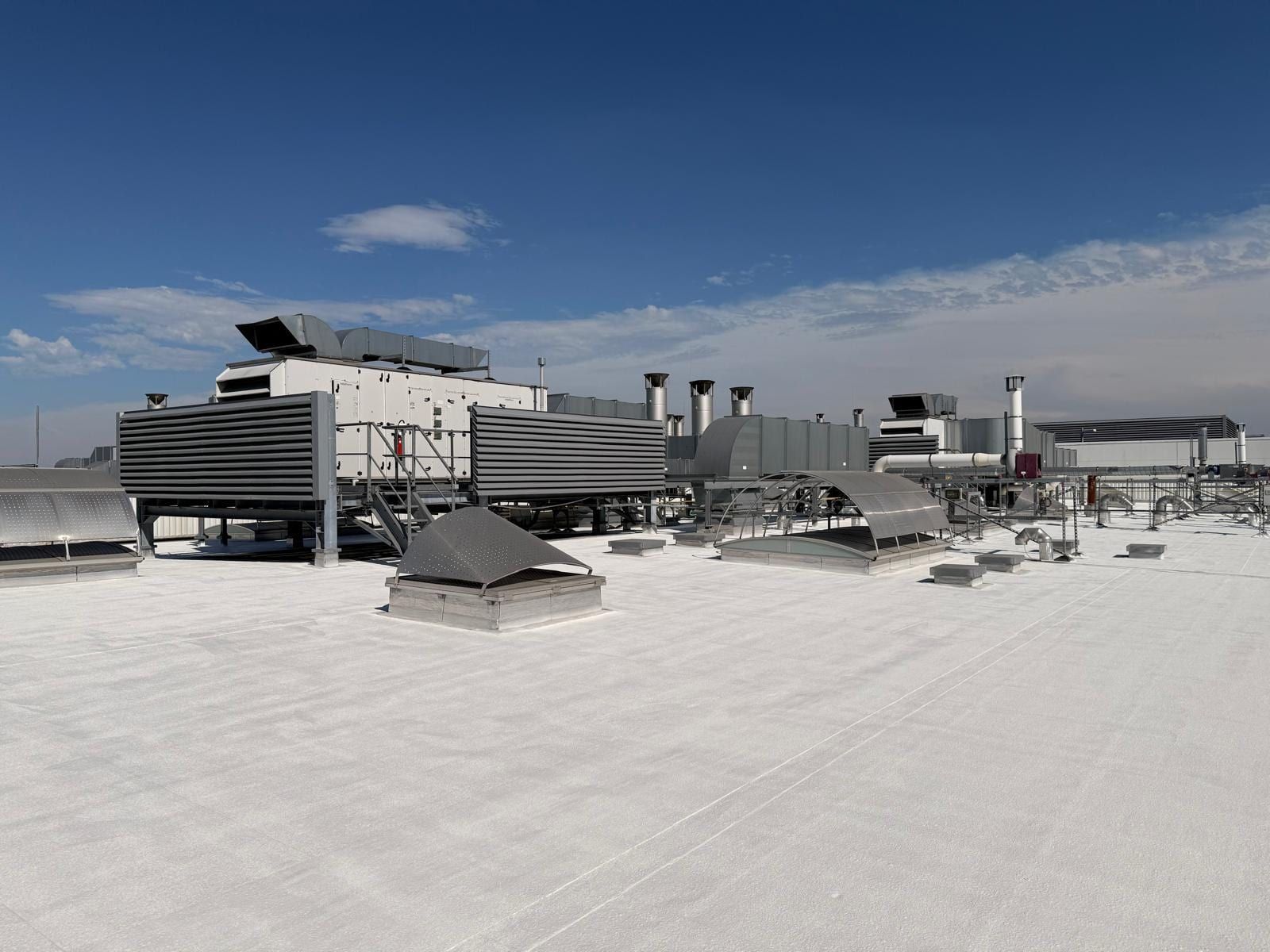
Hélios applies the PrimaTherm® system made in France by Primacoating: a water-based elastomeric coating, applied in 4 layers (PH169 primer, PH107 reflective base coat in two crossed passes, PH107TCL anti-soiling topcoat). Every value below comes from a test report that we attach to the quote presented at the general meeting.
| Characteristic | Value | Standard / report |
|---|---|---|
| Solar reflectance | 95 % | ASTM E903-12 |
| Thermal emissivity | 0.89 | ASTM C1371-15 |
| SRI (new) | 120 | ASTM E1980 (119 after ageing) |
| Durability | SRI maintained after 4,000 h QUV | conventional service life of 20 years (French CEE sheet) |
| External fire rating | Broof(t3) | EN 13501-5, CSTB report RA23-0010 |
On a residential building:
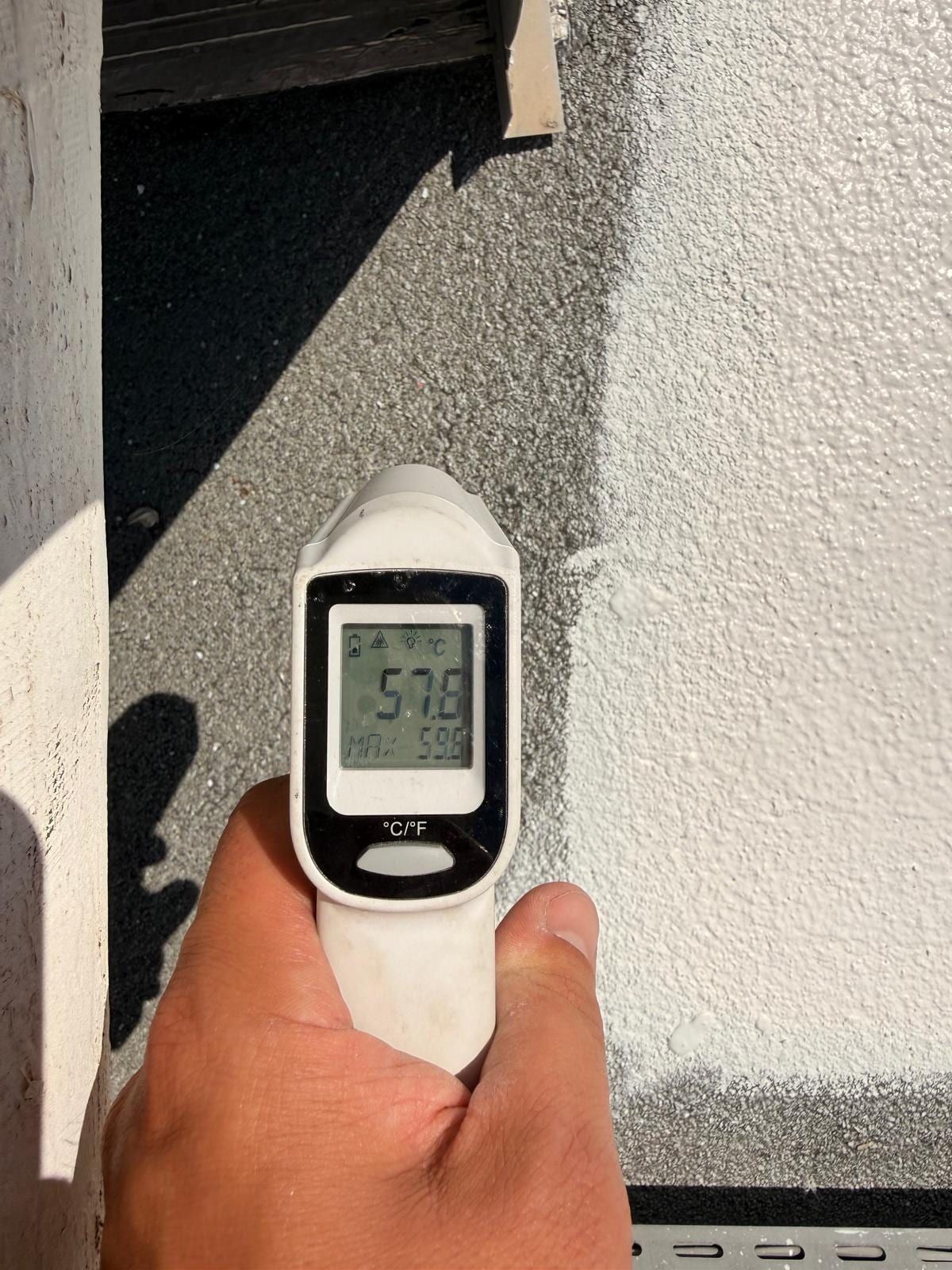
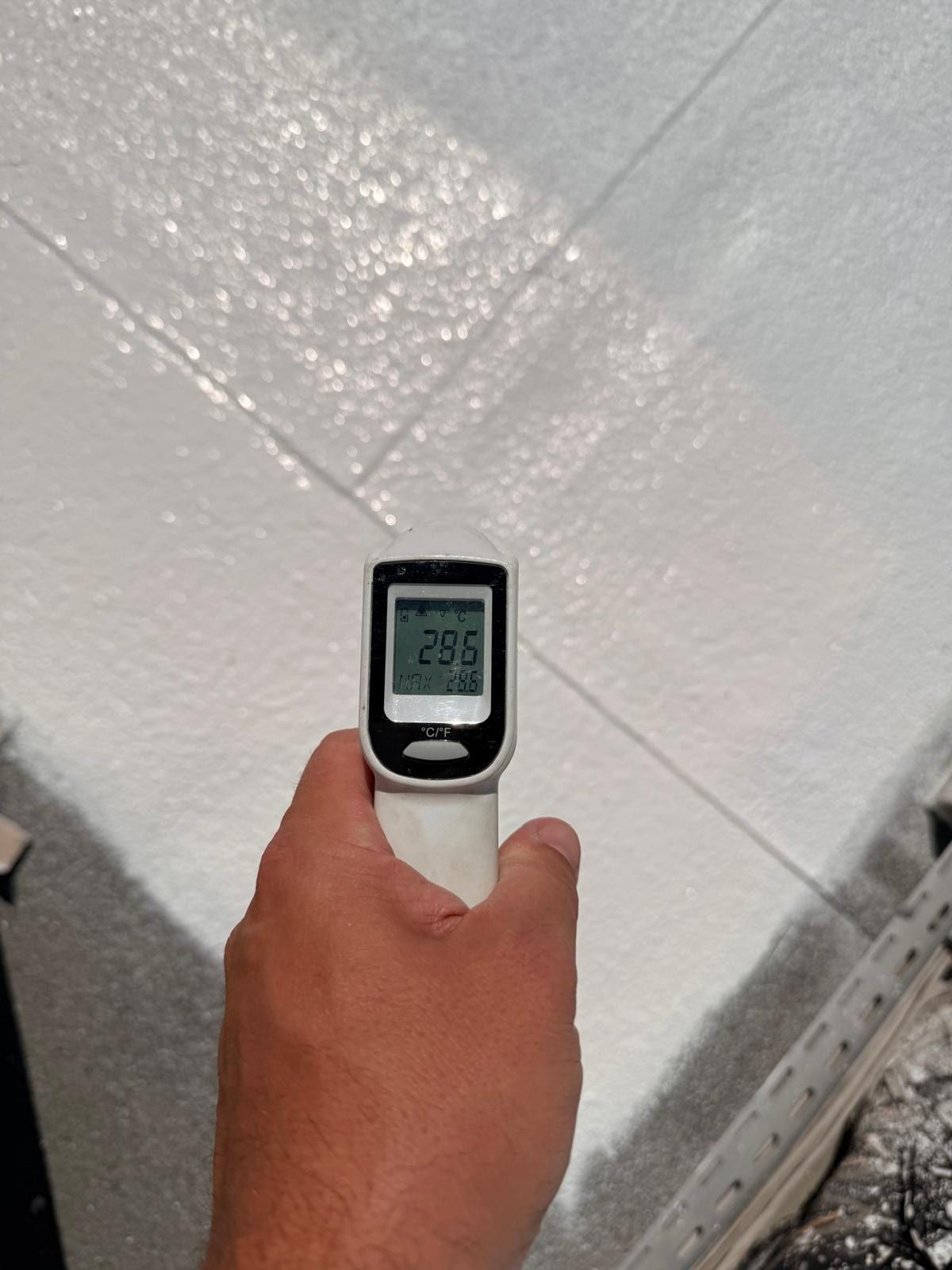
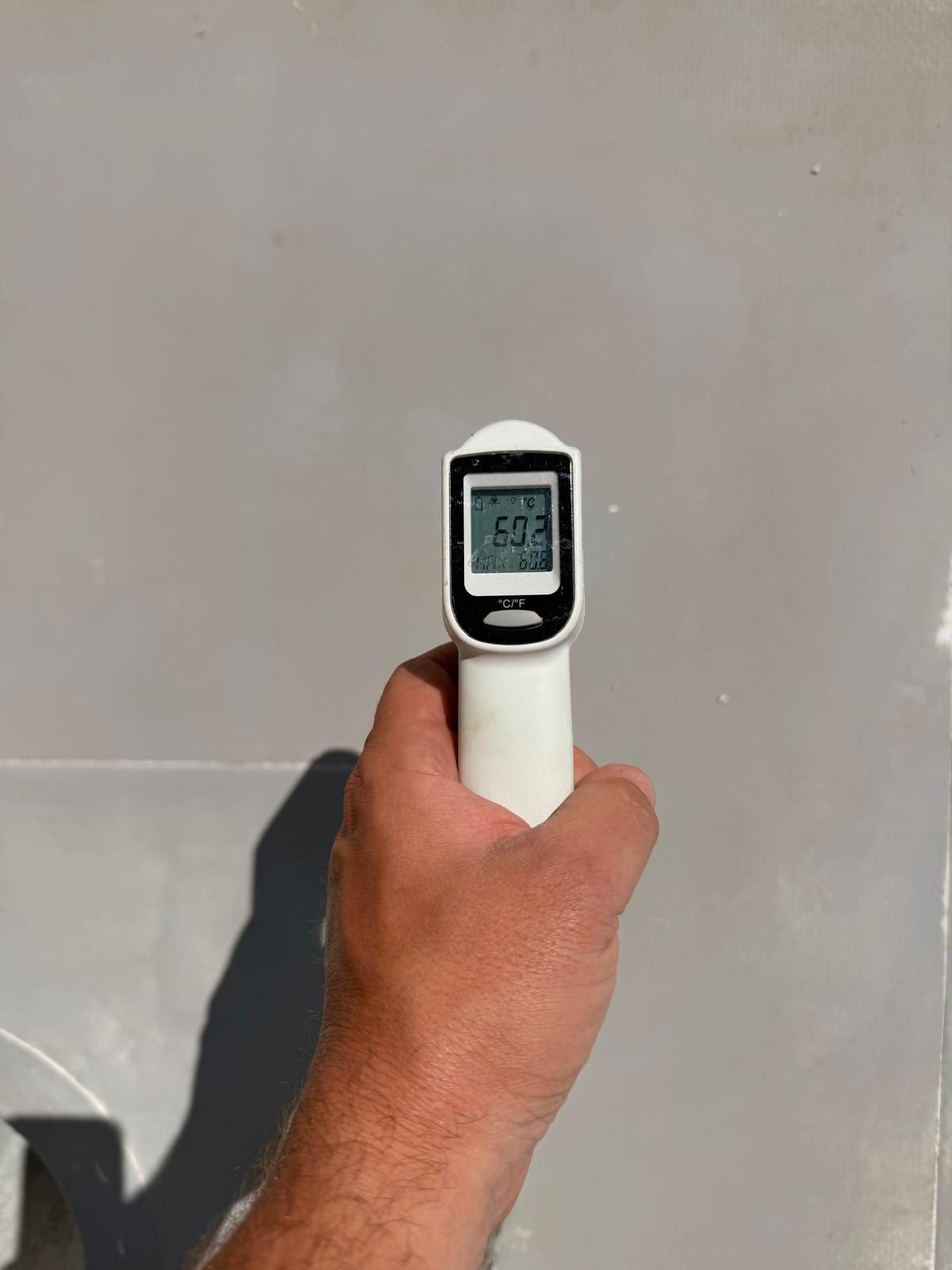
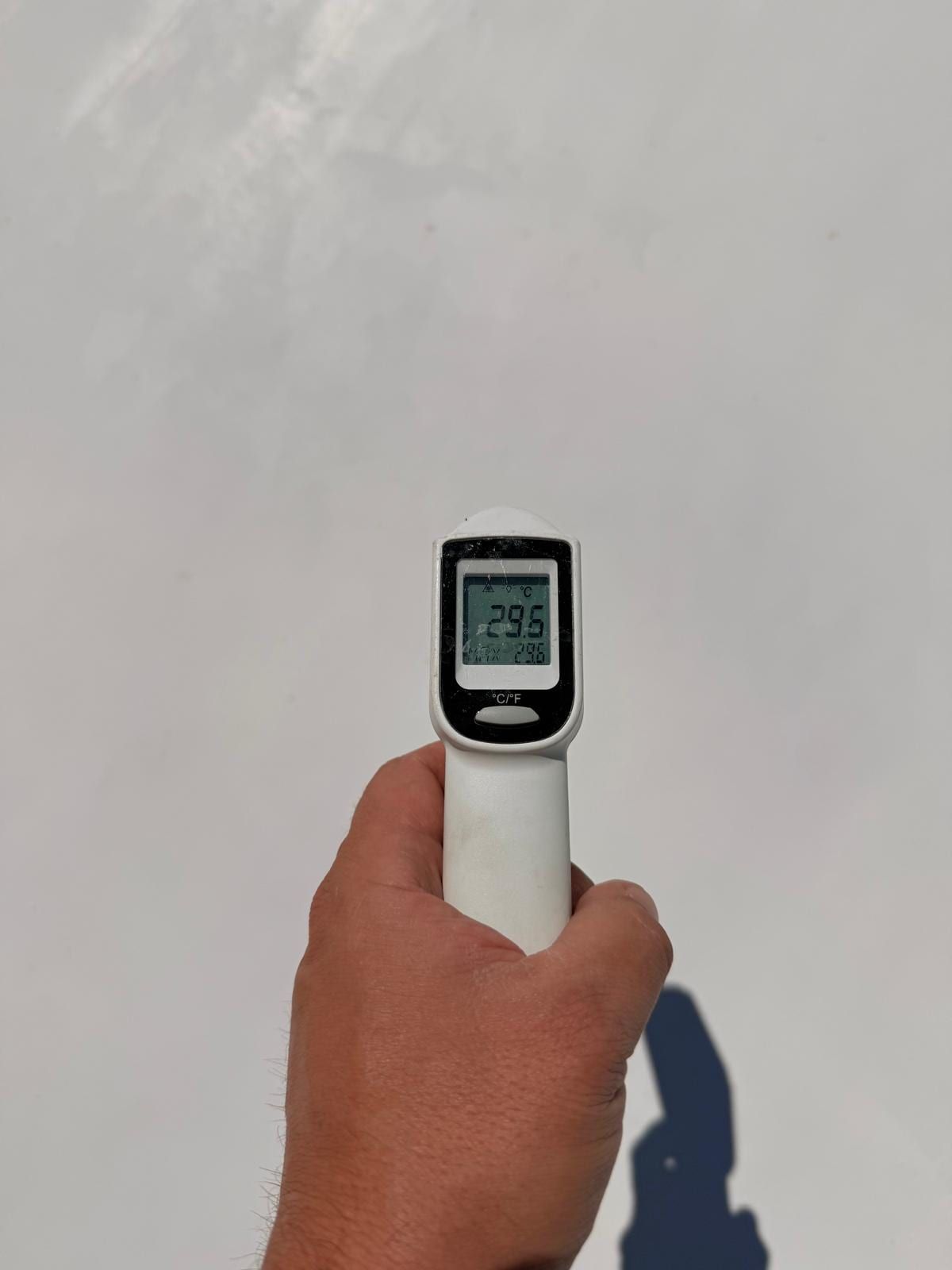
- up to −30 °C on the roof: from 50–70 °C to 25–35 °C;
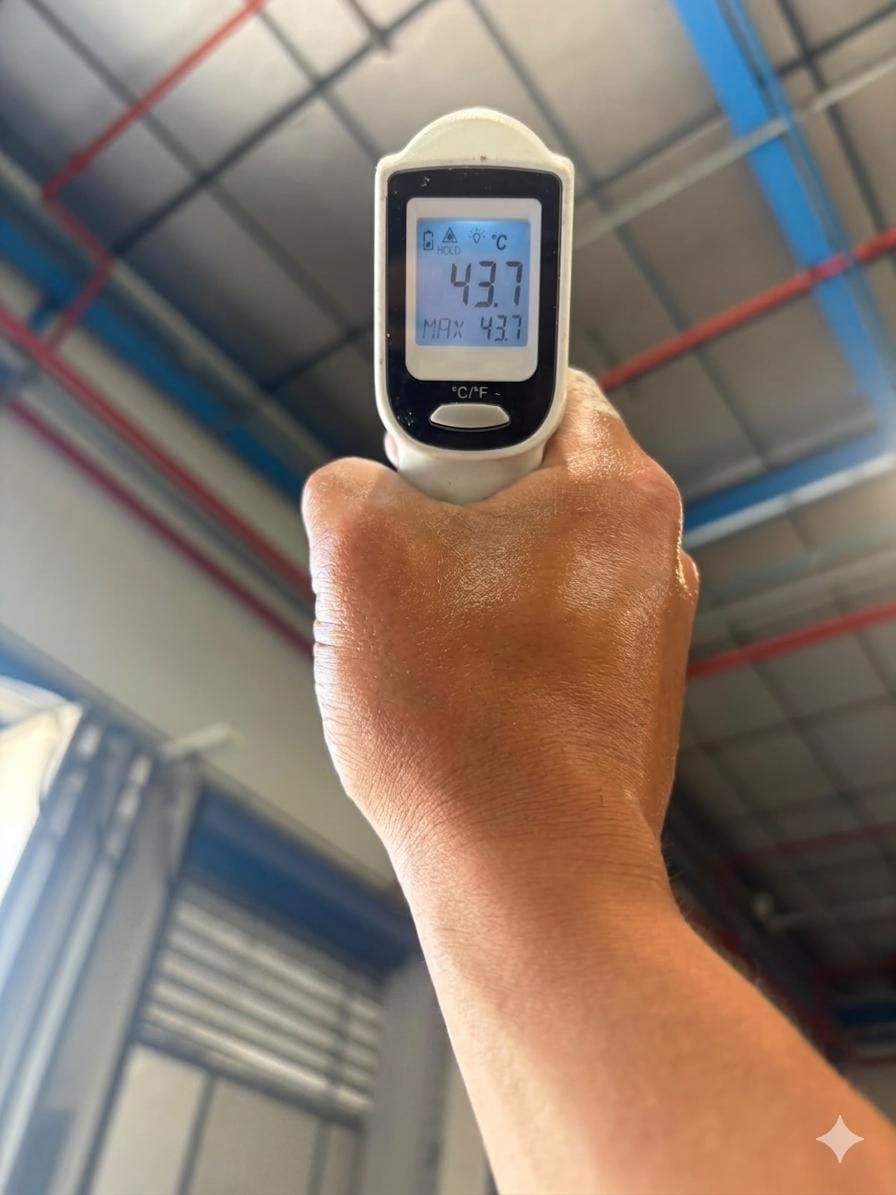
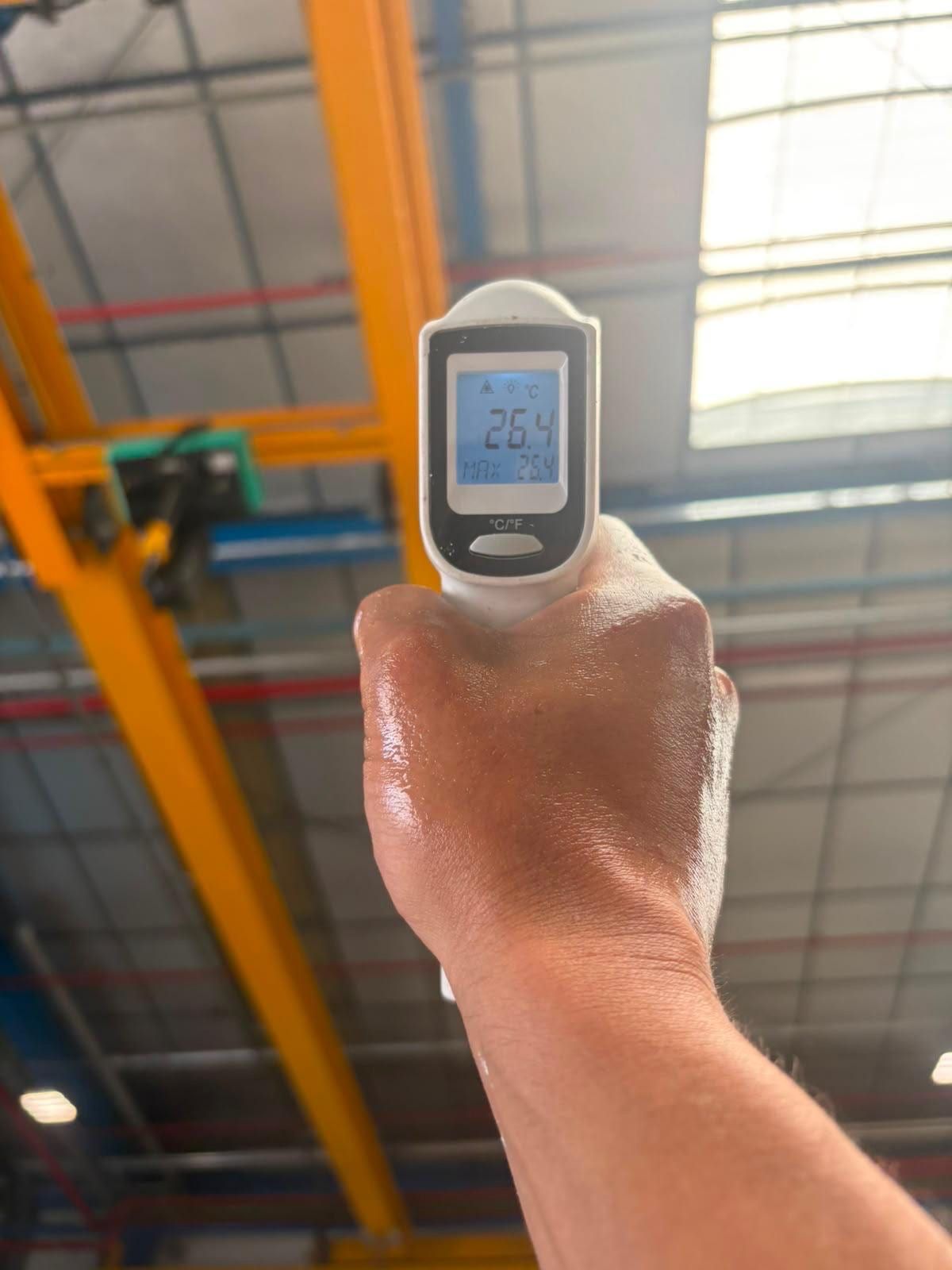
- up to −6 °C felt inside the top-floor flats depending on the insulation of the roof, and nights finally below 26 °C;
- waterproofing protected from UV and thermal shocks, with an elastic coating that complements the existing membrane;
- fewer individual air conditioners requested, hence fewer disputes between neighbours and over the façade;
- a contribution to the fight against the urban heat island: the roof sends the heat back to the sky rather than into the street. See cool roofs and urban heat islands.
What a cool roof does not do
We prefer to say it before the vote. A cool roof does not replace waterproofing at the end of its life: if the membrane leaks, it must first be repaired or replaced, and the coating is then applied to protect it. It does not insulate in winter: it is summer protection, complementary to insulation. And the French energy performance certificate (DPE), calculated with a conventional method, does not currently credit the reflectance of the roof: so we do not present a cool roof as a way of changing the rating, but as a gain in comfort, in charges and in the service life of the roof.
Getting the cool roof voted at the general meeting
The roof is a common part
Unless the by-laws say otherwise, the roof and its waterproofing are general common parts: the decision belongs to the general meeting, and the expense is shared according to the general co-ownership shares (tantièmes), not only among the top-floor co-owners. That is what makes the project fundable, and it is also why the argument of protected waterproofing counts as much as the comfort one.
Which majority, which procedure
Improvement works and energy-saving works fall under the absolute majority of article 25 of the French co-ownership law of 10 July 1965: a majority of the votes of all co-owners, present, represented or absent. If the project obtains at least one third of the votes without reaching that majority, article 25-1 allows an immediate second vote by the simple majority of article 24. The managing agent puts the resolution on the agenda, at the request of the owners’ council or of a co-owner, and attaches the essential terms of the quote to the notice of meeting. Above the competitive-tendering threshold set by the general meeting, several quotes are presented.
The file to attach to the notice of meeting
For a general meeting to vote in one sitting, it needs verifiable elements rather than a sales pitch: the itemised quote, the technical data sheets and test reports of the system (reflectance, emissivity, SRI, 4,000 h QUV ageing, Broof(t3) fire rating), the applicator’s ten-year insurance and professional liability certificates, the schedule and description of nuisance-free works, mention of the 10 % VAT rate and of the certificate to be signed, and the draft prior declaration. We provide all of it after the free roof study. Our article convincing the general meeting to vote for a cool roof (in French) gives a model resolution and the answers to the usual objections.
Funding: works fund and calls for funds
The mandatory works fund is intended for this type of operation; failing that, a call for funds shared according to the co-ownership shares, possibly spread over time, covers the expense. The cost depends on the area, the roof type, the preparation, the access and the applicable VAT rate: it exists only in the quote handed over after the study, and we do not publish a price list per m².
Incentives and tax: the 10 % VAT, and nothing else to expect
Let us be precise, because general meetings do not like bad surprises:
- 10 % VAT: the supply and application of a cool roof on a French residential building completed more than two years ago qualify for the reduced rate for improvement, conversion and maintenance works on homes, on a certificate signed by the managing agent. This is not the 5.5 % rate reserved for a closed list of energy-performance works, which does not include cool roofs.
- CEE bonus BAT-EN-112: no. This sheet targets commercial tertiary buildings heated and cooled by heat pump; collective housing does not qualify.
- MaPrimeRénov’ does not cover cool roofs, including its Copropriété strand, and we do not suggest otherwise to any general meeting.
- Local incentives: some French metropolitan areas and regions fund heat-adaptation actions in collective housing; we check what exists in the building’s municipality. The cool roof incentives 2026 page sums it up.
Prior declaration and planning rules
Turning a roof white alters the external appearance of the building: it generally means a prior declaration to the town hall under article R. 421-17 of the French planning code, filed by the managing agent on behalf of the owners’ association, with a one-month processing period (two months in a protected area, where the opinion of the French heritage architect is required). A flat roof invisible from the public space rarely raises a difficulty; local planning rules may, on the other hand, impose colours for visible roofs. We check the municipality’s rules and prepare the documents before the general meeting, so that the vote and the authorisation move forward in parallel.
Works on a co-owned building: no crane, no access to the flats
Application takes place exclusively on the roof. Our no-lifting method leaves the drums and the airless pump on the ground, in the courtyard or in a cordoned-off area; only the hoses go up through the roof access housing, the hatch or the caged ladder. No crane in the street, no road closure, no scaffolding on the façade, no passage through the flats. The product is water-based, solvent-free, low in VOCs: no odour in the common parts. Two to four days are enough for most buildings, within a weather window between 12 and 35 °C, relative humidity below 80 %, with no rain within 4 h of each coat.
The usual roof types on co-owned buildings:
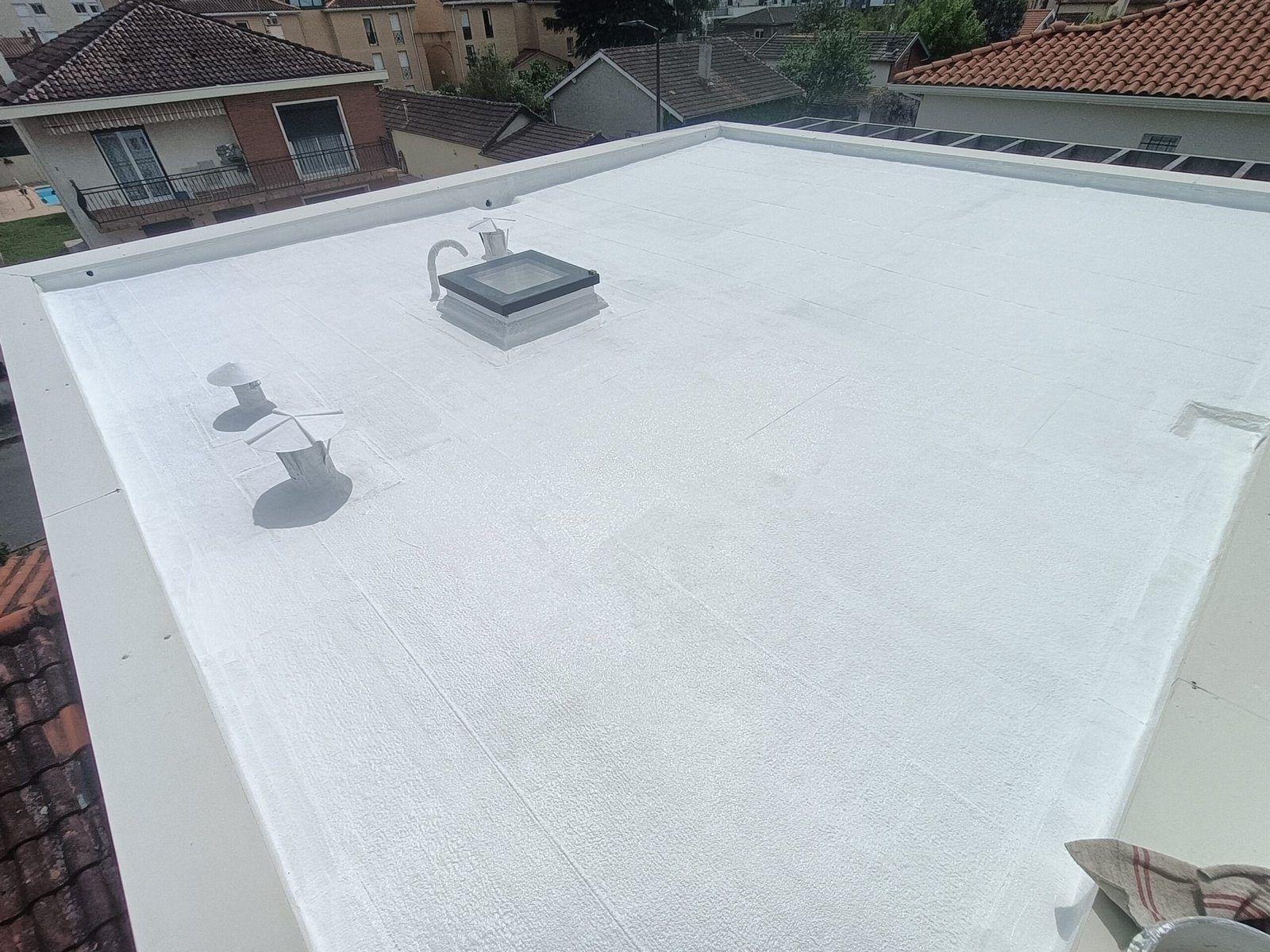
- Bitumen-membrane flat roof: the most frequent case, PH169 primer at 6 m²/L to block bitumen bleed-through. See cool roof on bitumen roofs.
- Accessible roof terrace: see cool roof on flat roofs.
- EPDM: compatible after an adhesion test.
- PVC membrane: only if laid more than 10 years ago, with the PH107PVC bonding base.
- Gravel-ballasted roof: to be studied case by case depending on whether the gravel can be cleared.
- Tiled or zinc roofs: cool roofs are first intended for flat roofs and steel decks; we will give you honest guidance.
Fibre cement is treated only when asbestos-free (buildings built after 1997).
How a cool roof project runs in a co-ownership
- Free study within 48 h: satellite measurement of the roof, nature of the roof type, first orders of magnitude, at the request of the managing agent or a member of the owners’ council.
- Technical visit: condition of the waterproofing and the upstands, access, adhesion tests if needed, planning check, itemised quote with the documents for the notice of meeting.
- Vote at the general meeting by the article 25 majority, then prior declaration.
- Preparation: cleaning at under 130 bar, anti-moss treatment, spot repairs to the waterproofing, 24 to 72 h drying.
- Application without lifting: primer, reflective base coat in two crossed passes, anti-soiling topcoat.
- Handover: thickness checks, before/after infrared measurements, as-built file handed to the managing agent, ten-year insurance, maintenance plan (low-pressure wash every 12 to 15 months).
The installation process is detailed step by step.
Small co-ownerships, flat-roofed houses: the shop
For a small building of a few units, a shared garage or a flat-roofed house, the online shop (in French) sells the same system as on our industrial projects, with the quantity calculation per m², the application guide and the conditions to respect, stated before purchase. A careful co-owner or a local tradesman can apply it. As soon as the area, the access or the requirement for ten-year insurance justify it, our teams take over.
The objections we hear at general meetings
- “It only concerns the top floor.” The waterproofing is a common part that everyone will pay for one day; protecting it concerns every share. And a building without air conditioners on the façade sells better on every floor.
- “A white paint does not last.” An off-the-shelf paint loses its whiteness within two seasons. PrimaTherm® reflects 95 %, keeps its SRI after 4,000 h of accelerated ageing and is applied in 4 layers under a controlled protocol.
- “We will lose heat in winter.” The low sun hits the façades, not the roofs; the loss of winter solar gain is marginal compared with summer comfort. See cool roof in winter.
- “We should insulate instead.” Insulating a flat roof from the outside is a heavy operation; a cool roof costs a fraction of that project, is applied in a few days and combines with insulation where it exists.
- “Who maintains it?” A low-pressure wash every 12 to 15 months, which can be included in the roof maintenance contract.
Buildings concerned
- Flat-roofed apartment blocks from the 1960s to 1990s, bitumen, without summer insulation.
- Residences with converted lofts under steel deck or membrane.
- Small blocks and flat-roofed town houses, including through the shop.
- Holiday residences and co-owned hotels: see cool roof for hotels and restaurants.
We work throughout France from Saint-Laurent-d’Agny, south of Lyon: within the day on the co-owned buildings of the metropolitan area and the region (Lyon, Villeurbanne and the Rhône, Grenoble, Saint-Étienne), with a team accommodated on site for buildings on the coast and in the large cities (Marseille, Nice, Montpellier, Paris). The cool roof simulator (in French) gives in two minutes a first order of magnitude of your roof’s potential, to present to the owners’ council.
Frequently asked questions
What majority is needed to vote a cool roof at a general meeting?
The roof is a common part: the decision belongs to the general meeting of co-owners. Improvement works and energy-saving works fall under the absolute majority of article 25 of the French co-ownership law of 10 July 1965 (a majority of the votes of all co-owners). If the project gathers at least one third of the votes without reaching that majority, the article 25-1 bridge allows an immediate second vote by simple majority. The quote and its essential terms must be attached to the notice of meeting.
What temperature gain in the top-floor flats?
On the roof, up to −30 °C on the surface (from 50–70 °C to 25–35 °C; −29 °C measured by infrared at the handover of a 5,900 m² project in 2026). In the flats, the gain depends on the insulation of the flat roof: up to 4 to 6 °C felt under a slab with little or no insulation, 1 to 3 °C if the loft or the roof is insulated. In every case, the heat radiated by the ceiling, the most unpleasant at night, disappears.
Does a cool roof on a co-owned building qualify for the CEE bonus or MaPrimeRénov'?
No. The French CEE sheet BAT-EN-112 targets air-conditioned commercial tertiary buildings; a residential building does not qualify. MaPrimeRénov' does not cover cool roofs, including MaPrimeRénov' Copropriété. The real lever is fiscal: supply and application qualify for the reduced 10 % VAT on a French home completed more than two years ago, on a certificate signed by the managing agent. The mandatory works fund can finance the operation.
Is planning permission needed to turn the roof white?
Generally yes: changing the colour of a roof alters the external appearance and requires a prior declaration to the town hall (article R. 421-17 of the French planning code), filed by the managing agent on behalf of the owners' association. In a protected area, the opinion of the French heritage architect (Architecte des Bâtiments de France) is required. A flat roof invisible from the street rarely raises a problem; we check the local planning rules and prepare the declaration documents.
Do the works disturb the occupants?
Very little. Application takes place on the roof, with no access to the flats. Our no-lifting method leaves the drums and the pump on the ground, in the courtyard or in a cordoned-off area; only the hoses go up through the roof access housing or hatch. No crane, no road closure, no scaffolding. The product is water-based, low in VOCs: no odour in the flats. Two to four days are enough for most buildings.
And for a small co-ownership or a flat-roofed house?
Below a few hundred m², the online shop (in French) sells the PrimaTherm® system with the quantity calculation per m², the application guide and the conditions to respect (12 to 35 °C, dry and sound surface, no rain within 4 h). A handy co-owner or a local tradesman can apply it. Above that, or if the general meeting wants ten-year insurance and an as-built file, our teams step in.