The roof, first thermal load of a pharmaceutical site
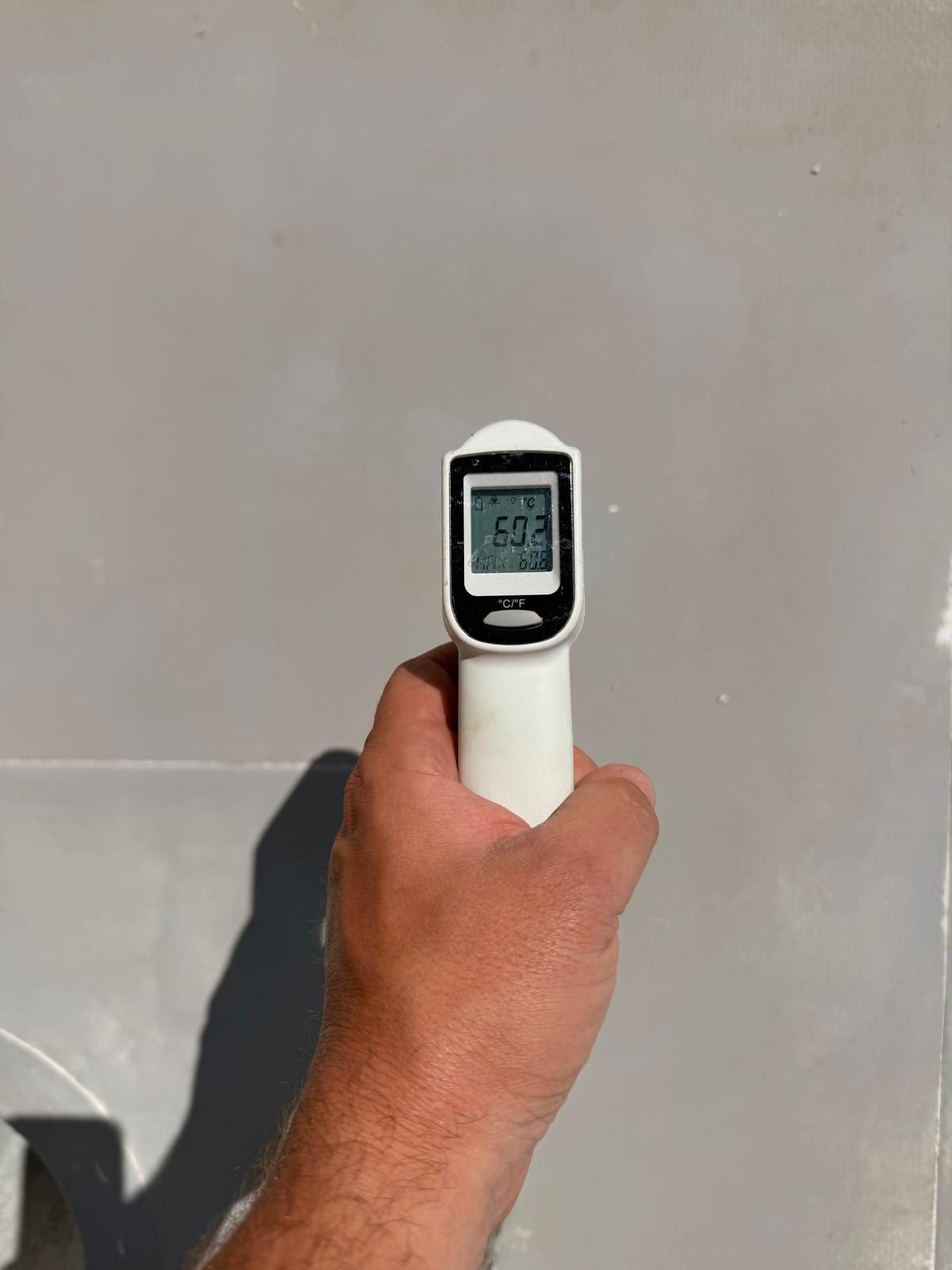
A pharmaceutical or cosmetics site is a controlled building: temperature, humidity, pressures and filtration are held within narrow, documented and audited ranges. In summer, the flat roof or the steel deck exceeds 60 °C on the surface and transmits that heat to the volumes below. The setpoint does not move; it is the chillers, the air-handling units and the cooling coils that compensate, at the cost of consumption that soars at the most expensive hours.
GDP stores and stratification
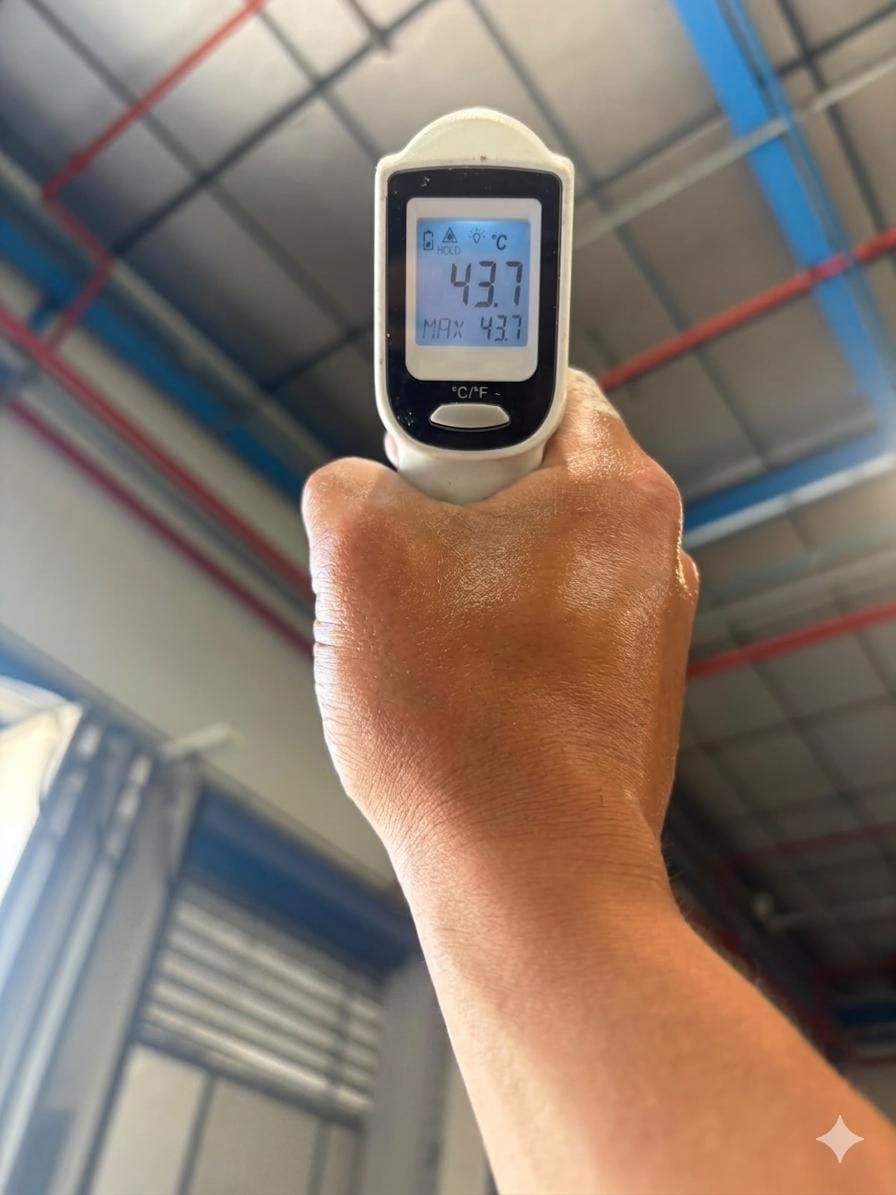
In racked warehouses, the heat rises and stratifies: the upper levels are the first to leave the 15–25 °C range. A sensor alarm triggers an investigation, sometimes a quarantine, and always quality time.
Any work must stay outside
Any action on the envelope that would open an area, generate dust or force a requalification costs more than the work itself. The cool roof is one of the few energy-efficiency actions carried out entirely outside, following an application protocol identical to the one used on our industrial projects.
What the PrimaTherm® system changes
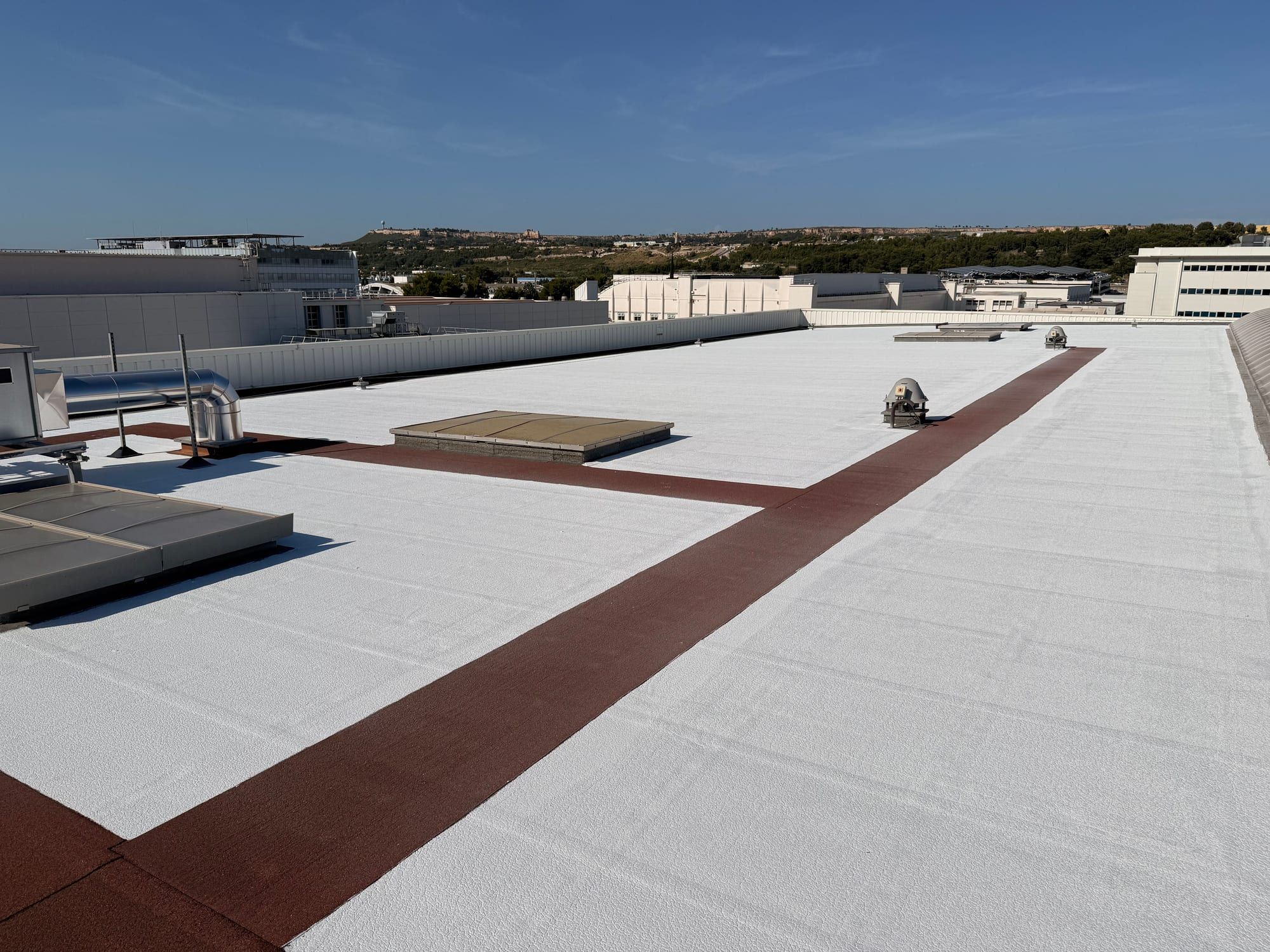
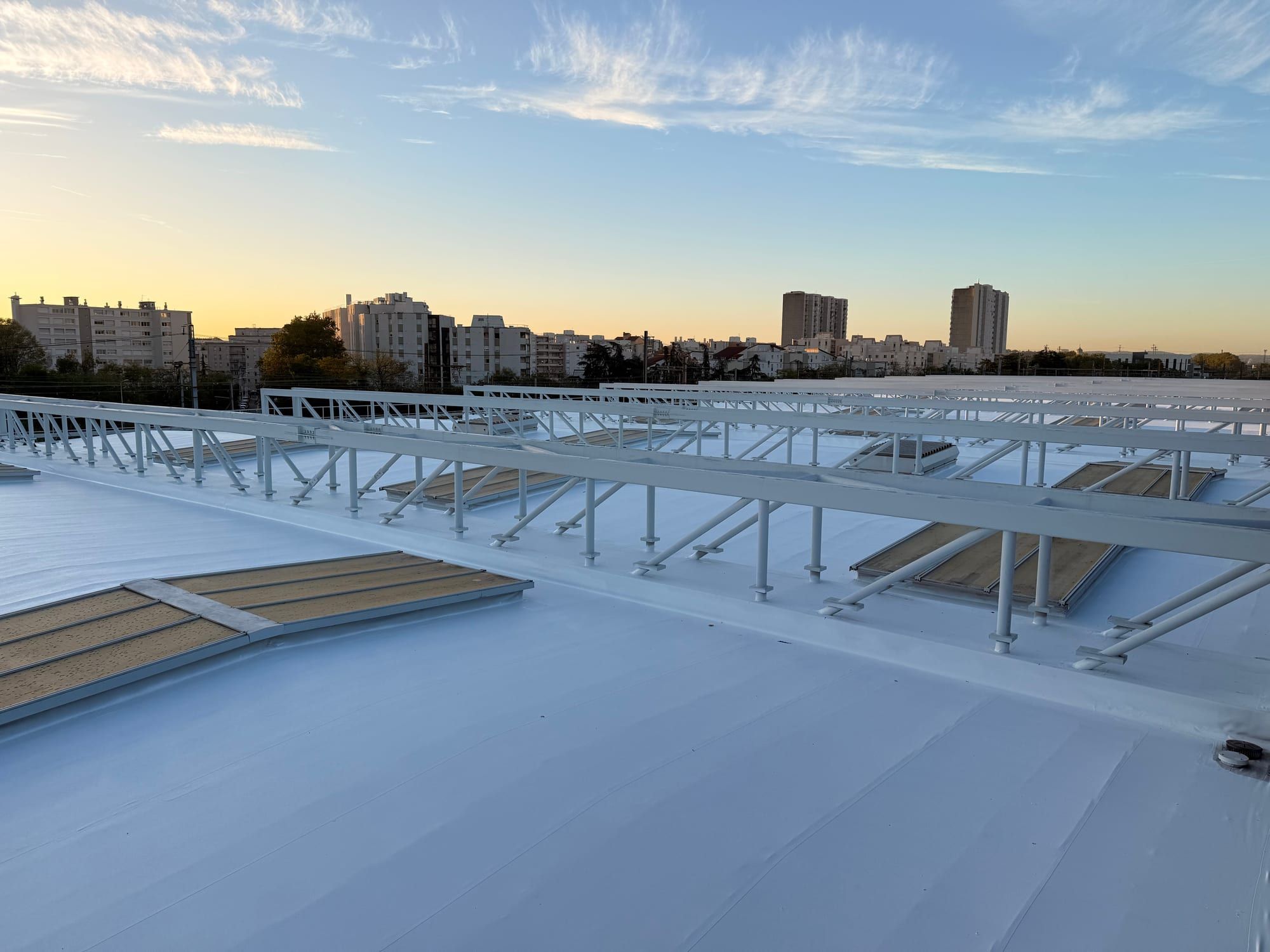
Hélios applies the PrimaTherm® system in 4 layers: PH169 primer suited to the substrate, PH107 reflective base coat in two passes, PH107TCL anti-soiling topcoat. It reflects 95 % of solar radiation (ASTM E903-12), with an emissivity of 0.89 and an SRI of 120, maintained at 119 after 4,000 hours of accelerated QUV ageing. Water-based and solvent-free, it has a Broof(t3) fire rating (CSTB report RA23-0010).
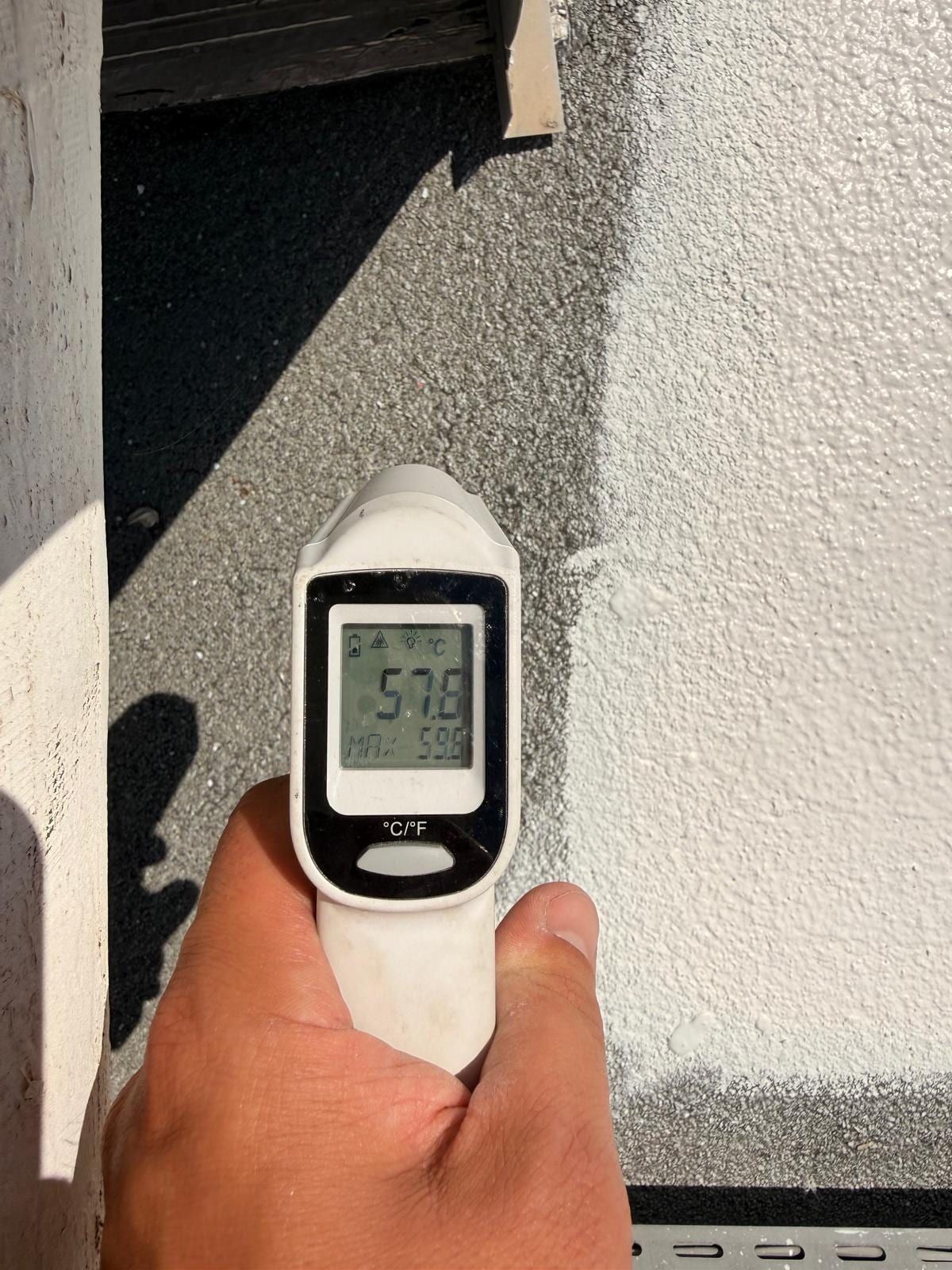
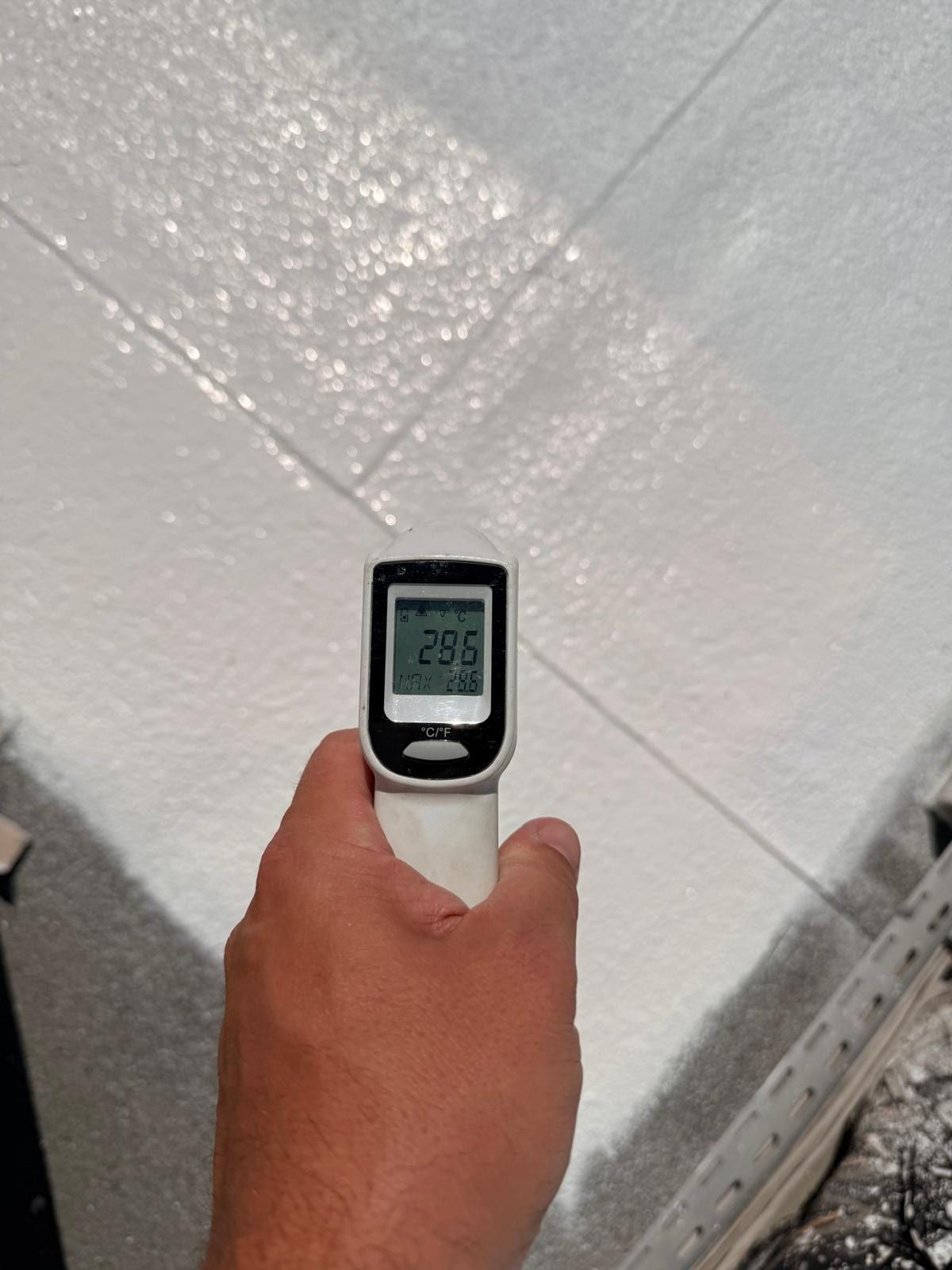
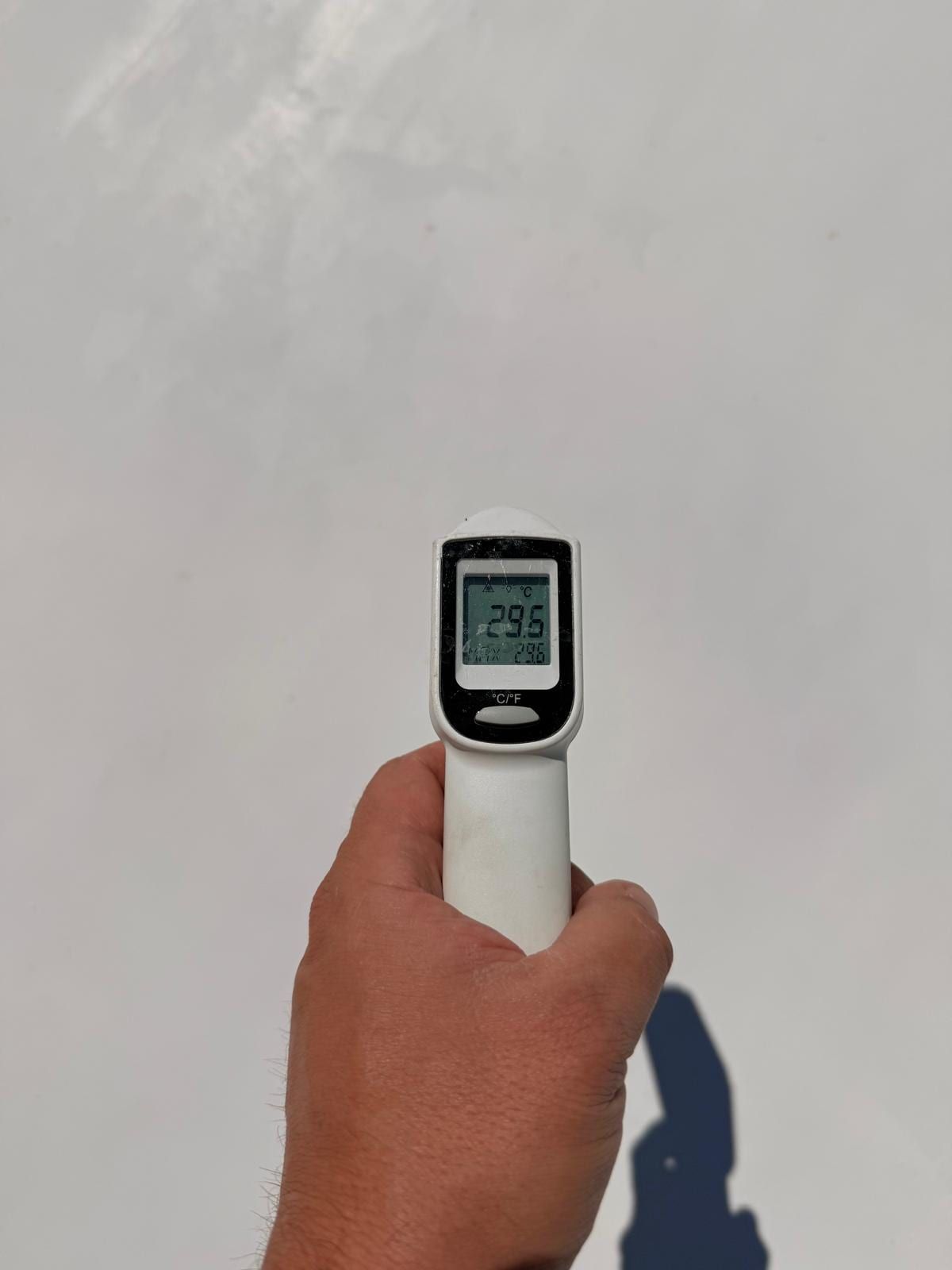
- Roof surface: up to −30 °C, measured with an infrared thermometer at handover.
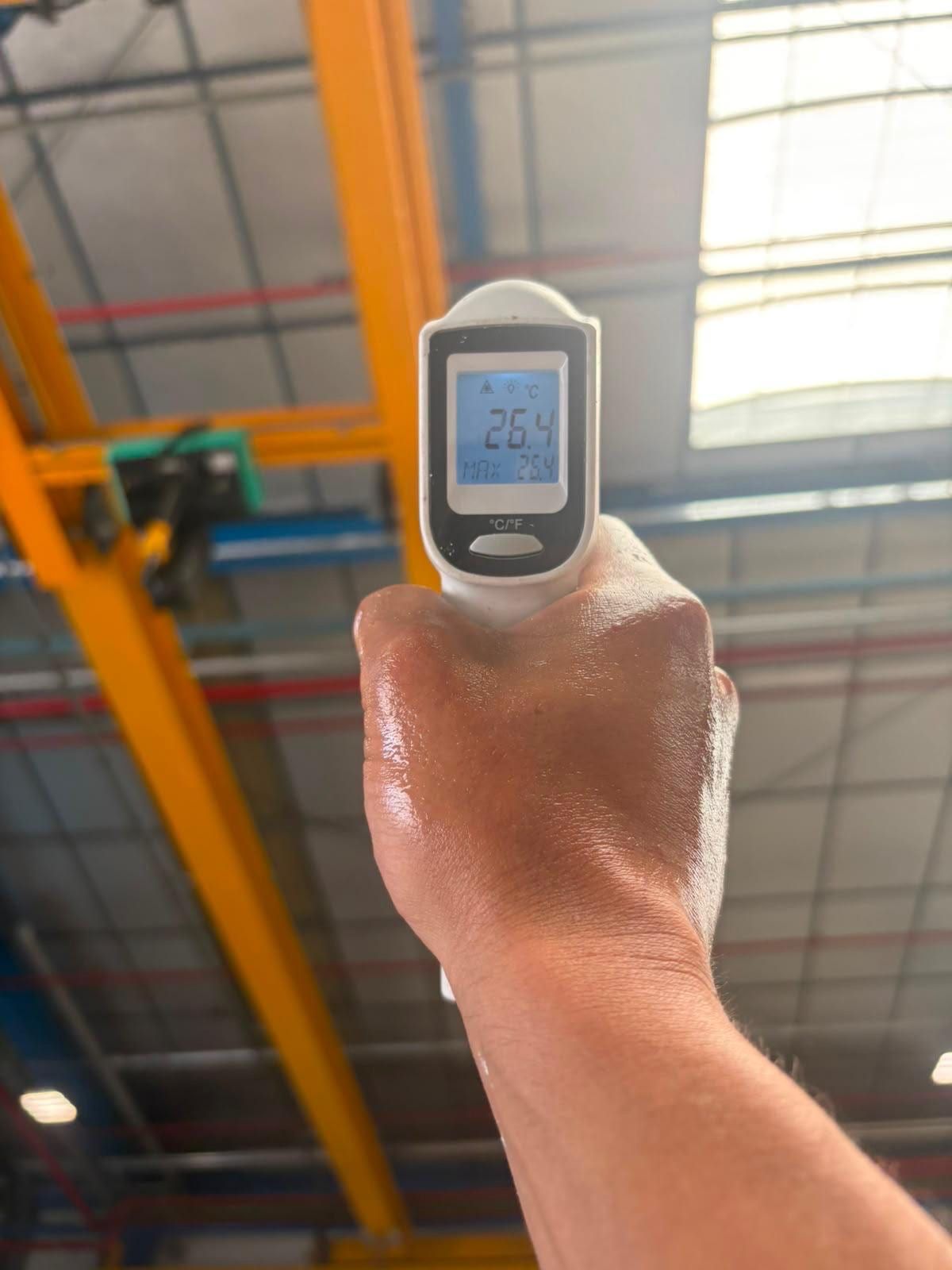
- Cooling load: up to −40 % in summer on air-conditioned volumes, quantified from your records.
- Stable room conditions: fewer peaks in the upper zones of the stores, fewer sensor alarms.
- Waterproofing: fewer thermal shocks, a re-roofing postponed, no load added to the structure.
Work 100 % on the roof, documented for your audits
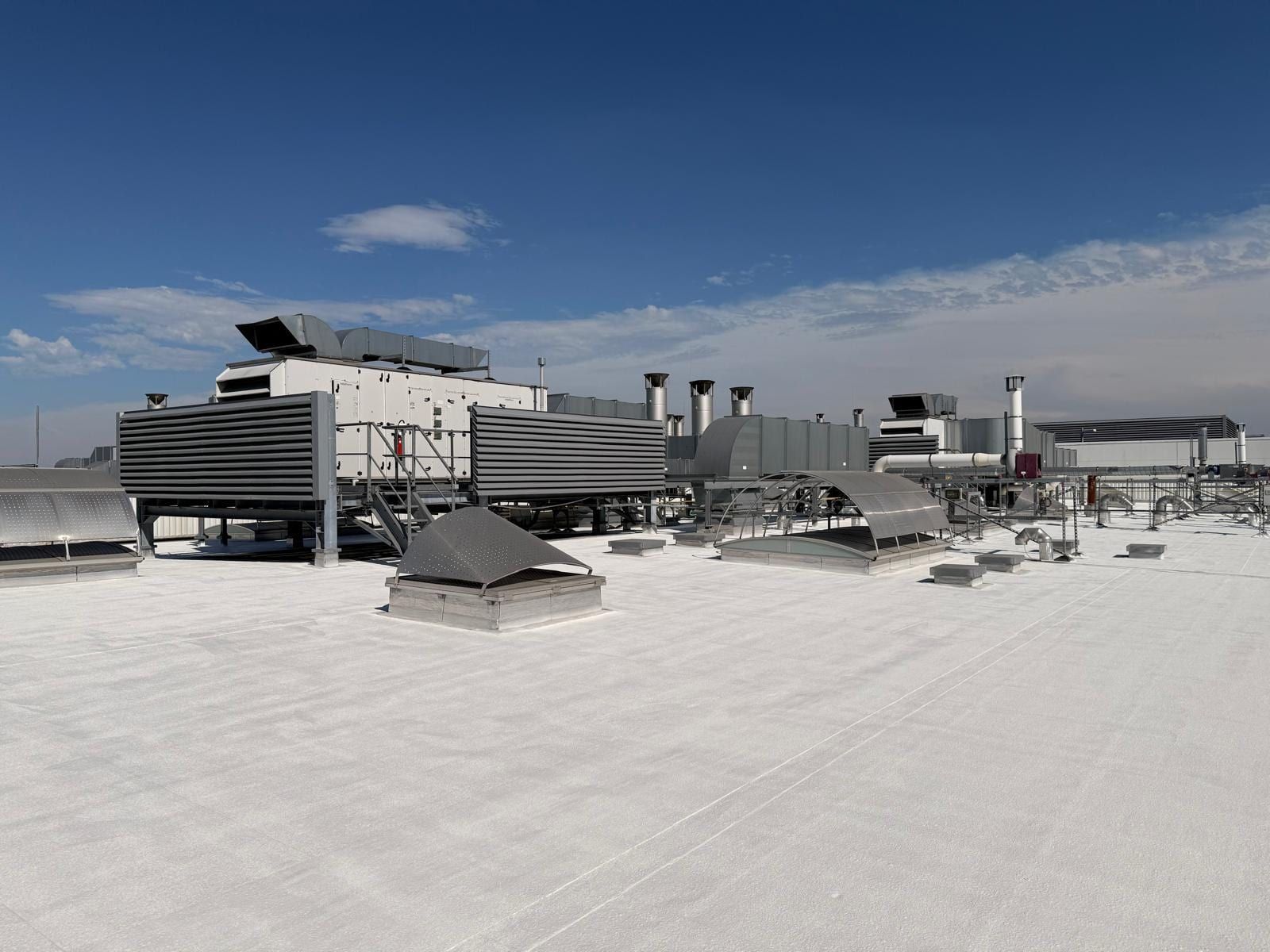
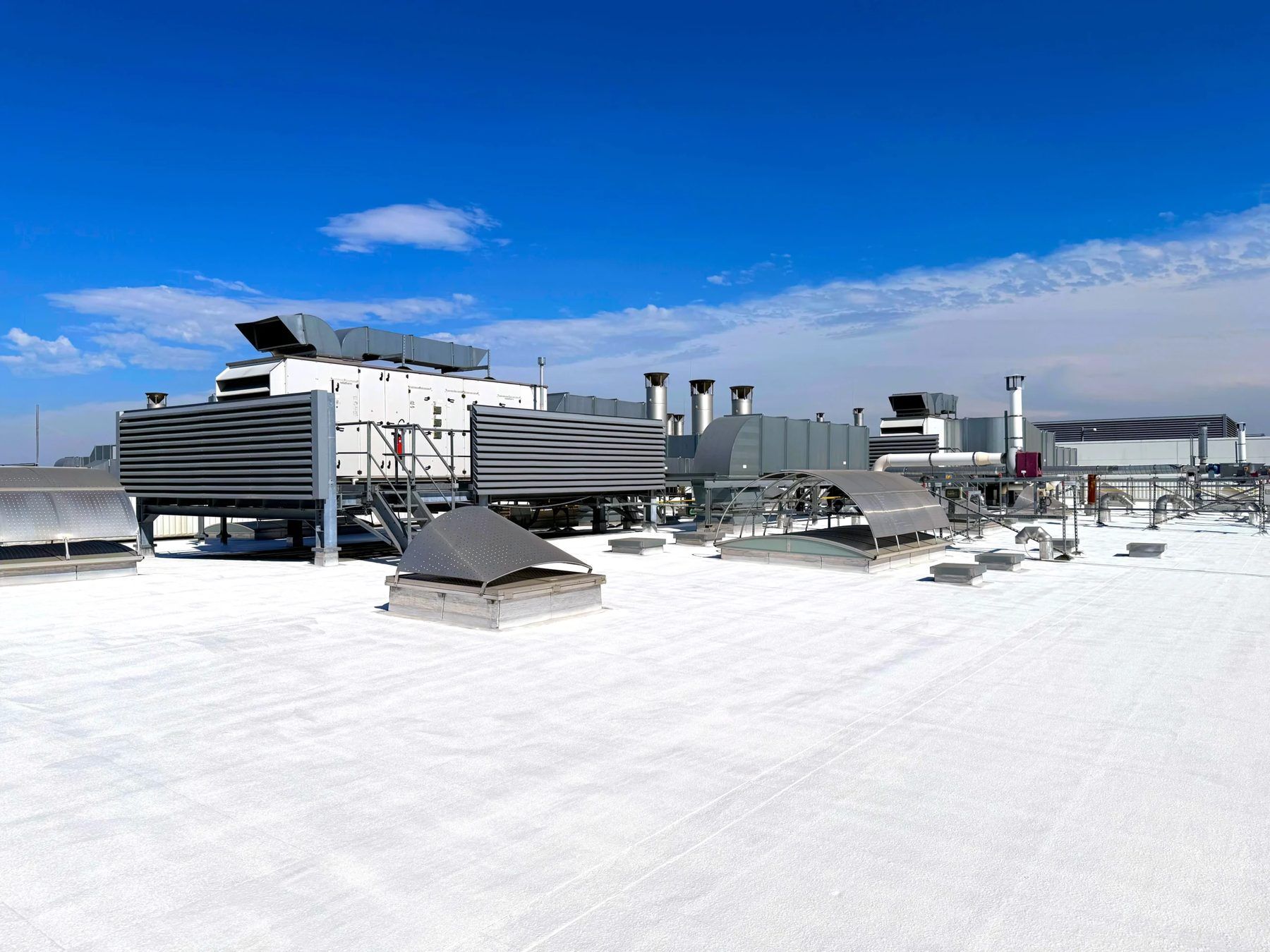
The drums and the airless pump stay on the ground in a marked-out area; only the hoses go up to the roof. No opening is made in the envelope and nobody enters the production areas. The AHU air intakes are protected during high-pressure cleaning and application, following a sequence approved with your utilities team. Chillers, cable trays, walkways and rooftop equipment are protected, then the feet and upstands are brushed in by hand.
Before the work, we provide the risk analysis, the certifications, the safety data sheets and the prevention plan. Afterwards, the as-built file gathers the before/after infrared readings, the thickness checks, the technical data sheets of the system and our ten-year insurance certificate: enough to document your change control.
Offices, laboratories, stores: a building-by-building approach
On a multi-building site, the gains differ: a GDP store under a steel deck, an air-conditioned suite under a flat roof and an office building do not receive the same benefit. The free study ranks the roofs by expected gain and checks, for the tertiary premises heated and cooled by heat pump only, eligibility for the French CEE incentive, sheet BAT-EN-112. Production suites are not eligible, and we do not claim otherwise.
How a pharmaceutical project runs with Hélios
- Free study within 48 h: satellite measurement, analysis of the roof types and uses, prioritisation of the buildings.
- Site visit with your utilities and HSE teams: condition of the waterproofing, adhesion tests, sequencing of the AHU protections, prevention plan.
- Application in 4 layers, without lifting, site in production, in phases if necessary.
- Documented handover: infrared readings treated area versus control area, thickness checks, as-built file, ten-year insurance certificate, annual maintenance plan.
Why Hélios for your site
We apply the PrimaTherm® system on aerospace and railway sites in operation, under prevention plans, and we publish the measurements. We only put forward certified or measured values, we turn down waterproofing at the end of its life, and we document every step for your quality assurance.
Frequently asked questions
Does the work touch the controlled-atmosphere areas?
No. The whole application takes place on the roof, from outside. The drums and the pump stay on the ground in a marked-out area; only the hoses go up. Nobody enters the production areas and no opening is made in the envelope. The AHU air intakes are protected during the cleaning and application phases, in coordination with your utilities team.
Do the rooms need to be requalified after the work?
The coating is applied to the outer face of the roof: it changes neither the airflows, nor the pressures, nor the filters. It reduces the thermal load received by the building, which makes it easier to hold the setpoints. The requalification decision belongs to your quality system; we provide the technical file of the system and the as-built file to support it.
Do your products contain solvents?
No. The PrimaTherm® system is water-based, with no perceptible odour inside the buildings, and has a Broof(t3) fire rating according to CSTB report RA23-0010. The safety data sheets are sent with the prevention plan. Any ATEX zones are analysed during the site visit with your HSE department.
What is the gain on a site that is already air-conditioned around the clock?
The indoor setpoint does not change; the chillers simply work less. The roof surface drops from 50–70 °C to 25–35 °C, up to −30 °C, and the transmitted thermal load falls. Depending on the climate zone and the insulation, cooling consumption falls by up to −40 % in summer. We quantify the range from your consumption records.
Which roof types do you treat on a pharmaceutical site?
Bitumen membrane, steel deck and EPDM. A PVC membrane is only treated if it has been in place for more than ten years, with a specific adhesion base. Busy technical flat roofs, with AHUs, chillers, cable trays and walkways, are treated with the equipment protected and the feet and upstands brushed in by hand. See our guides on [flat roofs](/en/cool-roof-on-flat-roofs/) and [waterproofing membranes](/en/cool-roof-on-waterproofing-membranes/).
Is a pharmaceutical site eligible for the French CEE incentive?
Sheet BAT-EN-112 of the French energy-savings certificates (CEE) targets commercial tertiary buildings heated and cooled by heat pump; a production suite does not qualify. The site’s air-conditioned offices and tertiary premises may qualify under conditions. We check building by building during the free study.