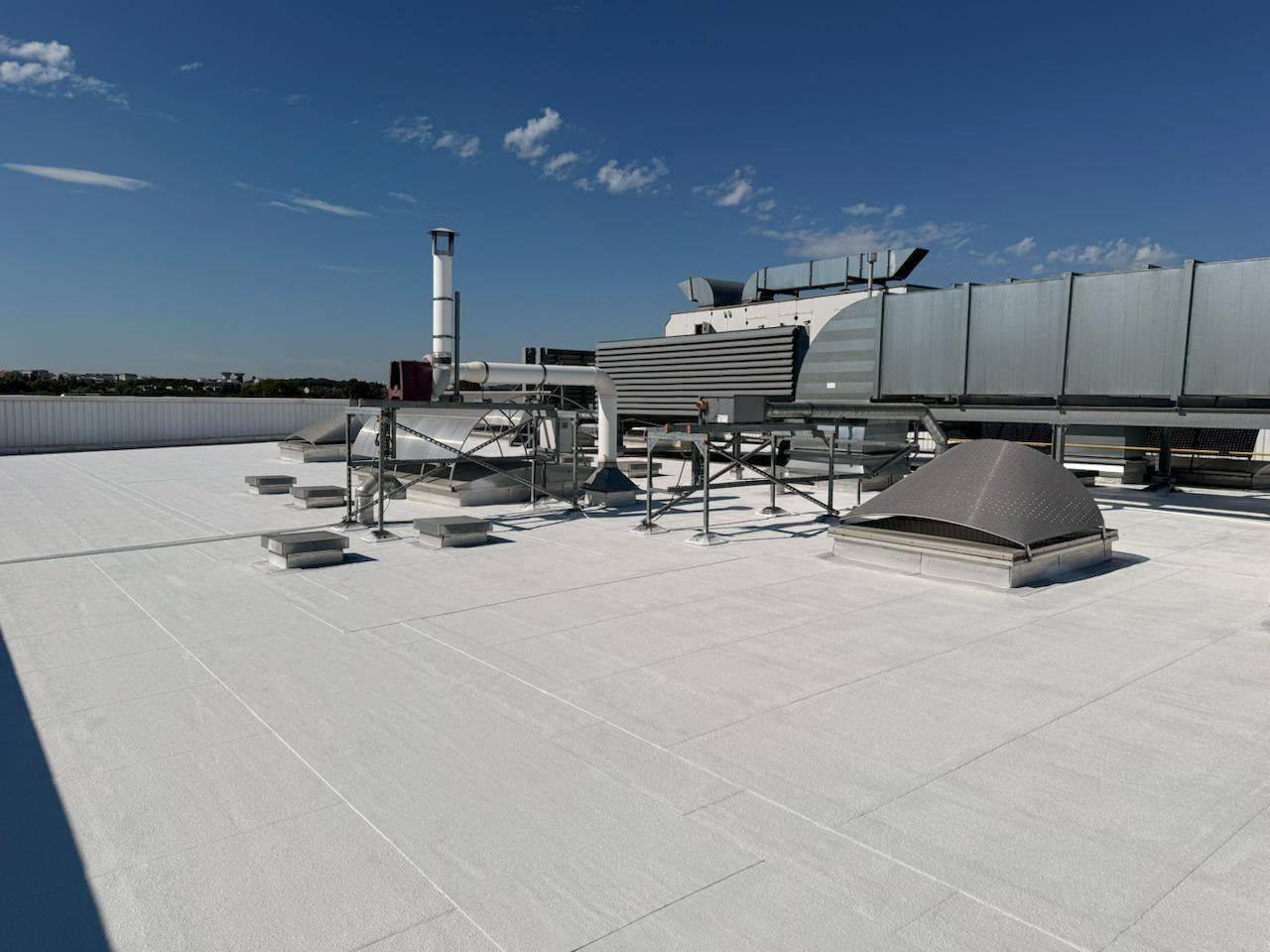
Quick facts — Cool roof on fibre cement roofs: asbestos-free only, and how we treat it
- Substrates treated
- Corrugated sheets and asbestos-free fibre cement elements (buildings later than 1 January 1997 or negative asbestos survey)
- Substrates excluded
- Asbestos cement, broken or friable sheets, heavily degraded translucent sheets
- Primer
- PH169 diluted 10 % — 6 m²/L (rough, porous substrate), long-pile roller or airless sprayer
- Base coat and topcoat
- PH107 in two passes — 2 m²/L; PH107TCL — 10 m²/L
- Preparation
- Low-pressure cleaning, anti-moss treatment, rinsing, 48 to 72 h drying, replacement of damaged sheets
- Safety
- Fragile roof: roof ladders and crawling boards, safety nets or collective protection, lifeline, never walking directly on the sheets
- Singular points
- Ridge caps, verges, overlaps, fixings, translucent sheets (PrimaTherm® LT lacquer)
- Expected result
- Up to −30 °C on the surface, up to −6 °C felt inside depending on insulation
Fibre cement, a substrate apart
A fibre cement roof is made of thin cement sheets reinforced with fibres, most often corrugated, laid on purlins with overlaps and fixed with hook bolts or coach screws. Light, inexpensive and easy to install, they have covered since the 1950s a considerable share of livestock buildings, storage sheds, workshops, older warehouses and garages. Until 1996, the fibres were asbestos. Since then, they have been cellulose or synthetic fibres, and the material is known as “new technology” fibre cement.
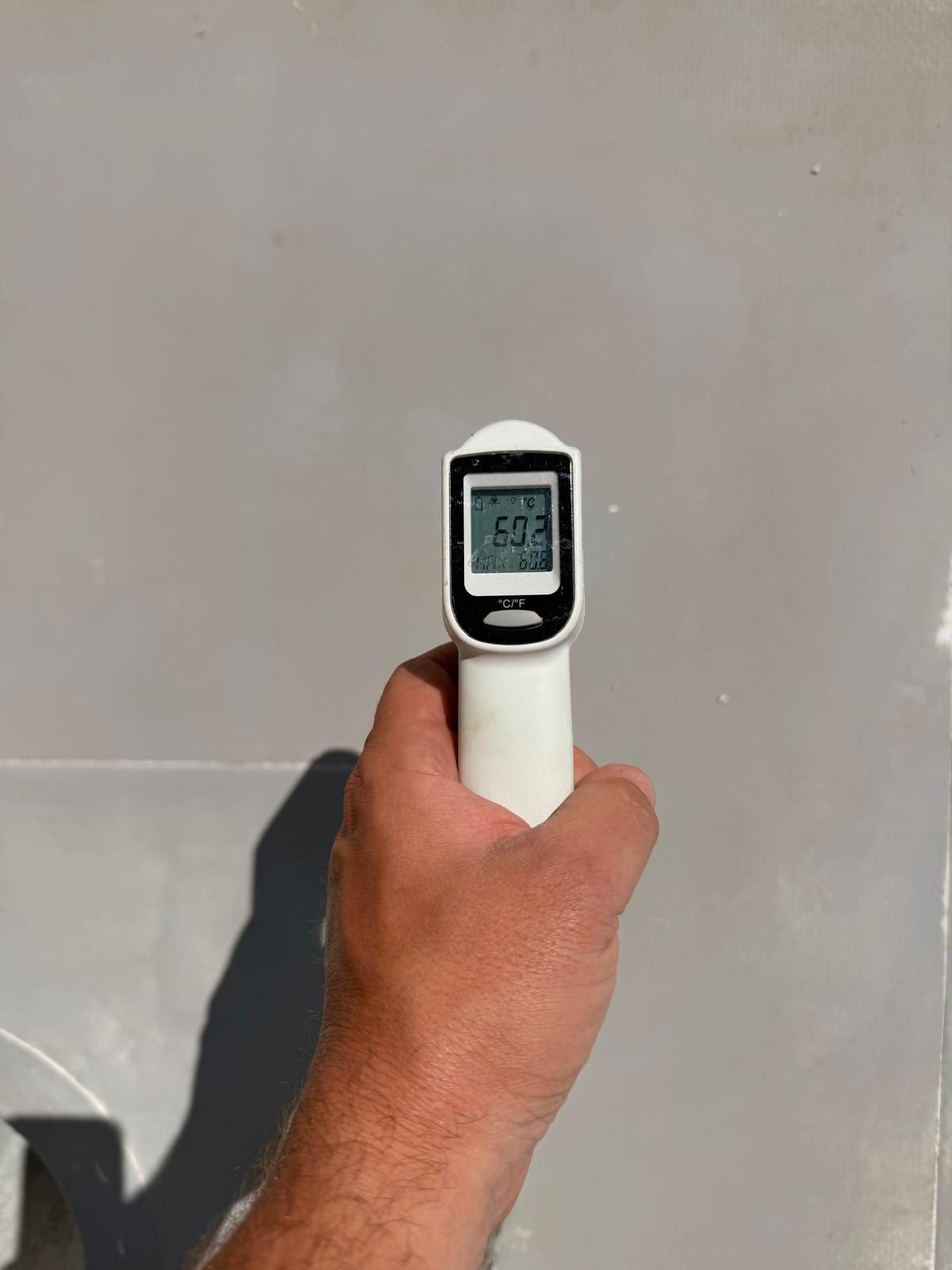
This substrate combines three characteristics that matter for a cool roof. It is porous: it soaks up water and primer, and it holds the moisture that feeds moss and lichen. It is grey and matt: an aged sheet absorbs most of the solar radiation and exceeds 60 °C in summer, with a day-night swing that fatigues the material. It is fragile: a sheet cannot bear the weight of a person between two purlins, and falls through fragile roofing materials remain a recurring cause of serious accidents in construction and farming.
The PrimaTherm® system answers the first two characteristics, provided the third is respected. And it answers nothing at all on asbestos fibre cement, which we do not treat.
The precondition: no asbestos
Asbestos has been banned in France since 1 January 1997. Any fibre cement sheet installed before that date is presumed to contain it, and the presumption is only lifted by a pre-works asbestos survey, carried out by a certified surveyor, with sampling and laboratory analysis. On a building roofed after 1997, a roofing invoice or a dated permit is generally sufficient; in case of doubt, the survey decides.
Why this red line? Because working on asbestos cement, even without removal, falls under its own rules: risk assessment, specific training for operators, validated working methods, a ban on pressure cleaning that releases fibres, management of washing water and waste. It is not our trade, and a cool roof applied under those conditions would have neither a serious warranty nor a solid regulatory framework. We therefore tell you from the free study whether your roof is eligible, and we tell you what to ask the surveyor for if the construction date leaves a doubt. An asbestos roof at the end of its life calls for asbestos removal and then a new roof covering, in steel deck or fibre cement, which we can treat afterwards.
Why fibre cement heats up and ages
A grey sheet reflects little and radiates poorly. In full sun, its upper face exceeds 60 °C, sometimes more on sheets blackened by moss. The heat passes through a thickness of a few millimetres and radiates under the roof: a livestock building or a workshop without a false ceiling receives that heat directly, and animals and employees alike endure it at the hours when the outside air is already hot. At night, the sheet drops back to ambient temperature: this daily thermal swing of 40 to 50 °C opens micro-cracks, accelerates the weathering of the surface and gradually loosens the fibres, which further increases porosity and the grip of moss. The circle is complete: the older the sheet, the hotter it gets.
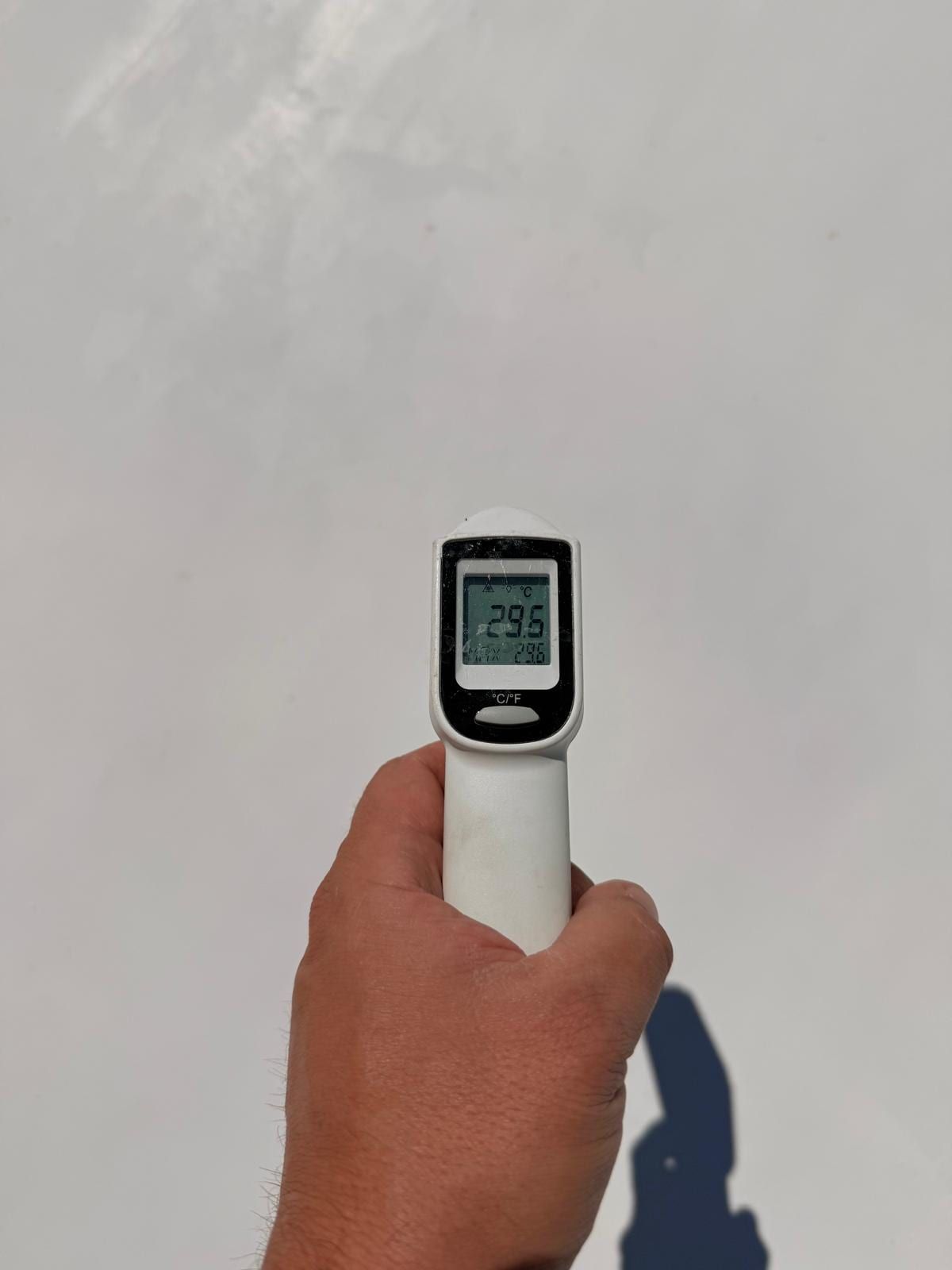
A reflective roof breaks this circle. With 95 % solar reflectance (ASTM E903-12) and an emissivity of 0.89 (ASTM C1371-15), the PrimaTherm® system keeps the surface between 25 and 35 °C, that is up to −30 °C compared with a dark sheet; its SRI of 120 (ASTM E1980) is maintained at 119 after 4,000 h of accelerated QUV ageing, and the system is classified Broof(t3) (CSTB report RA23-0010). The elastic film closes surface micro-cracks and protects the cement from UV and water; the PH107TCL anti-soiling topcoat limits the return of moss.
Preparing fibre cement: gently, but thoroughly
Preparation makes the difference between a cool roof that lasts and a paint that flakes. On fibre cement, it follows one rule: clean thoroughly without damaging.
- Diagnosis: date of the roof covering and supporting document or asbestos survey, condition of the sheets (breaks, cracks, friable sheets), fixings, overlaps, translucent sheets, purlins visible from below.
- Replacement of broken or heavily degraded sheets, tightening or replacement of failed fixings, treatment of leaking overlaps.
- Low-pressure cleaning with a wide nozzle, from the ridge down to the eaves, to remove moss, lichen and dust without eroding the cement matrix or loosening the fibres. High-pressure washing, common on steel deck, would damage this substrate and shorten its life.
- Anti-moss and fungicidal treatment, contact time, then careful rinsing: product residues would prevent the primer from bonding.
- Complete drying, 48 to 72 hours depending on the weather: fibre cement slowly releases the water it has absorbed, and a primer applied on a damp substrate does not anchor.
- Check before application: clean, dry, cohesive substrate, temperature between 12 and 35 °C, relative humidity below 80 %, no rain forecast in the following hours.
The four-layer system on fibre cement
The sequence is that of any rough substrate, with coverage rates adapted to the porosity:
| Layer | Product | Coverage | Role on fibre cement |
|---|---|---|---|
| 1 | PH169 primer, diluted 10 % | 6 m²/L | Anchoring in the porous substrate, consolidation of the surface, regulation of absorption |
| 2 and 3 | PH107 reflective base coat, two cross passes | 2 m²/L in total | The certified reflective coating, elastic, rainproof |
| 4 | PH107TCL topcoat | 10 m²/L | UV protection, anti-soiling, preservation of whiteness and SRI |
Application is done with a long-pile roller, which follows the corrugations, or with an airless sprayer set for a fragile substrate, from crawling boards and roof ladders. Drums and pump stay on the ground; only the hoses go up, which limits the weight on the roof. On the most absorbent sheets, part of the primer is soaked up by the substrate: the wet-film thickness check, recorded on the site log sheet, verifies that the reflective base coat receives its full quantity. Each zone is reconciled with the quantities used and the coverage rates of the protocol. The method is described in detail on the page how we work.
Points to watch specific to fibre cement
- Safety first. A fibre cement roof is a roof in fragile materials: the French labour code requires load-spreading devices and protection against falls from height for any work on these coverings. Our teams never walk on them directly: crawling boards, roof ladders, safety nets or collective protection under the fragile areas, lifeline or anchor point. The translucent polyester sheets, even more fragile, are identified and protected before the works start.
- Fixings and overlaps. Hook bolts and coach screws are water entry points: they are checked, tightened and encased by the system, which forms a continuous film over the sheet and its edges. A leaking overlap is dealt with beforehand, not with the paint.
- The slope. Fibre cement is generally laid at a slope of 15 to 30 %: application is done from top to bottom, in strips, without visible joins.
- Rooflights and translucent sheets. To keep natural light while limiting heat gain, translucent sheets and rooflights receive the PrimaTherm® LT lacquer: one coat reduces the transmitted light by about a quarter, two coats by half.
- The surroundings. On an agricultural building, application fits around the rhythm of the farm; on a workshop, around that of production. No crane, no ground footprint beyond the drums and the pump.
What you can expect from it
On a livestock building, the treated roof reduces the radiation received by the animals during the hot hours; on a workshop or a warehouse, it lowers the temperature felt under the roof, up to −6 °C depending on insulation and ventilation. On an air-conditioned building, air-conditioning consumption falls by up to 40 % depending on the climate zone. And in every case, a sheet protected from UV, water and thermal cycles ages more slowly: it is the roof replacement that gets pushed back.
Incentives follow the building, not the substrate. The French energy-savings certificates (CEE), sheet BAT-EN-112, target tertiary-sector buildings for commercial use whose volume is heated and cooled by heat pump; they do not apply as such to an agricultural shed or an unconditioned workshop. French homes over two years old benefit from the reduced 10 % VAT on supply and installation. Changing the colour of a roof requires a prior declaration to the town hall (French planning code). The details are in our guide to incentives; the applicable warranties are the same as on any other substrate.
Maintaining a treated fibre cement roof
An inspection visit 12 to 15 months after handover, then a visual check every year: condition of the topcoat, possible return of moss on north-facing slopes, singular points. Gentle cleaning with clear water, without pressure, restores the whiteness if the environment is very dirty. The film stays elastic and can be repaired locally: a replaced sheet is treated again without redoing the whole roof.
Fibre cement and the buildings concerned
The substrate is found mainly on agricultural buildings — livestock, fodder storage, equipment sheds —, in industry from the 1960s to the 1990s, on craft workshops and garages. On the same buildings, steel deck has often replaced fibre cement during renovations: our steel deck guide covers that case, and the bitumen roof guide covers the adjoining flat roofs. For a small asbestos-free area, the online shop delivers the three products with the quantity calculation for a rough substrate.
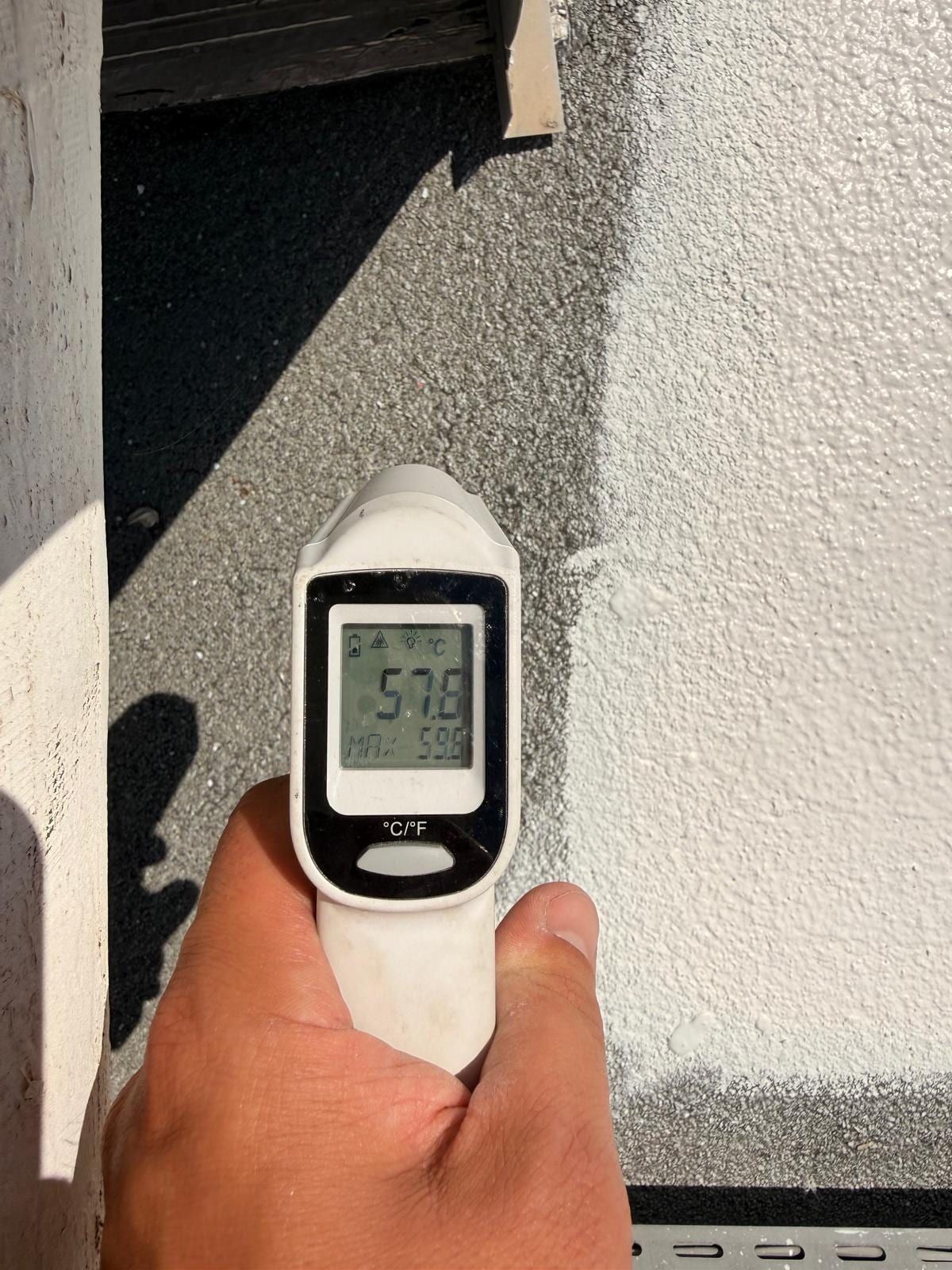
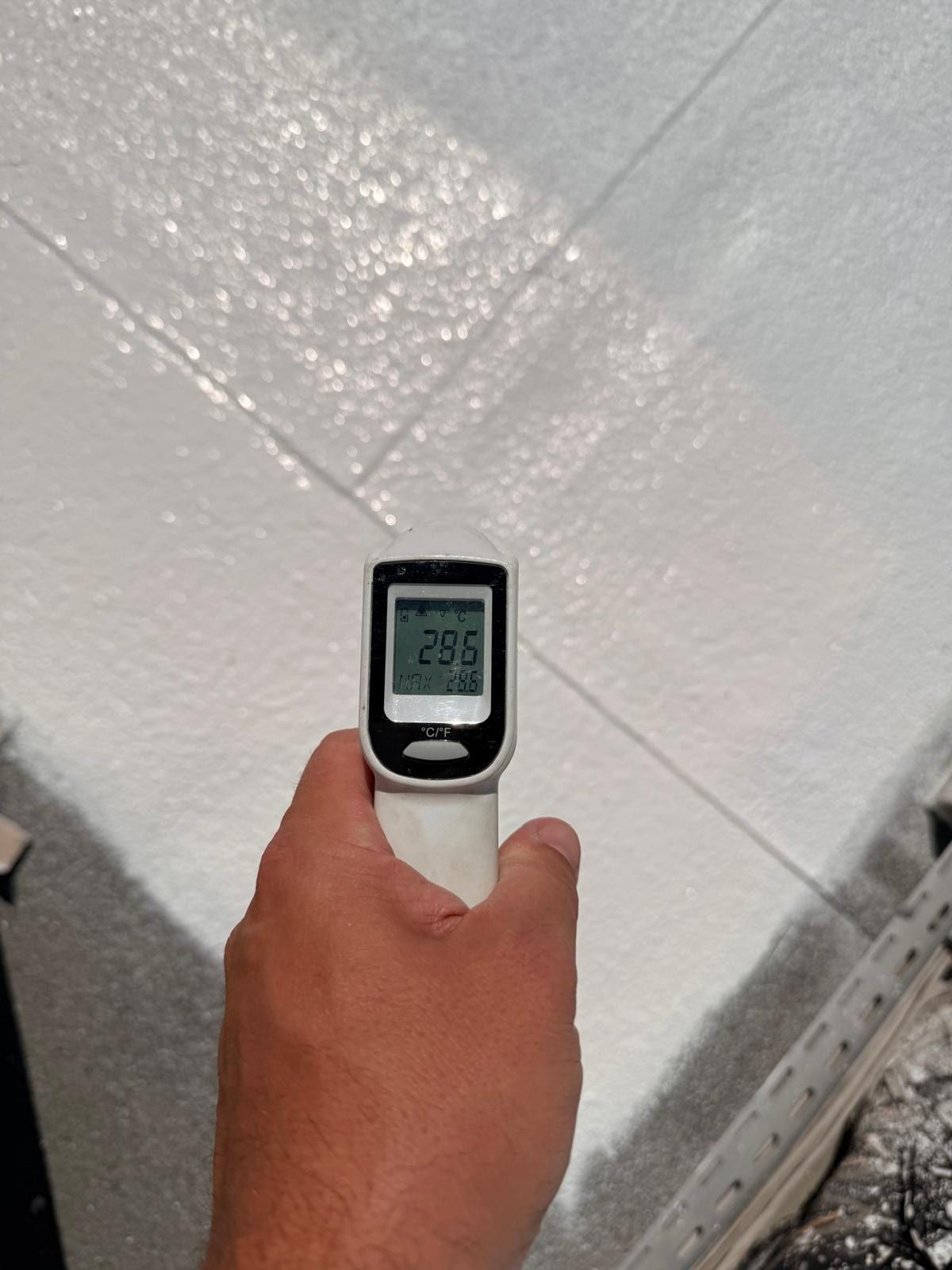
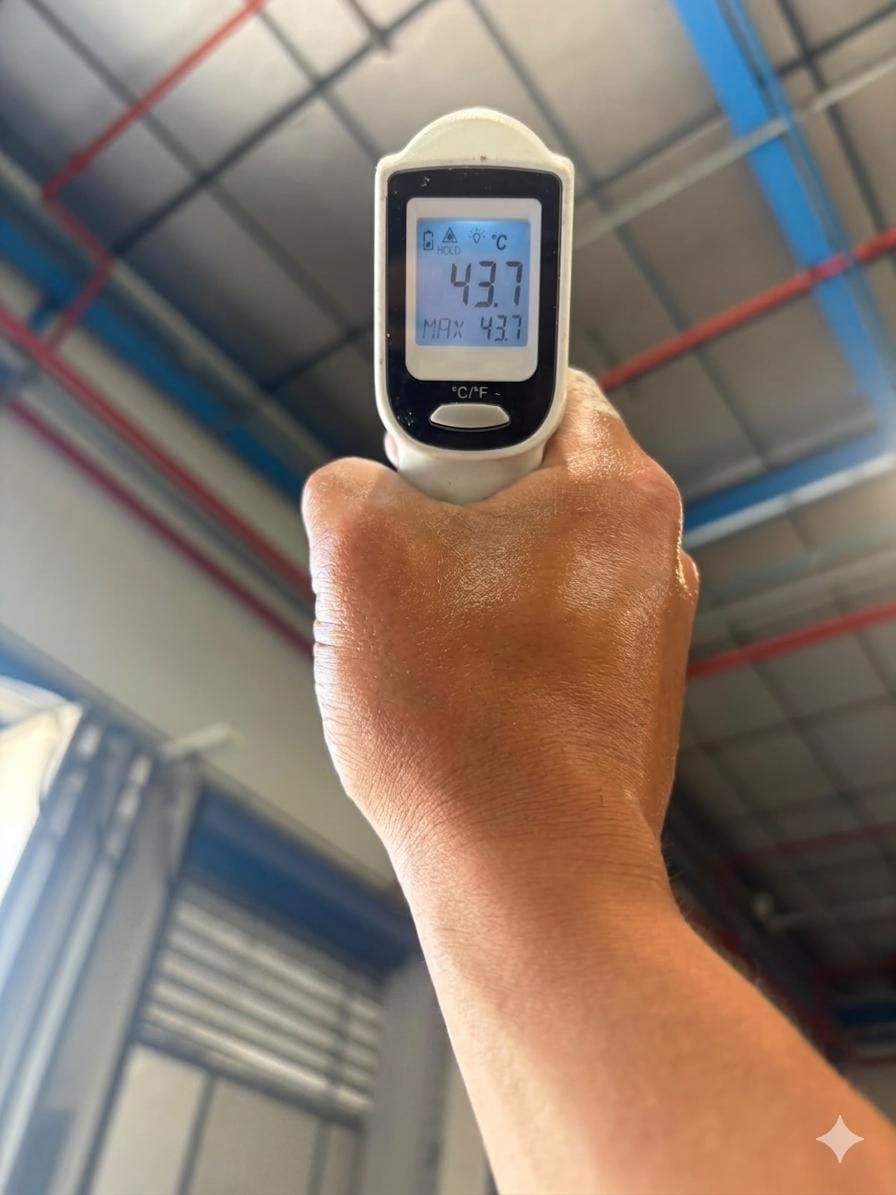
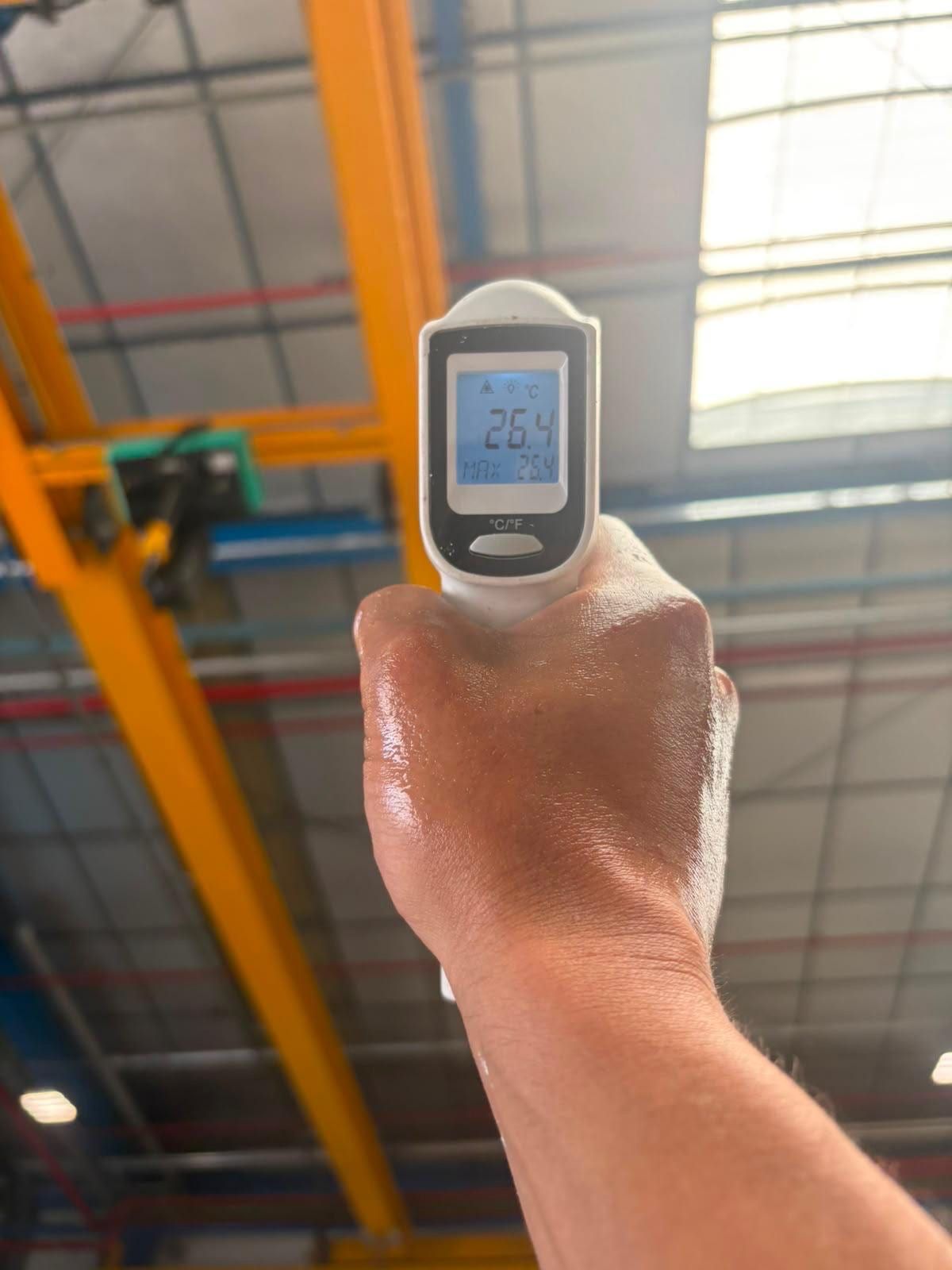
The thermometer, same time of day, before and after.
Frequently asked questions
My fibre cement roof dates from before 1997: can you treat it?
No, unless a pre-works asbestos survey demonstrates the absence of asbestos. Asbestos has been banned in France since 1 January 1997: any earlier sheet is presumed to contain it. We do not work on asbestos cement, where pressure cleaning is prohibited and any intervention falls under specific procedures. The survey is the owner’s responsibility; we tell you what to ask the surveyor for.
How do you know whether fibre cement contains asbestos?
By the construction date and by the survey. A building roofed after 1997 is in asbestos-free fibre cement; for an older building, a pre-works asbestos survey report, drawn up by a certified surveyor, is authoritative. An NT (new technology) marking on the edge of the sheets is a clue, not proof. Without a document, we do not treat the roof.
Fibre cement is fragile: how do your teams work on it?
Nobody walks directly on the sheets. The teams move on crawling boards and roof ladders that spread the load, with safety nets or collective protection under the fragile areas and a lifeline. Drums and pump stay on the ground, only the hoses go up: the roof carries less weight than for any other intervention.
My roof is covered in moss: is that a problem?
It is the rule rather than the exception on fibre cement over ten years old, especially on the north side. Cleaning is done at low pressure so as not to erode the cement and loosen the fibres, followed by an anti-moss treatment, rinsing and complete drying. The PH107TCL anti-soiling topcoat then limits the return of moss and preserves the whiteness, and therefore the reflectance.
What coverage rate should be expected for the primer on fibre cement?
Fibre cement is a rough, porous substrate: allow 6 m²/L for the PH169 primer, as on a bitumen membrane, against 10 m²/L on a smooth steel deck. The PH107 reflective base coat is applied in two passes at 2 m²/L and the PH107TCL topcoat at 10 m²/L. On very absorbent sheets, a first pass of primer may be partly soaked up: the wet-film thickness check is there to verify it.
I am a homeowner with a fibre cement garage or shed: can I do it myself?
Yes, if the roof is asbestos-free and you can reach it without walking on the sheets. The online shop (in French) calculates the quantity for your area on a rough substrate and delivers the three products with the roller application guide. Remember the prior declaration to the town hall for the change of colour, and only apply between 12 and 35 °C on a clean, dry substrate.