Farm buildings: the roof is the first lever against heat
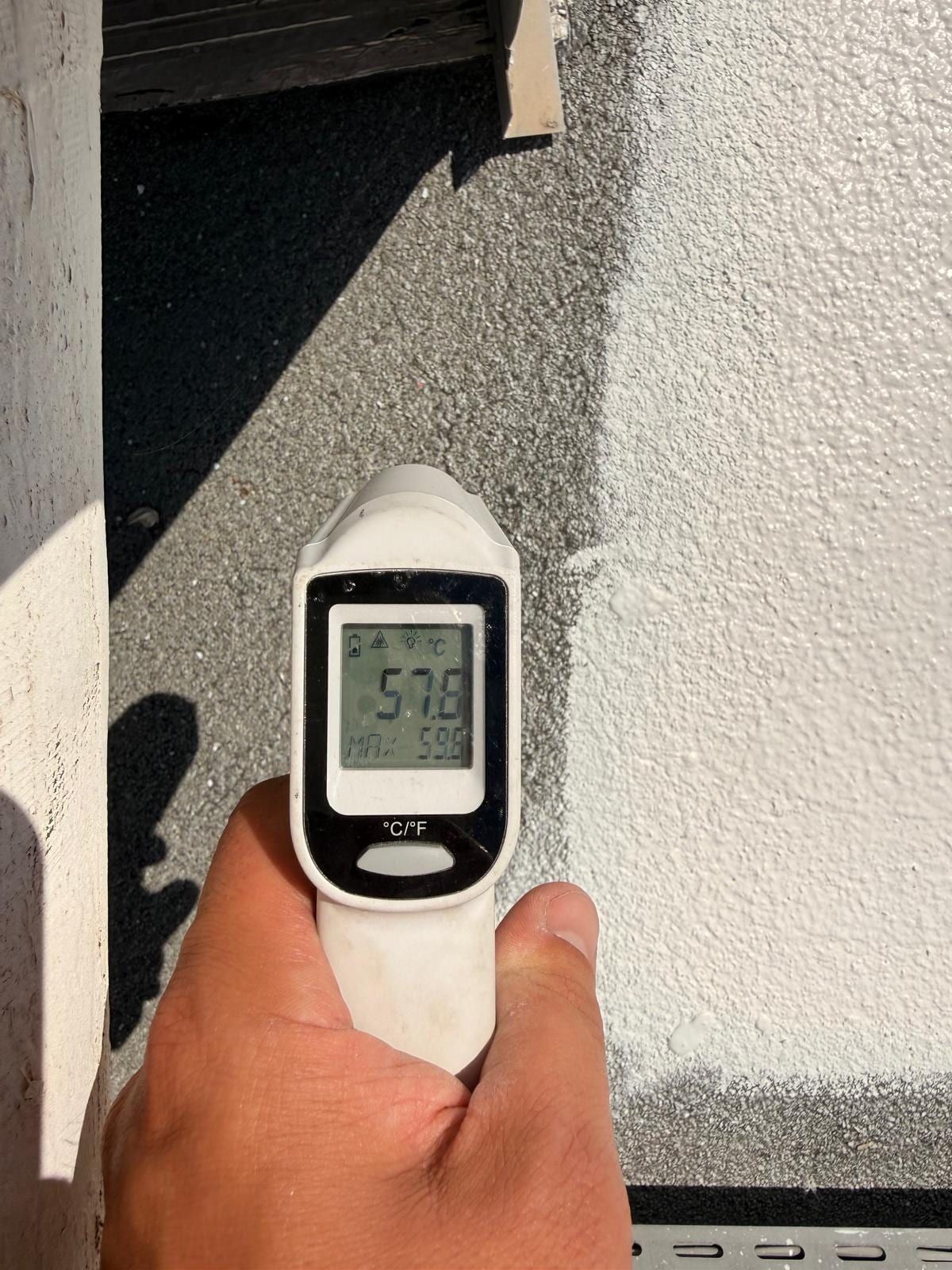
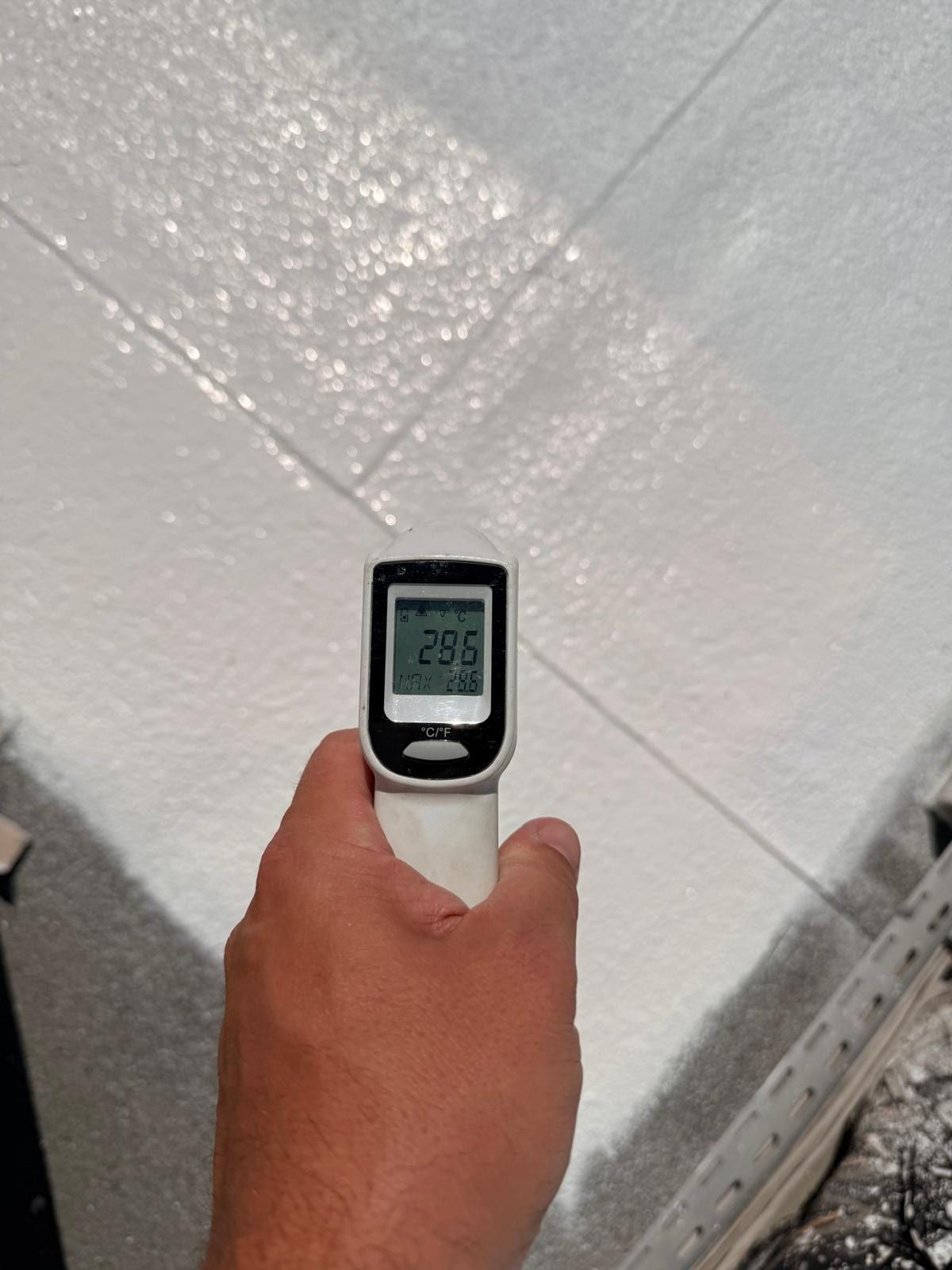
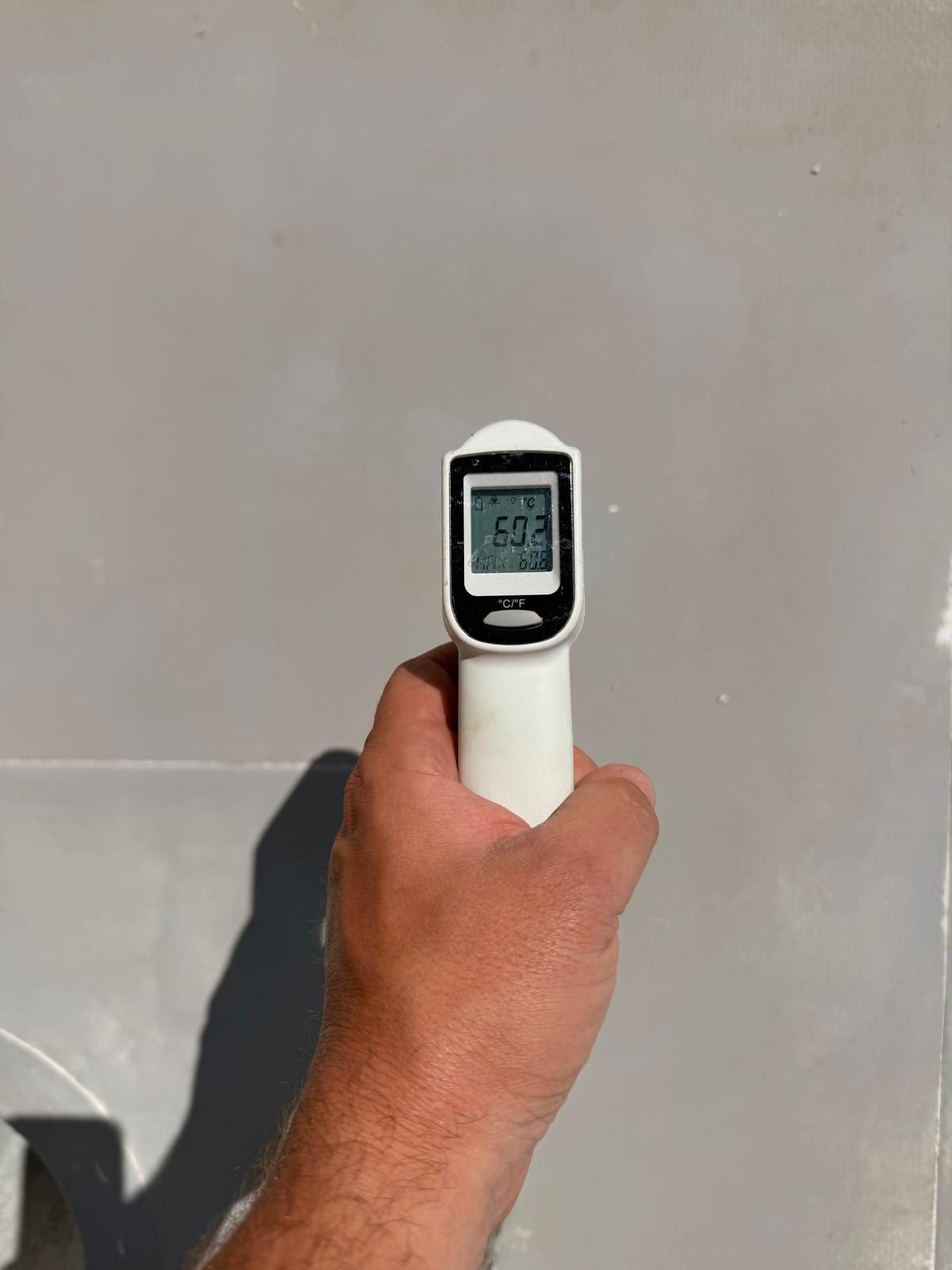
A farm building is almost always a building without summer insulation: steel deck or fibre cement on a frame, a large volume, often open on the sides for ventilation. When the sun beats down, the roof climbs to 50–70 °C and radiates downwards like a radiator hung above the animals, the forage or the tanks. Natural ventilation can do nothing against that radiation: the air moving through is already hot, and fans or misting only shift the problem while consuming electricity and water. An agricultural cool roof coating treats the cause: the roof no longer absorbs most of the radiation, it reflects it.
Livestock: heat stress, production, mortality
Farmers know the thresholds. A dairy cow is in thermal comfort up to about 25 °C; beyond that, she reduces her feed intake, her milk yield falls and reproduction deteriorates. Broilers and laying hens cope badly with days above 30 °C, with a risk of mortality during a heatwave; fattening pigs slow their growth; goats and ewes in sheds face the same constraints. In a building under a dark roof, those thresholds are exceeded from June, and heat stress sets in for the summer. Lowering the roof temperature by 30 °C directly changes the temperature radiated onto the animals’ backs, where the stress is decided.
Storage, processing, wineries: produce that dislikes heat
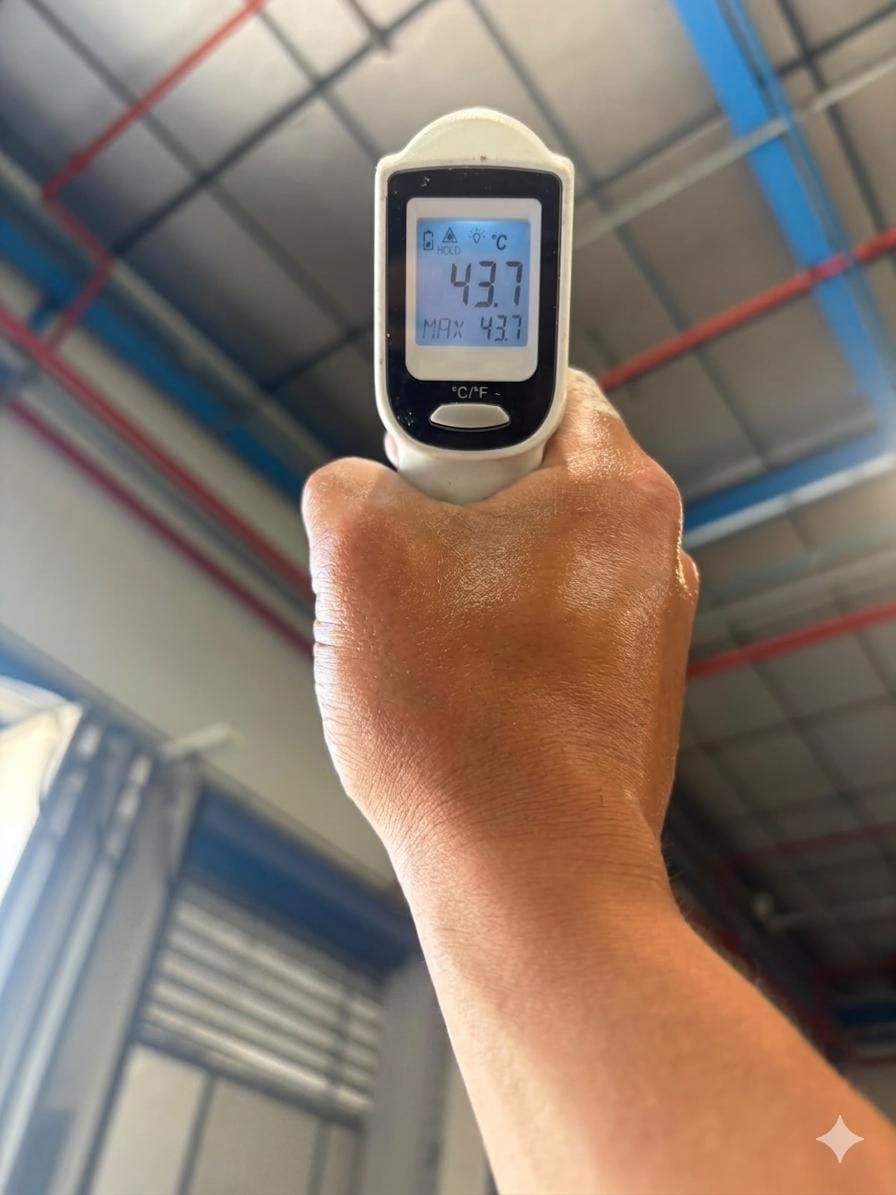
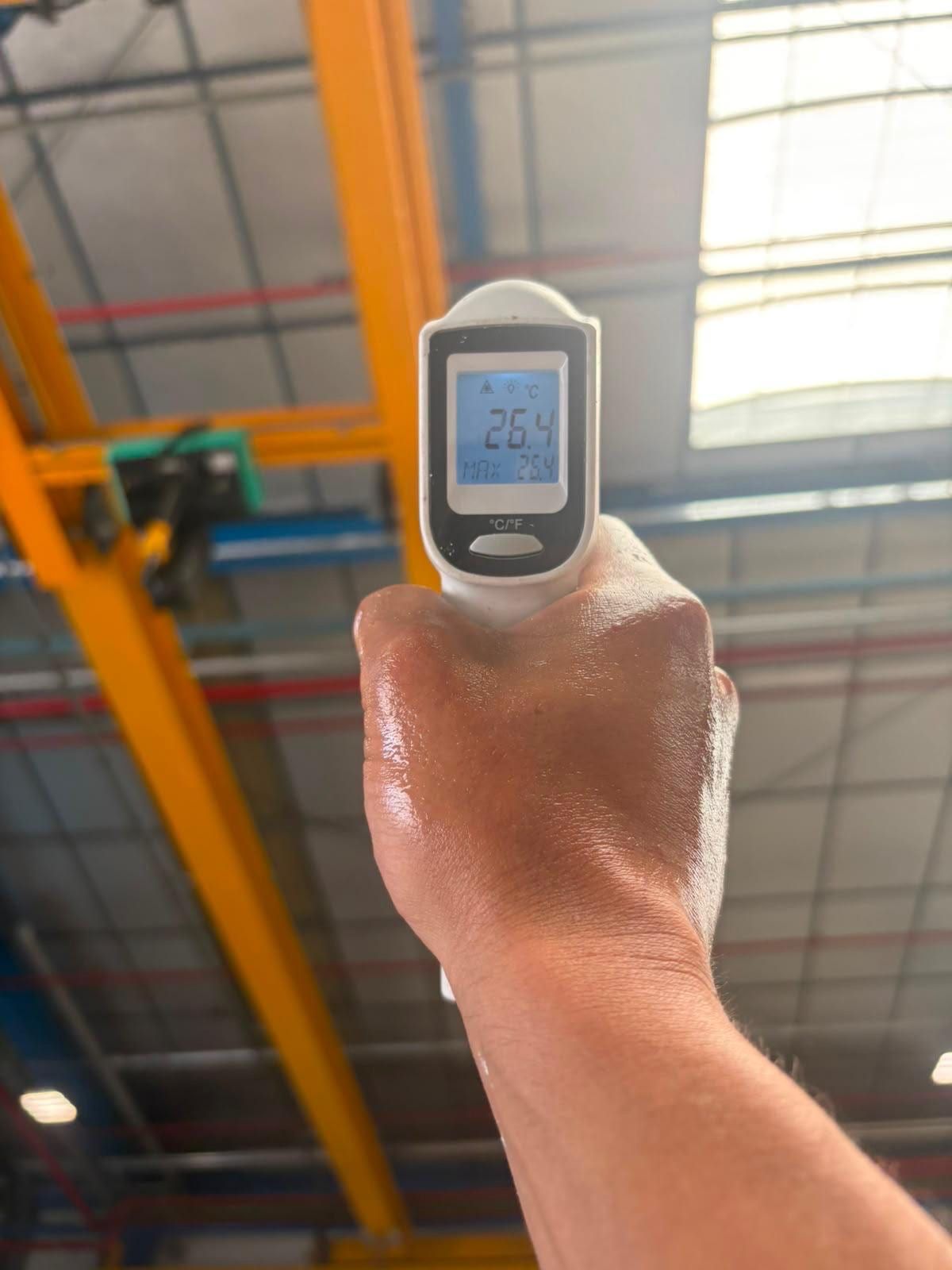
Under a steel-deck barn, forage heats up, grain stored in flat stores loses quality, potatoes and fruit in the packing station deteriorate, machinery and crop protection products are exposed. In a winery, the temperature of the tank room governs fermentation and keeping; in a dairy, a cured-meat plant or a cutting room, the refrigeration runs continuously to offset the heat that came in through the roof. That is exactly the case measured in Périgny: on a 2,000 m² steel-deck cured-meat plant, a Hélios project, the roof space went from 50 to 30 °C and refrigeration consumption fell by 35 %. See the Périgny project.
What is not a matter for a cool roof
Greenhouses call for temporary shading whitewash, not a permanent opaque coating: a cool roof is not made for them. Likewise, an asbestos fibre-cement roof (buildings built before 1997) can be neither pressure-washed nor coated: it is excluded, and we prefer to say so from the outset.
Agricultural cool roof coating: what PrimaTherm® changes
Hélios applies the PrimaTherm® system made in France by Primacoating: a water-based, solvent-free elastomeric coating, applied in 4 layers (PH169 primer, PH107 reflective base coat in two crossed passes, PH107TCL anti-soiling topcoat). Every value below is measured in the laboratory and the report is attached to the proposal.
| Characteristic | Value | Standard / report |
|---|---|---|
| Solar reflectance | 95 % | ASTM E903-12 |
| Thermal emissivity | 0.89 | ASTM C1371-15 |
| SRI (new) | 120 | ASTM E1980 (119 after ageing) |
| Durability | SRI maintained after 4,000 h QUV | conventional service life of 20 years (French CEE sheet) |
| External fire rating | Broof(t3) | EN 13501-5, CSTB report RA23-0010 |
On a farm building, this gives:
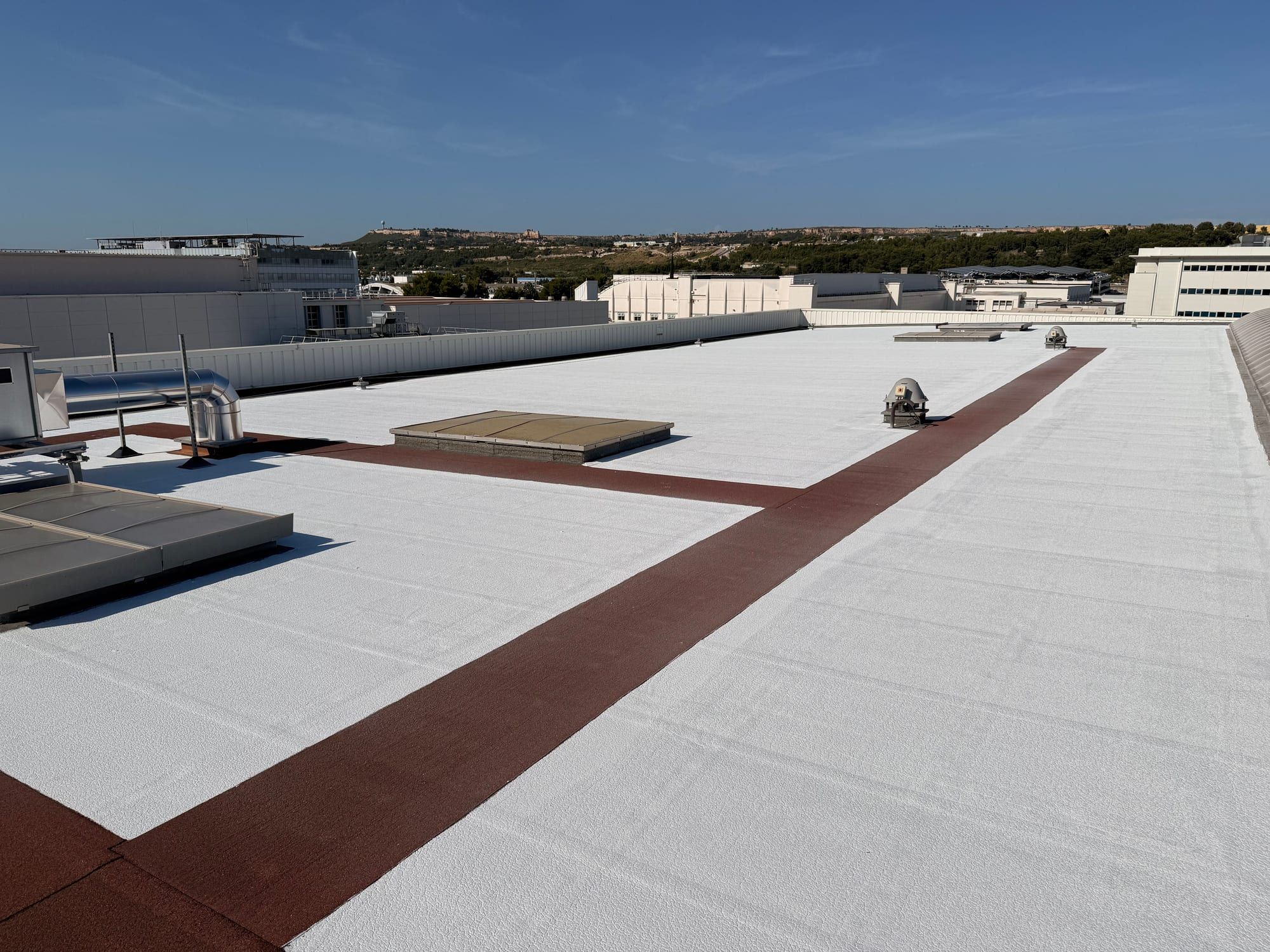
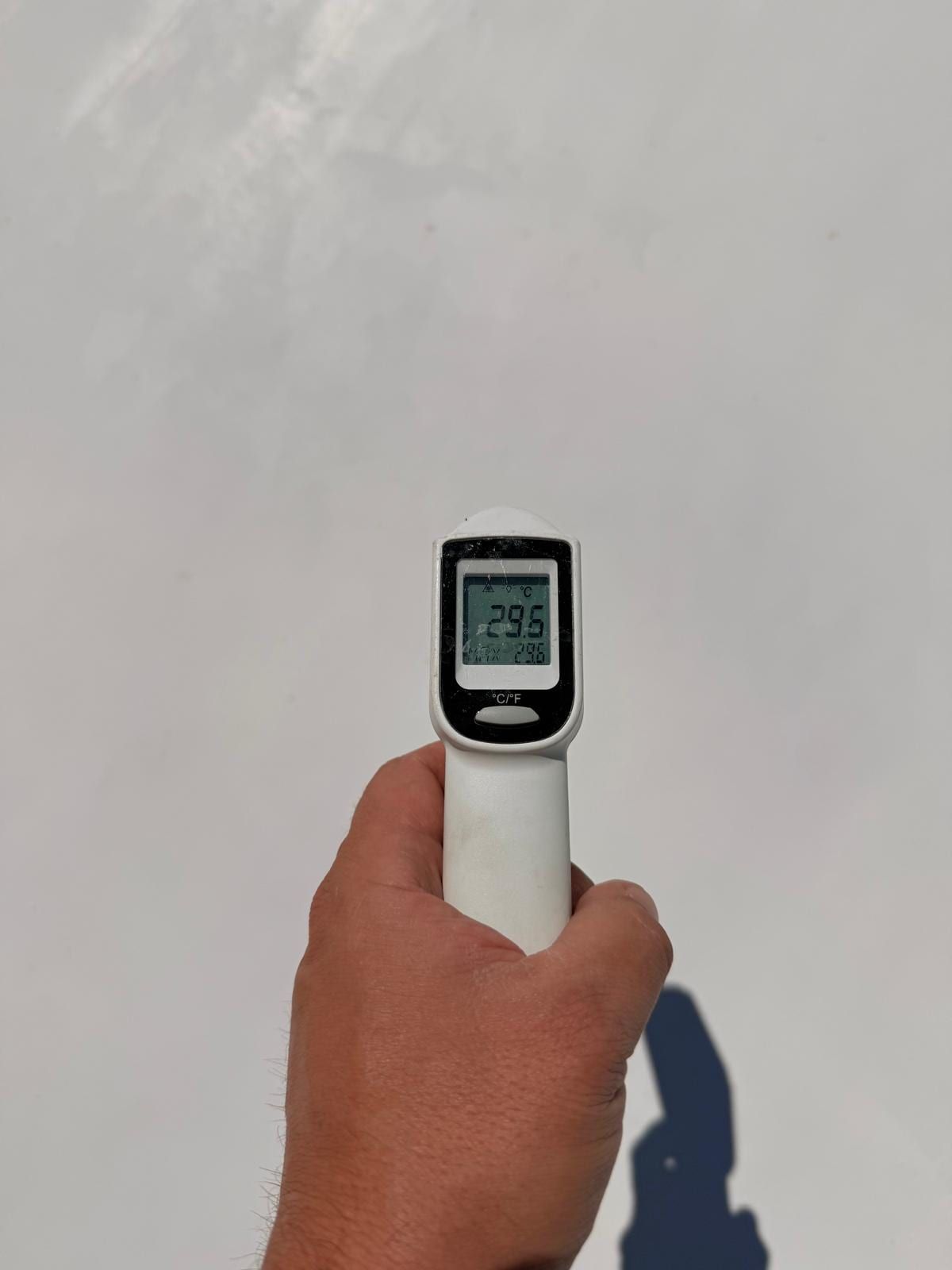
- up to −30 °C on the roof: from 50–70 °C to 25–35 °C, with −29 °C measured by infrared on the largest building at Airbus Marignane;
- up to −6 °C felt inside under a single-skin steel deck or uninsulated fibre cement, that is, in almost every livestock and storage building;
- animals that stay below their stress threshold several more weeks a year, without extra fans;
- up to −40 % refrigeration consumption in air-conditioned processing workshops, wineries and dairies, depending on the climate zone;
- a roof that ages more slowly: less expansion of the steel deck, less cracking of the fibre cement, fixings under less stress.
The gain is calculated on your building, not on a catalogue: the payback study starts from your herd, your stock and your consumption.
Agricultural roof types: steel deck, fibre cement, sandwich panels
- Steel deck, coated or galvanised: the ideal roof type, PH169 primer at 10 m²/L after medium-pressure cleaning and treatment of corrosion spots. See the cool roof on steel deck roofs guide.
- Fibre cement from after 1997: chalky surface bound by the primer, anti-moss treatment beforehand; farm roofs are often mossy on the north side.
- Sandwich panels: the outer coated-steel face is treated like a steel deck; the gain is smaller, because the insulation already does part of the work, but the roof lasts longer.
- Open buildings: a cattle shed open along its long sides benefits just as much from the treatment, since it is the radiation from the roof that counts, not the air temperature.
- Solar barns: the roof is treated between and beneath the rows, and a white surface lowers the operating temperature of the panels. See cool roof and solar panels.
- Membranes on the flat roofs of cooperative buildings: bitumen or EPDM after a study; PVC only if laid more than 10 years ago.
Incentives: what really exists for agriculture
We prefer to be clear. The French energy-savings certificates (CEE), sheet BAT-EN-112, target commercial tertiary buildings whose volume is heated and cooled by heat pump: a farm building is not eligible. MaPrimeRénov’ does not cover cool roofs. On the other hand, some French regions support, through the EU rural development fund (EAFRD) and their farm modernisation schemes, investments linked to animal welfare and climate adaptation; the eligibility of a cool roof is examined case by case, often with the support of the chamber of agriculture. Cooperatives and farm machinery cooperatives (CUMA) can also carry a joint project across several farms, with a uniform protocol. We provide the technical documents (data sheets, test reports, estimate of the potential); the cool roof incentives 2026 page details the schemes. The cost depends on the area, the roof type, the preparation, the access and the incentives: it exists only in the proposal handed over after the free roof study.
Works on a farm: no crane, animals in place
On a farm, nobody wants a crane in the yard or a truck-mounted platform in front of the cattle shed at milking time. Our no-lifting method settles the question: the 150 to 200 L drums and the airless pumps stay on the ground in a cordoned-off area, only the hoses go up to the roof. The works interrupt neither feeding, nor milking, nor deliveries.
- Biosecurity: we follow the farm’s protocols (hygiene lock, dedicated clothing, disinfection of equipment, no movement between buildings without procedure), particularly for poultry and pigs.
- Timing: work outside births, arrival of new batches, harvest or grape harvest, and before the first hot spells to benefit from the summer; weather window between 12 and 35 °C, relative humidity below 80 %, no rain within 4 h of each coat.
- Water and effluent: cleaning at under 130 bar is carried out with management of the wash water; the product is water-based, solvent-free, low in VOCs.
- Cluttered roofs: rooflights, ventilated ridges, extraction stacks, solar panels are mapped and protected. Polycarbonate rooflights can receive the PrimaTherm® LT lacquer (one coat: around −25 % heat gain and light; two coats: around −50 %).
- Safety: lifelines or collective protection put in place, fibre cement walked on only along walkways.
How an agricultural cool roof project runs with Hélios
- Free study within 48 h: satellite measurement, type of building and use (livestock, storage, processing), roof type, first orders of magnitude.
- Technical visit: condition of the roof, construction date and nature of the fibre cement where applicable, fixings, adhesion, biosecurity and timing constraints, itemised proposal.
- Preparation: cleaning at under 130 bar, anti-moss treatment, spot repairs, 24 to 72 h drying.
- Application without lifting: primer, reflective base coat in two crossed passes, anti-soiling topcoat.
- Checks and handover: thickness checks, before/after infrared measurements, site follow-up sheet, as-built file, ten-year insurance, maintenance plan.
The installation process is detailed step by step. For a small building, a shelter or a workshop, the online shop (in French) sells the system with the quantity calculation per m² and the application guide.
The objections we hear on farms
- “Lime is the same and it is cheaper.” Lime reflects less, flakes and washes off with the first rains: it is redone every year. PrimaTherm® reflects 95 %, keeps its SRI after 4,000 h of accelerated ageing and is cleaned with low-pressure water every 12 to 15 months.
- “And in winter, will my animals be cold?” No: in winter, the low sun hits the façades, not the roofs, and a livestock building is not heated by its roof. The annual balance is positive. See cool roof in winter.
- “The roof will get dirty with dust and droppings.” The PH107TCL topcoat with PVDF resins limits soiling; an annual wash is enough to restore the reflectance.
- “My building is open, it is pointless.” On the contrary: it is the radiation from the roof that heats the animals, not the ambient air. An open building under a white roof is markedly cooler than an open building under a dark roof.
- “I would rather insulate.” Insulating an existing cattle shed is rarely realistic; a cool roof is applied in a few days and combines with insulation where it exists.
Farm buildings concerned
- Cattle sheds and dairy barns: cow comfort, yield maintained in summer.
- Poultry houses: mortality in heatwaves, ventilation consumption.
- Pig houses, goat sheds, sheep sheds: growth and reproduction.
- Storage barns: forage, grain, machinery, products.
- Wineries, dairies, cured-meat plants, processing workshops: refrigeration produced to offset the roof.
- Fruit packing stations and cooperative buildings: large steel-deck roofs; see also cool roof for logistics and cool roof for industrial buildings for food-processing sites, including the 3,000 m² food plant in La Rochelle treated by Hélios with the PrimaTherm® system.
From Saint-Laurent-d’Agny, in the Monts du Lyonnais, we travel out for the day to the farms of the Beaujolais and the Dombes (Villefranche-sur-Saône, Bourg-en-Bresse, Mâcon) and of the Drôme and Isère (Valence), and work throughout France with a team accommodated on site, from the Bordeaux vineyards to the orchards and market gardens of Roussillon (Perpignan). Test your building’s potential with the cool roof simulator (in French), then launch the free study: reply within 48 h.
Frequently asked questions
Is a cool roof coating suitable for a fibre-cement farm roof?
Only if the fibre cement contains no asbestos, that is, on buildings built after 1997. An asbestos fibre-cement roof can be neither pressure-washed nor coated: it is excluded. On sound fibre cement, the PH169 primer binds the chalky surface and the system is applied normally. If there is any doubt about the date, a survey before work settles it.
Do the animals have to be moved out during application?
No. The work is done on the roof, without lifting: the drums and pumps stay on the ground in the yard, in a cordoned-off area, and only the hoses go up onto the roof. The product is water-based, low in VOCs, solvent-free. We follow the farm's biosecurity protocols (hygiene lock, dedicated clothing, disinfection) and schedule outside sensitive periods: births, arrival of new batches, harvest.
What temperature gain in a livestock building or a barn?
On the roof, up to −30 °C on the surface (from 50–70 °C to 25–35 °C). Inside the building, a single-skin steel deck or uninsulated fibre cement gains 4 to 6 °C felt; it is the heat radiated by the roof onto the animals' backs that disappears. On a 2,000 m² cured-meat plant treated by Hélios with the PrimaTherm® system, the roof space went from 50 to 30 °C.
Are there any incentives for an agricultural cool roof?
Not the French CEE bonus BAT-EN-112, which targets air-conditioned commercial tertiary buildings, nor MaPrimeRénov', which does not cover cool roofs. Some French regions support, through the EU rural development fund (EAFRD) and their farm modernisation schemes, investments linked to animal welfare and climate adaptation; eligibility is examined case by case. We provide the necessary technical documents.
Doesn't a lime wash do the same thing?
For one season, partly. Lime reflects less, flakes and washes off with the first rains: it has to be redone every year. PrimaTherm® reflects 95 % of the radiation, with an SRI of 120 maintained after 4,000 h of accelerated ageing, and an anti-soiling topcoat. It is maintained with a low-pressure wash every 12 to 15 months.
Can I apply it myself on a small building?
Yes, for a workshop, a shelter or a small storage building, the online shop (in French) sells the PrimaTherm® system with the quantity calculation per m² and the application guide; the application conditions (12 to 35 °C, dry and sound surface, no rain within 4 h) are given to you before purchase. Beyond a few hundred m², or on an occupied livestock building, our teams apply, check and document.