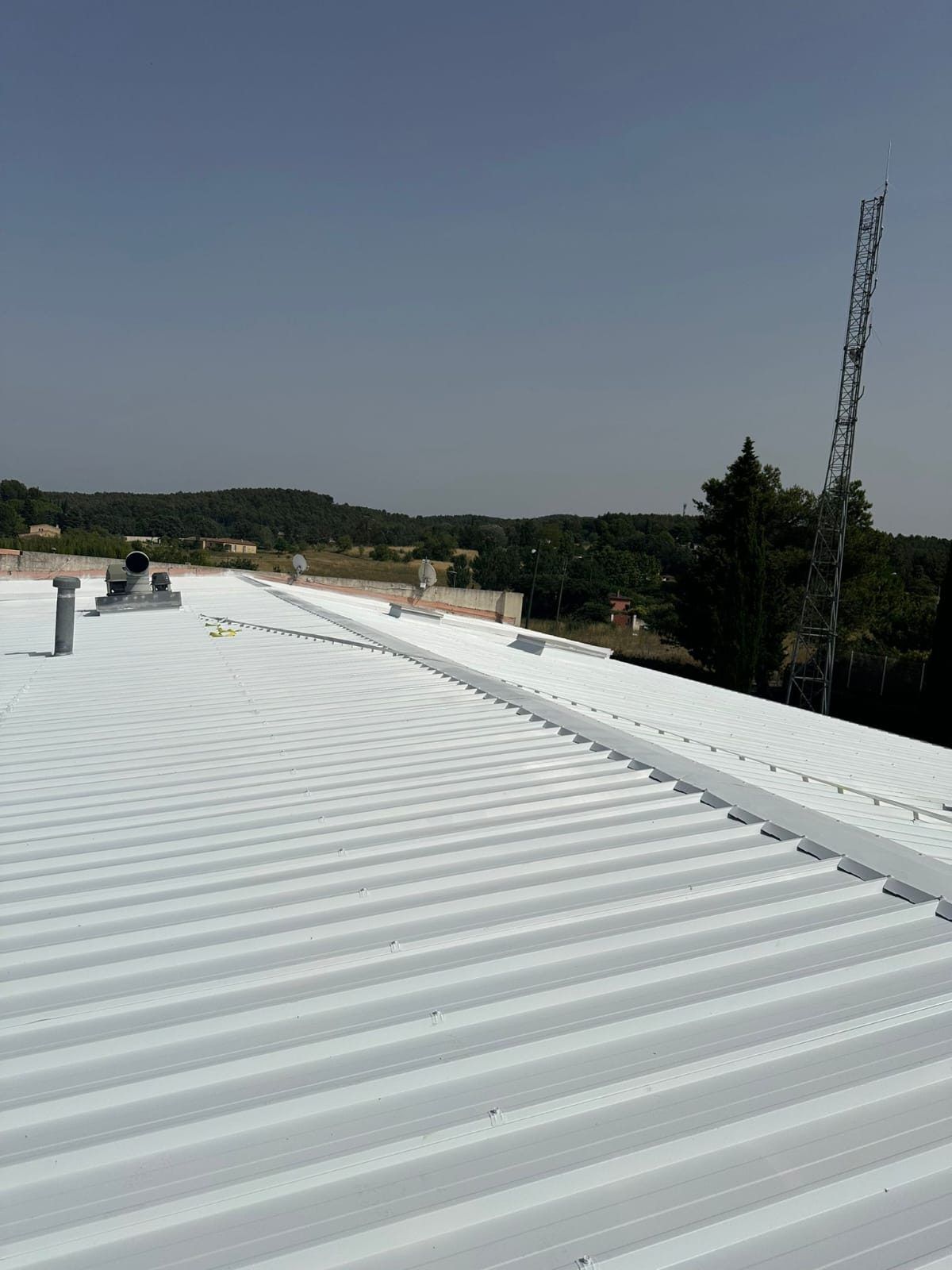
Quick facts — Cool roof on steel deck roofs: the complete 2026 guide (preparation, 4 layers, results)
- Substrate
- Pre-painted or galvanised steel deck, ribbed or corrugated, single or double skin
- Primer
- PH169 — 10 m²/L, 12 mm short-pile roller or airless
- Reflective base coat
- PH107 in two crossed passes — 2 m²/L (0.5 L/m²), 18 mm long-pile roller
- Topcoat
- PH107TCL anti-soiling — 10 m²/L
- Preparation
- Medium-pressure cleaning below 130 bar, treatment of rust spots, fixings made good, 24 h drying
- Points of attention
- Fixings and washers, condensation on single skin, rooflights (PrimaTherm® LT lacquer), rust areas
- Expected result
- Up to −30 °C on the surface, up to −6 °C inside (single skin), up to −40 % air conditioning
- Indicative lead time
- About 1 week for 3,000 m², without lifting, site in operation
Why steel deck heats up so much
Steel deck covers most French industrial, logistics and agricultural roofs: light, economical, quick to install. Its weakness is physical. Steel is an excellent conductor: the heat received on the surface passes through the sheet in a few minutes and radiates straight inside. A dark or aged steel deck absorbs most of the solar radiation (a reflectance of only 10 to 20 %) and reaches 50 to 70 °C on an ordinary summer day.
Two characteristics make the phenomenon worse:
- the low emissivity of bare metal: galvanised steel is poor at emitting the heat it has absorbed (0.2 to 0.3 against 0.89 for PrimaTherm®). The sheet stores the heat instead of radiating it towards the sky;
- the absence of thermal mass: a 0.75 mm sheet buffers nothing. It heats up from 10 a.m. and cools abruptly in the evening, which multiplies the expansion cycles, fatigues the fixings and encourages condensation.
You know the consequences: 35 to 40 °C in the aisles of a warehouse, operators slowing down, heat-sensitive goods to protect, chillers running flat out, and an air-conditioning bill that soars between June and September. A cool roof on steel deck treats the problem at the source: the sheet no longer heats up, so it no longer radiates.
What a PrimaTherm® cool roof changes on a steel deck
The PrimaTherm® system reflects 95 % of solar radiation (ASTM E903-12) with an emissivity of 0.89 (ASTM C1371-15), i.e. an SRI of 120 (ASTM E1980) — against 10 to 40 for a grey steel deck depending on its condition. On a sheet, the difference is immediate.
| Indicator | Untreated steel deck | Steel deck + PrimaTherm® |
|---|---|---|
| Solar reflectance | 10 to 20 % | 95 % (ASTM E903-12) |
| Thermal emissivity | 0.2 to 0.3 (galvanised) | 0.89 (ASTM C1371-15) |
| SRI | 10 to 40 depending on colour and condition | 120 when new, 119 after 4,000 h QUV |
| Surface temperature (summer, 35 °C outside) | 50 to 70 °C | 25 to 35 °C |
| External fire | depends on the sheet | Broof(t3) — CSTB report RA23-0010 |
On the roof: up to −30 °C
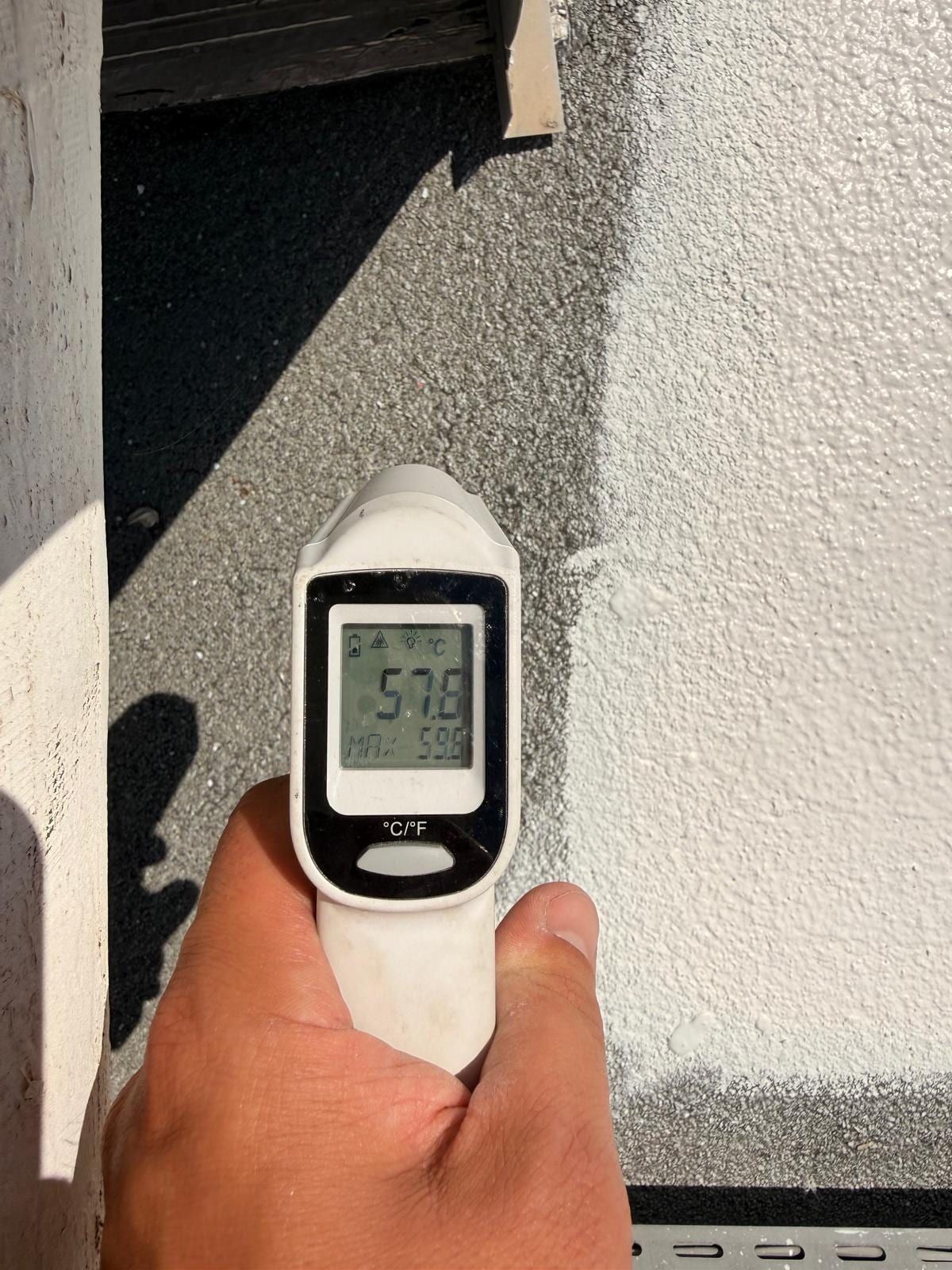
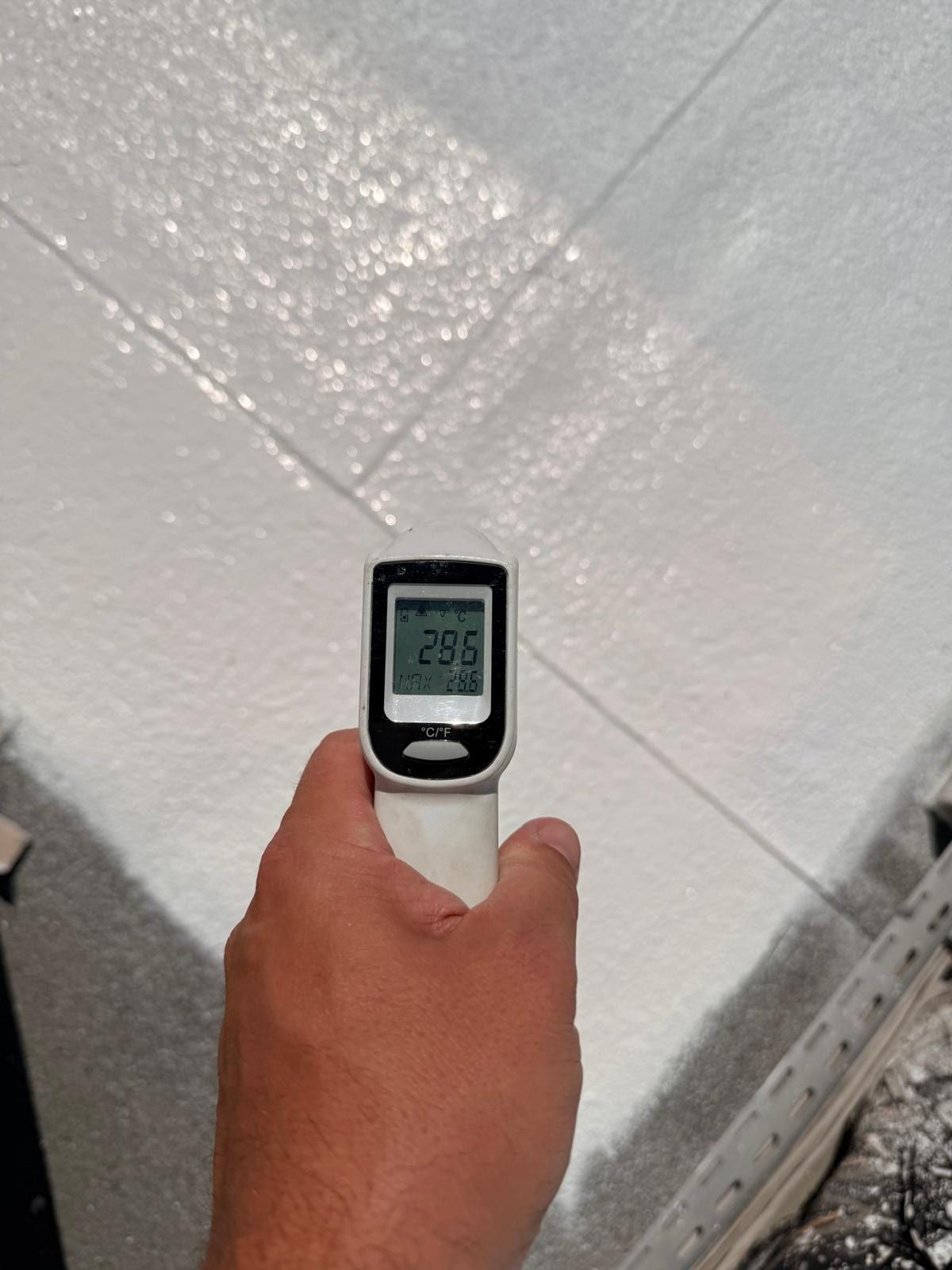
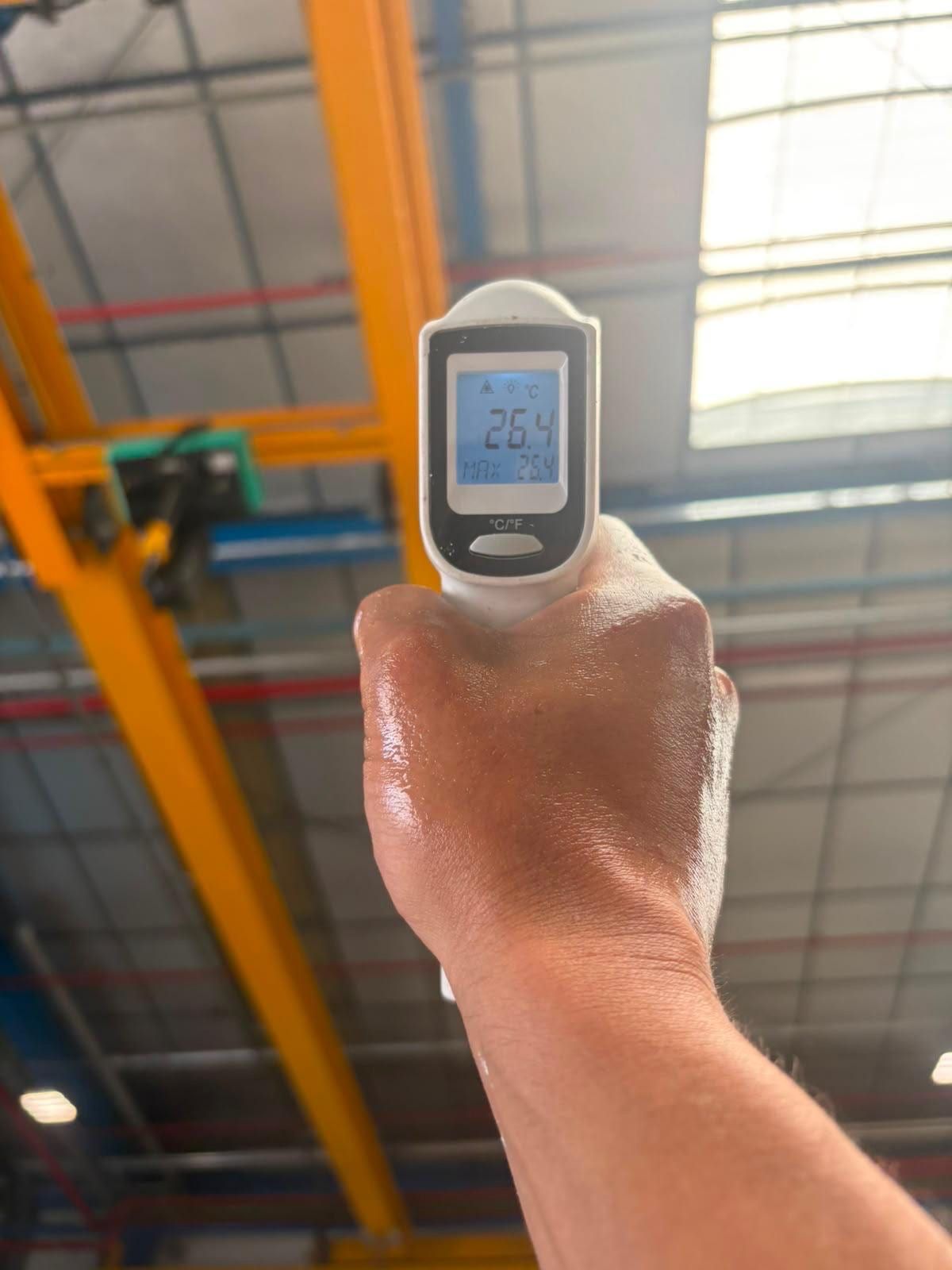
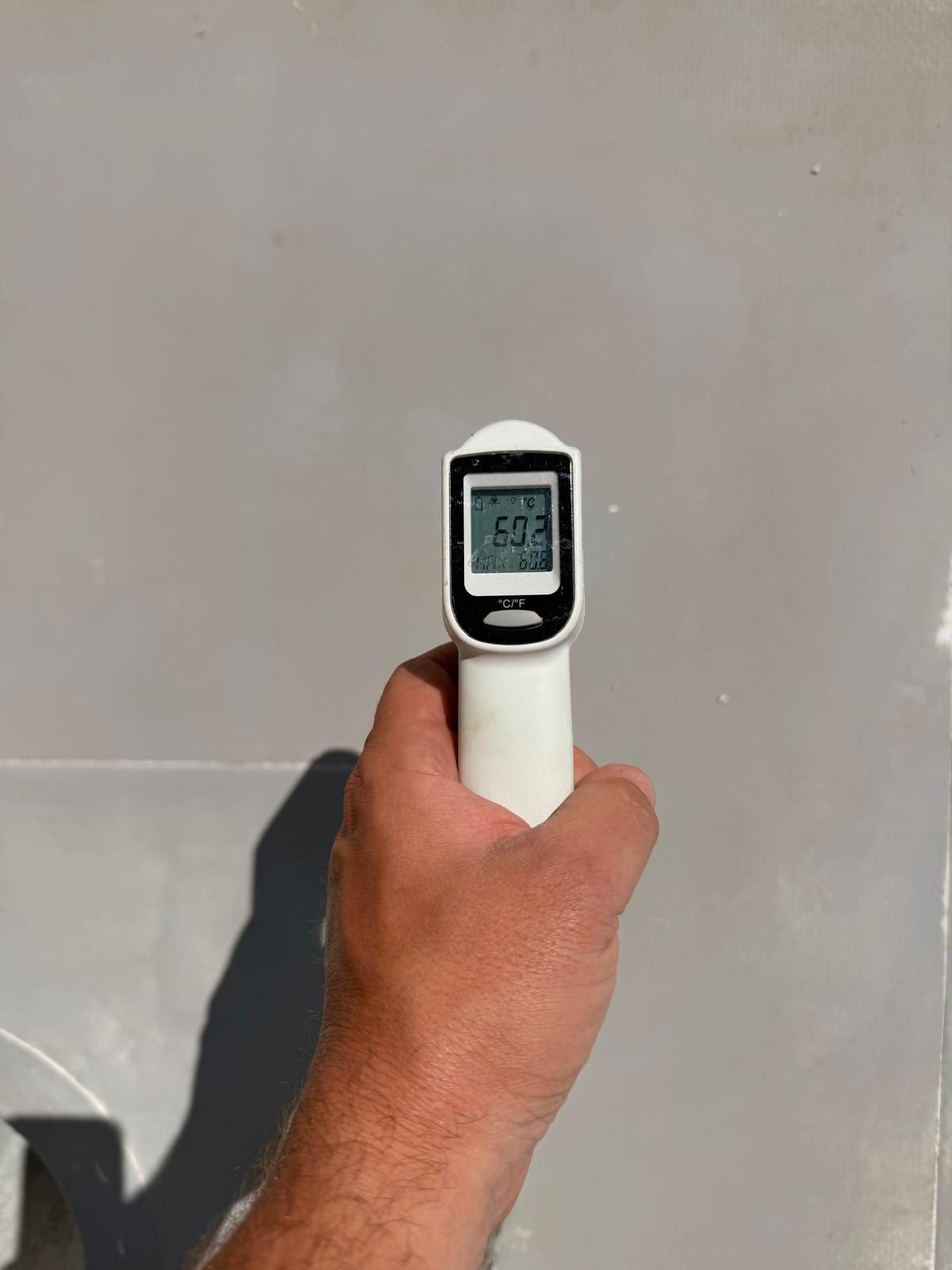
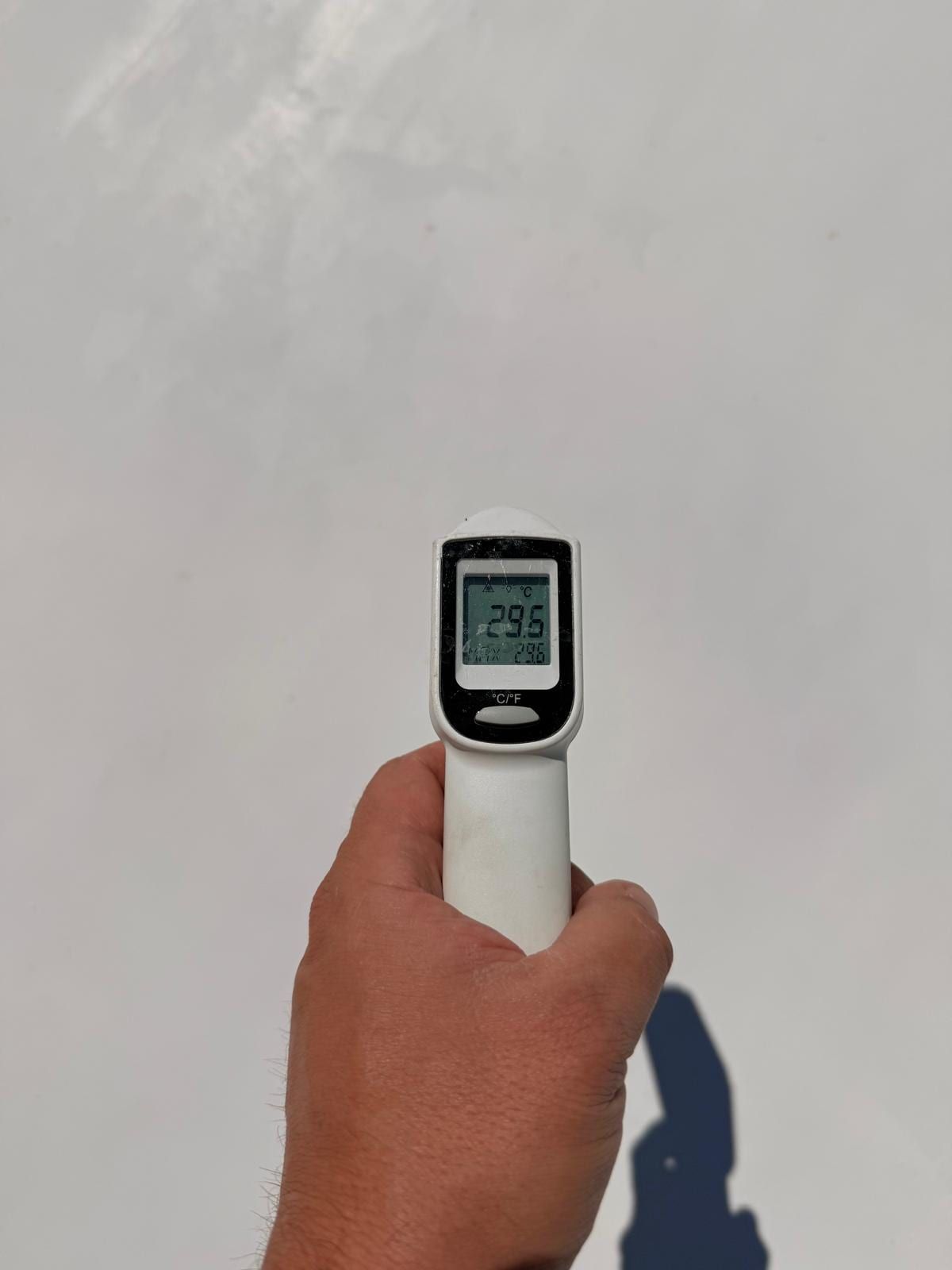
The sheet drops from 50–70 °C to 25–35 °C in full sun. That is the order of magnitude we measure with an infrared thermometer at the handover of every project, treated area versus control area.
Inside: up to −6 °C felt
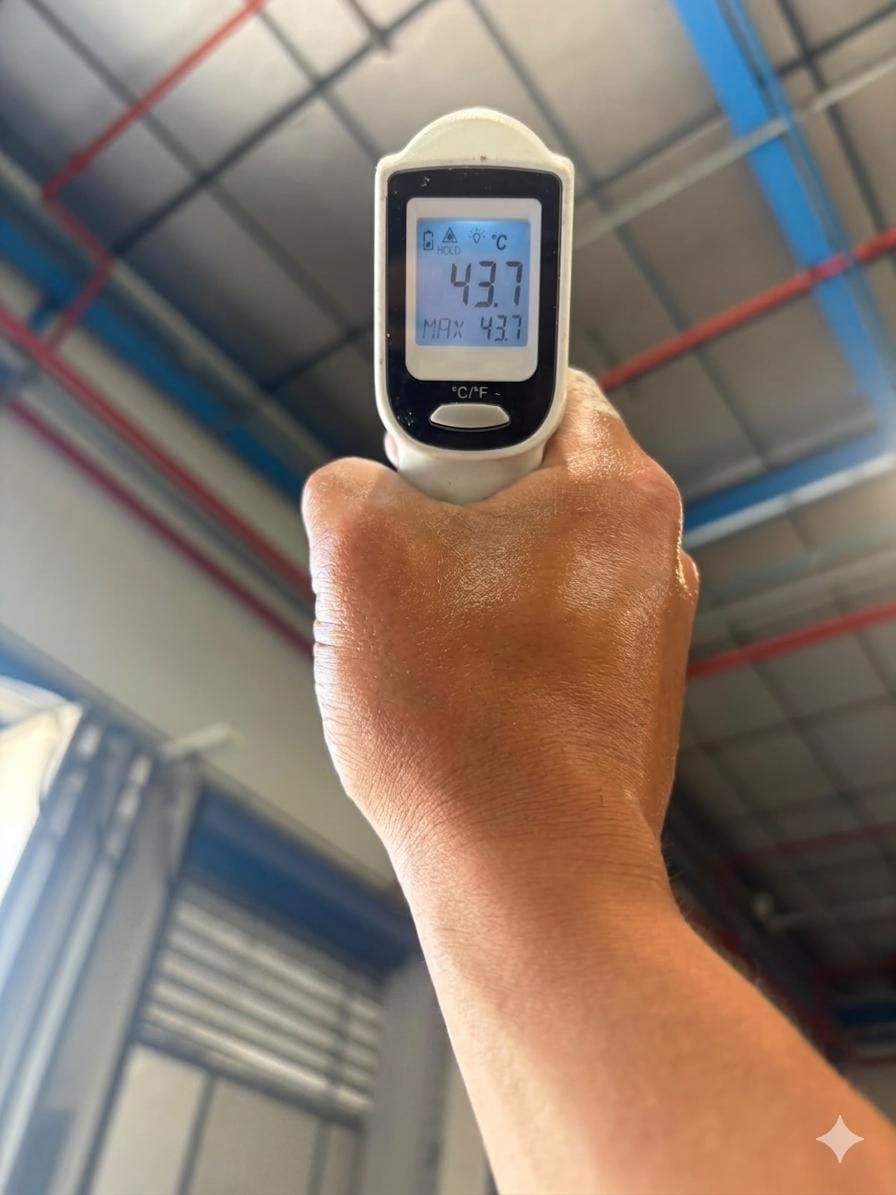
On a single-skin steel deck (uninsulated warehouse, workshop, agricultural building), the indoor gain reaches 4 to 6 °C: it is the radiation from the ceiling, the most unpleasant component of discomfort, that disappears. On an insulated double-skin sandwich panel, the air gain is 1 to 3 °C, but the insulation stops being loaded with heat all day and the air conditioning regains its margin. On a cured-meat site in Périgny (2,000 m² of steel deck, a Hélios project), the roof space went from 50 to 30 °C and refrigeration consumption fell by 35 %.
On the bill: up to −40 % air conditioning
Depending on the climate zone and the use, the reduction in air-conditioning consumption is between 15 and 40 % (15 to 25 % in French climate zone H1, 20 to 30 % in H2, 25 to 40 % in H3). We never quantify this saving from a catalogue: the cool roof ROI and payback page explains the method and the simulator (in French) gives a first order of magnitude from your data.
On the sheet: less expansion, less corrosion
A sheet that no longer exceeds 35 °C expands half as much. The fixings work less, the overlaps stay watertight, and the PrimaTherm® film, elastic and impervious to rainwater, protects the paint or the zinc from UV. A cool roof does not repair a corroded steel deck, but it clearly slows the ageing of a sound one.
Pre-painted or galvanised steel deck: what changes in the preparation
Both substrates accept the system, but they are not prepared the same way.
Pre-painted steel deck (polyester or PVDF coil coating). The factory paint is an excellent base, provided it is clean and cohesive. We check for chalking (a cloth wiped over the sheet that comes away coloured indicates a powdering paint) and for areas of delamination. Medium-pressure cleaning, degreasing if necessary, and the PH169 primer bonds without difficulty. Scratches down to the metal are treated locally.
Galvanised steel deck. New zinc is greasy and smooth: it requires serious degreasing. Old zinc, matt and slightly oxidised, on the contrary offers excellent adhesion after cleaning. What must be removed is white rust (oxidation of the zinc in damp areas) and red rust at the overlaps and around the fixings: brushing, treatment of the spots, then primer over the whole surface. The PH169 primer is not optional on galvanised steel: it is what guarantees that the system holds over time.
Single skin or double skin. The application method is the same; what differs is the expectation. On single skin, the main objective is immediate indoor comfort and less condensation. On double skin, it is above all about relieving the insulation and the air conditioning, protecting the upper sheet and contributing to the objectives of the French tertiary-sector decree. In both cases, the site record sheet notes the type of deck, its thickness and its initial condition.
The application protocol on steel deck, step by step
1. Diagnosis and free study
Everything starts with the free study: satellite measurement, identification of the deck (pre-painted or galvanised, single or double skin), first qualification of the incentives. The site visit then checks the condition of the fixings, overlaps, gutters, rooflights and rooftop equipment (AHUs, extractors, cable trays), as well as the access and safety conditions (lifelines, guardrails, prevention plan).
2. Substrate preparation
- anti-moss treatment if necessary, without chlorinated products;
- medium-pressure cleaning with cold water, below 130 bar;
- brushing and treatment of rust spots, oxidised fixings made good, worn sealing washers replaced;
- protection of rooflights, rainwater outlets and equipment;
- drying for at least 24 h, dry substrate and sheet temperature between 12 and 35 °C.
3. The 4 layers, 3 products
| Layer | Product | Coverage on steel deck | Tool |
|---|---|---|---|
| 1 | PH169 primer | 10 m²/L | 12 mm short-pile roller or airless |
| 2 and 3 | PH107 reflective base coat, two crossed passes | 2 m²/L in total (0.5 L/m²) | 18 mm long-pile roller or airless |
| 4 | PH107TCL anti-soiling topcoat | 10 m²/L | roller or airless |
The short-pile roller (12 mm) is enough for the primer, which is fluid and lightly loaded. For the base coat, the 18 mm long-pile roller is essential: it follows the bottom of the ribs and the sides of the corrugations without leaving thin areas, where a paint applied “flat” would stop on the crests. On large areas, we spray with airless equipment using the no-lifting method: drums and pumps on the ground, 80 m hoses on the roof, zero crane, zero reserved roadway. Each 60 to 100 m² zone is checked by following the drop in level in the drums, and a thickness check is recorded in the site record sheet.
4. Checks and handover
Infrared readings treated area versus control area, visual check of uniformity, reconciliation of the quantities used with the coverage rates of the protocol, as-built file with test reports, technical data sheets and ten-year insurance certificate.
The points of vigilance specific to steel deck
The fixings. On a screwed deck, every screw head is a potential water entry point. The preparation treats them one by one; the system then covers them with an elastic film that does not crack under expansion. On a standing-seam deck, there are no through fixings: the preparation focuses on the overlaps.
Condensation. On single skin, the sheet cools quickly at night and the moisture in the indoor air condenses on it. A cool roof reduces the end-of-day thermal shocks; it does not replace ventilation or an existing anti-condensation felt. We say so before the study.
Rooflights. An industrial steel deck often has 5 to 10 % of polycarbonate rooflights, which let in as much heat as light. The PrimaTherm® LT lacquer is applied to them as a complement: one coat reduces the solar gains (and the transmitted light) by about 25 %, two coats by about 50 %.
Rust areas. Superficial rust can be treated; a perforated sheet must be replaced. The diagnosis says so clearly, sheet by sheet.
Fibre cement is not steel deck. Corrugated fibre-cement roofs can also be treated, but only if asbestos-free (buildings built after 1997). Do not confuse the two substrates when requesting a study.
For which steel-deck buildings
- Logistics platforms: several thousand m² treated by zones without interrupting the flows. A 1,000 m² steel-deck warehouse in Marseille was treated by Hélios with the PrimaTherm® system; see the project page.
- Industrial sites: workshops, temperature-sensitive processes, regulated sites where the no-lifting method avoids a heavy prevention plan.
- Agricultural buildings: livestock and storage under single skin, where the indoor gain is greatest.
- Retail and cold stores: cold chain and chillers relieved.
- Roofs with photovoltaic panels: the cool roof is preferably applied before the modules are installed.
The cool roof applications hub covers all the buildings and substrates concerned.
Incentives and regulation for a steel deck
Sheet BAT-EN-112 of the French energy-savings certificates (CEE) targets the reflective renovation of the roof of a commercial tertiary building whose volume is heated and cooled by heat pump: 160, 170 or 270 kWh cumac per m² depending on French climate zone H1, H2 or H3. A logistics warehouse without air conditioning or an agricultural building is not eligible as such; an air-conditioned shop or tertiary site may be. MaPrimeRénov’, the French home renovation grant, does not cover cool roofs. We check eligibility during the study; the details are on the cool roof incentives 2026 page.
For tertiary buildings over 1,000 m², a cool roof is an action that can be declared on the OPERAT platform under the French tertiary-sector decree. Changing the colour of a roof may require a prior declaration to the town hall (article R. 421-17 of the French planning code) depending on the local planning rules (PLU): we check this point for every project.
Maintenance and durability on steel deck
The SRI of PrimaTherm® is maintained after 4,000 h of accelerated QUV ageing (119 against 120 when new); the conventional service life used in the French CEE sheet is 20 years. On steel deck, two actions are enough: an annual visual inspection (fixings, overlaps, gutters) and a clean with clear water or low pressure, 100 bar maximum, every 12 to 15 months. When working on a piece of equipment, lay load-spreading boards so as not to mark the film. The cool roof maintenance guide (in French) details the maintenance plan.
Small areas and homeowners
For a hangar, a workshop or a shelter under 500 m², the online shop (in French) sells the three products of the system with the quantity calculation per m² and the application guide; the coverage rates above (10 m²/L for the primer, 2 m²/L for the base coat, 10 m²/L for the topcoat) let you order the right amount. The other substrates have their own guide: bitumen roofs, waterproofing membranes, flat roofs.
The thermometer, same time of day, before and after.
Frequently asked questions
Does a cool roof work on all types of steel deck?
Yes: pre-painted, galvanised, ribbed or corrugated steel deck, single skin or double-skin sandwich panels. The diagnosis checks the condition of the sheet (rust, fixings, joints) and adapts the preparation. Only a deck whose structure is deeply corroded must be repaired or replaced before application.
How long does a cool roof project take on a steel deck?
Allow about one week for 3,000 m² in good weather conditions, preparation included. Large logistics platforms are phased by zones. The building stays in operation: drums and machines stay on the ground, only the hoses go up to the roof.
Do the fixings need to be treated before applying the cool roof?
Yes, it is a key point of the preparation on steel deck. Oxidised screws and washers are brushed or replaced, worn sealing washers are changed, then the whole receives the PH169 primer like the rest of the sheet. The system, being elastic, then covers the screw heads without weakening them.
Does a cool roof reduce condensation under a single-skin steel deck?
It reduces the temperature differences between the sheet and the indoor air, which limits the condensation episodes linked to thermal shocks, particularly at the end of the day. It does not replace proper ventilation of the volume or an anti-condensation felt: the diagnosis examines both points.
How often does a cool roof on steel deck need maintenance?
One visual inspection per year and a clean with clear water or low pressure (100 bar maximum) every 12 to 15 months are enough. The PH107TCL topcoat limits soiling; the SRI of PrimaTherm® is maintained after 4,000 h of accelerated QUV ageing, for a conventional service life of 20 years (French CEE sheet).
Is a cool roof compatible with photovoltaic panels on a steel deck?
Yes, and it is even recommended: a cooler roof improves the yield of the modules by a few percent, as they lose power when they heat up. Ideally, the cool roof is applied before the panels are installed. Our cool roof and solar panels page details the order of the works.