Why the roof weighs so heavily on a food-industry site
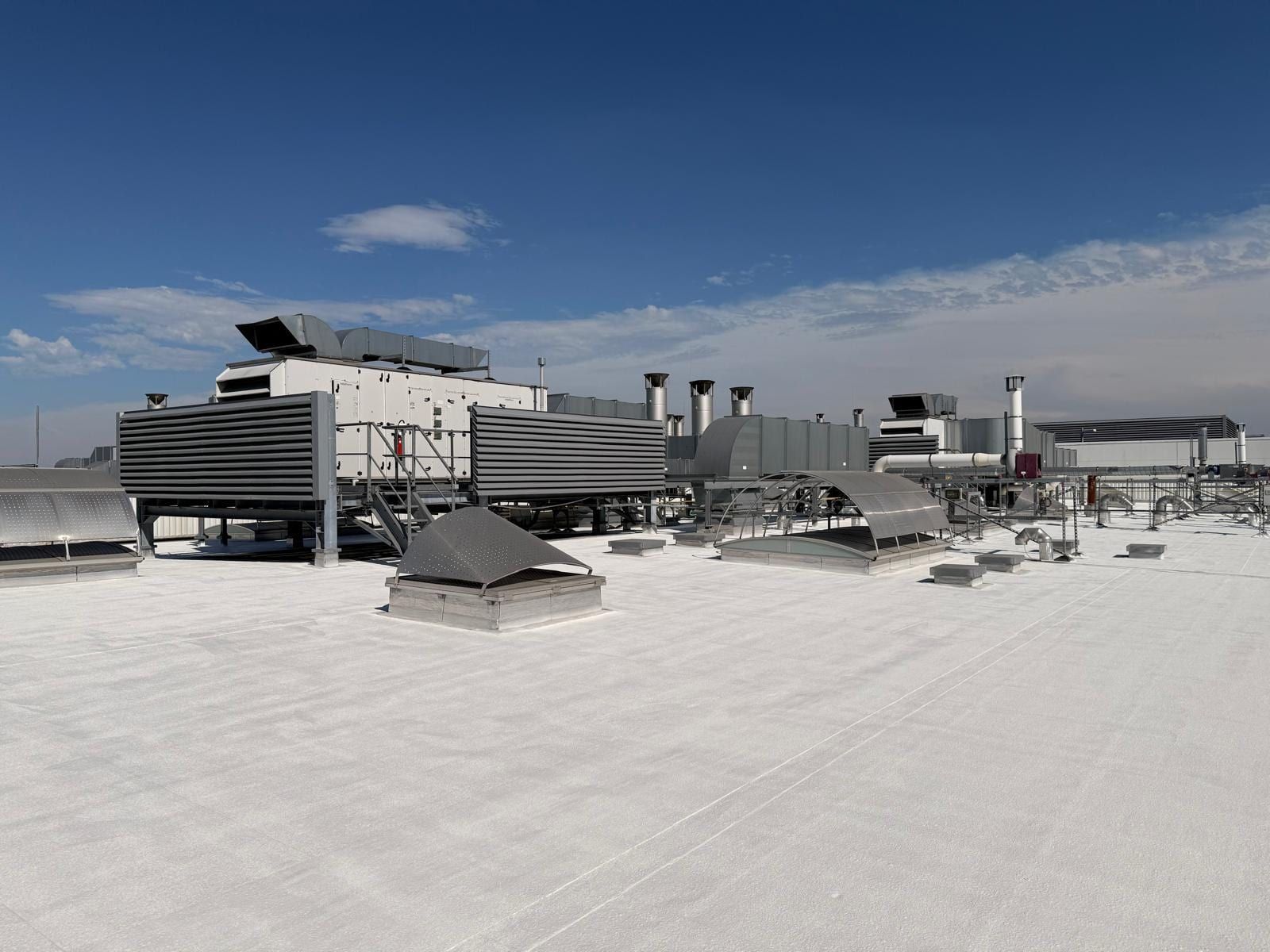
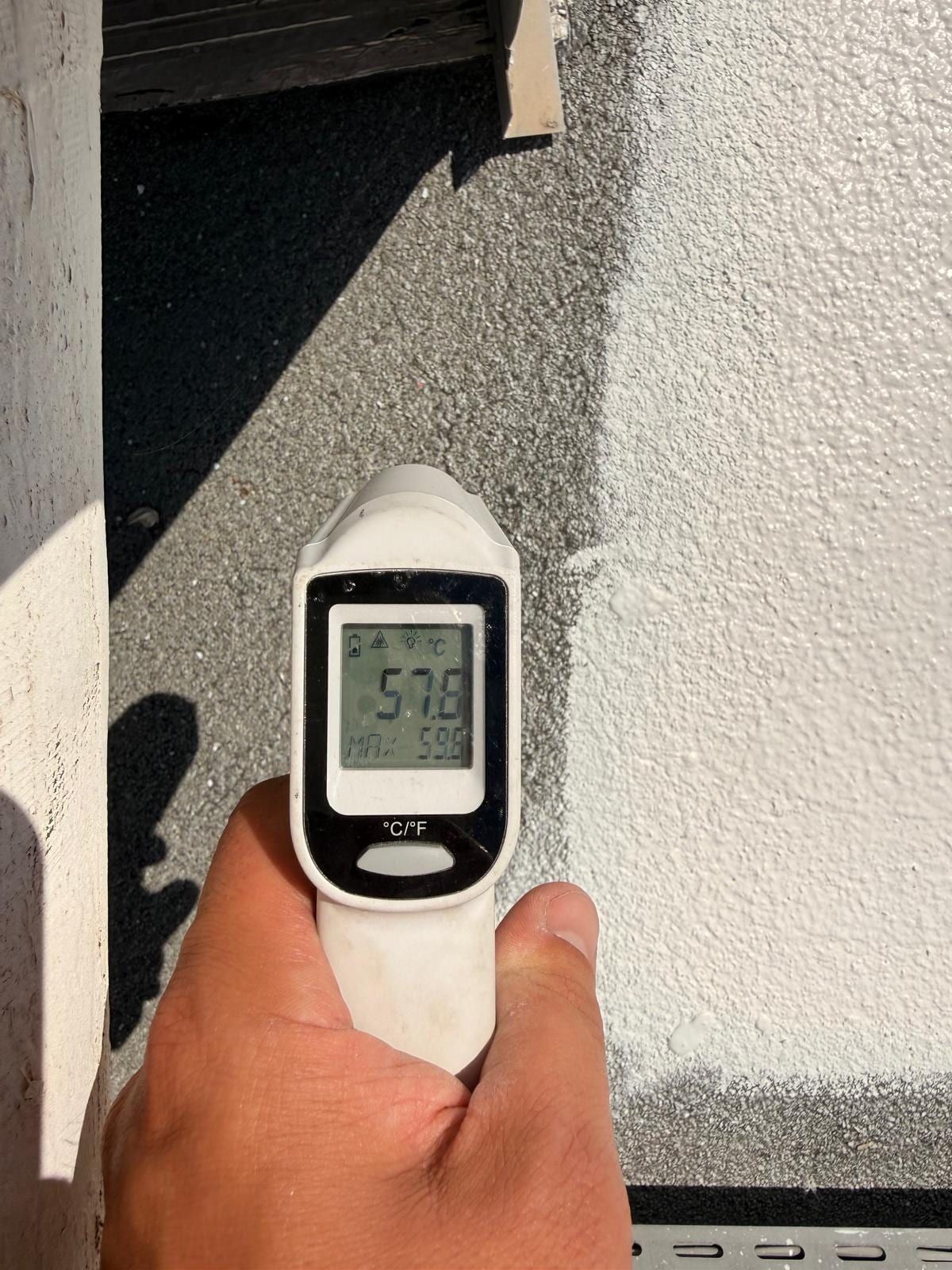
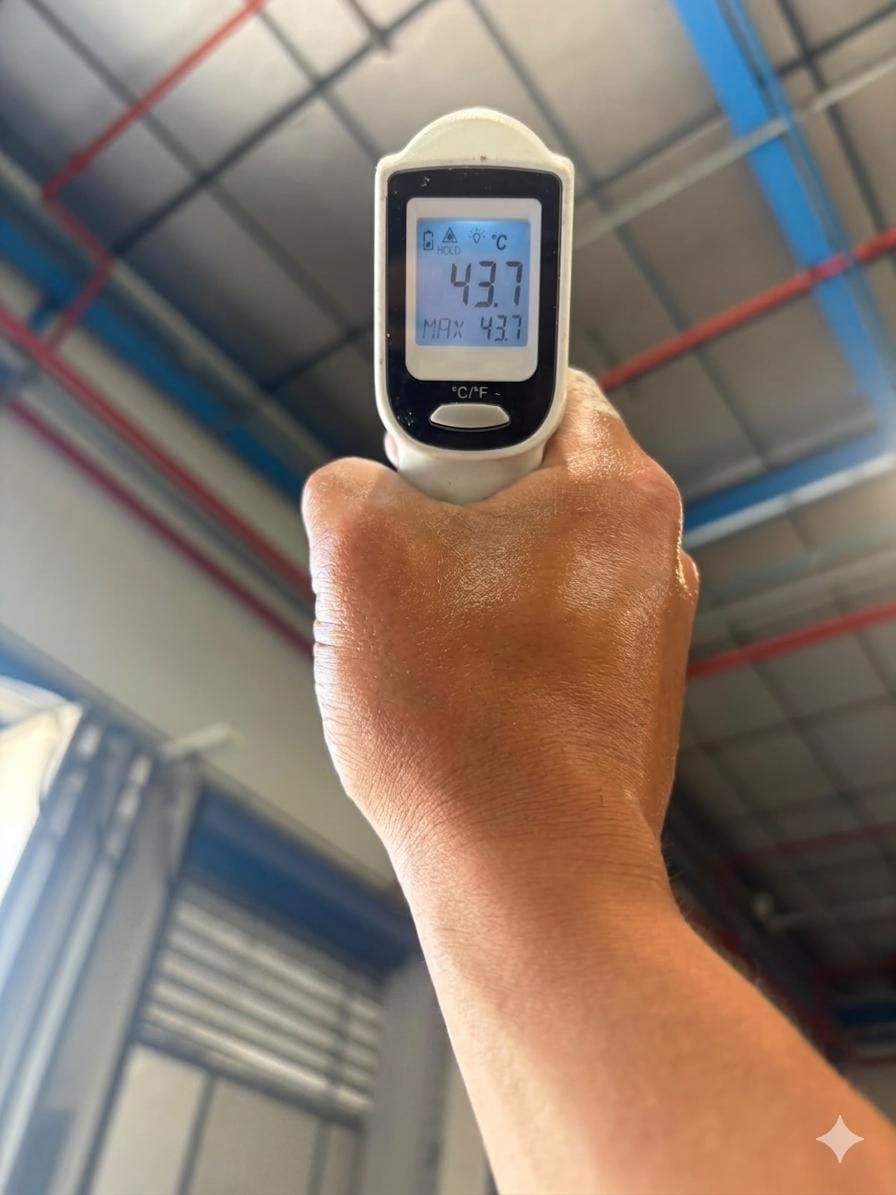
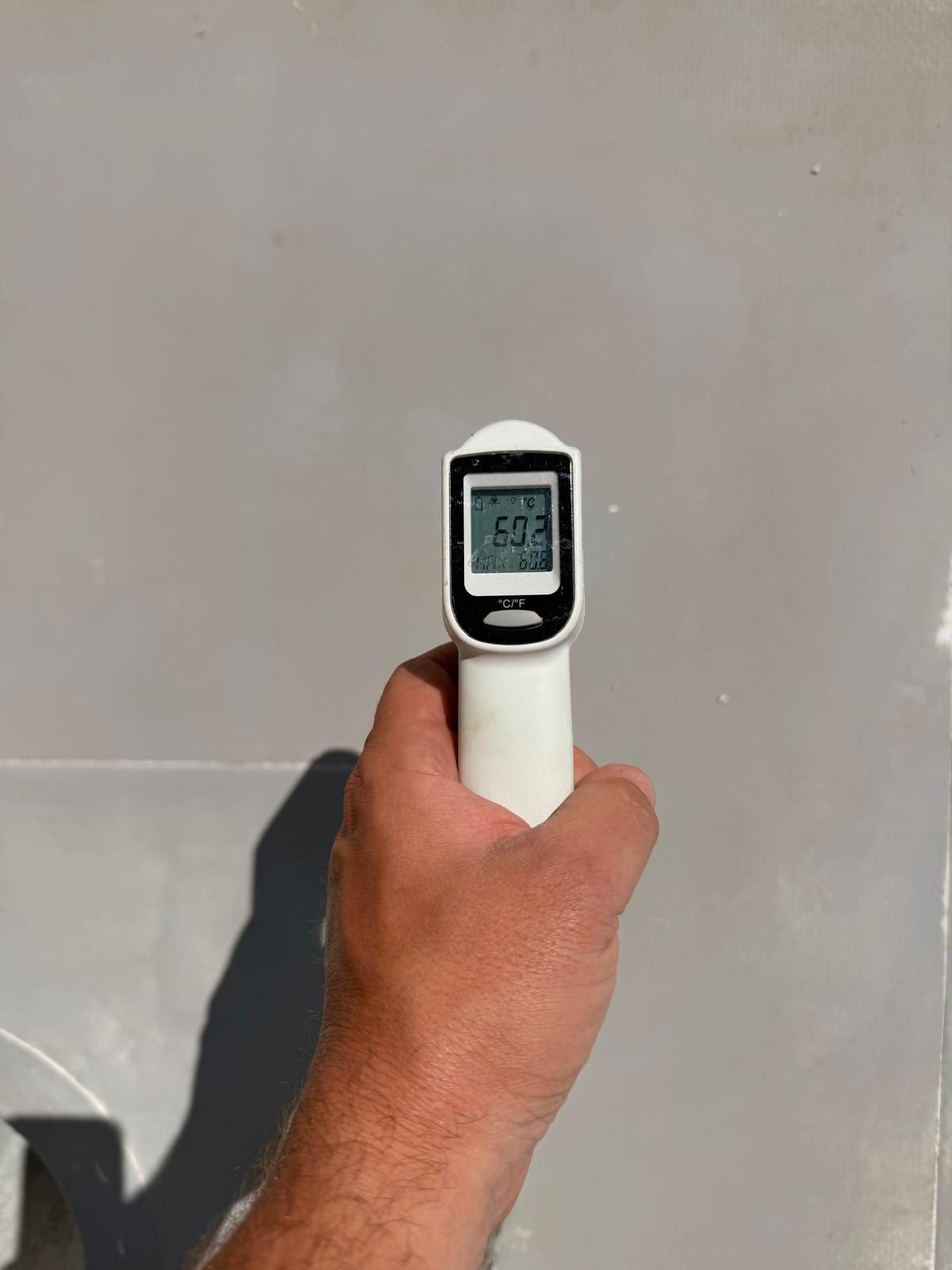
A cold store or a processing plant combines two sources of heat: the process, with cooking, compressors and lighting, and the roof. In summer, a steel deck or a dark membrane exceeds 60 °C on the surface and transmits that heat to the volumes below. The cold-room setpoint does not move; it is the chillers that compensate, at the hours when electricity costs the most.
The docks, weak link of the cold chain
Picking areas, docks and airlocks are rarely refrigerated to the same level as the cold rooms. A few degrees too many in July are enough to downgrade a batch, trigger a dispute with a carrier or a non-conformity in a customer audit.
Insulation is not enough
Sandwich panels slow heat transfer, they do not cancel it. Over a summer day, a roof at 65 °C gets through the insulation and loads the cold rooms. Acting on the surface temperature reduces the incoming flow whatever the insulation thickness.
What the PrimaTherm® system changes on your buildings
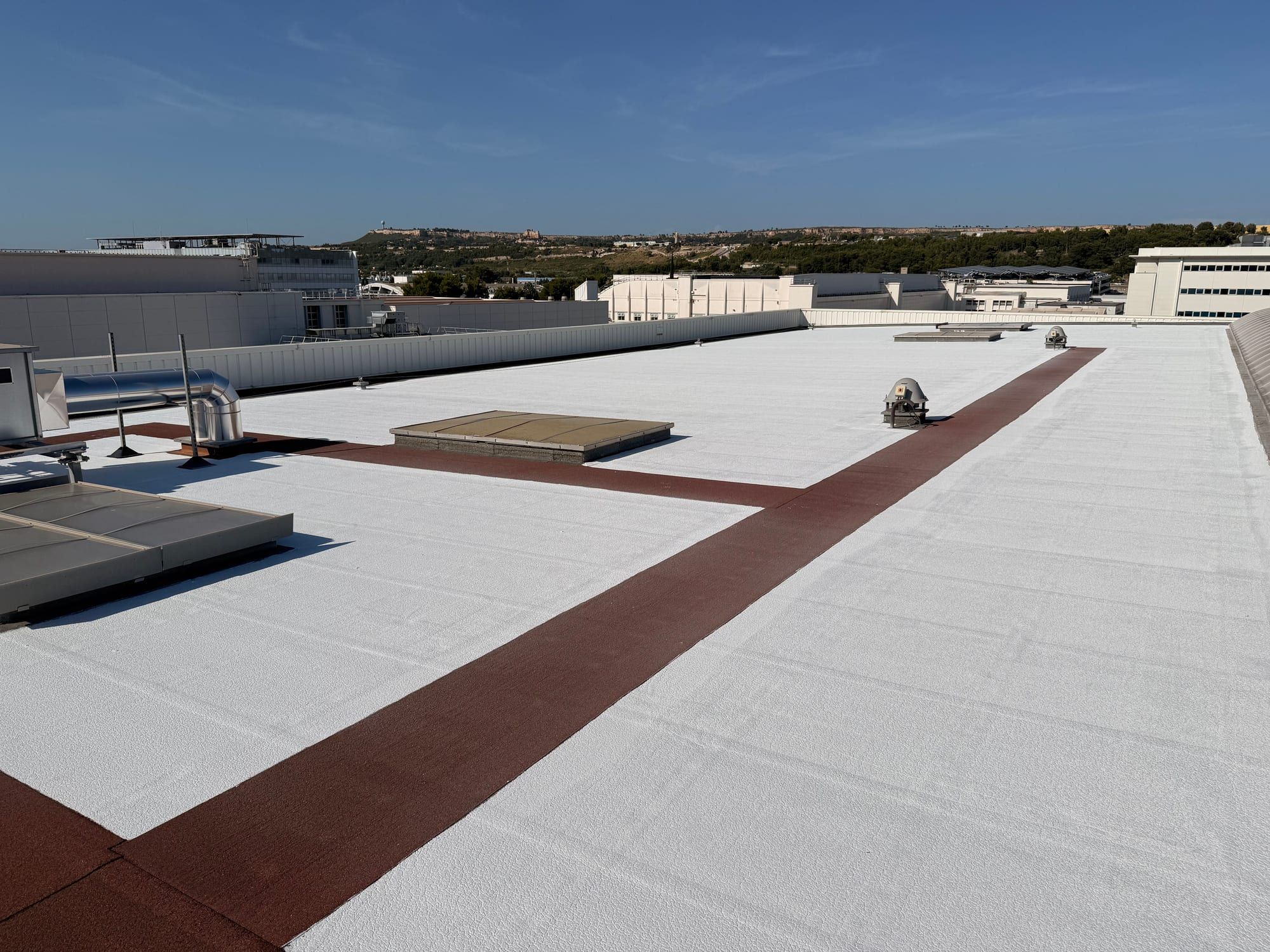
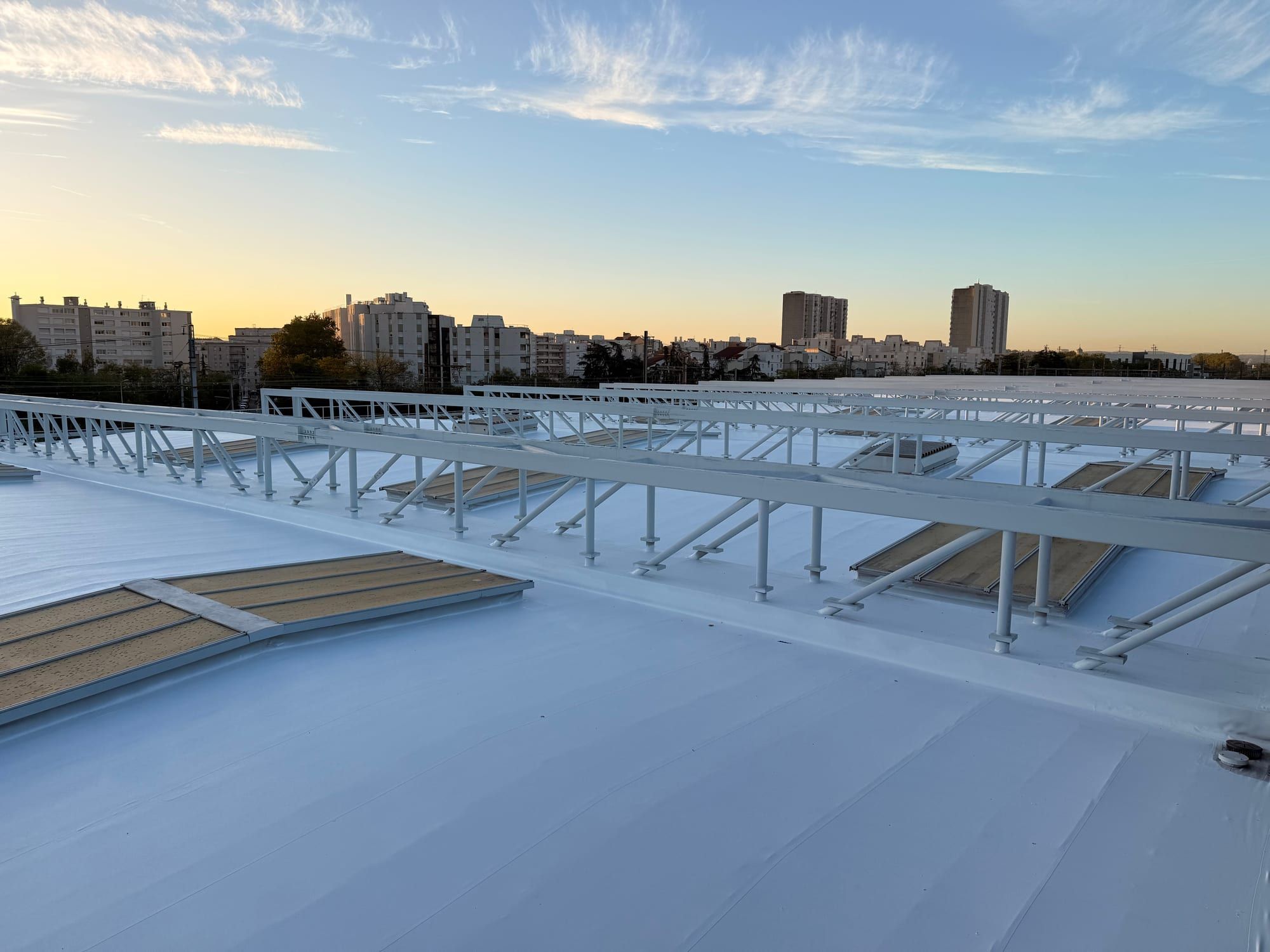
Hélios applies the PrimaTherm® system, manufactured by Primacoating in La Rochelle, in 4 layers: PH169 primer suited to the substrate, PH107 reflective base coat in two passes, PH107TCL anti-soiling topcoat. It reflects 95 % of solar radiation (ASTM E903-12) with an emissivity of 0.89 and an SRI of 120, maintained at 119 after 4,000 hours of accelerated QUV ageing.
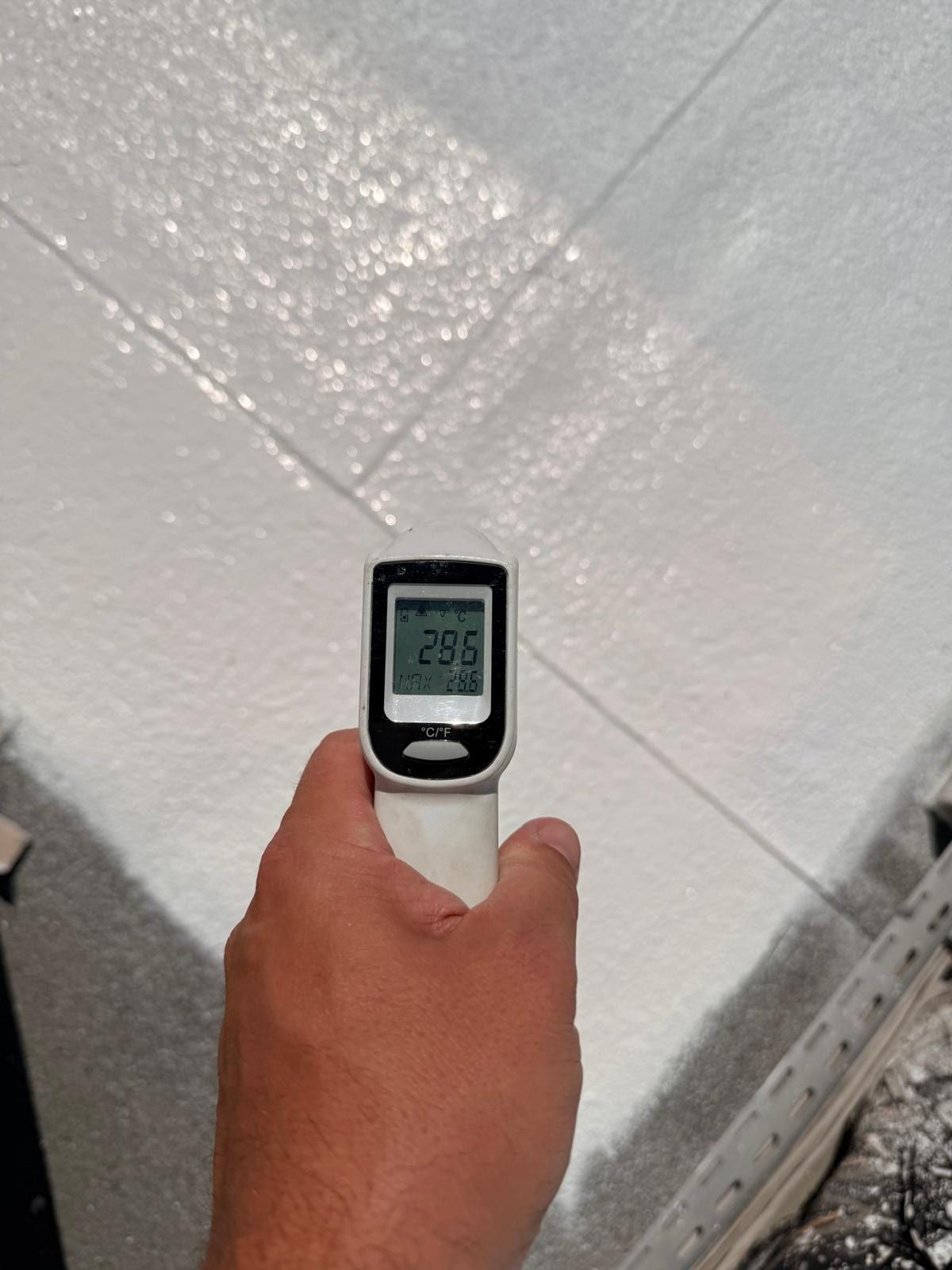
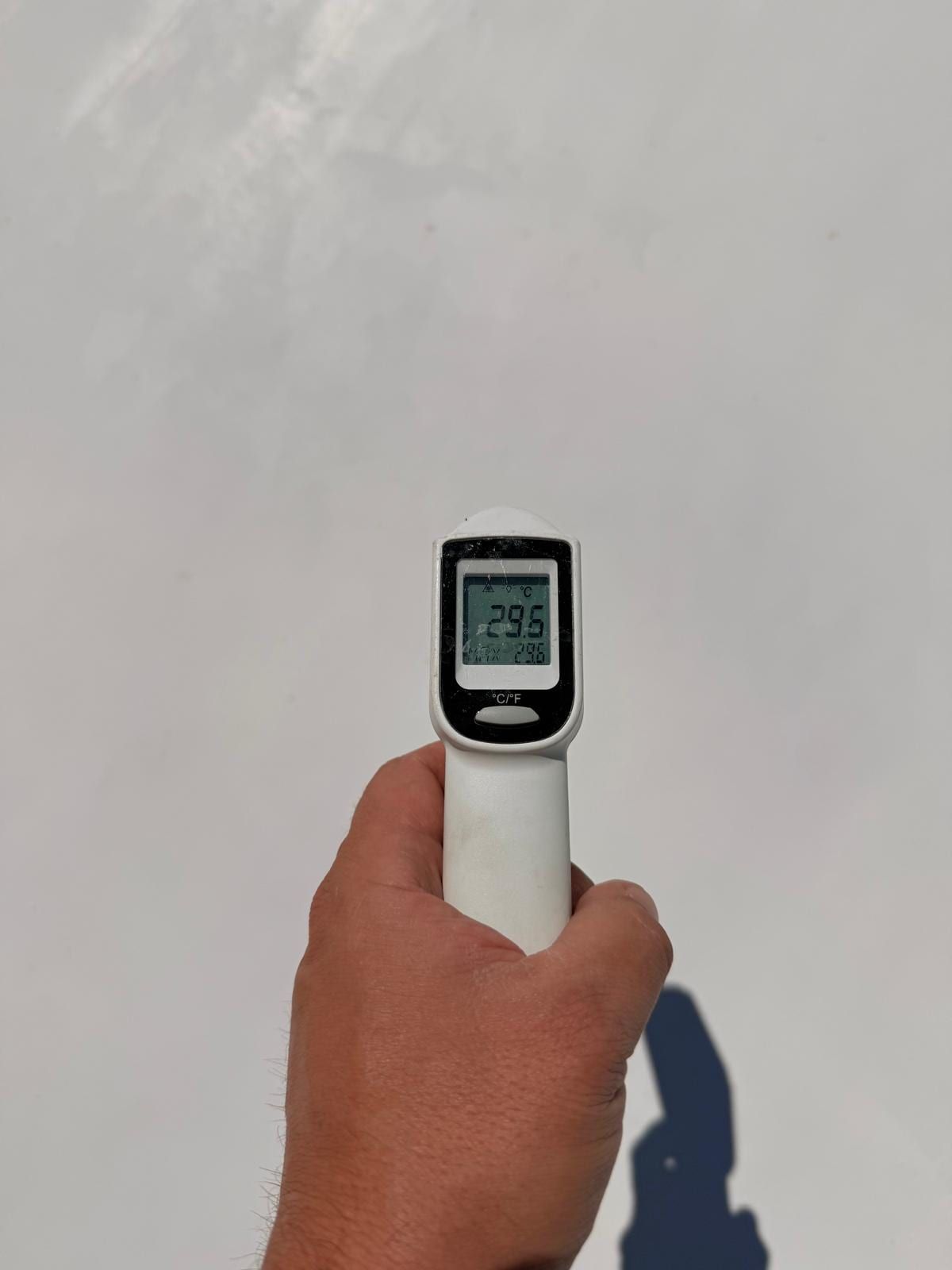
- Roof surface: up to −30 °C, measured with an infrared thermometer at handover.
- Cooling: up to −40 % consumption in summer on refrigerated or air-conditioned volumes.
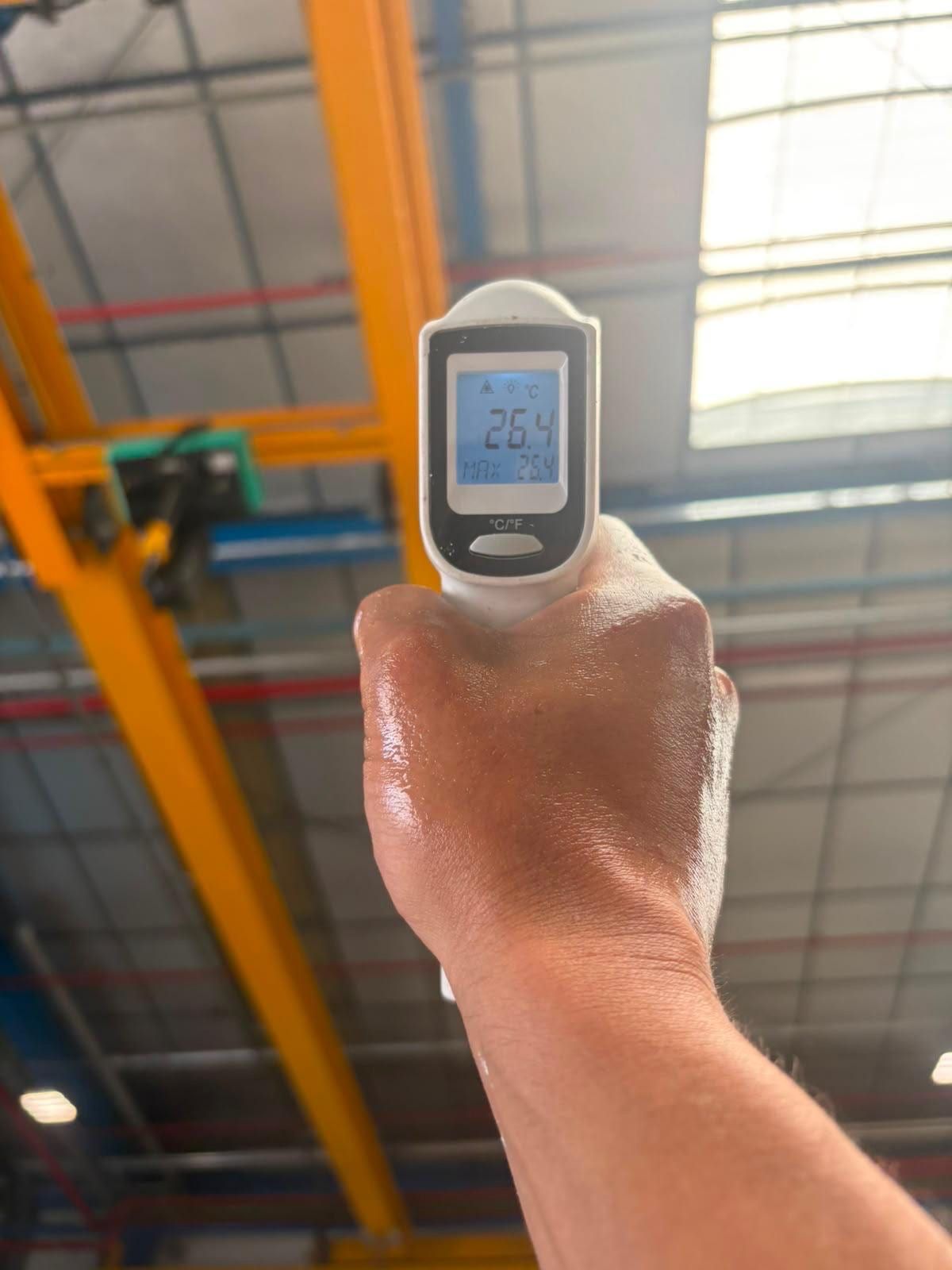
- Cold chain: fewer peaks on the docks and in the upper zones of the warehouses.
- Envelope: fewer thermal shocks on the panels and the waterproofing, a re-roofing postponed.
Two food-industry sites already operate with this system: a food plant in La Rochelle and a site in Périgny, PrimaTherm® system projects carried out by the manufacturer.
Work that stays outside, documented for your audits
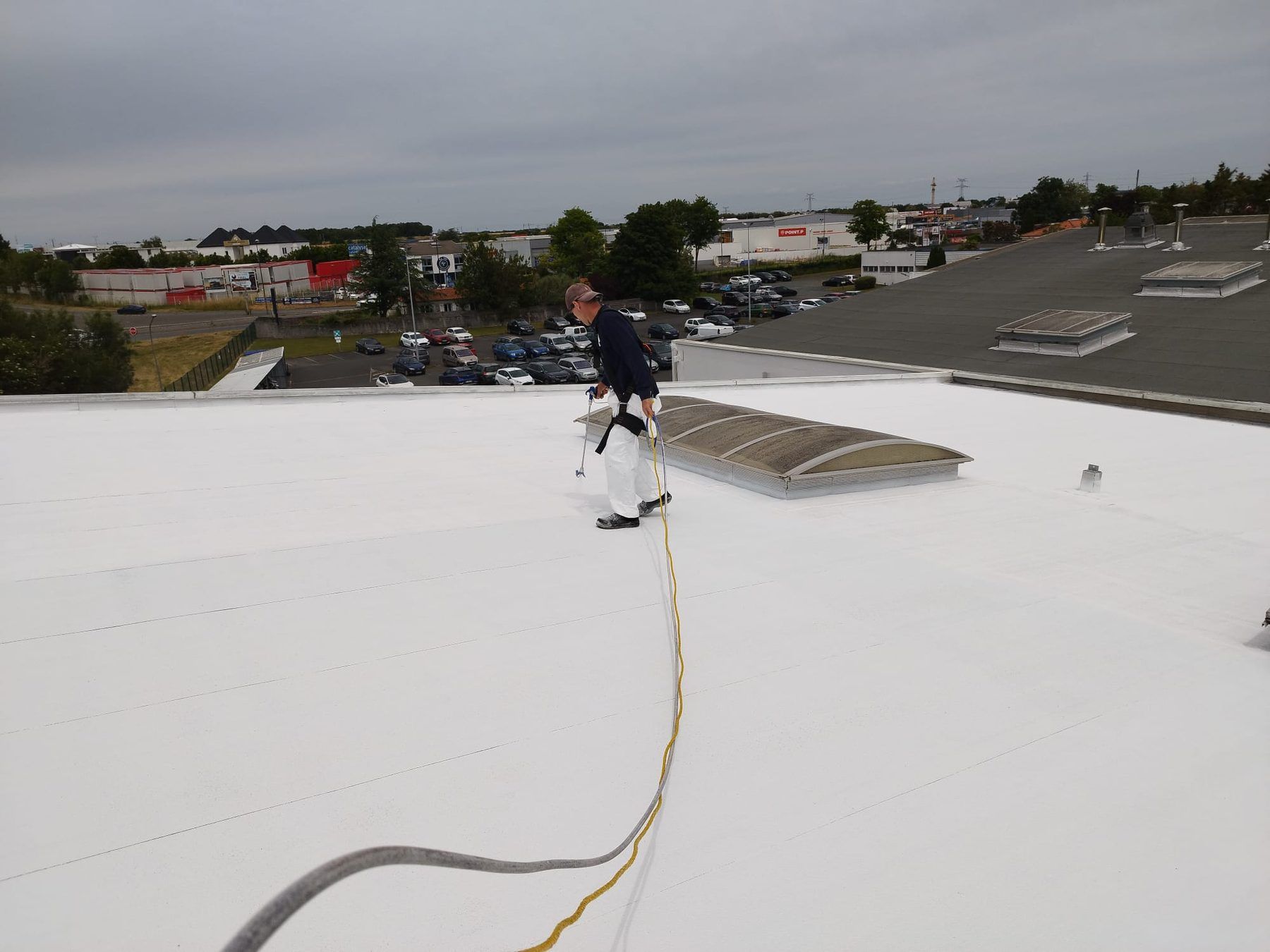
The drums and the airless pump stay on the ground in a marked-out area; only the hoses go up to the roof. No opening is made and nobody enters the plant. Air intakes, condensers and chillers on the roof are protected during high-pressure cleaning and application, following a sequence approved with the maintenance team. The coating is water-based, without solvent or odour, with a Broof(t3) fire rating (CSTB report RA23-0010).
Before the work: risk analysis, working-at-height certifications, safety data sheets, prevention plan. Afterwards: as-built file with before/after infrared readings, thickness checks, technical data sheets, ten-year insurance certificate and maintenance plan. An annual rinse with clean water preserves the reflectance; the PH107TCL topcoat limits soiling, a sensitive point near cooking extract vents.
Steel deck, sandwich panels, membrane: each roof type has its primer
Pre-painted or galvanised steel deck receives the PH169 primer at 10 m²/L after cleaning and treatment of the corrosion spots. Steel-faced sandwich panels are treated the same way, after checking the joints and fixings. Bitumen membrane and EPDM receive the primer at 6 m²/L on a rough substrate. The steel deck and waterproofing membrane guides detail the preparations.
How a food-industry project runs with Hélios
- Free study within 48 h: satellite measurement, substrate analysis, review of your refrigeration consumption, prioritisation of the buildings.
- Site visit with the maintenance team: condition of the substrates, adhesion tests, sequencing of the protections, prevention plan.
- Application in 4 layers, without lifting, production maintained, zone by zone.
- Documented handover: infrared readings treated area versus control area, thickness checks, as-built file, ten-year insurance certificate.
Why Hélios for your site
We apply the same system and the same checks as on the Airbus Marignane hangars, with published measurements. We only put forward certified or measured values, we turn down substrates at the end of their life, and we document every step for your quality audits and your insurers.
Frequently asked questions
Do we need to stop production or empty the cold rooms during the work?
No. The application takes place entirely on the roof, from outside, without a crane or scaffolding: the drums and the pump stay on the ground in a marked-out area; only the hoses go up. Cold rooms, workshops and docks operate normally. We plan the zones and the hours with the maintenance team, including the high-pressure cleaning phases.
Does the work have an impact on the HACCP plan?
Nobody enters the production areas and no opening is made in the envelope. The PrimaTherm® system is water-based, without solvent or odour. Air intakes, chillers and condensers on the roof are protected during the cleaning and application phases. We provide the safety data sheets and the as-built file for your audits.
How much does it save on the refrigeration bill?
The roof surface drops from 50–70 °C to 25–35 °C, up to −30 °C, and the load transmitted to the cold rooms falls. Depending on the climate zone, the insulation of the walls and how the chillers run, cooling consumption falls by up to −40 % in summer. We quantify the range from your consumption records, never from a catalogue.
My roof is already insulated with sandwich panels: is it still useful?
Yes. Insulation slows heat transfer, it does not cancel it: a roof at 65 °C gets through a sandwich panel over the course of a summer day. Lowering the surface temperature reduces the incoming flow whatever the insulation thickness, and protects the outer face of the panels from thermal ageing.
Which roof types do you treat on a food-industry site?
Pre-painted or galvanised steel deck, steel-faced sandwich panels, bitumen membrane and EPDM. A PVC membrane is only treated if it has been in place for more than ten years, with a specific adhesion base. The diagnosis checks corrosion at the overlaps and fixings and the condition of the waterproofing before any commitment.
Is there an incentive for a cold store?
The French CEE incentive, sheet BAT-EN-112, targets commercial tertiary buildings heated and cooled by heat pump; a cold store or a plant does not qualify. Some regional or sector schemes may apply depending on your activity. We check building by building during the study and announce no incentive before validation.