The logistics warehouse and heat: a problem of surface area
The logistics sector combines everything that makes a roof a problem in summer. The buildings are huge (5,000 to 60,000 m² per cell or per platform), tall, often roofed with single-skin steel deck or dark membrane, and the insulation dates from construction. Activity does not stop in July or August: lorries arrive, orders leave, pickers walk kilometres through aisles that have no air conditioning. On a platform, the roof accounts for almost the entire envelope exposed to the sun: when it climbs to 50–70 °C, the whole volume beneath follows.
Single-skin steel deck: the roof that heats up fastest
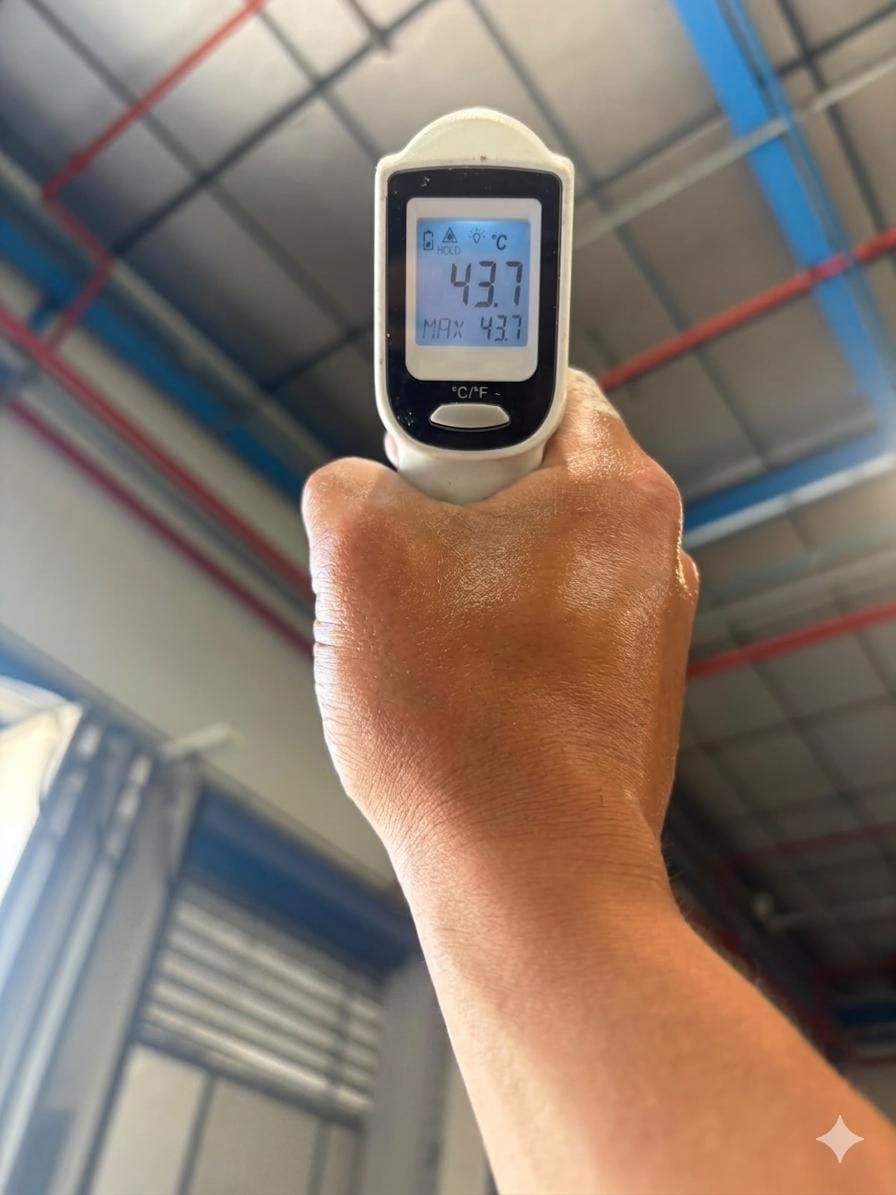
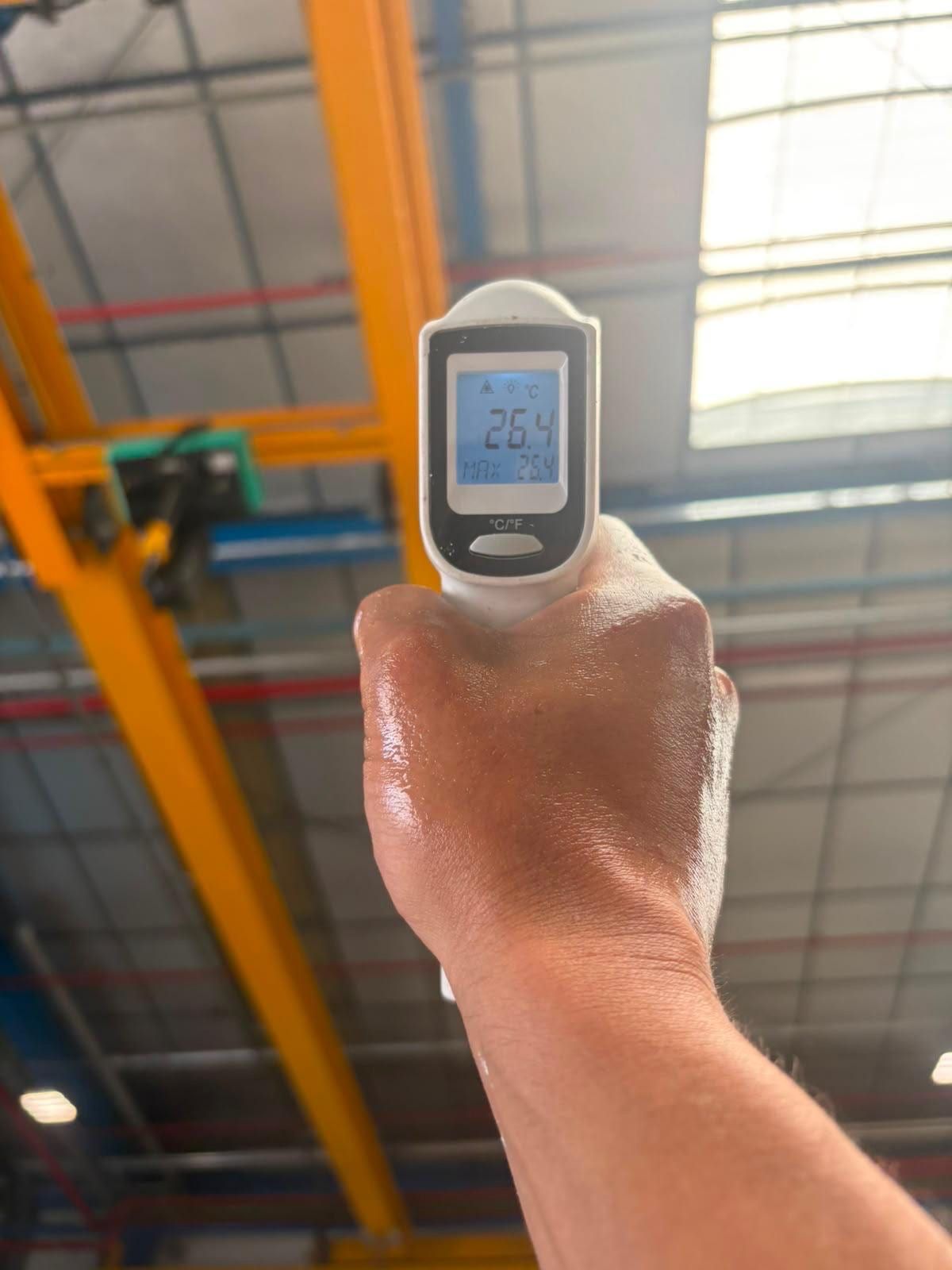
Steel deck has low thermal inertia: it heats up in less than an hour of sunshine and immediately radiates inwards. Under a single-skin roof, the temperature at head height regularly exceeds 35 °C in July, and picking mezzanines, closer to the ceiling, are even more exposed. Our cool roof on steel deck roofs guide explains why this roof type is also the most responsive to reflective treatment.
Goods, cold chain and temperature-controlled cells
A growing share of logistics flows is temperature-sensitive: healthcare products (good distribution practice), cosmetics, chocolate and confectionery, wines and spirits, electronics, cardboard that warps in hot, humid air. When a shipper demands “below 25 °C”, the operator can either temper the cell (and pay for air conditioning) or turn the flow away. Cold-storage warehouses and temperature-controlled cells, for their part, pay for every degree that enters through the roof in kilowatt-hours of refrigeration.
Pickers, forklift drivers, lorry drivers: hardship
Above 28 °C, picking rates fall, picking errors rise and handling accidents multiply. The employer must assess the “extreme heat” risk in the single risk-assessment document, adapt working hours and provide water; since 2025, the obligations during heatwave alerts are specified by decree. In a sector that struggles to recruit, a warehouse known as “an oven in summer” is also a handicap for attracting temporary staff and retaining teams.
Cool roof and energy savings in a warehouse: what PrimaTherm® changes
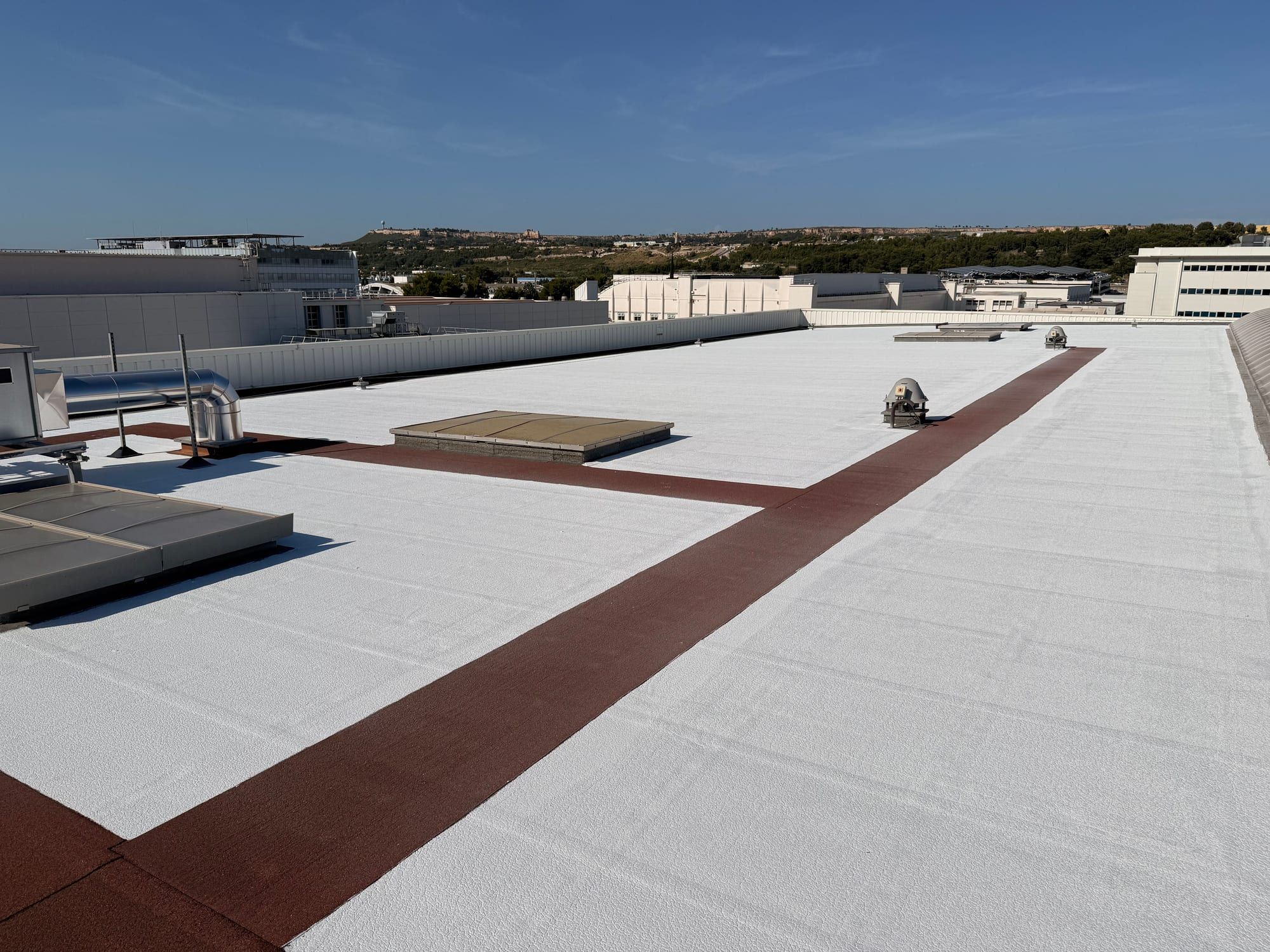
Hélios applies the PrimaTherm® system made by Primacoating in La Rochelle: a water-based elastomeric coating, applied in 4 layers (PH169 primer, PH107 reflective base coat in two crossed passes, PH107TCL anti-soiling topcoat). Every value below comes from a test report attached to our proposals.
| Characteristic | Value | Standard / report |
|---|---|---|
| Solar reflectance | 95 % | ASTM E903-12 |
| Thermal emissivity | 0.89 | ASTM C1371-15 |
| SRI (new) | 120 | ASTM E1980 (119 after ageing) |
| Durability | SRI maintained after 4,000 h QUV | conventional service life of 20 years (French CEE sheet) |
| External fire rating | Broof(t3) | EN 13501-5, CSTB report RA23-0010 |
Reducing heat on a warehouse roof: the orders of magnitude
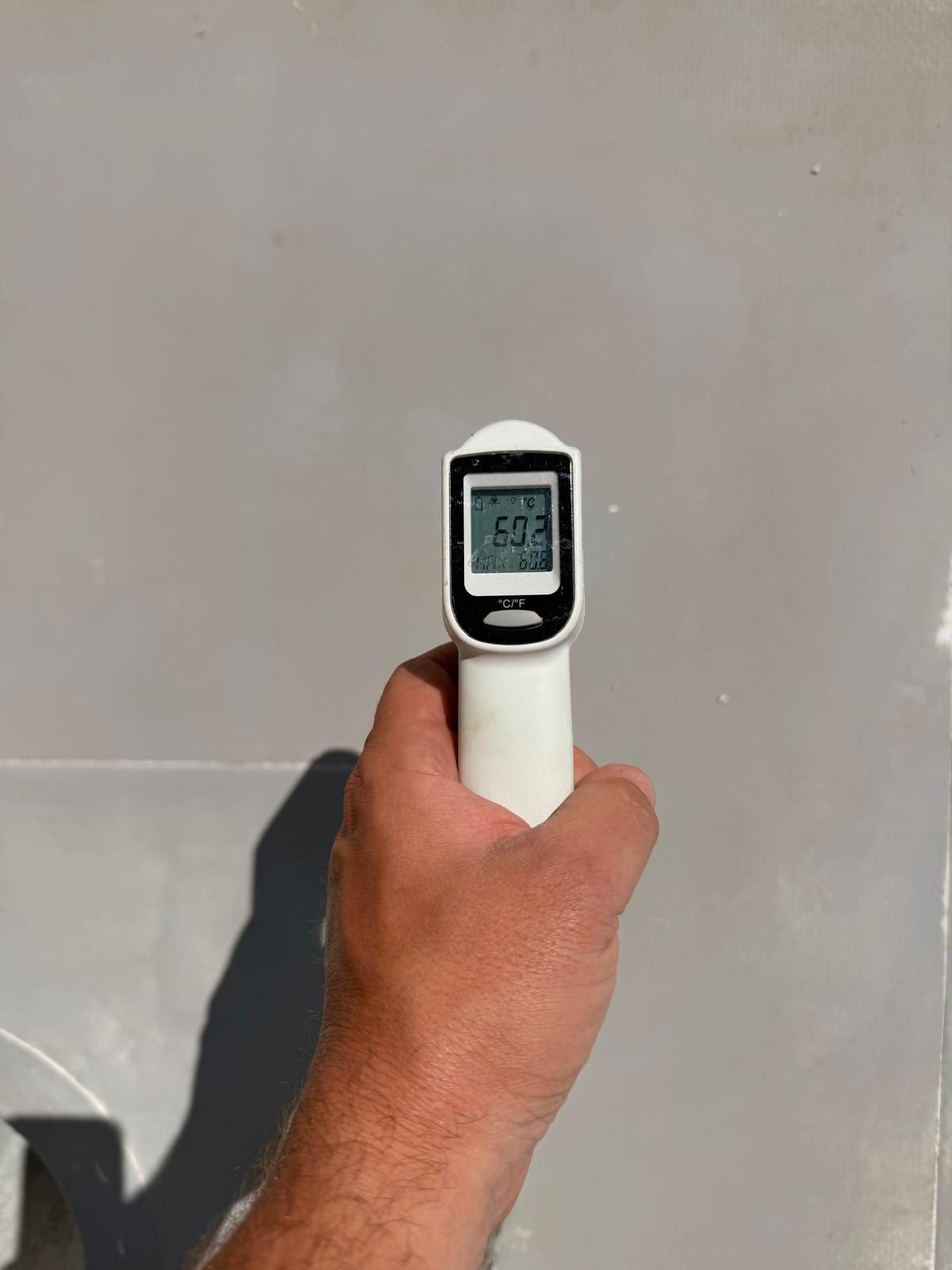
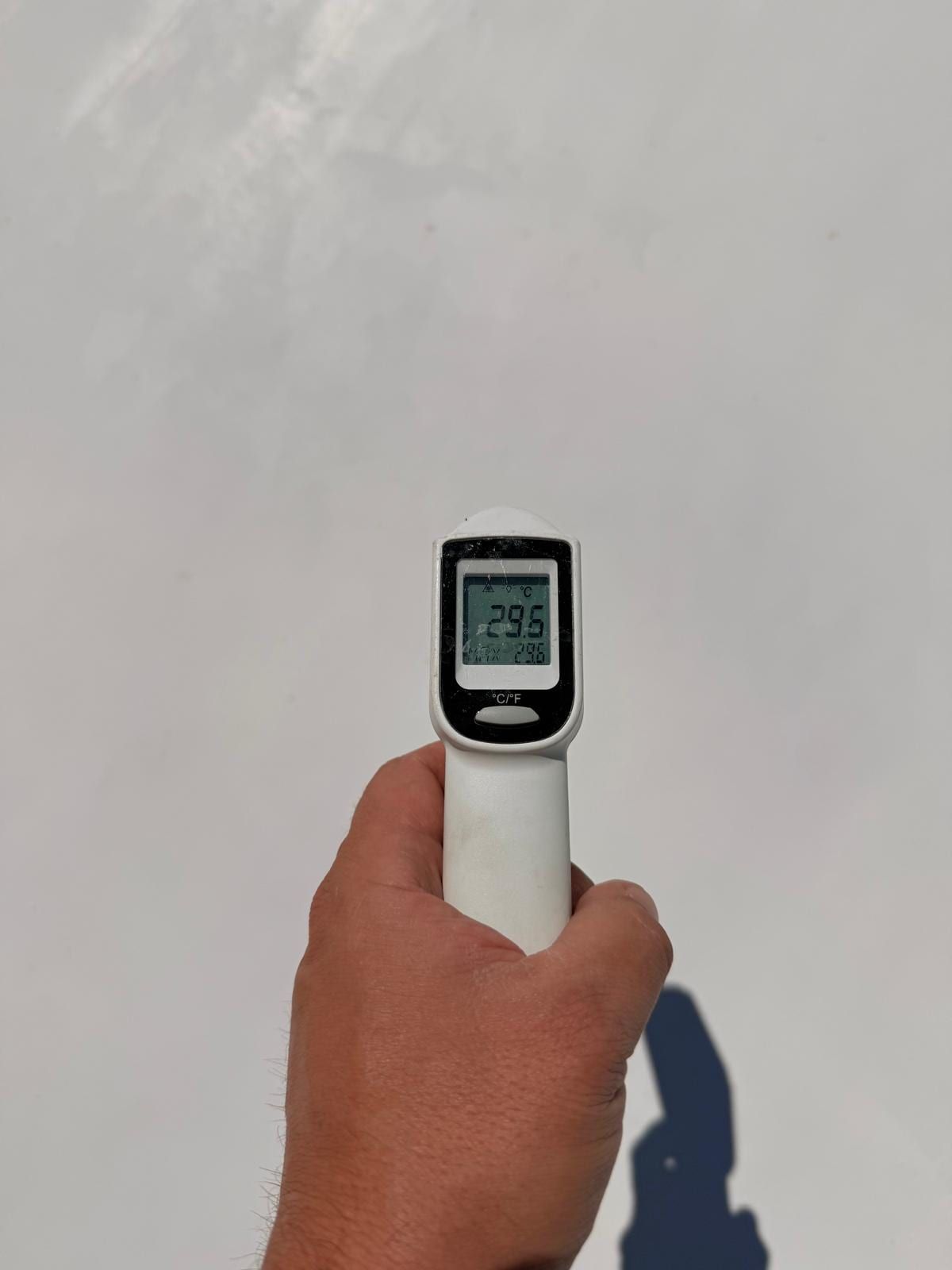
- On the roof: up to −30 °C on the surface, from 50–70 °C to 25–35 °C. The membrane or steel deck no longer suffers the daily thermal cycles that crack the waterproofing and loosen the fixings.
- In the aisles: up to −6 °C felt inside in a single-skin or poorly insulated warehouse, 1 to 3 °C in a well-insulated cell. The heat radiated by the ceiling, the most unpleasant for pickers, disappears.
- In temperature-controlled or cold-storage cells: up to −40 % air-conditioning consumption, i.e. 15 to 25 % in French climate zone H1, 20 to 30 % in H2, 25 to 40 % in H3.
- On rooftop equipment: chillers and air-handling units draw in cooler air and regain their rated efficiency at peak hours.
We never quote savings from a catalogue: the payback study starts from your actual consumption and the use of each cell.
Warehouse cool roof works: no lifting, no dock blocked
This is the point that decides an operations director. On a logistics site, a crane in the manoeuvring yard or a truck-mounted platform in front of the docks costs more than the works themselves. Our method is designed to avoid it: the 150 to 200 L drums and the airless pumps stay on the ground, in a cordoned-off area away from the flows; only the hoses, up to 80 m long, go up to the roof. Zero cranes, zero road closures, zero docks out of service.
Phasing by cells and fire compartments
A logistics platform is divided into cells of 3,000 to 6,000 m² separated by fire walls; we follow that layout. Each cell is prepared, treated and checked before moving on to the next, which keeps a readable schedule for operations and allows the most exposed cells, or those storing sensitive products, to be treated first. A 3,100 m² industrial building was treated in one week with the site in operation; a 20,000 m² platform is scheduled over a few weeks, without ever interrupting receiving and shipping.
Logistics roofs: rooflights, smoke vents, photovoltaics
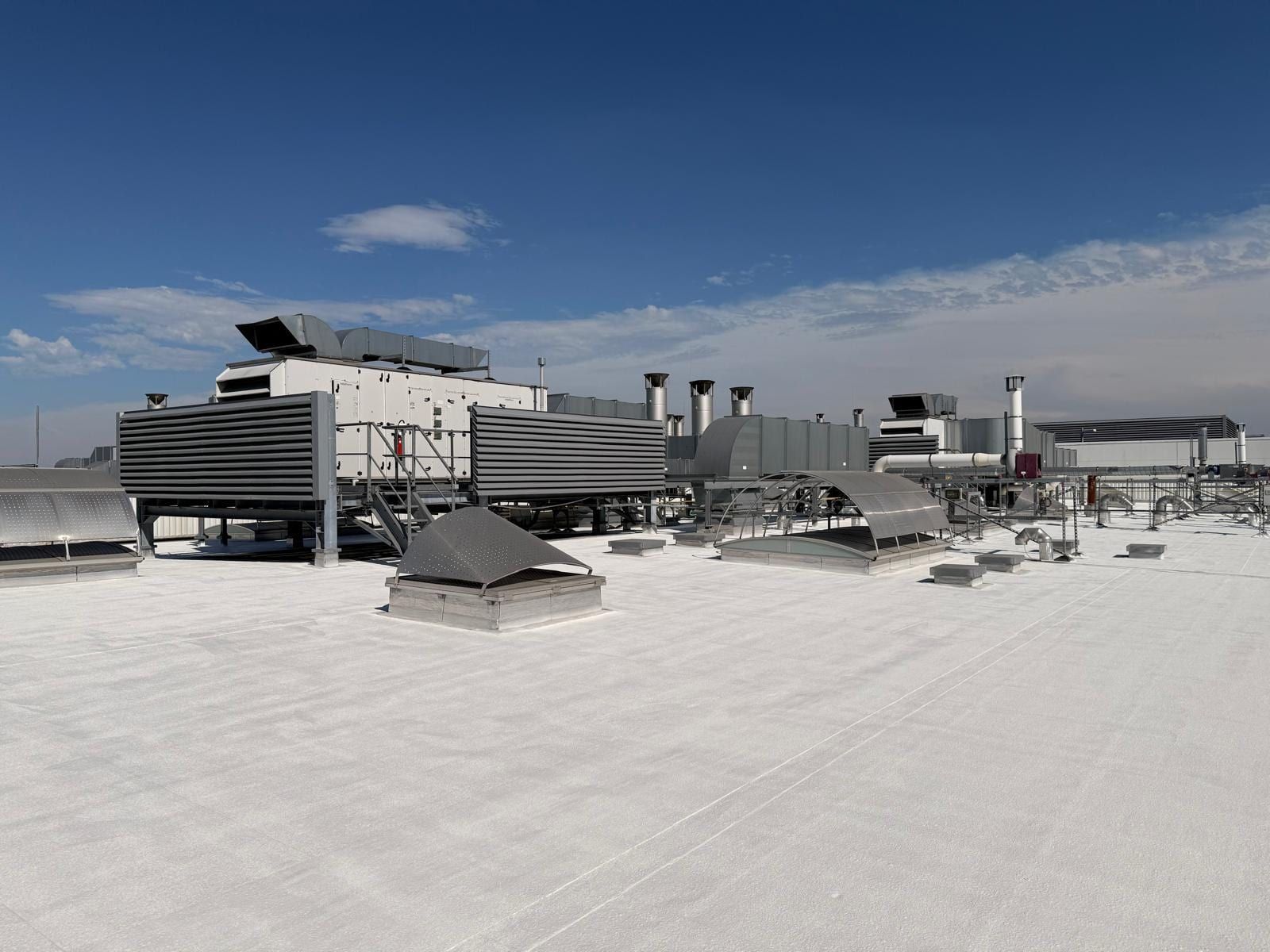
Warehouse roofs are dotted with rooflights, smoke vents, lifelines and, increasingly, photovoltaic panels. All are mapped during the technical visit. Smoke vents are protected and remain operational. Polycarbonate rooflights can receive the PrimaTherm® LT semi-transparent lacquer (one coat: around −25 % heat gain and light; two coats: around −50 %). Rows of solar panels are worked around, and the white roof improves their output by lowering the ambient temperature: see cool roof and solar panels.
References on large roofs
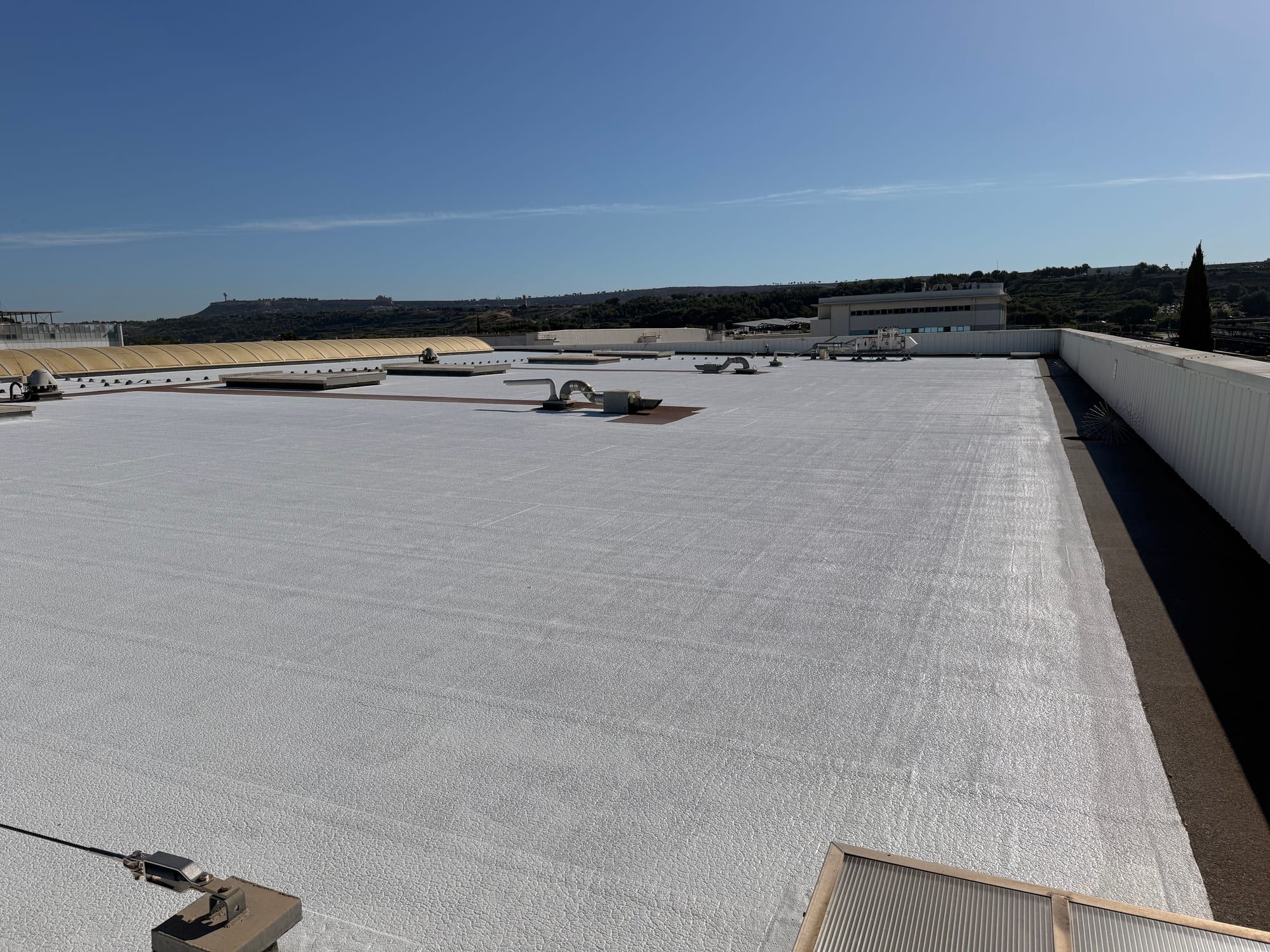
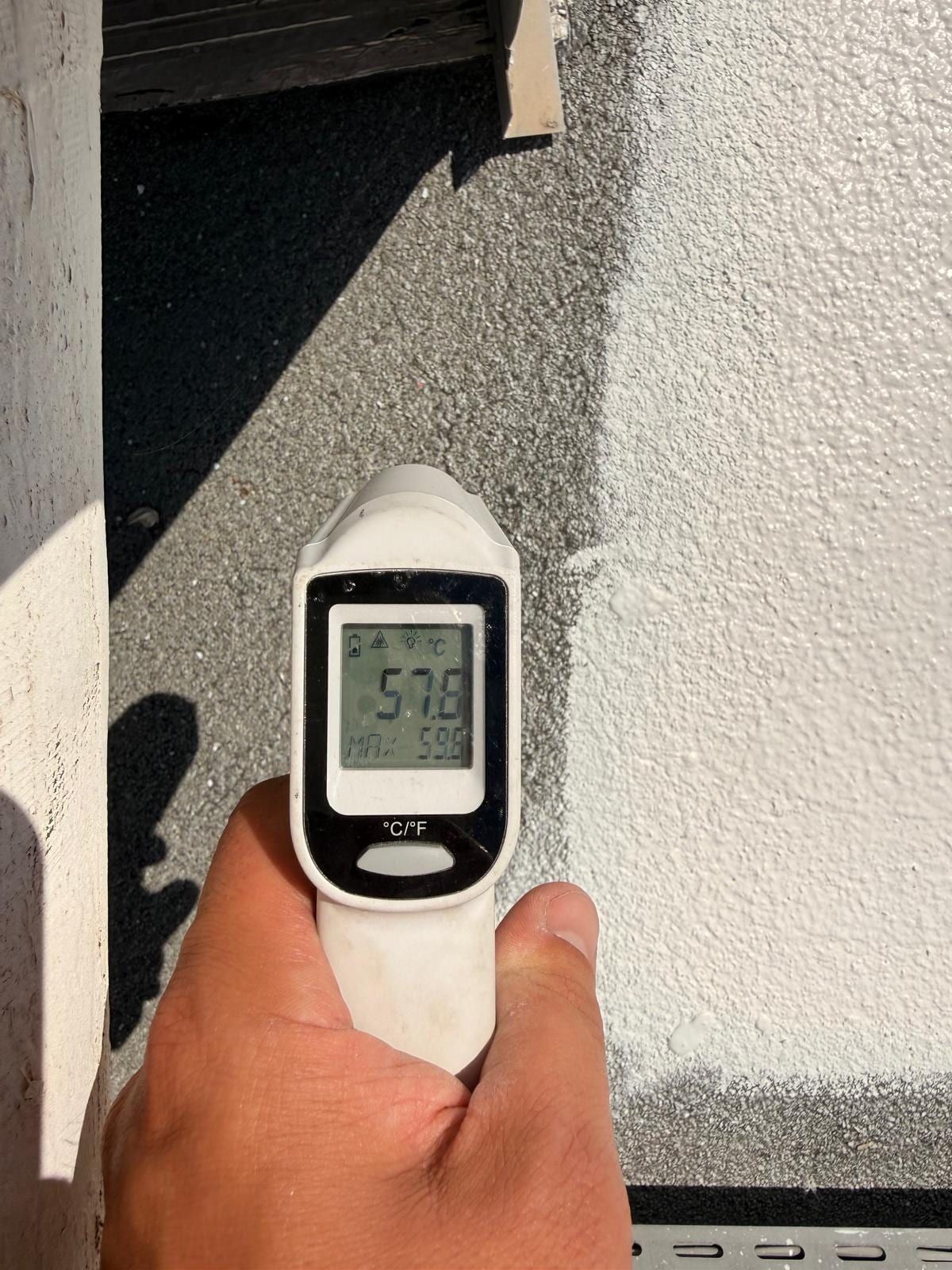
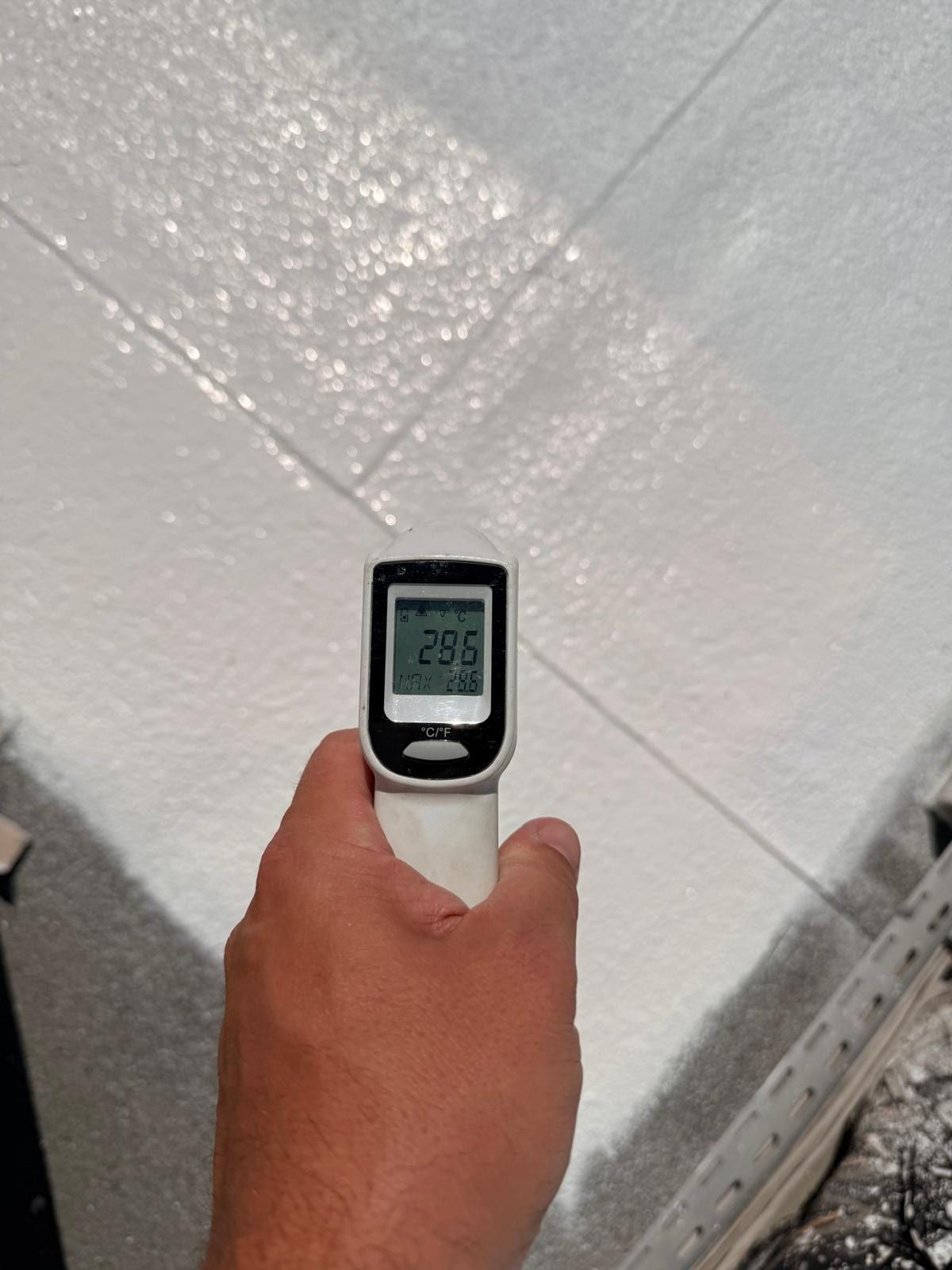
- Airbus Marignane: 5,900 m² of bitumen-membrane roofs on three buildings, treated from April to June 2026 with the site in operation. Infrared measurement at handover on 19 June 2026: 57.8 °C on the untreated area, 28.6 °C on the treated area, i.e. −29 °C. See the full project.
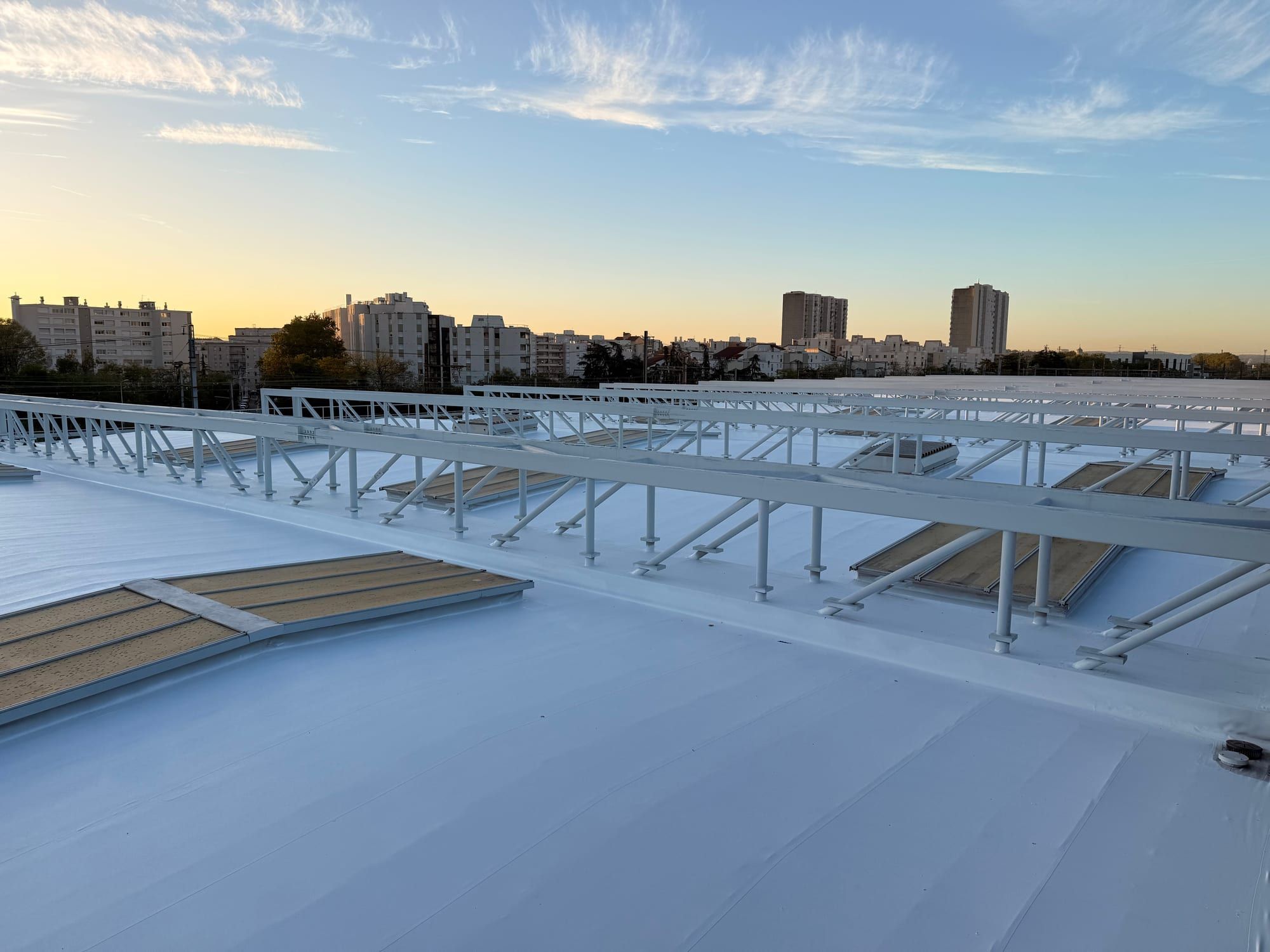
- Railway maintenance centre in Lyon: maintenance workshops, secure-site constraints. See the Lyon project.
- 1,000 m² warehouse in Marseille, steel deck: a Hélios project, the textbook case of a logistics steel deck in climate zone H3. See Marseille warehouse.
- 2,000 m² cured-meat plant in Périgny, steel deck: a Hélios project; roof space brought down from 50 to 30 °C and refrigeration consumption cut by 35 %. It is the best illustration of what a cold-storage cell gains: see Périgny.
Incentives, CEE and regulation in logistics
We prefer to say it before the study: the French energy-savings certificates (CEE), sheet BAT-EN-112, target commercial tertiary buildings whose volume is heated and cooled by heat pump. A logistics warehouse is not eligible as such, and MaPrimeRénov’ does not cover cool roofs. The site’s offices and staff facilities may sometimes fall under other schemes; we check case by case. The cool roof incentives 2026 page details what actually exists.
What does apply to logistics:
- French tertiary-sector decree: warehouses of more than 1,000 m² fall within the scope of the Éco Énergie Tertiaire scheme (−40 % consumption by 2030, −50 % by 2040, −60 % by 2050), with an annual declaration on the OPERAT platform. A cool roof is a short-payback action that can be declared. See French tertiary decree and cool roofs.
- ICPE 1510: for covered warehouses subject to authorisation or registration, the fire behaviour of the roof covering is a point of attention for insurers and the authorities. PrimaTherm® is rated Broof(t3) (CSTB report RA23-0010) and the supporting document is provided.
- Landlord and tenant: in a logistics lease, the cool roof is most often carried by the owner (it protects the waterproofing and enhances the asset) and benefits the tenant (hardship, goods, consumption). We document both sides to make the decision easier and can work on a multi-site portfolio with a uniform protocol.
- Planning: changing the colour of a roof may require a prior declaration to the town hall depending on the local planning rules (article R. 421-17 of the French planning code); we check this point for every site.
How a logistics cool roof project runs with Hélios
- Free study within 48 h: satellite measurement of each cell, analysis of the roof type and the uses (dry, tempered, cold storage), first priorities.
- Technical visit: survey of rooftop equipment, check of the fixings and the condition of the waterproofing, adhesion tests if needed, prevention plan, itemised proposal.
- Preparation: cleaning at under 130 bar, anti-moss treatment, spot repairs, 24 to 72 h drying.
- Application without lifting: primer, reflective base coat in two crossed passes, anti-soiling topcoat; weather window between 12 and 35 °C, relative humidity below 80 %, no rain within 4 h of each coat.
- Checks and handover: thickness checks, before/after infrared measurements, site follow-up sheet, as-built file, ten-year insurance, maintenance plan.
The installation process details each step. The cost depends on the area, the roof type, the preparation, the access and the incentives: it exists only in the proposal handed over after the study.
The objections we hear in logistics
- “A white paint, we can do that ourselves.” An off-the-shelf paint reflects 70 to 80 % of the radiation and loses its whiteness within two seasons. PrimaTherm® reflects 95 %, with an SRI maintained after 4,000 h of accelerated ageing, an application protocol and thickness checks. It is the system chosen by major aerospace and railway clients.
- “Our waterproofing is old.” A cool roof extends sound waterproofing by removing thermal shocks; it does not replace a membrane at the end of its life. The study settles it, and the cool roof on waterproofing membranes page explains the borderline cases.
- “What about winter?” The low sun hits the façades, not the roofs; the winter loss is marginal and a warehouse is rarely heated through its roof. See cool roof in winter.
- “The roof will get dirty.” The PVDF-resin topcoat limits soiling; a low-pressure wash every 12 to 15 months is enough.
Logistics buildings concerned
- Ambient-temperature storage warehouses, often single-skin steel deck: the comfort gain is the most spectacular.
- Parcel and cross-dock platforms: many docks, day and night activity, phased works without taking a dock out of service.
- Distribution and e-commerce centres: picking mezzanines under the roof, high staff density.
- Temperature-controlled cells and cold-storage warehouses: every degree avoided on the roof is a kilowatt-hour of refrigeration saved.
- Retailers’ warehouses: see also cool roof for retail and supermarkets.
- Adjoining industrial buildings: workshops and plants, on the cool roof for industrial buildings page.
From Saint-Laurent-d’Agny, south of Lyon, we travel out for the day to the region’s major logistics hubs: the Chesnes zone at Saint-Quentin-Fallavier, the Ain plain (Bourg-en-Bresse), the Rhône corridor (Valence, Lyon). For platforms in the North, the Paris region, the South or the West (Lille, Paris, Marseille, Bordeaux), the team is accommodated on site for the duration of the works.
Why Hélios for your logistics platform
- Large roofs treated with the site in operation: 5,900 m² on an aerospace site, railway maintenance workshops.
- Certified values: 95 %, 0.89, SRI 120, Broof(t3), reports attached to the proposal.
- No lifting, no dock blocked, cell-by-cell phasing, prevention plan.
- An applicator trained in the PrimaTherm® protocol that checks and documents every cell.
- Ten-year insurance, professional liability cover and as-built file at handover.
Two minutes are enough to launch the study: area, building type, postcode, and within 48 h you receive a satellite measurement and a first assessment of the potential of your cells. For an immediate estimate, use the cool roof simulator (in French).
Frequently asked questions
What gains can be expected from a cool roof coating on a logistics building?
On the roof surface, up to −30 °C: from 50–70 °C to 25–35 °C, with −29 °C measured by infrared at the handover of a 5,900 m² project in 2026. Inside, a single-skin or poorly insulated steel-deck warehouse gains 4 to 6 °C felt; a well-insulated building 1 to 3 °C. In air-conditioned or tempered cells, the reduction in air-conditioning consumption lies between 15 and 40 % depending on the climate zone.
Do the works block the docks or the lorry flows?
No. Our no-lifting method leaves the drums and pumps on the ground, in a cordoned-off area; only the hoses go up to the roof. There is no crane, no road closure and no manoeuvring yard out of service. Application is phased by cell or by fire compartment, which keeps 100 % of operations running during the works.
Is a logistics warehouse eligible for the French CEE bonus BAT-EN-112?
Not as such. This sheet targets commercial tertiary buildings whose volume is heated and cooled by heat pump. A non-air-conditioned warehouse does not qualify; the site's tertiary premises (offices, staff facilities) may sometimes fall under other schemes. MaPrimeRénov' does not cover cool roofs. We check eligibility during the free study and calculate the return on investment on your actual consumption, generally 3 to 5 years.
My warehouse's steel deck is more than twenty years old, is it compatible?
In most cases, yes. Coated or galvanised steel deck is the roof type most favourable to a cool roof: PH169 primer at 10 m²/L after medium-pressure cleaning and treatment of corrosion spots. The fixings are checked, the oxidised areas repaired. The study checks adhesion before any commitment; a bitumen or PVC membrane more than 10 years old is treated with the appropriate primer or bonding base.
What happens with the rooflights and the smoke vents?
The smoke vents remain functional: they are protected during application. Polycarbonate rooflights can receive the PrimaTherm® LT semi-transparent lacquer: one coat reduces heat gain and transmitted light by around 25 %, two coats by around 50 %. You choose the level of daylight you want in the aisles.
How long does the coating last on a warehouse roof?
The SRI of PrimaTherm® is maintained after 4,000 h of accelerated QUV ageing; the conventional service life used by the French CEE sheet is 20 years. The PH107TCL anti-soiling topcoat preserves the whiteness; a low-pressure wash every 12 to 15 months maintains the reflectance.