Hotels and restaurants: heat shows up in the reviews
No sector suffers summer heat as immediately as the hotel and restaurant trade. A workshop that is too hot slows down production; a room that is too hot produces a negative review the same evening, a refund request the next day, and a rating that weighs on bookings for months. High season is the hot season, and establishments built before the 2000s, with bitumen flat roofs, converted attics or steel-deck roofs, were not designed for summers at 38 °C. The air conditioning, where it exists, was sized for another climate and for a roof that was not at 70 °C.
Top-floor rooms, converted attics
Top-floor and attic rooms are the most expensive to air-condition and the worst rated in summer. Under a dark roof, the slab or the ceiling radiates all night; the temperature does not fall below 26 °C before dawn, even with the air conditioning running. The guest sleeps badly, asks to change rooms, and the establishment ends up blocking these rooms in July or selling them off cheaply.
Kitchens, dining rooms, covered terraces
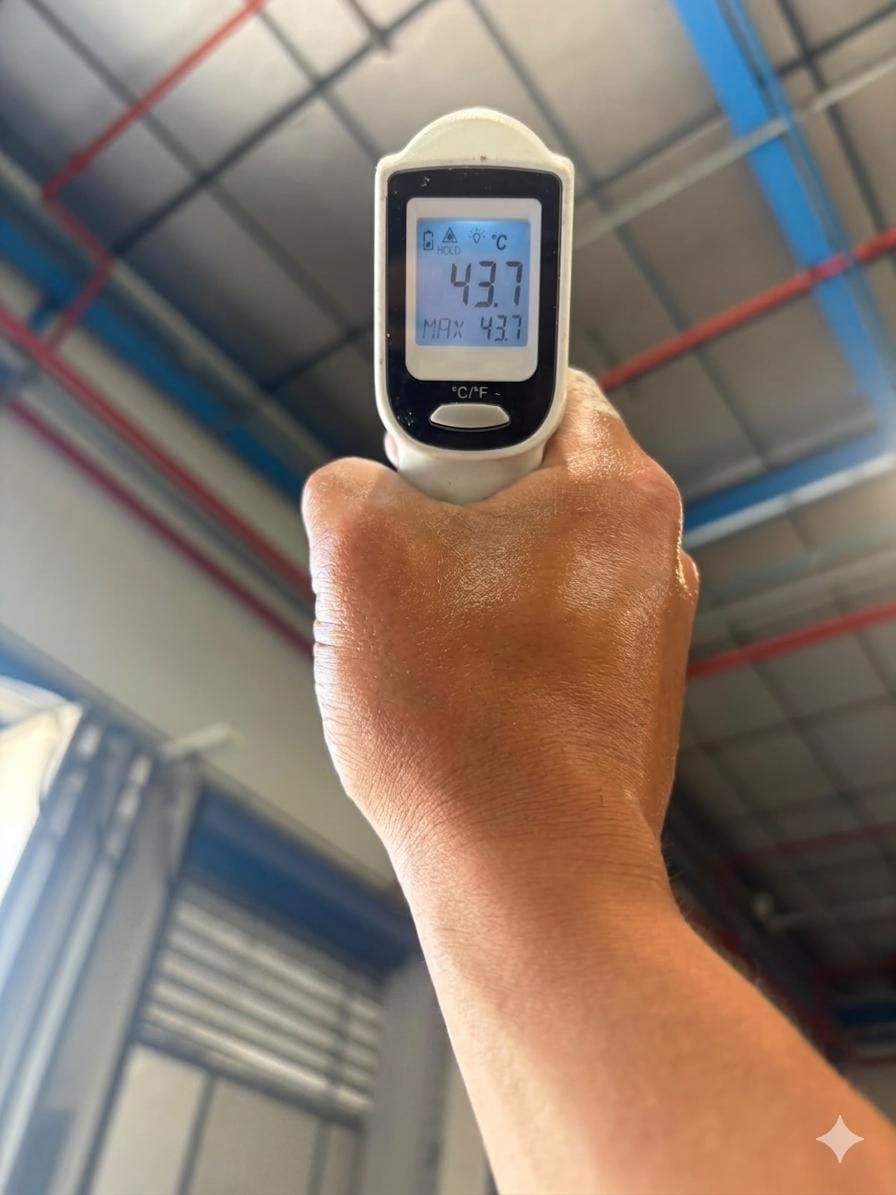
A kitchen under steel deck combines the heat of the stoves, the extraction and the roof: over 40 °C during lunch service, arduous conditions that weigh on recruitment and staff turnover, cold rooms running flat out. Dining rooms under glass roofs or flat roofs become uncomfortable from 1 p.m., covered terraces under steel deck become unusable. Treating the roof reduces the incoming heat in all these spaces without a single extra kilowatt-hour.
High season is the hot season
A seaside hotel, a resort restaurant or an establishment in a tourist town makes most of its turnover between June and September, exactly when the roof heats up the most. Every degree gained in the rooms during these weeks translates into reviews, occupancy rate and avoided air-conditioning consumption. Our comparison cool roof or air conditioning (in French) puts the two options side by side.
What PrimaTherm® changes on a hotel or a restaurant
Hélios applies the PrimaTherm® system, made in France by Primacoating: a water-based, solvent-free elastomeric coating applied in 4 layers (PH169 primer, PH107 reflective base coat in two cross passes, PH107TCL anti-soiling topcoat). Every value is measured in the laboratory; the reports are attached to the proposal.
| Characteristic | Value | Standard / report |
|---|---|---|
| Solar reflectance | 95 % | ASTM E903-12 |
| Thermal emissivity | 0.89 | ASTM C1371-15 |
| SRI (new) | 120 | ASTM E1980 (119 after ageing) |
| Durability | SRI maintained after 4,000 h of accelerated QUV ageing | conventional service life of 20 years (French CEE sheet) |
| External fire classification | Broof(t3) | EN 13501-5, CSTB report RA23-0010 |
On a hotel or restaurant establishment:
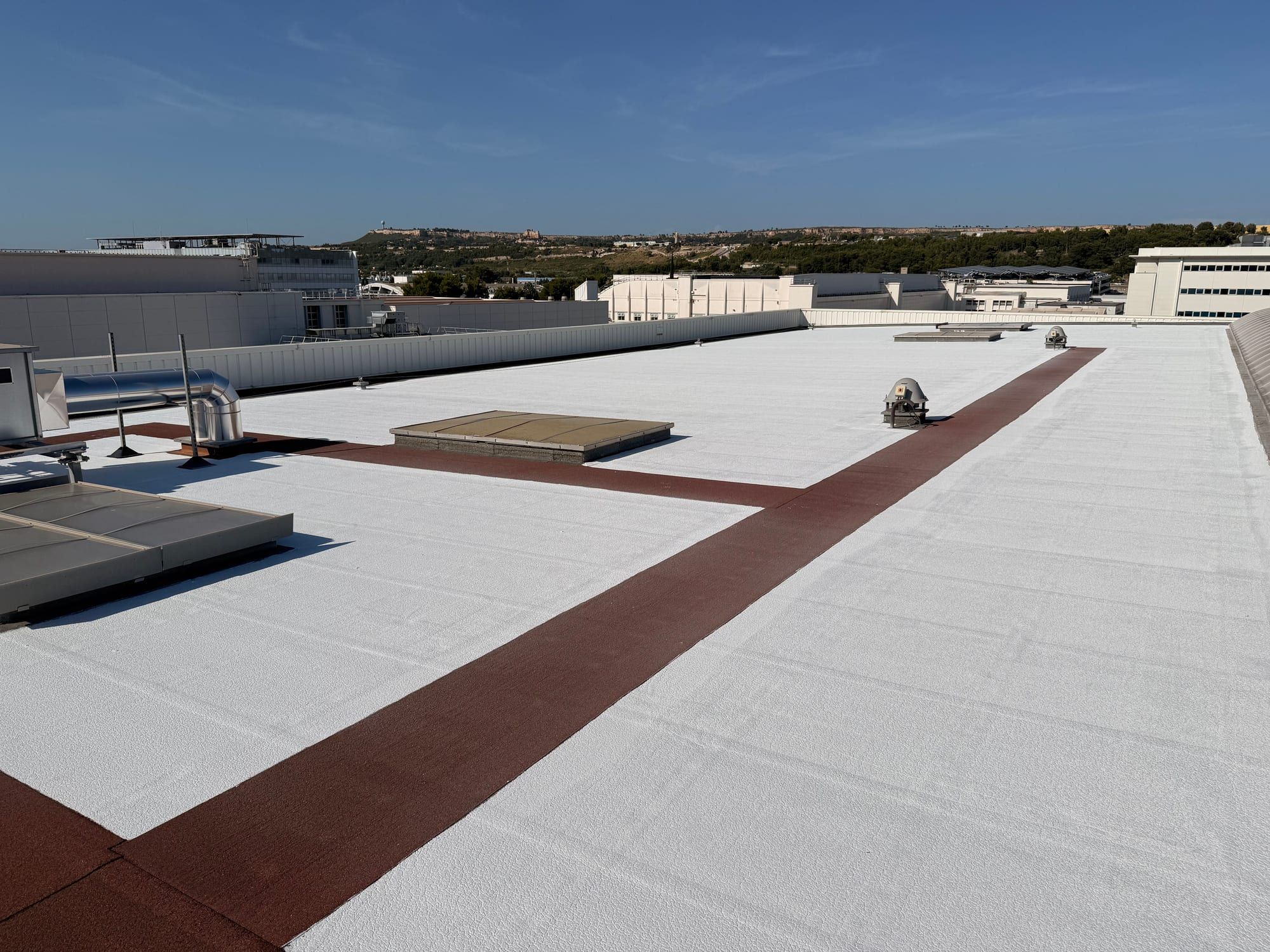
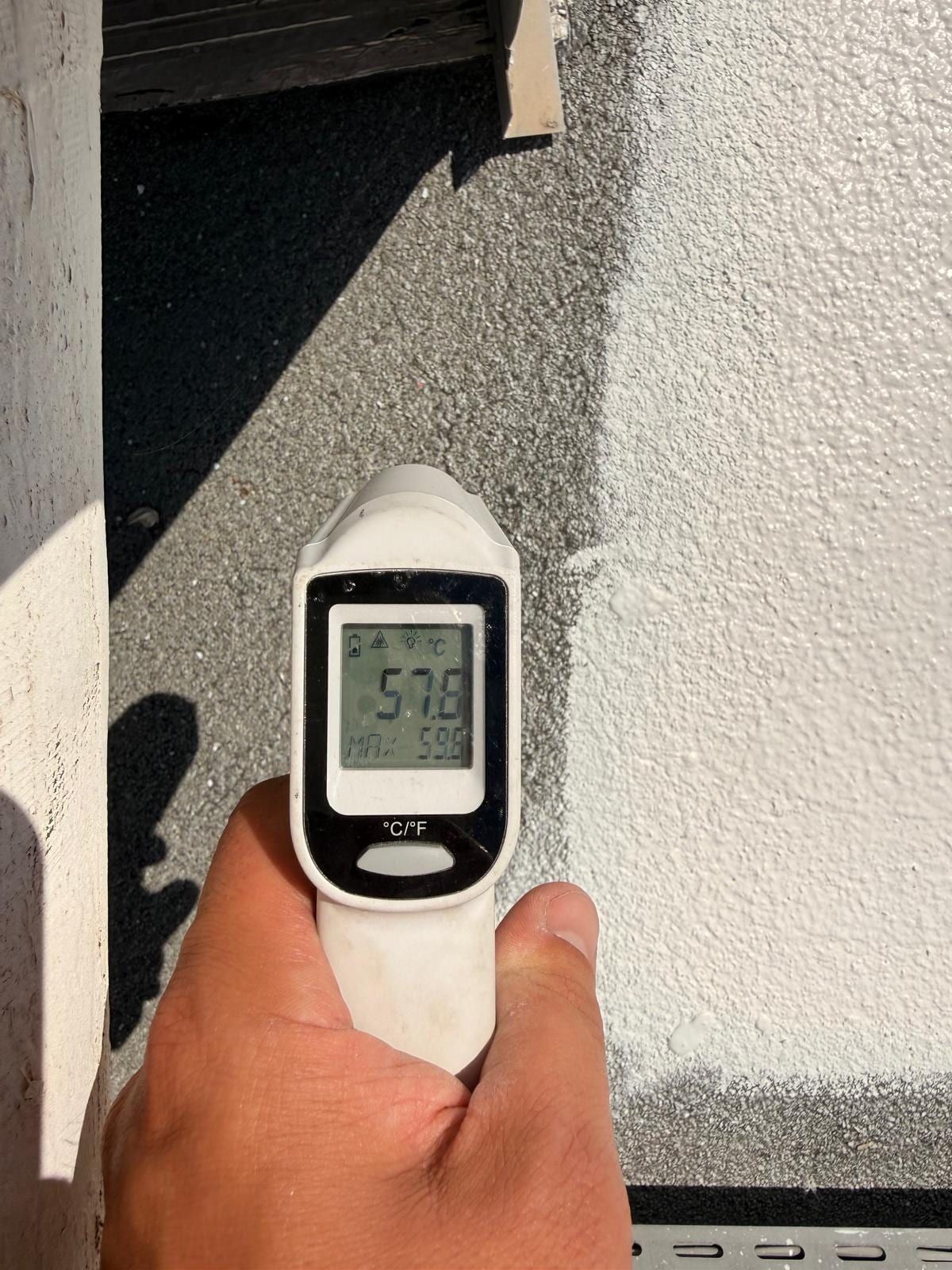
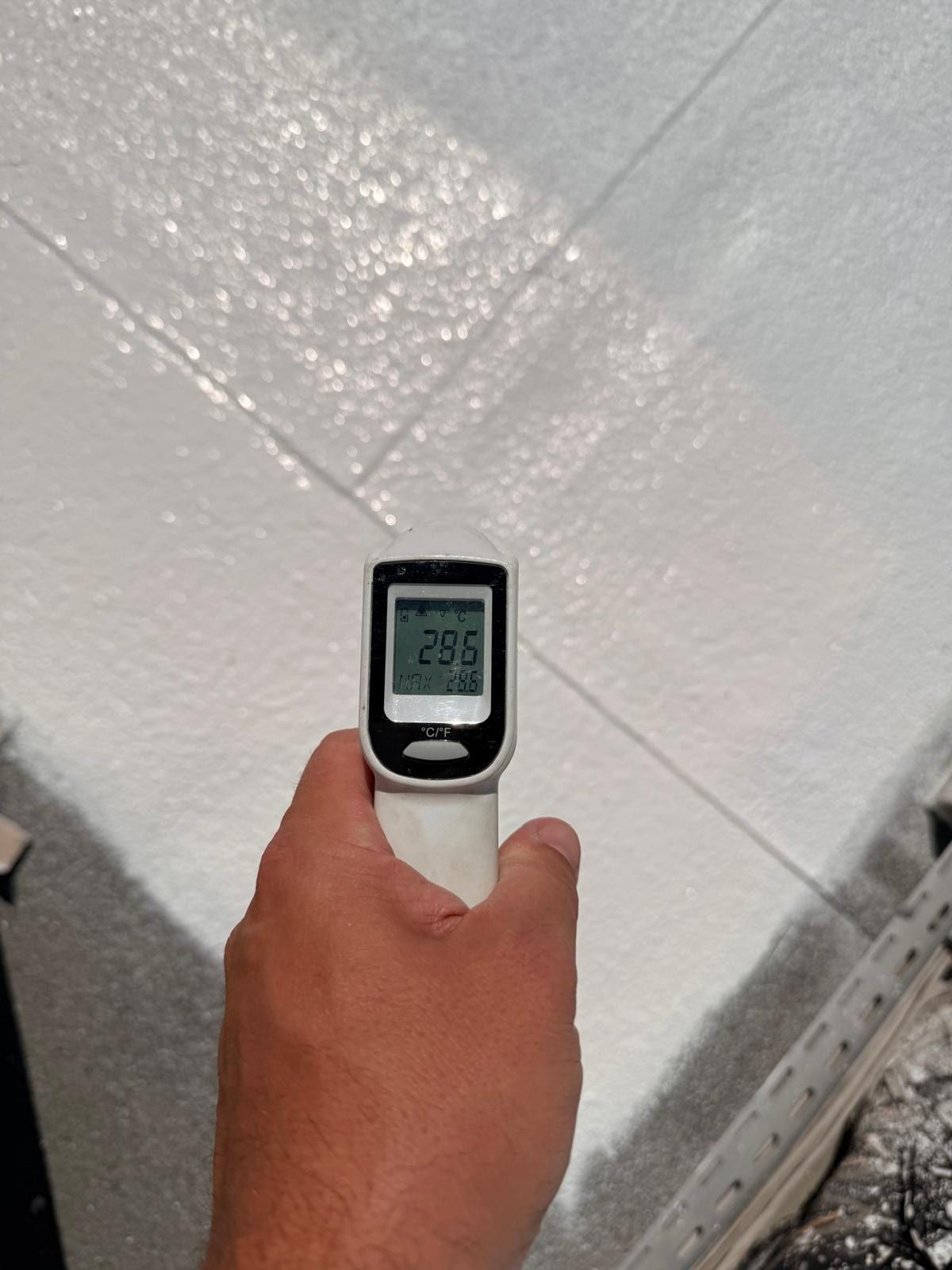
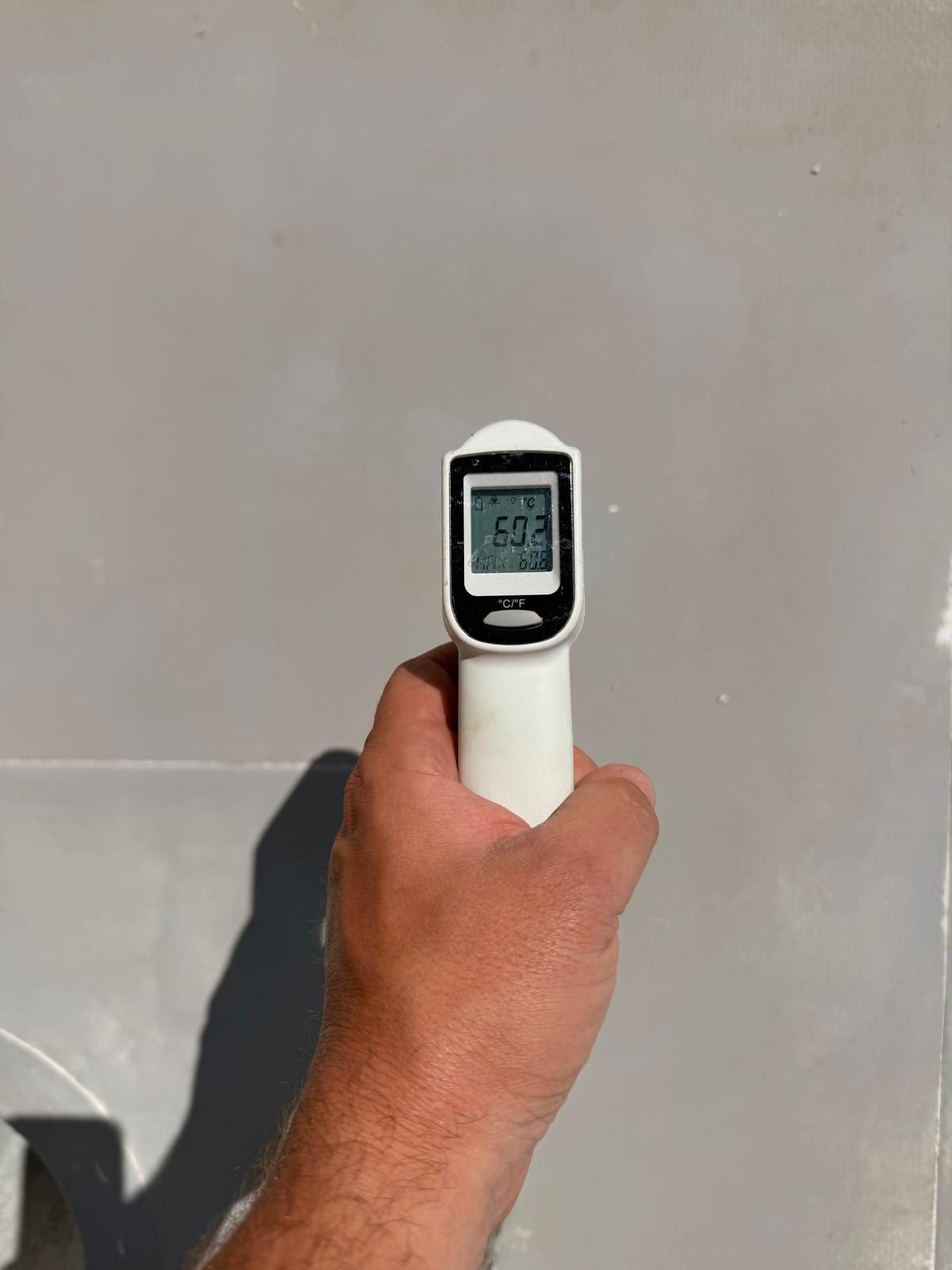
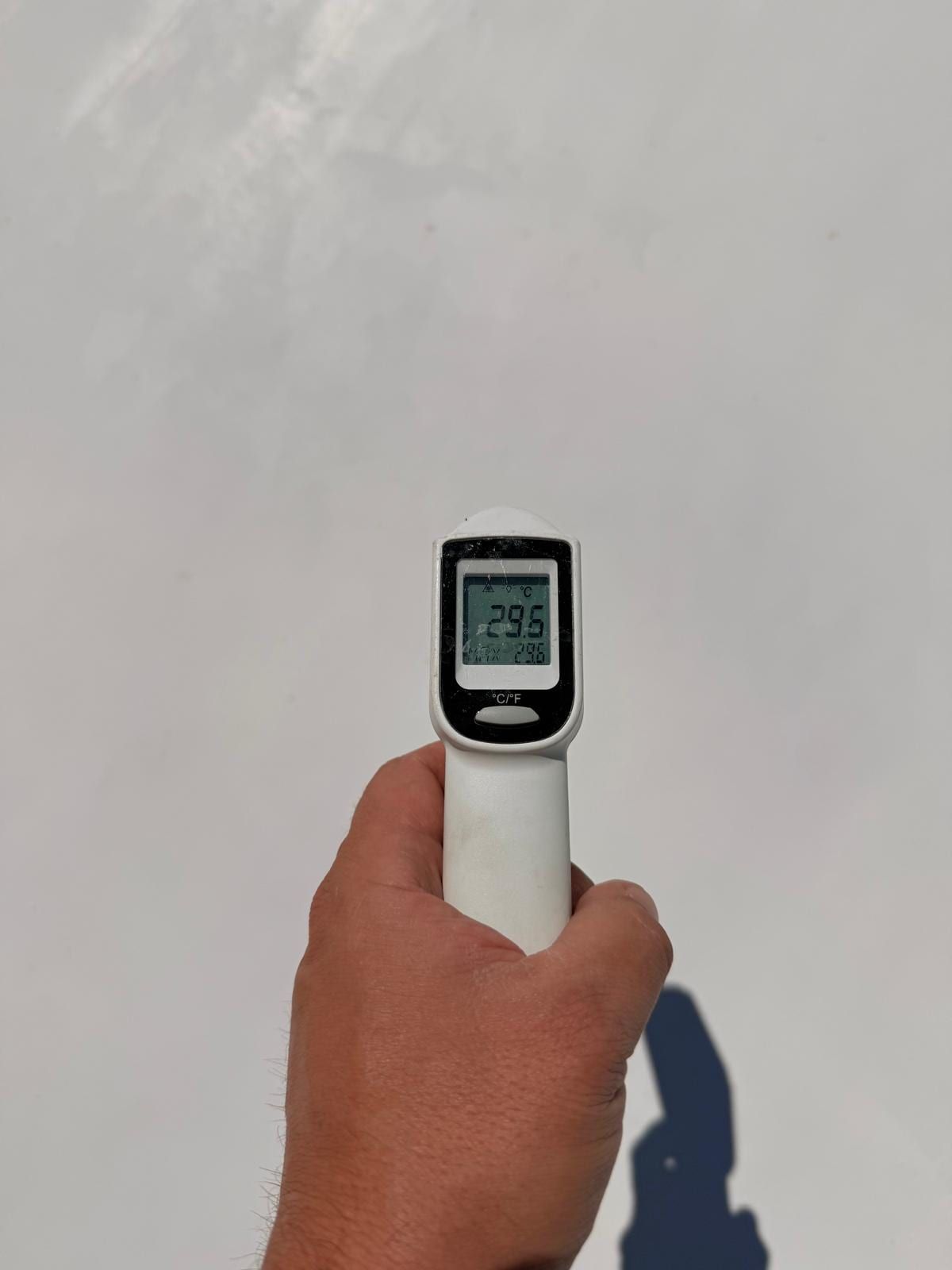
- up to −30 °C on the roof surface: from 50–70 °C down to 25–35 °C, with −29 °C measured by infrared at the handover of a 5,900 m² project in 2026;
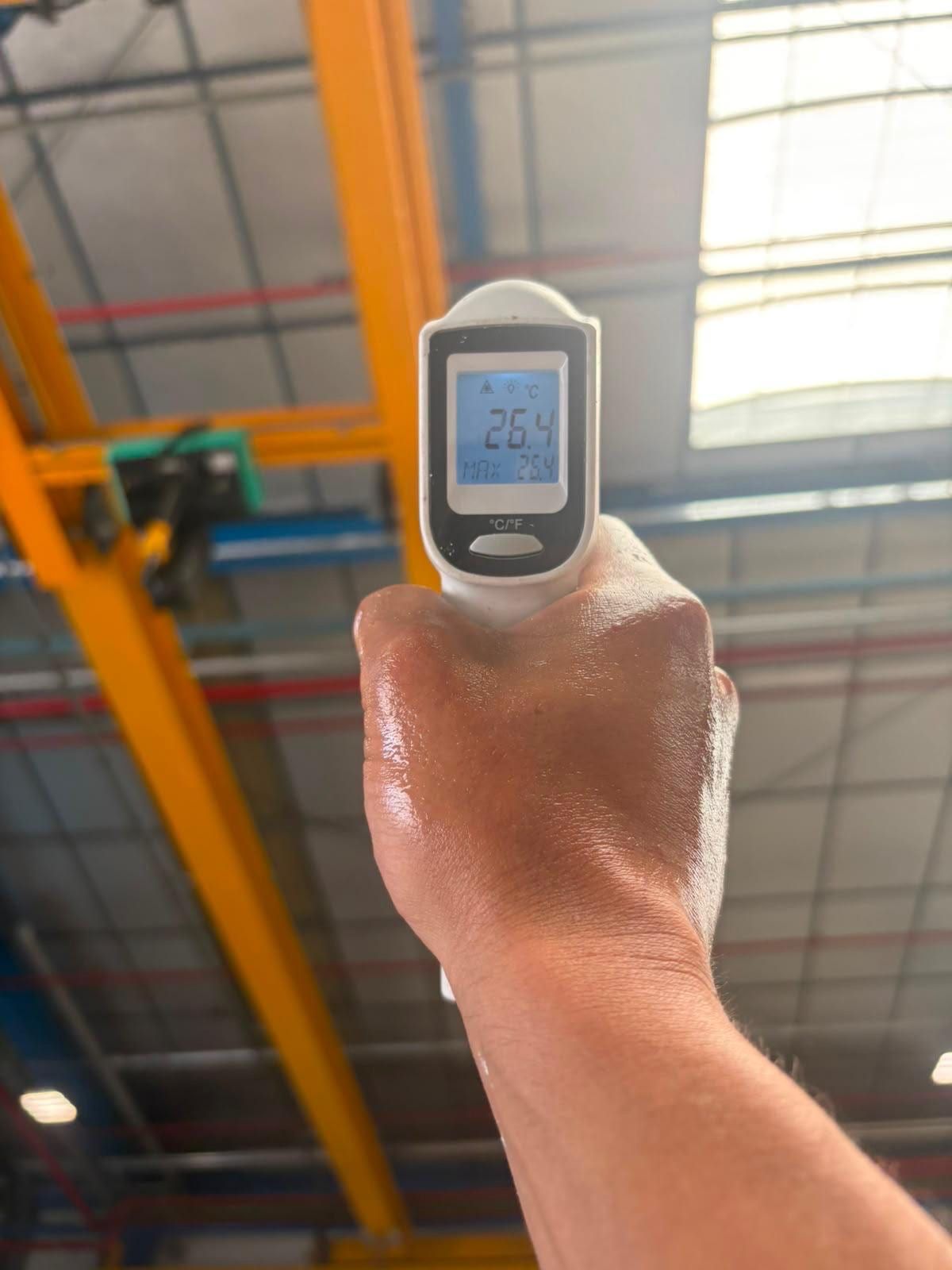
- up to −6 °C felt inside in the rooms and kitchens under the roof depending on insulation, and nights below 26 °C;
- up to −40 % air-conditioning consumption: 15 to 25 % in French climate zone H1, 20 to 30 % in H2, 25 to 40 % in H3;
- existing air conditioning that regains its capacity during the hottest hours, without replacement or additional outdoor units on the façade;
- cold rooms and condensers that draw in cooler air;
- waterproofing that lasts longer, because it no longer cycles between 20 and 70 °C every summer day;
- a concrete environmental action to present in a Green Key (Clef Verte) or EU Ecolabel approach, with before/after measurements.
The payback study starts from your consumption and your seasonality, never from a catalogue ratio.
CEE BAT-EN-112: possible for an air-conditioned establishment, under conditions
The French sheet BAT-EN-112 credits the reflective renovation of the roof of a tertiary building for commercial use, whose volume is heated and cooled by heat pump: 160 kWh cumac per m² in French climate zone H1, 170 in H2, 270 in H3. A hotel or a restaurant with reversible air conditioning can qualify; non-air-conditioned volumes, annexes and staff accommodation do not, and the file must be put together before signature. We check the actual equipment, the eligible surface and the schedule during the free study and hand over a written pre-qualification. MaPrimeRénov’ does not cover cool roofs. Establishments over 1,000 m² are also covered by the French tertiary-sector decree (−40 % consumption by 2030), for which the cool roof is an action that can be declared. The cool roof incentives in France 2026 page details the schemes.
Work without closing: low season, mornings, zero crane in front of the entrance
No lifting, no access to the rooms
Our no-lift method keeps the 150 to 200 L drums and the airless pump on the ground, in a cordoned-off area away from the entrance, the terraces and the rooms; only the hoses go up to the roof through the hatch or the roof access structure. No crane, no scaffolding on the façade, no road reserved, no passage through the floors. The product is water-based, solvent-free and low in VOCs: no odour in the kitchen, the dining room or the rooms. Two to four days are enough for most establishments.
A schedule adapted to your business
The application requires a weather window between 12 and 35 °C, humidity below 80 % and no rain in the 4 h following each coat. For a seasonal hotel, we work in spring before opening or in autumn for the following summer; for an establishment open all year, during a quiet week and in the mornings, outside breakfast; for a restaurant, during the weekly or annual closure. The schedule is set with management, room by room if necessary to avoid the noise of the pump on the ground.
Hotel and restaurant roofs
- Bitumen-membrane flat roofs of hotels from the 1970s to the 1990s: PH169 primer at 6 m²/L. See cool roof on bitumen roofs and cool roof on flat roofs.
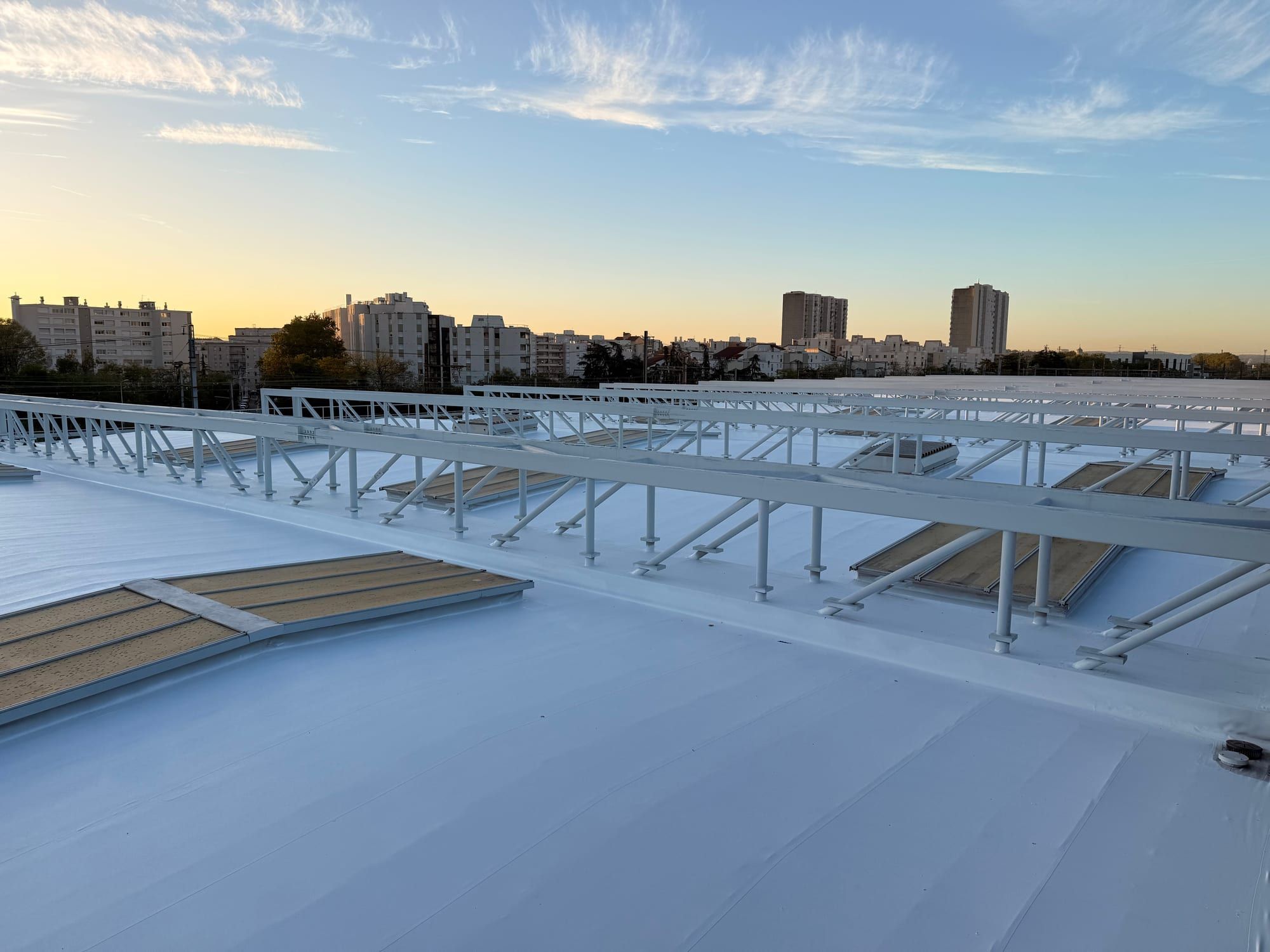
- Steel deck on out-of-town chain hotels, roadside restaurants and kitchen extensions: primer at 10 m²/L, the most spectacular comfort gain. See the cool roof on steel deck roofs guide.
- EPDM: compatible after an adhesion diagnosis; PVC membranes only if laid more than 10 years ago.
- Polycarbonate rooflights and glass roofs above dining rooms: PrimaTherm® LT semi-transparent lacquer (one coat: around −25 % heat gain and light; two coats: around −50 %).
- Exclusions: tiles and zinc visible from the street, asbestos fibre cement (buildings from before 1997). We point you honestly towards other solutions.
Planning rules and public-access buildings
Changing the colour of a roof generally requires a prior declaration to the town hall (article R. 421-17 of the French planning code), with the opinion of the French heritage architect (Architecte des Bâtiments de France) in protected areas, frequent for hotels in historic centres. A flat roof invisible from the public space rarely poses a problem; we check the local planning rules (PLU) before the proposal. For the fire safety committee, PrimaTherm® is classified Broof(t3) for external fire (CSTB report RA23-0010) and the certificate is supplied.
Groups, chains, owners of the premises
A hotel group or a restaurant chain treats an estate, not a building: we supply the same file for each site (diagnosis, certified values, estimate based on consumption, CEE pre-qualification, no-closure schedule, as-built file with infrared measurements before/after, maintenance plan), which can be rolled out establishment after establishment with the same checks. When the premises and the business are separate, the owner protects the waterproofing and enhances the asset, the operator reduces service charges and negative reviews: we document both sides. For a hotel in a co-owned building or a holiday residence, see also cool roof for residential buildings.
Small establishments: the online shop
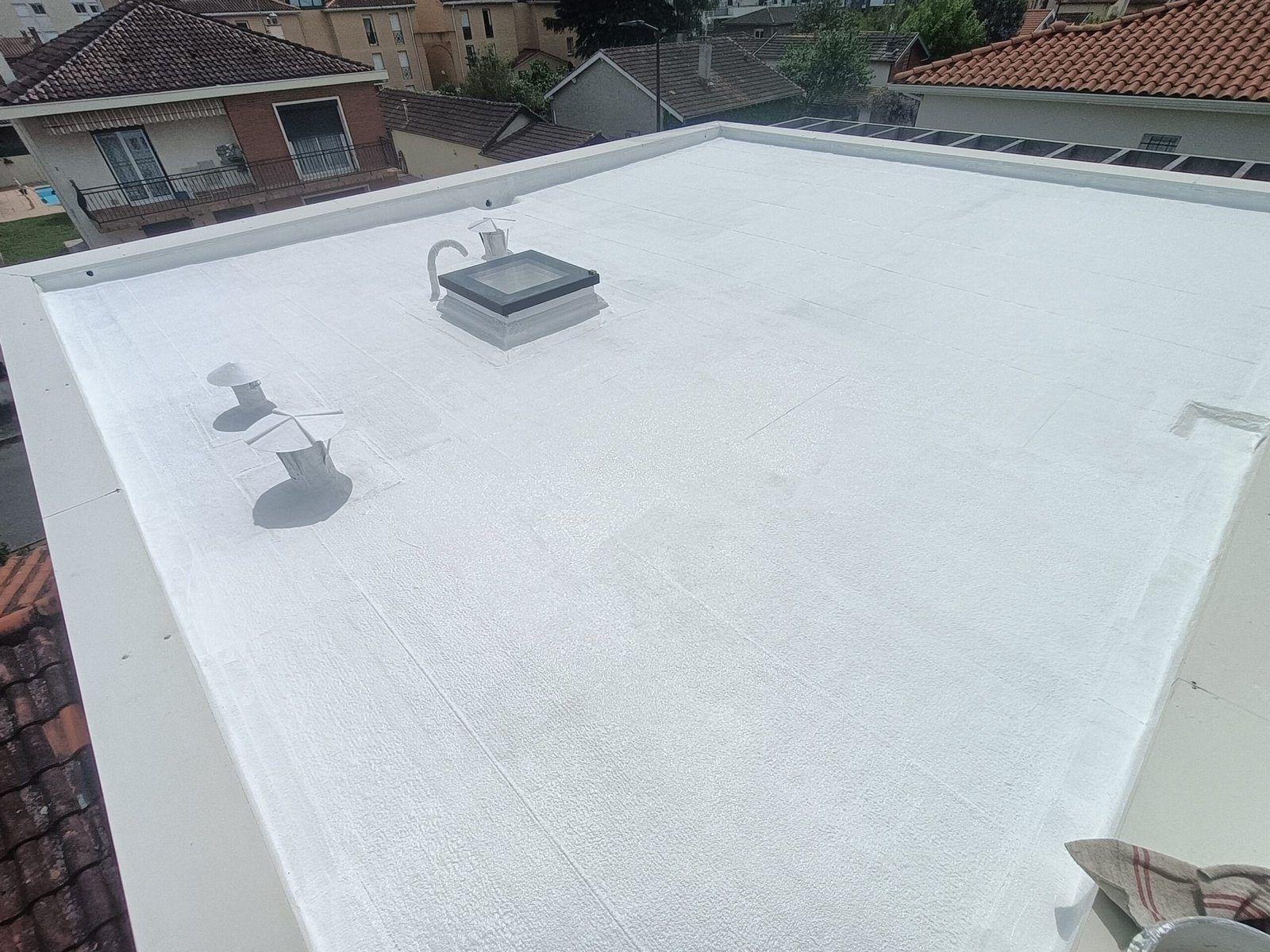
For a neighbourhood restaurant, a bed and breakfast or an annexe of a few hundred m², the PrimaTherm® online shop (in French) sells the same system as on our industrial projects, with the quantity calculation per m², the application guide and the conditions to respect, stated before purchase. As soon as the surface, the access or the ten-year liability cover justify it, our teams take over.
References
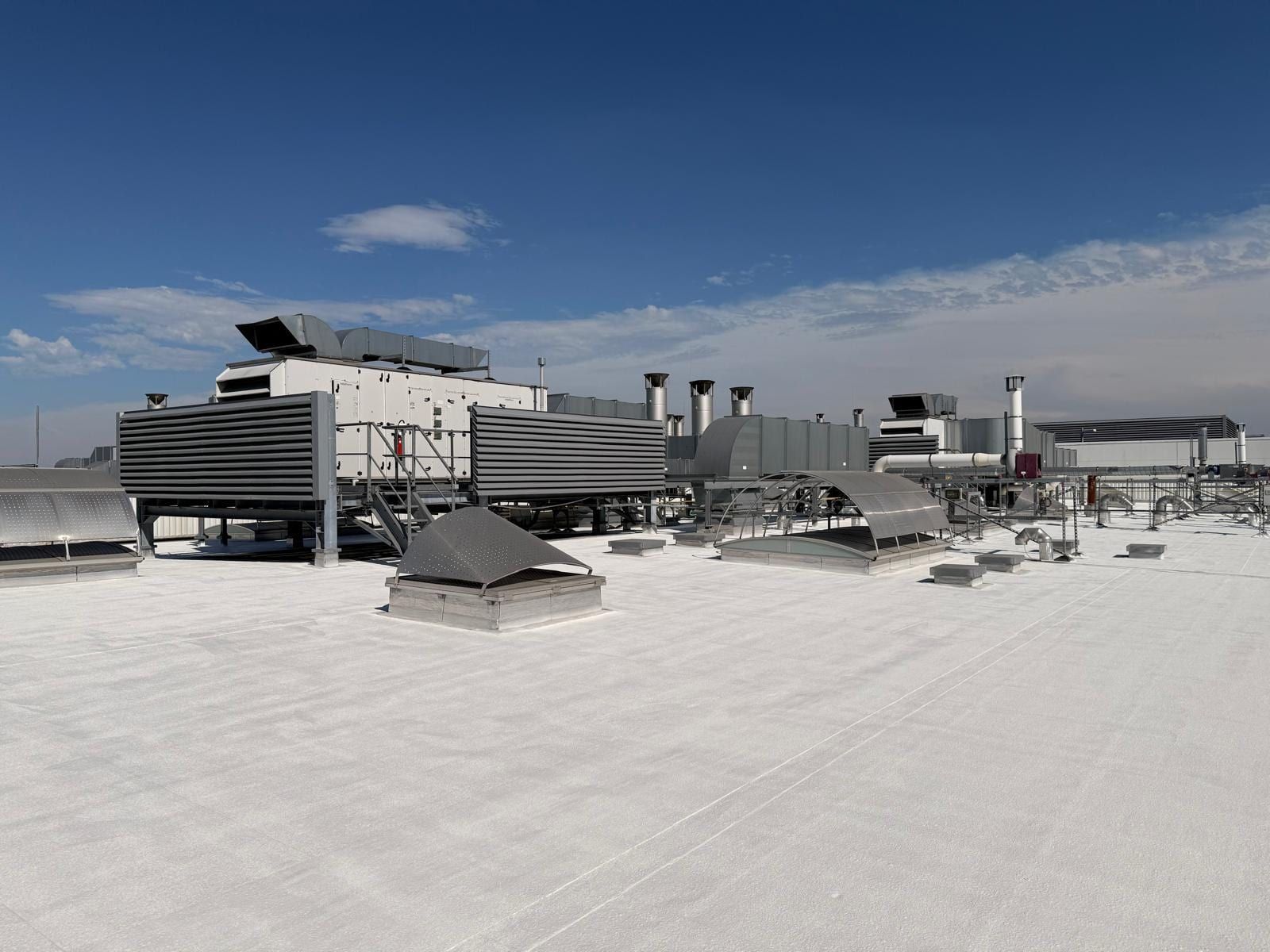
Our largest project: 5,900 m² of bitumen membrane on three buildings, treated from April to June 2026 on an industrial site in operation, −29 °C measured at handover. See the Airbus Marignane project and all our projects. On a reception building comparable to a hotel in its comfort constraints, the 1,000 m² school in La Rochelle no longer needed the planned air conditioning after treatment.
How a hotel and restaurant cool roof project unfolds
- Free study within 48 h: satellite measurement, substrate, rooms and premises under the roof, existing air conditioning, CEE pre-qualification.
- Technical visit: condition of the waterproofing, access, roof equipment (condensers, kitchen extractors, rooflights), adhesion tests, check of the local planning rules, costed proposal item by item.
- Schedule in low season or in the mornings, assembly of the CEE file before signature where applicable, prior declaration if required.
- Preparation: cleaning at under 130 bar, anti-moss treatment, local repairs, 24 to 72 h drying.
- No-lift application: primer, base coat in two cross passes, anti-soiling topcoat.
- Checks and handover: thickness checks, infrared measurements before/after, as-built file, ten-year liability cover (French décennale), maintenance plan (low-pressure water cleaning every 12 to 15 months).
The installation process is detailed step by step. The cost depends on the surface, the substrate, the preparation, the access and the grants: it only exists in the proposal handed over after the study.
The objections we hear from hoteliers
- “We already have air conditioning.” Precisely: the cool roof reduces the load it fights, gives it back capacity on heatwave nights and reduces its consumption by 15 to 40 % depending on the zone, without an additional outdoor unit on the façade.
- “A coating is a gimmick.” An off-the-shelf white paint reflects 70 to 80 % of the radiation and loses its whiteness within two seasons. PrimaTherm® reflects 95 %, keeps its SRI after 4,000 h of accelerated ageing and is applied under a thickness-controlled protocol.
- “What about winter?” The low winter sun hits the façades, not the roofs; the loss of winter solar gain is marginal compared with the summer savings. See cool roofs in winter.
- “The heritage architect will refuse.” On a flat roof invisible from the street, the opinion is rarely unfavourable; we prepare the prior declaration with the relevant documents.
- “It will be seen from the rooms opposite.” A clean white roof is a sign of a well-maintained establishment; the anti-soiling topcoat keeps it neat with a wash every 12 to 15 months.
Establishments concerned
- Independent and chain hotels with flat or steel-deck roofs, top-floor rooms.
- Restaurants, brasseries, roadside restaurants: kitchens and dining rooms under a dark roof.
- Holiday residences, holiday villages, campsites with communal buildings: catering, sanitary blocks, common rooms.
- Mountain establishments open in summer and coastal establishments: high season in full heat.
- Restaurants in shopping centres: see cool roof for shopping centres.
From Saint-Laurent-d’Agny, near Lyon, we work on establishments across the region on day trips (Lyon, Annecy, Chambéry, Grenoble) and anywhere in France with a team accommodated on site, from the Mediterranean coast (Nice, Marseille, Montpellier) to the Atlantic coast (Biarritz, Bordeaux) and Paris. The cool roof simulator (in French) gives a first order of magnitude; the free study follows within 48 h, to be launched before the season.
Frequently asked questions
Does the hotel or restaurant have to close during the application?
No. The work takes place exclusively on the roof, with no access to the rooms or the dining areas. Our no-lift method keeps the drums and the pump on the ground, in a cordoned-off area away from the entrance and the terraces; only the hoses go up. No crane, no scaffolding on the façade, no road reserved. The product is water-based, solvent-free and odourless: no nuisance in the kitchen or the dining room. Two to four days are enough for most establishments, scheduled in low season or in the mornings.
What temperature gain in the top-floor rooms?
On the roof, up to −30 °C on the surface, from 50–70 °C down to 25–35 °C (−29 °C measured by infrared at the handover of a 5,900 m² project in 2026). In the rooms, the gain depends on the roof insulation: up to 4 to 6 °C felt under a poorly insulated flat roof or attic, 1 to 3 °C in a well-insulated building. The existing air conditioning regains its capacity during the hottest hours and the heat radiated by the ceiling, the most unpleasant at night, disappears.
Is a hotel or a restaurant eligible for the French CEE incentive, sheet BAT-EN-112?
Under conditions. The sheet targets a commercial-use tertiary building whose volume is heated and cooled by heat pump; a hotel or a restaurant with reversible air conditioning can qualify, for 160, 170 or 270 kWh cumac per m² depending on French climate zone H1, H2 or H3. Non-air-conditioned volumes do not qualify and the file must be put together before signature. We check during the free study, without promising anything in advance. MaPrimeRénov’ does not cover cool roofs.
When should the work be done for a seasonal establishment?
Before the hot season, in a weather window between 12 and 35 °C with a dry substrate: April to June for a seaside establishment, September–October to prepare the following summer, or during a quiet week for a restaurant. Mountain establishments open in summer are treated in spring. We plan around your weekly or annual closing periods.
My establishment is in a historic centre, can I turn the roof white?
Changing the colour of a roof generally requires a prior declaration to the town hall (article R. 421-17 of the French planning code) and, in protected areas, the opinion of the French heritage architect (Architecte des Bâtiments de France). A flat roof invisible from the street rarely poses a problem; a tiled or zinc roof that is visible calls for other solutions. We check the local planning rules (PLU) and the protected perimeters for each establishment before handing you the proposal.
What about a small restaurant or a bed and breakfast?
Below a few hundred m², our online shop sells the PrimaTherm® system with the quantity calculation per m², the application guide and the conditions to respect, stated before purchase. A local tradesman or a careful owner can apply it. As soon as the surface, the access or the requirement for ten-year liability cover justify it, our teams step in.