Shopping centres: the roof, the largest summer service-charge item
A shopping centre is a wide, low, flat building, open seven days a week, whose malls are air-conditioned five months a year. Its roof accounts for almost the entire envelope exposed to the sun: under steel deck, bitumen membrane or dark PVC, it climbs to 50–70 °C and radiates into the galleries, the shops and the stockrooms. The air conditioning fights this heat during opening hours, that is during the hottest hours. The result shows in the service charges re-invoiced to the tenants, in the complaints of customers under the glass roofs and in the site’s OPERAT trajectory.
Malls, glass roofs, food court: where the heat gets in
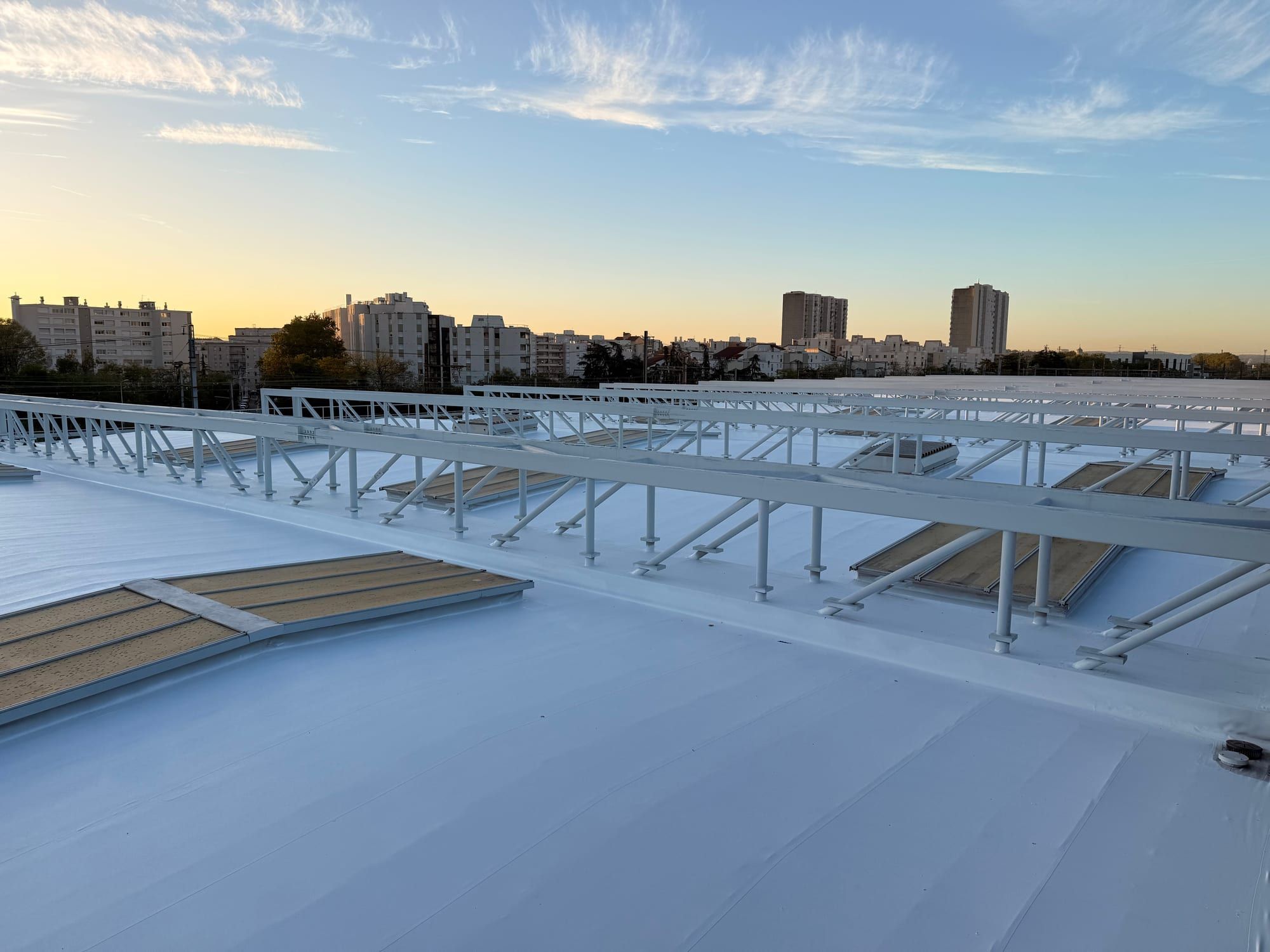
The hot spots of a centre are well known to its managers: the malls under rooflights, the upper floors under the roof, the food court with its extraction, the exposed corner units. Heat gets in two ways: the radiation from the dark roof, which passes through often ageing insulation, and the polycarbonate rooflights or vaults that let the sun through. The cool roof treats the first; the PrimaTherm® LT semi-transparent lacquer on the polycarbonate rooflights treats the second, adjusting the desired brightness (one coat: around −25 %; two coats: around −50 %).
Service charges, leases and the environmental annex
Air-conditioning the malls is a common service charge: every kilowatt-hour saved shows up in the charges re-invoiced to the tenants, a concrete argument at lease renewals and lettings. For leases over 2,000 m², the environmental annex (French green lease clause) requires landlord and tenant to share consumption data and an action plan: the cool roof naturally finds its place there, with before/after measurements.
The French tertiary-sector decree and in-use certifications
Centres over 1,000 m² are covered by the French Éco Énergie Tertiaire scheme: −40 % final energy consumption by 2030, −50 % by 2040, −60 % by 2050, declared every year on OPERAT. Property companies have already dealt with LED lighting, the building management system and the rooftop units; the roof is the next deposit, with a short payback (generally 3 to 5 years). The action also fits into in-use certifications that reward reduced consumption and summer comfort. See the French tertiary-sector decree and cool roofs and cool roofs and HQE, BREEAM, LEED certifications (in French).
What PrimaTherm® changes on a shopping centre
Hélios applies the PrimaTherm® system, made in France by Primacoating: a water-based elastomeric coating applied in 4 layers (PH169 primer, PH107 reflective base coat in two cross passes, PH107TCL anti-soiling topcoat). Every value is certified and the reports are attached to the proposal.
| Characteristic | Value | Standard / report |
|---|---|---|
| Solar reflectance | 95 % | ASTM E903-12 |
| Thermal emissivity | 0.89 | ASTM C1371-15 |
| SRI (new) | 120 | ASTM E1980 (119 after ageing) |
| Durability | SRI maintained after 4,000 h of accelerated QUV ageing | conventional service life of 20 years (French CEE sheet) |
| External fire classification | Broof(t3) | EN 13501-5, CSTB report RA23-0010 |
On a shopping centre:
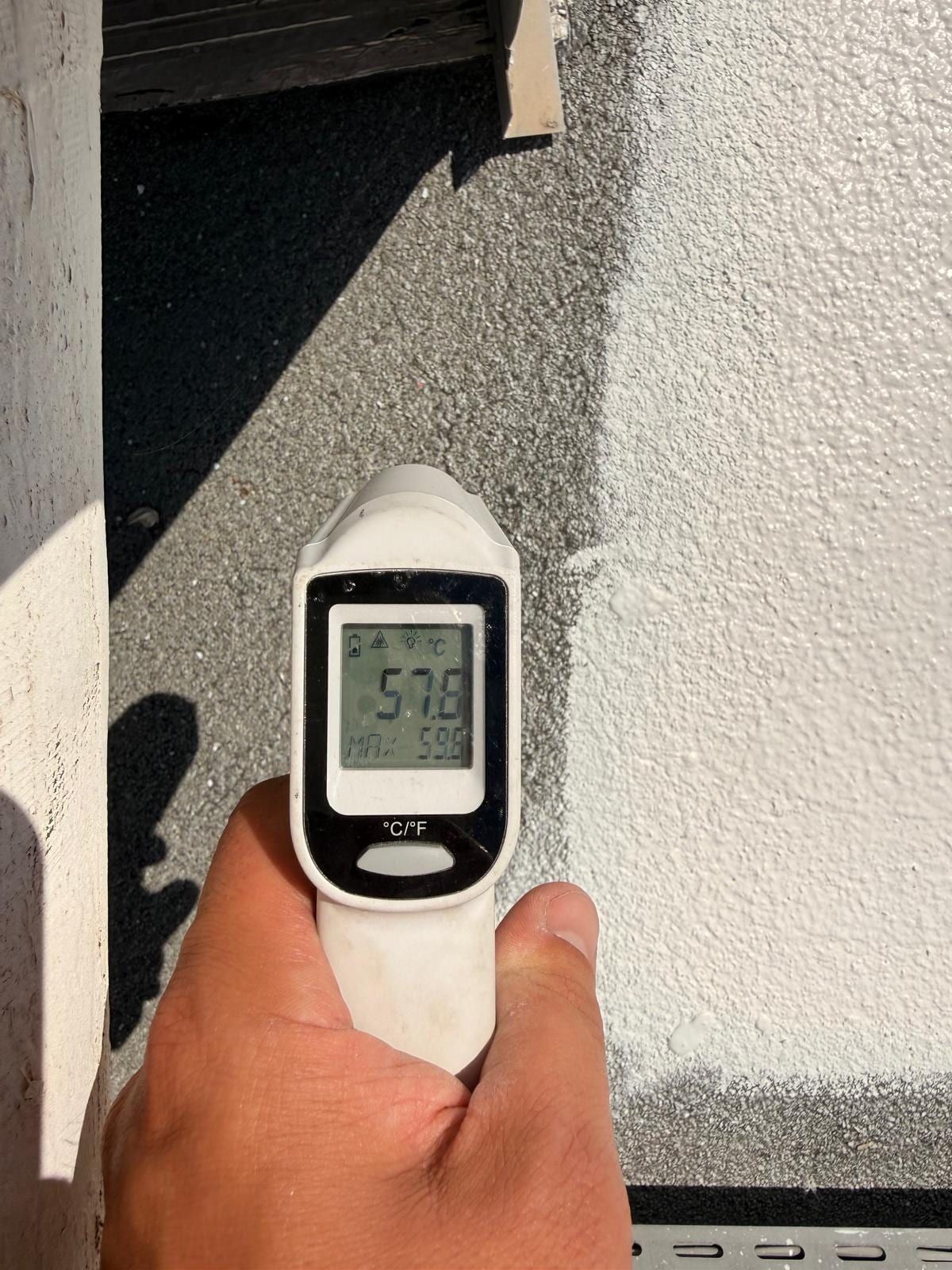
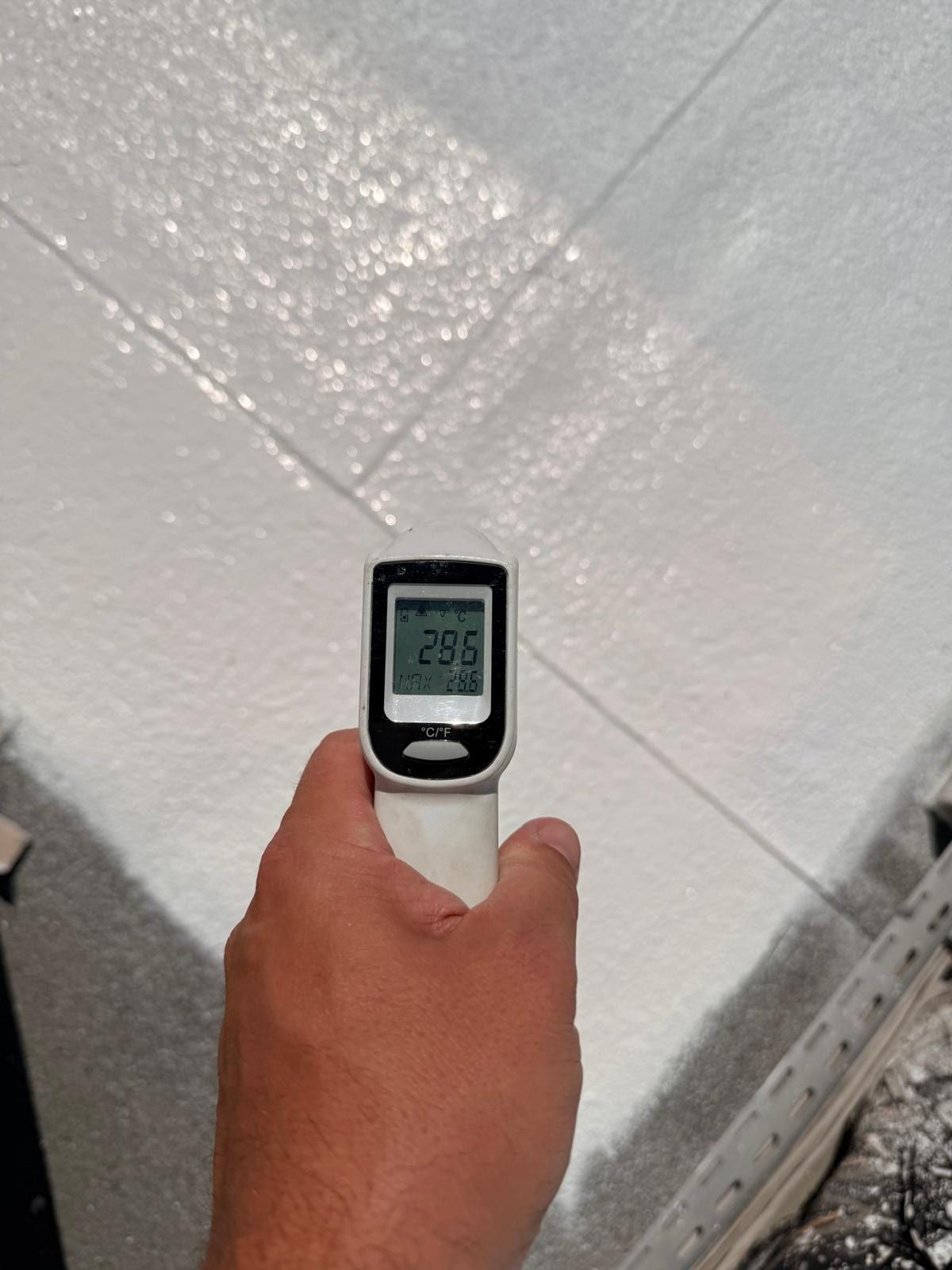
- up to −30 °C on the roof surface: from 50–70 °C down to 25–35 °C, with −29 °C measured by infrared at the handover of a 5,900 m² project in 2026;
- up to −40 % air-conditioning consumption on the volumes under the treated roof: 15 to 25 % in French climate zone H1, 20 to 30 % in H2, 25 to 40 % in H3;
- rooftop units, chillers and AHUs that draw in cooler air and regain their capacity on a Saturday afternoon in July;
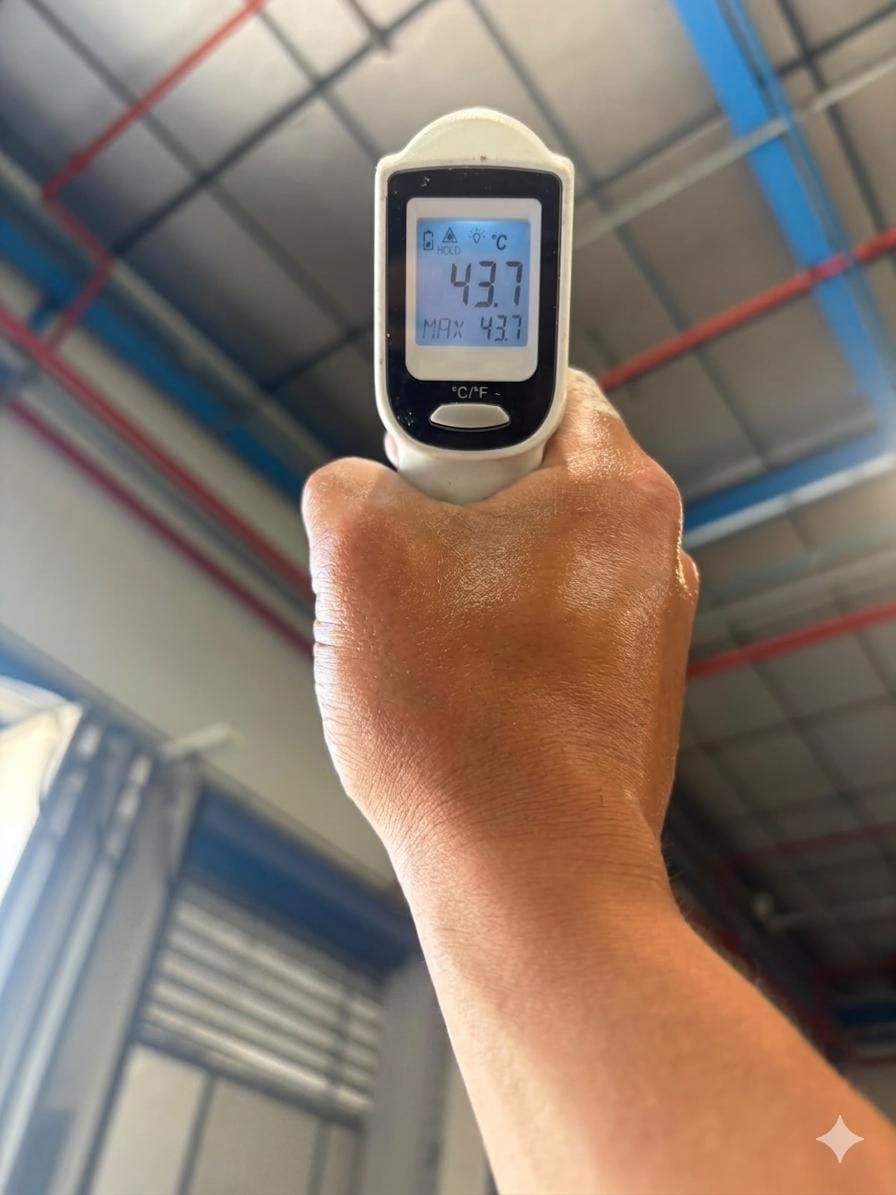
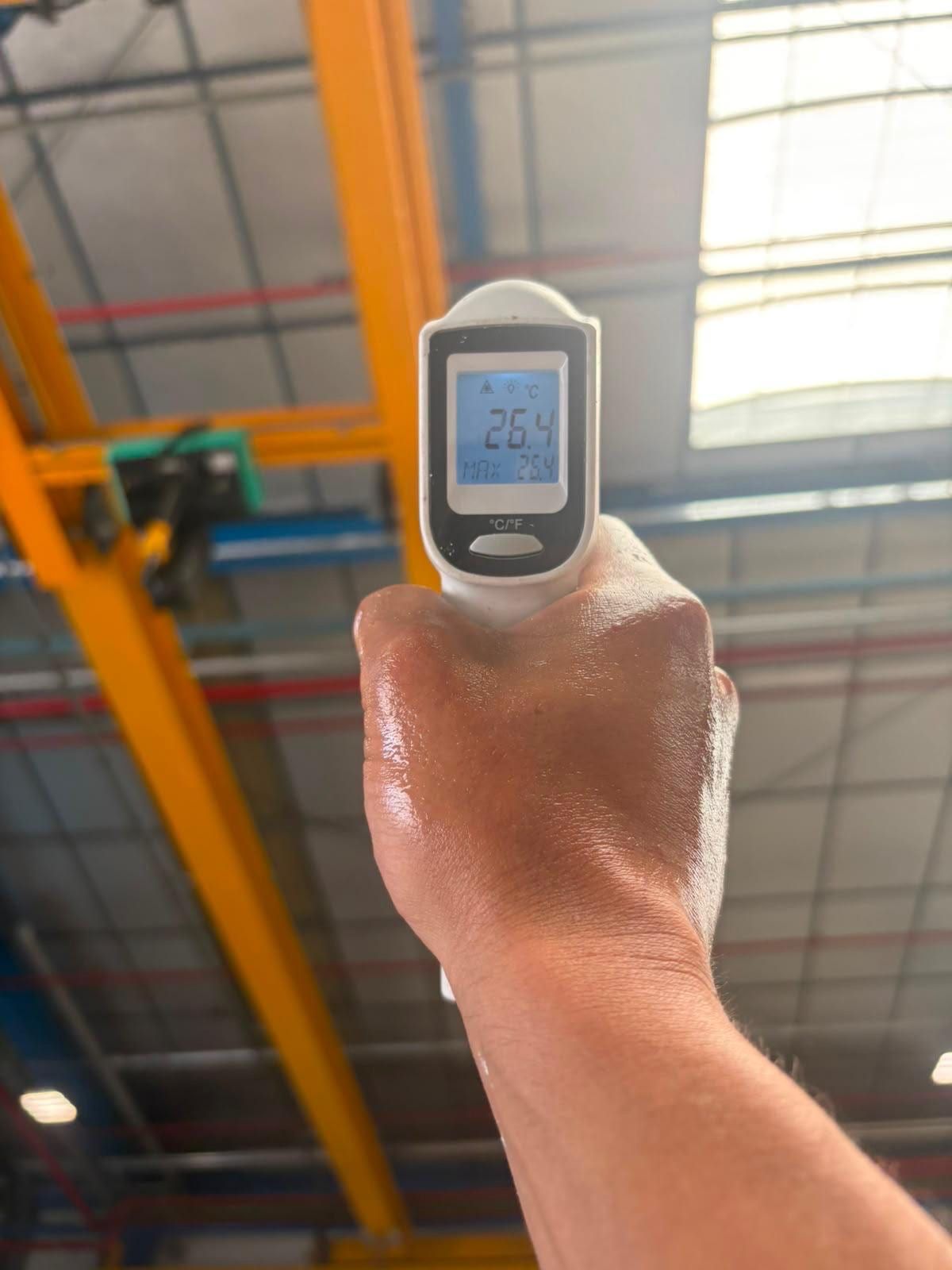
- up to −6 °C felt inside in poorly insulated volumes (stockrooms, technical premises, upper floors under the roof) and the end of the heat radiated by the ceiling in the malls;
- waterproofing that ages more slowly, on surfaces where a re-roofing is counted in weeks of work and in commercial disruption.
The payback study is built on your consumption readings and the zoning of the centre, never on a catalogue ratio.
CEE BAT-EN-112: eligible under conditions, never taken for granted
The French standardised operation sheet BAT-EN-112 credits the reflective renovation of the roof of a tertiary building for commercial use, whose volume is heated and cooled by heat pump: 160 kWh cumac per m² in French climate zone H1, 170 in H2, 270 in H3. A shopping gallery air-conditioned by reversible rooftop units is the typical case targeted. The conditions to check: the actual air-conditioning equipment of the volumes under the treated roof, the eligible surface (car parks, non-air-conditioned stockrooms and technical premises do not qualify), the date of commitment of the work and the assembly of the file before signature. We check every point during the free study and hand over a written pre-qualification. MaPrimeRénov’ does not cover cool roofs. The cool roof incentives in France 2026 page details the schemes.
Work with the centre open: no crane in the car park, no closure
No lifting
On a shopping centre, the cost of a roofing project is not in the roof: it is in the parking spaces closed off, the crane in front of the entrance, the deliveries blocked. Our no-lift method avoids all three: the 150 to 200 L drums and the airless pumps stay on the ground in the service area, only the hoses, up to 80 m long, go up to the roof. No crane, no road reserved, no customer space occupied, no nuisance in the malls.
Phasing by zone, adapted hours
The roof is divided into zones consistent with operations: gallery, food court, mid-size stores, stockrooms. Each zone is prepared, coated, checked and handed over before the next, early in the morning if management wishes, with a schedule approved with the centre’s security. A 3,100 m² industrial building was treated in one week, site in operation; a centre of several tens of thousands of m² is planned over a few weeks, without ever closing.
Retail roofs: rooftop units, smoke vents, signage, photovoltaics
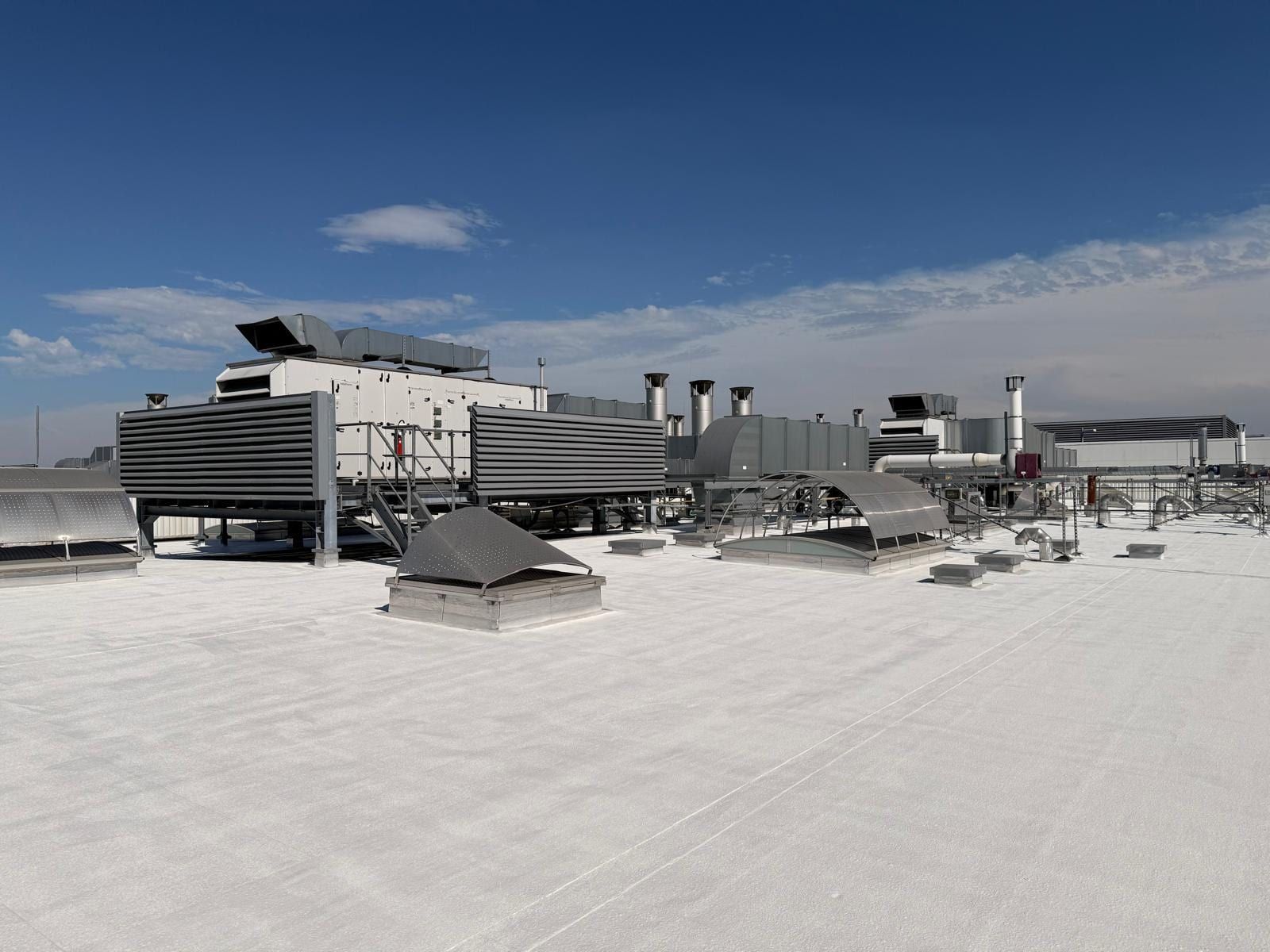
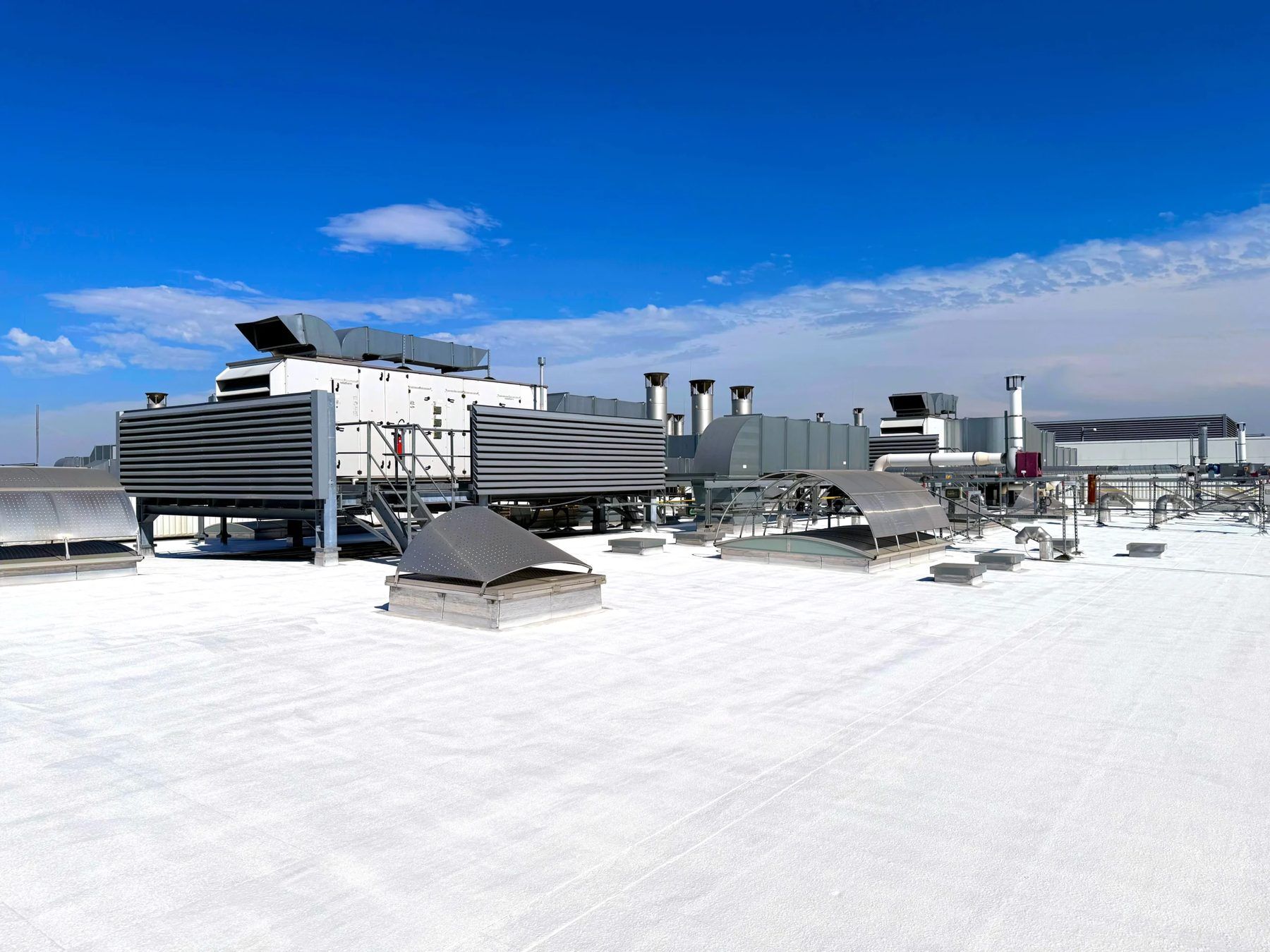
Air handling units, rooftop units, condensers, smoke vents, food court extractors, signage, lifelines, antennas, photovoltaic panels: every piece of equipment is mapped during the technical visit, protected during application and left in service. The smoke vents remain functional. Roofs fitted with solar panels are treated between the rows, and the white surface improves their output: see cool roof and solar panels.
Substrates found
- Steel deck on retail parks and mid-size stores: PH169 primer at 10 m²/L. See the cool roof on steel deck roofs guide.
- Bitumen membrane on galleries and flat roofs: primer at 6 m²/L. See cool roof on bitumen roofs.
- PVC membrane, frequent on 2000s centres: only if laid more than 10 years ago, with the PH107PVC adhesion base. See cool roof on waterproofing membranes.
- EPDM: compatible after an adhesion diagnosis. Fibre cement only when asbestos-free (buildings from after 1997).
Asset management: a file that can be rolled out across a portfolio
A property company does not treat one centre, it treats a portfolio. We supply the same file for each site: diagnosis and measurement, certified values, estimate of the potential based on consumption readings, CEE pre-qualification, no-closure schedule, as-built file with thickness checks and infrared measurements before/after, maintenance plan. This consistent format feeds environmental reporting, the environmental annexes of leases and certification files, and allows roll-out site after site with the same checks. The landlord-tenant trade-offs are documented: protected waterproofing and asset value on one side, service charges and sales comfort on the other.
References
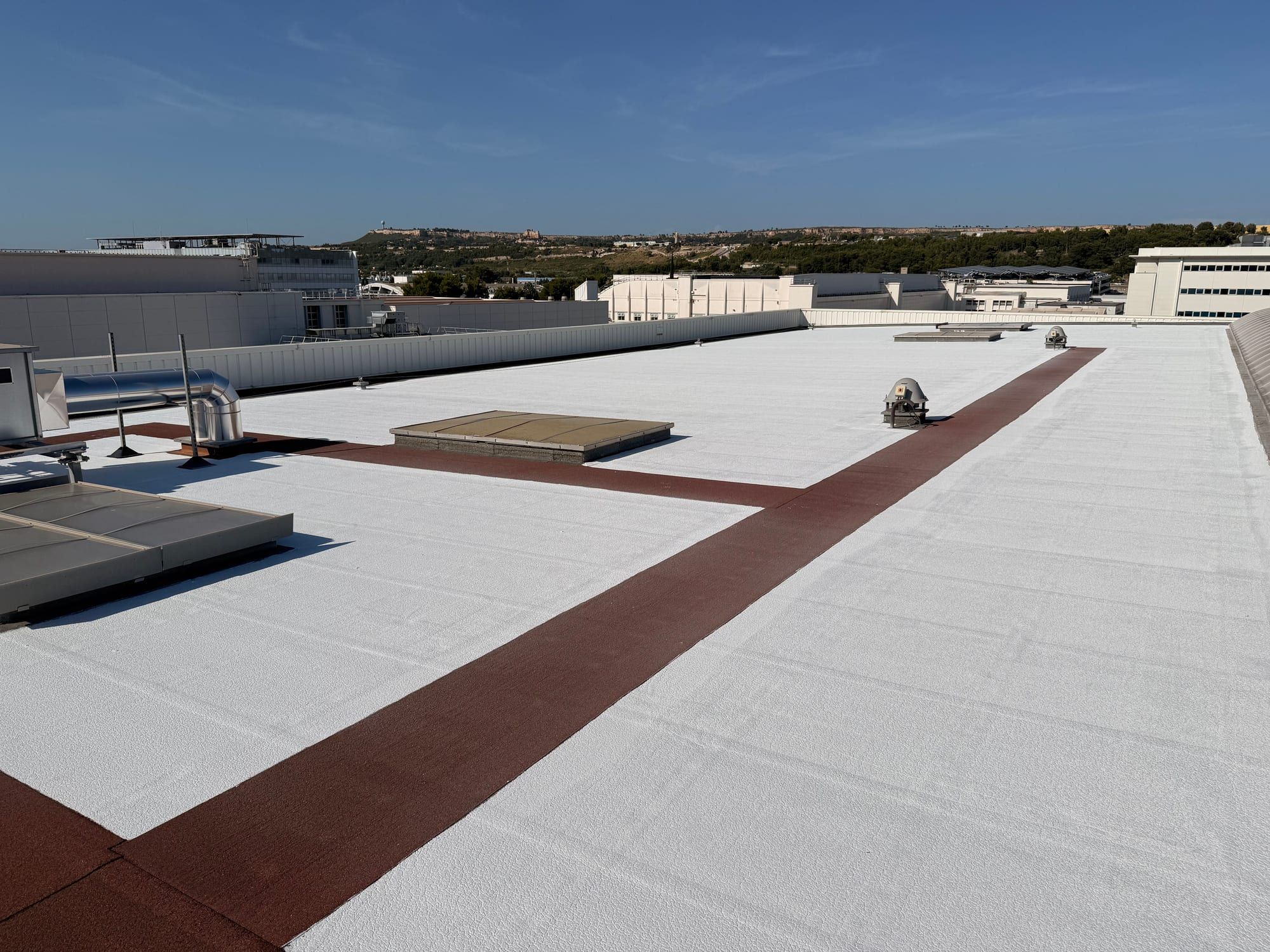
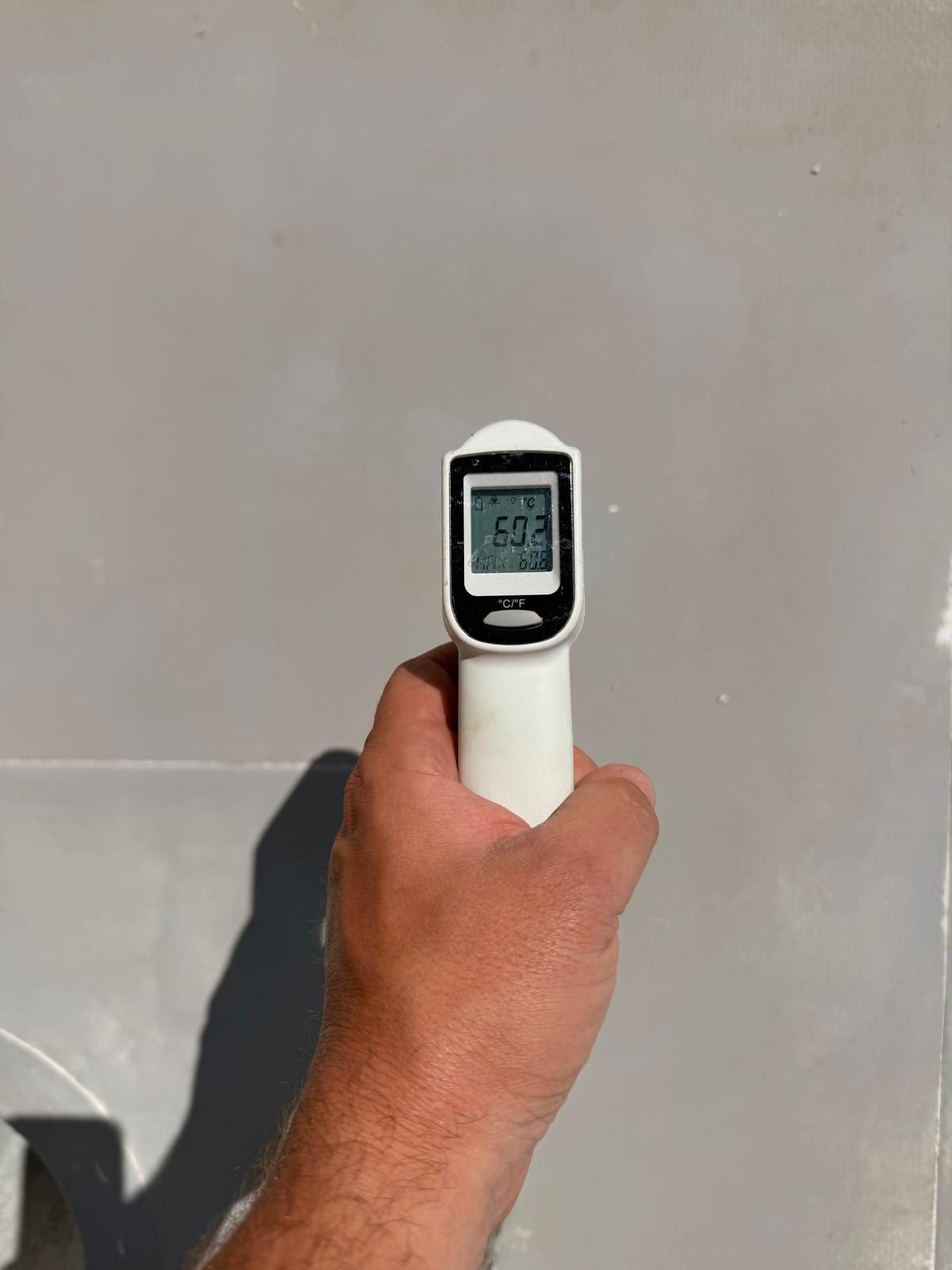
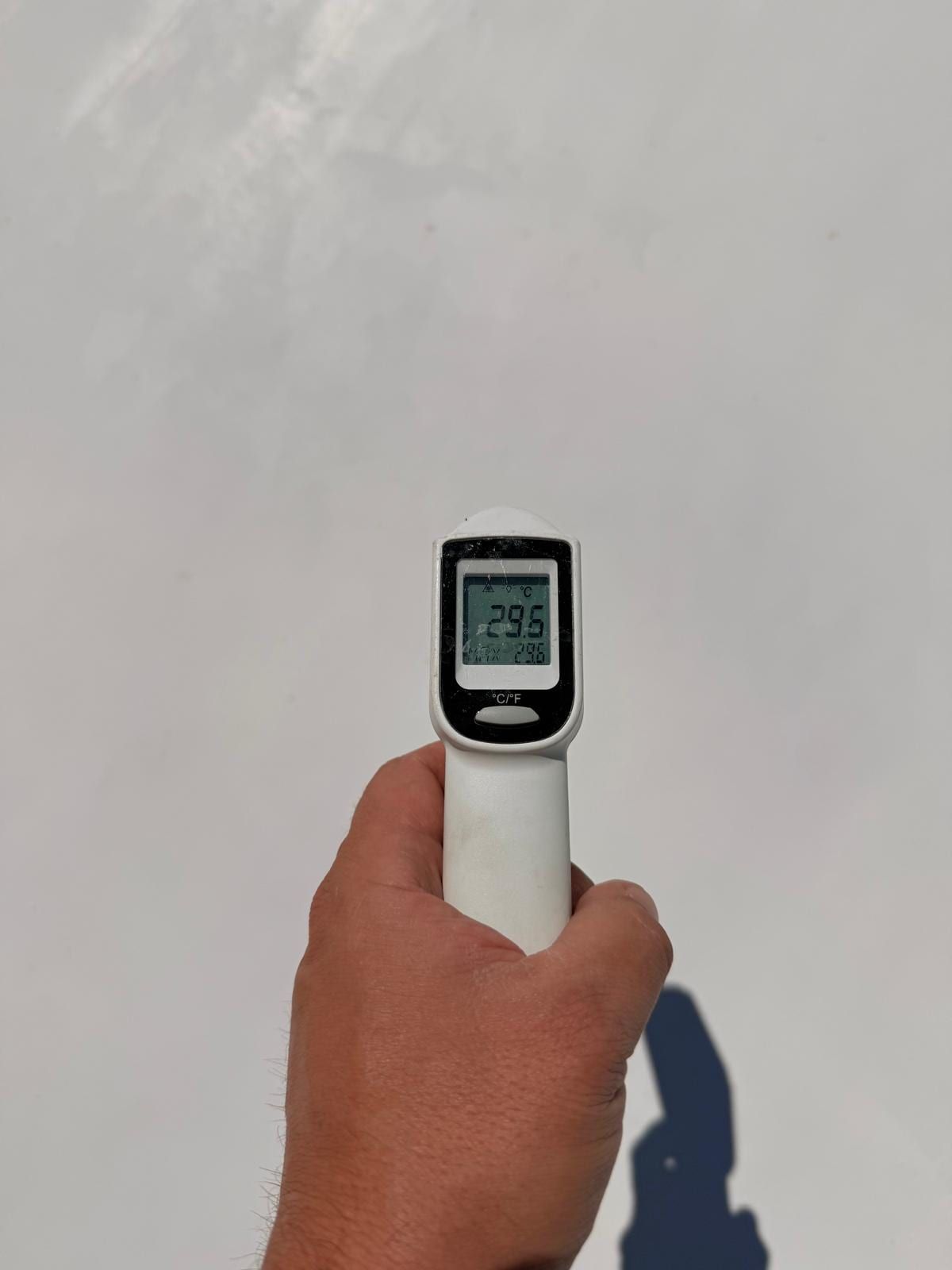
Our largest project: 5,900 m² of bitumen membrane on three buildings, treated from April to June 2026 on an industrial site in operation, −29 °C measured at handover (57.8 °C on the untreated area versus 28.6 °C on the treated area). See the Airbus Marignane project and all our projects, documented with before/after measurements. For commercial refrigeration, the cured-meat plant in Périgny (Hélios project, 2,000 m², attic from 50 down to 30 °C, cooling consumption reduced by 35 %) illustrates the effect on chillers.
How a shopping centre cool roof project unfolds
- Free study within 48 h: satellite measurement per zone, substrate, use and air conditioning of the volumes, CEE pre-qualification.
- Technical visit with the centre management: roof equipment, condition of the waterproofing, adhesion tests, schedule compatible with operations and security, costed proposal item by item.
- Assembly of the CEE file where applicable, before signature, and recording in the environmental annex if necessary.
- Preparation: cleaning at under 130 bar, anti-moss treatment, local repairs, 24 to 72 h drying.
- No-lift application: primer, base coat in two cross passes, anti-soiling topcoat, zone by zone; weather window between 12 and 35 °C, humidity below 80 %, no rain in the 4 h following each coat.
- Checks and handover: thickness checks, infrared measurements before/after, as-built file, ten-year liability cover (French décennale), maintenance plan.
The installation process is detailed step by step. The cost depends on the surface, the substrate, the preparation, the access and the grants: it only exists in the proposal handed over after the study.
The objections we hear from property companies
- “We have already optimised the BMS and the rooftop units.” The cool roof acts on the incoming heat, an item those actions do not touch; it adds to them in the OPERAT trajectory and gives capacity back to the existing equipment.
- “Our membrane is PVC.” If it is more than 10 years old, it can be treated with the PH107PVC adhesion base after testing on three areas; otherwise, we say so and we wait.
- “A coating will not hold on a roof of this size.” An off-the-shelf white paint loses its whiteness within two seasons. PrimaTherm® keeps its SRI after 4,000 h of accelerated ageing, under a thickness-controlled 4-layer protocol, and 5,900 m² were treated on a single industrial site in 2026.
- “What about winter?” The low winter sun hits the façades and the shopfronts, not the roofs; the loss of winter solar gain is marginal compared with the summer savings. See cool roofs in winter.
- “The roof will get dirty.” The PH107TCL topcoat with PVDF resins limits soiling; low-pressure water cleaning every 12 to 15 months is enough.
Formats concerned
- Regional shopping centres and hypermarket galleries: air-conditioned malls, French tertiary-sector decree, CEE possible.
- Retail parks and mid-size stores under steel deck: the fastest comfort gain. See also cool roof for retail and supermarkets.
- Outlet centres: low buildings, large roofs, summer footfall.
- Rooftop food and leisure: see cool roof for hotels and restaurants.
From Saint-Laurent-d’Agny, near Lyon, we work on centres across the region on day trips (Lyon, Saint-Étienne, Grenoble) and anywhere in France with a team accommodated on site (Marseille, Toulouse, Bordeaux, Paris, Lille). The cool roof simulator (in French) gives a first order of magnitude per site; the free study follows within 48 h.
Frequently asked questions
Is a shopping centre eligible for the French CEE incentive, sheet BAT-EN-112?
It is one of the most favourable cases, but eligibility remains conditional. The sheet targets a commercial-use tertiary building whose volume is heated and cooled by heat pump, and credits 160, 170 or 270 kWh cumac per m² depending on French climate zone H1, H2 or H3. Non-air-conditioned surfaces (car parks, stockrooms) do not qualify, and the file must be put together before signature. We check the conditions during the free study; MaPrimeRénov’ does not cover cool roofs.
Does the centre or part of the gallery have to close during the work?
No. The application takes place exclusively on the roof, with the centre open. Our no-lift method keeps the drums and the pumps on the ground in the service area; only the hoses go up to the roof. No crane in the customer car park, no space closed off, no delivery access blocked. The AHUs, rooftop units and condensers stay in service; the phasing by zone (gallery, food court, retail units) is approved with the centre management.
What gain can be expected on the air conditioning of the malls?
On the roof, up to −30 °C on the surface (−29 °C measured by infrared at the handover of a 5,900 m² project in 2026). On the air-conditioning consumption of the volumes under the treated roof, up to −40 %: 15 to 25 % in French climate zone H1, 20 to 30 % in H2, 25 to 40 % in H3. The chillers and rooftop units also draw in cooler air and regain their capacity during peak hours. The study starts from your consumption readings, never from a ratio.
What do you do with the glass roofs and rooflights?
Polycarbonate rooflights and vaults can receive the PrimaTherm® LT semi-transparent lacquer: one coat reduces heat gain and transmitted light by around 25 %, two coats by around 50 %, which allows the brightness of the malls to be adjusted. Glazed roofs call for other treatments; we say so from the technical visit.
How can the cool roof be promoted to tenants and investors?
To tenants, through the drop in air-conditioning service charges and the comfort of the malls, two arguments at lease renewal; the environmental annex of leases over 2,000 m² is the framework to record it in. To investors, through the as-built file, the before/after measurements and the contribution to the OPERAT trajectories and to in-use certifications. We supply a consistent file that can be rolled out across a portfolio.
What service life and what maintenance?
The SRI of PrimaTherm® is maintained after 4,000 h of accelerated QUV ageing; the conventional service life used by the French CEE sheet is 20 years. The PH107TCL anti-soiling topcoat preserves the whiteness; low-pressure water cleaning every 12 to 15 months maintains the reflectance and can be built into the roof maintenance contract.