Retail: why the roof weighs on the operating account
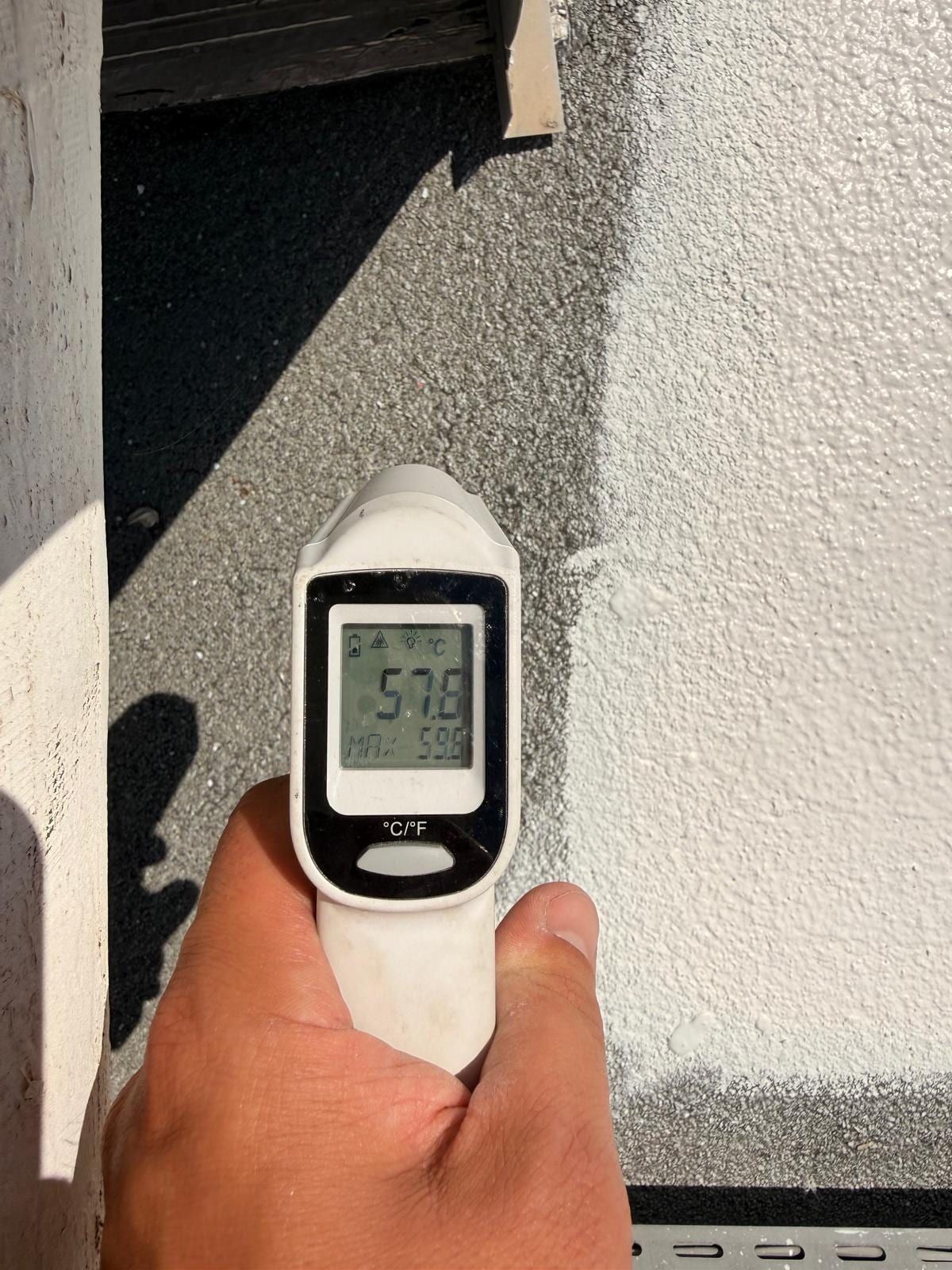
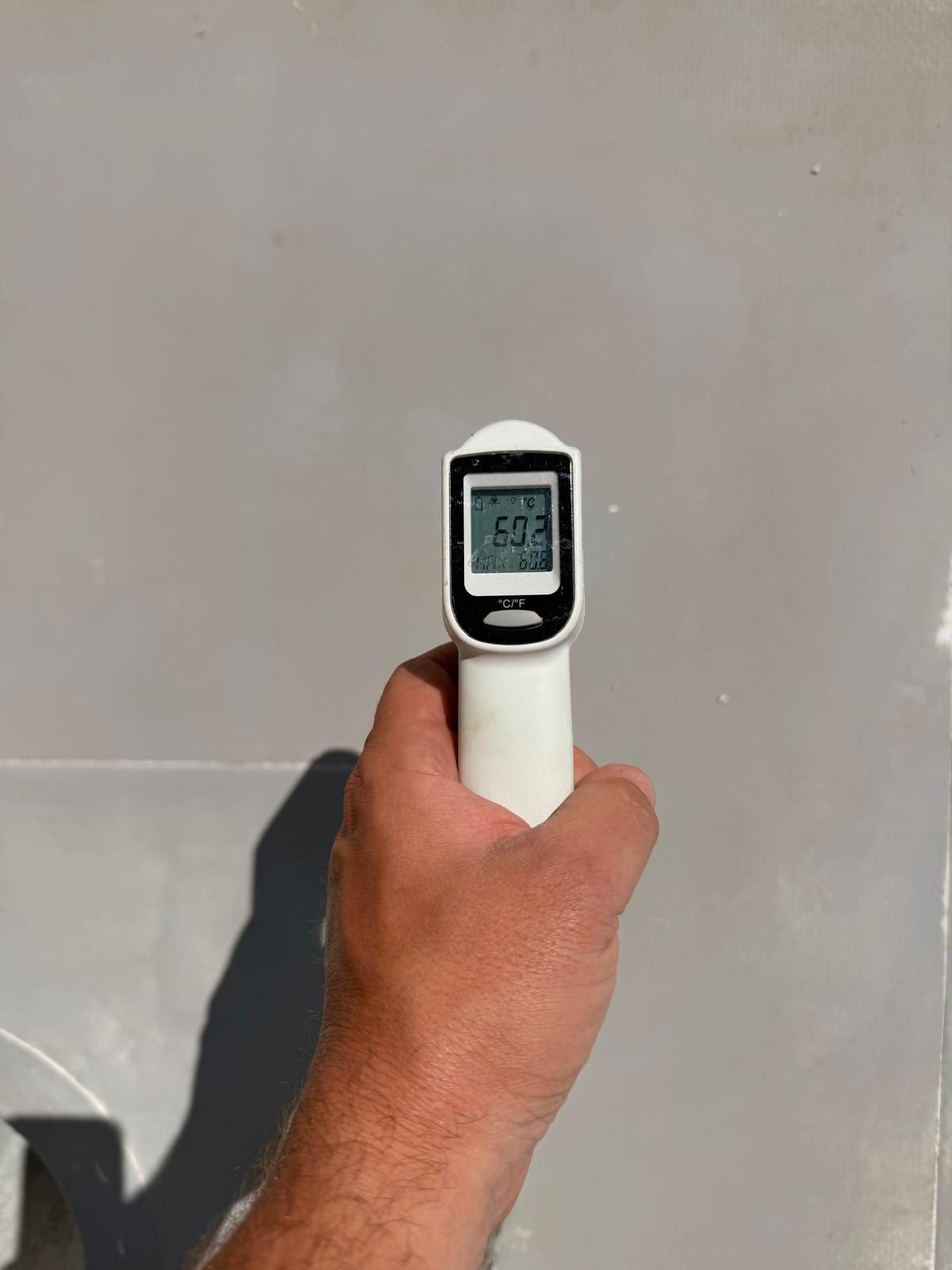
A hypermarket or a supermarket is a low, wide, flat building: its roof represents almost the entire surface exposed to the sun. In steel deck or dark bitumen membrane, it climbs to 50–70 °C at the height of summer and radiates towards the sales floor, the stockrooms and the preparation areas. This heat is fought by two systems running at the same time: the air conditioning of the volume and the production of food refrigeration. Both are fed by the same electricity bill, and that bill is one of a store’s largest cost items, after wages.
Cold chain: refrigerated cabinets, cold rooms, preparation areas
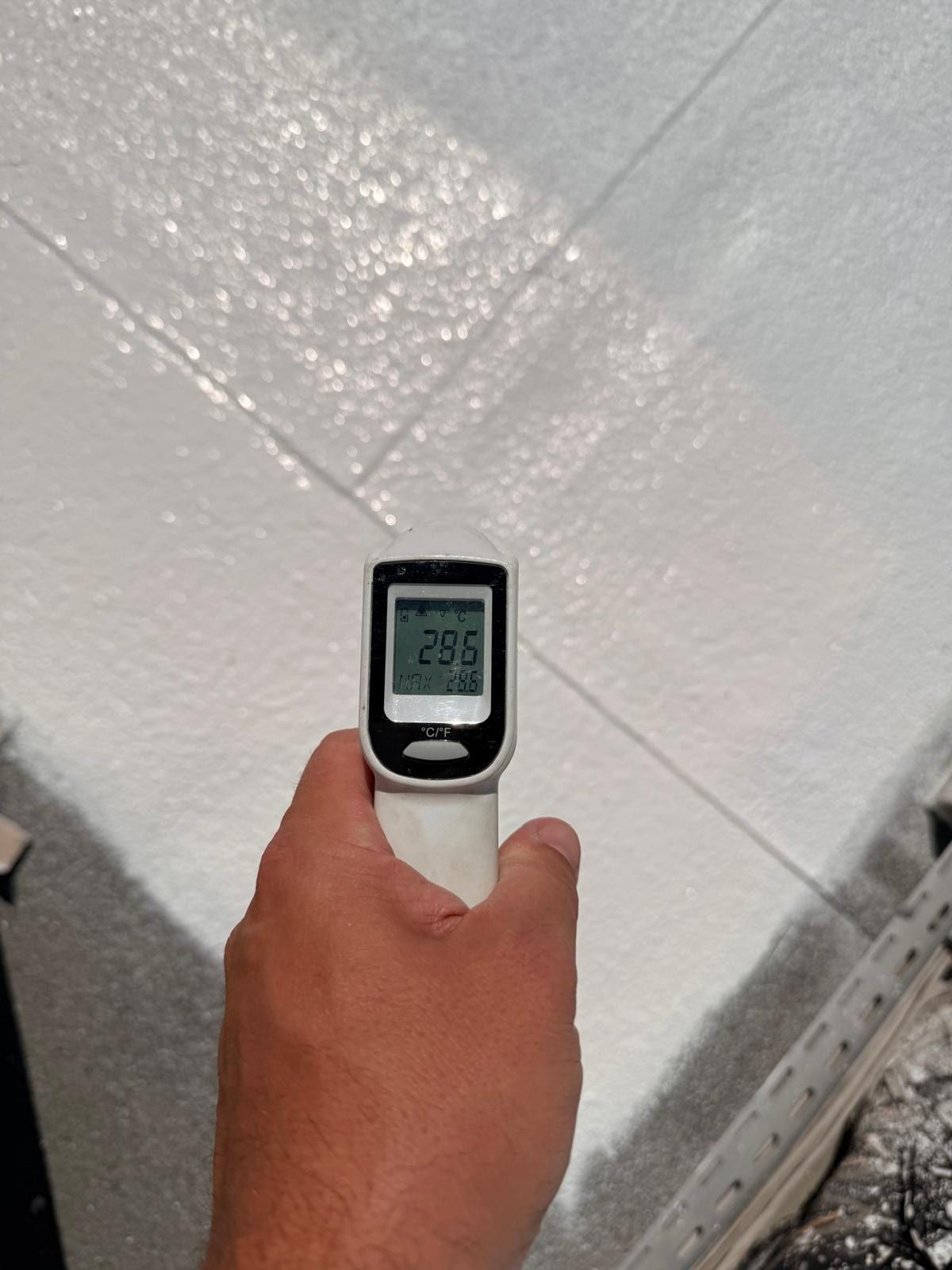
Food refrigeration accounts for nearly half of a supermarket’s electricity consumption. Open refrigerated cabinets exchange constantly with the ambient air: every extra degree on the sales floor increases their load, causes more frequent defrosting and fogging on the glass doors. The condensers, installed on the roof, draw in air that, 1 m above a dark roof, is well above the outdoor temperature. When the roof drops to 25–35 °C, the compressor load falls on both counts. This is the mechanism observed in Périgny on a 2,000 m² cured-meat plant treated by Hélios with the PrimaTherm® system: roof space brought down from 50 to 30 °C, refrigeration consumption cut by 35 %.
Shopping comfort and peak hours
Above 26 °C on the sales floor, customers shorten their visit, the chilled aisles and the checkout areas become uncomfortable and staff work in hardship conditions. On a Saturday afternoon in July, when footfall and heat peak together, an air-conditioning system sized for a dark roof reaches its limit. Reducing the heat entering through the roof gives the existing system headroom without replacing it.
French tertiary decree: −40 % by 2030
Retail floor areas over 1,000 m² are subject to the Éco Énergie Tertiaire scheme: −40 % final energy consumption by 2030, −50 % by 2040, −60 % by 2050 compared with a reference year, with an annual declaration on the OPERAT platform. Retail has already worked on LED lighting, doors on refrigerated cabinets and heat recovery; the roof is the next reservoir, with a payback generally of 3 to 5 years. See our feature on the French tertiary decree and cool roofs.
What PrimaTherm® changes on a store
Hélios applies the PrimaTherm® system, made by Primacoating: a water-based elastomeric coating applied in 4 layers (PH169 primer, PH107 reflective base coat in two crossed passes, PH107TCL anti-soiling topcoat). Every value is certified and the reports are attached to the proposal.
| Characteristic | Value | Standard / report |
|---|---|---|
| Solar reflectance | 95 % | ASTM E903-12 |
| Thermal emissivity | 0.89 | ASTM C1371-15 |
| SRI (new) | 120 | ASTM E1980 (119 after ageing) |
| Durability | SRI maintained after 4,000 h QUV | conventional service life of 20 years (French CEE sheet) |
| External fire rating | Broof(t3) | EN 13501-5, CSTB report RA23-0010 |
On a store, this translates into:
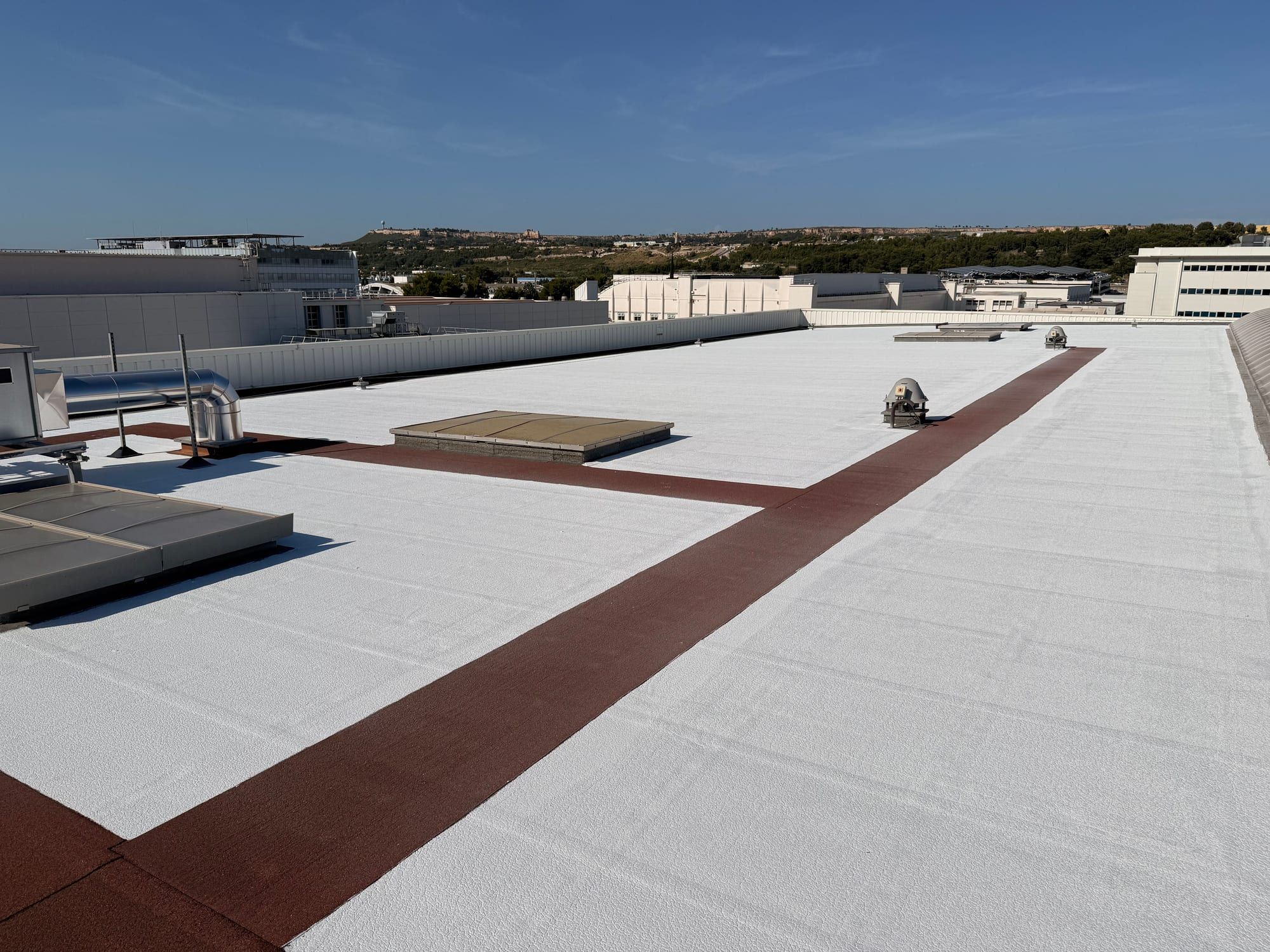
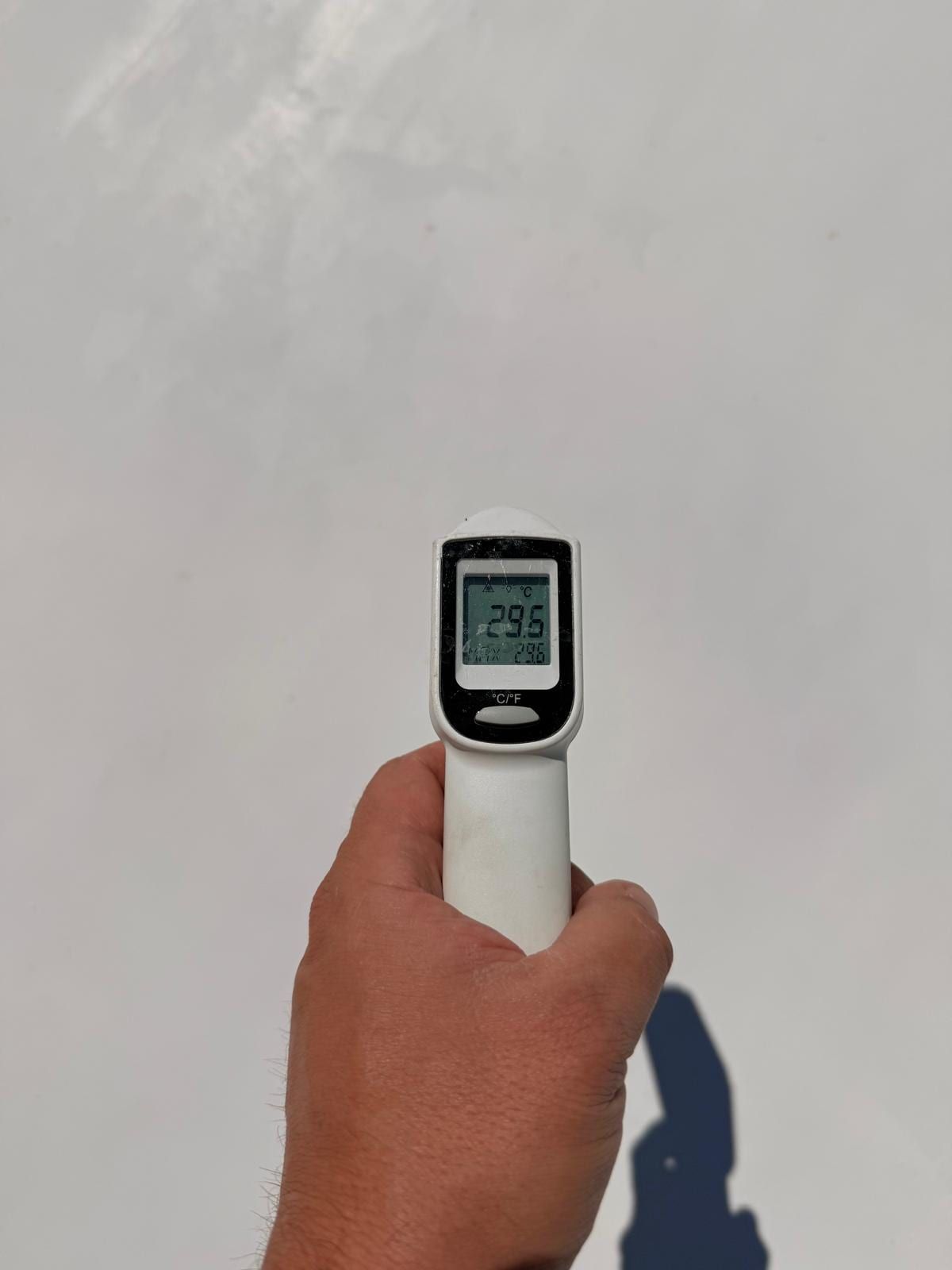
- up to −30 °C on the roof: from 50–70 °C to 25–35 °C, with −29 °C measured by infrared at the handover of a 5,900 m² project in 2026;
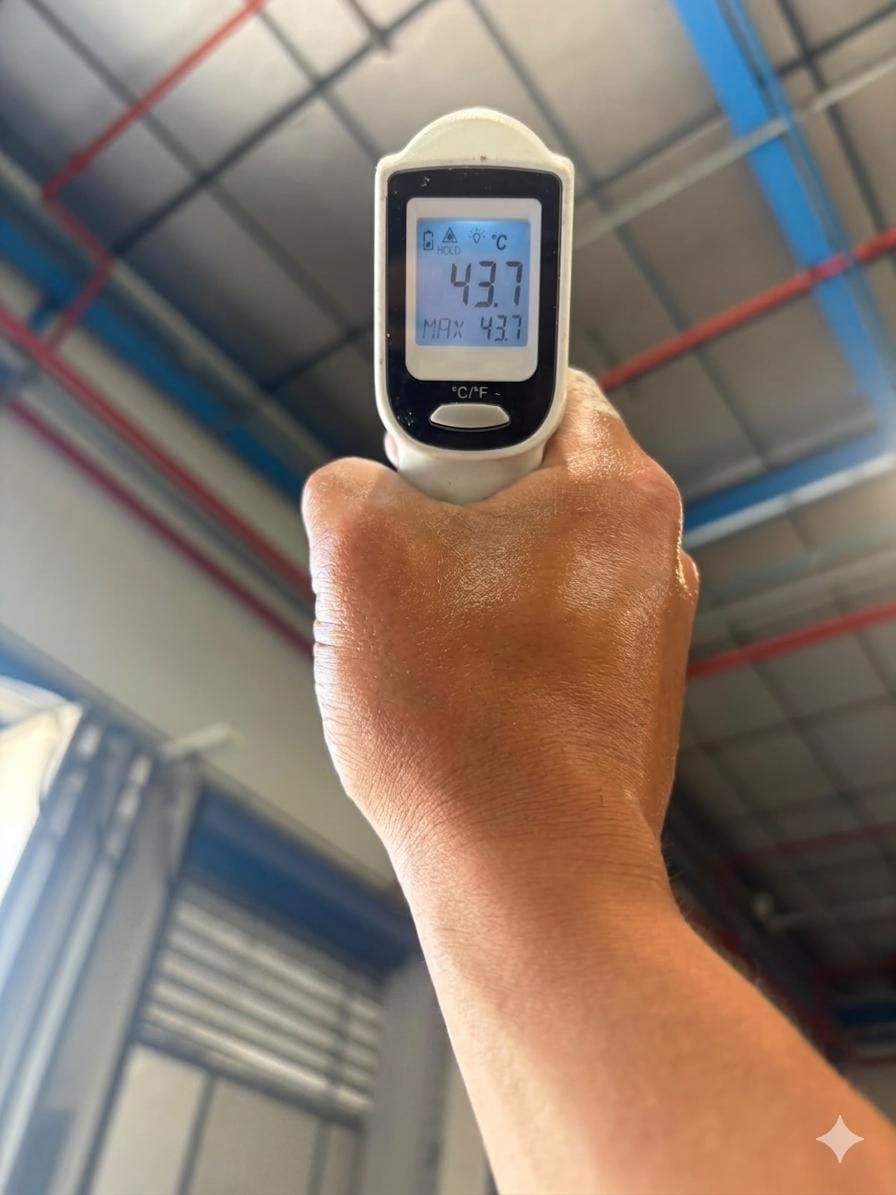
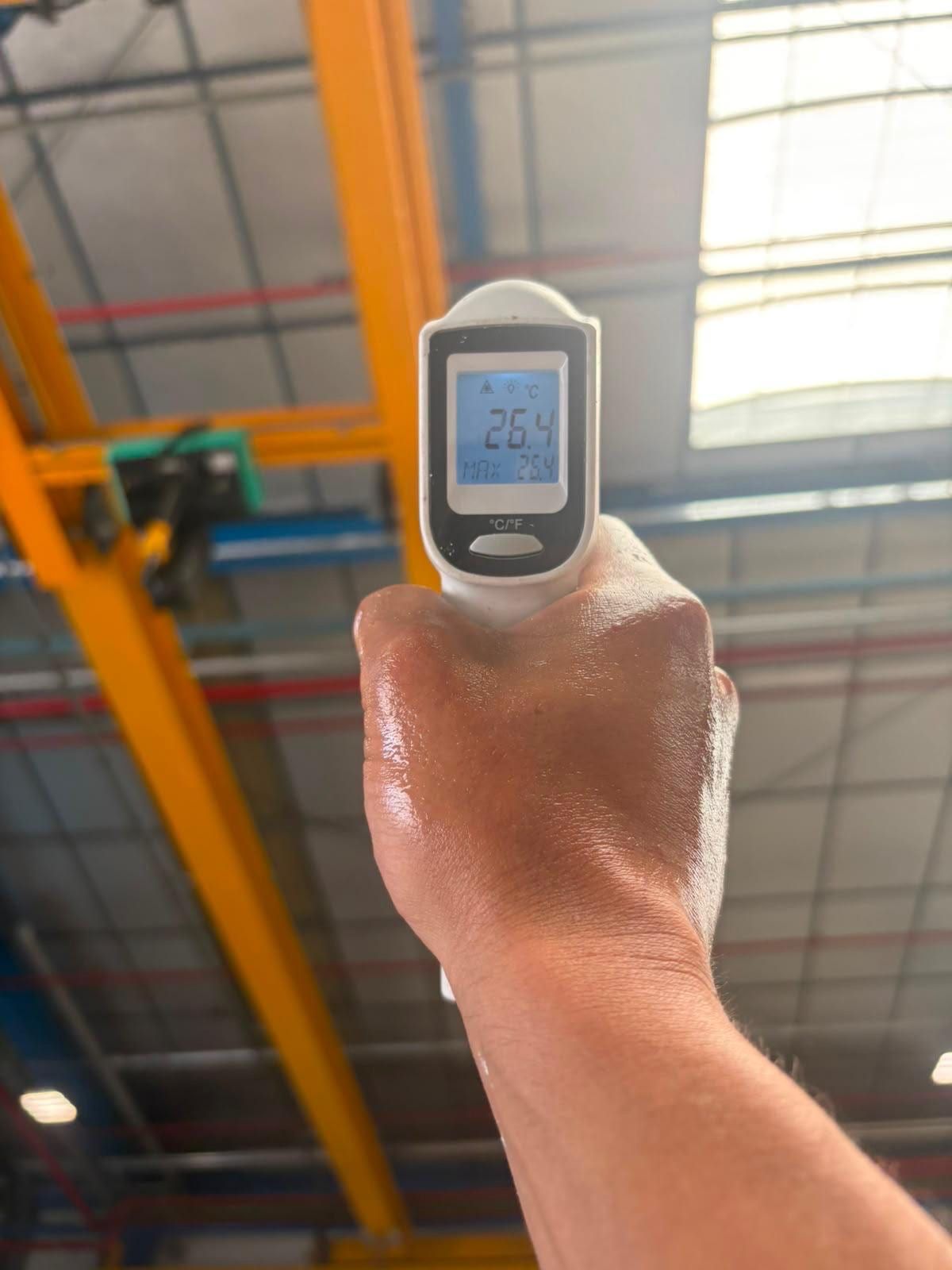
- up to −6 °C felt inside on the sales floor depending on insulation, and above all the disappearance of the heat radiated by the ceiling;
- up to −40 % air-conditioning consumption: 15 to 25 % in French climate zone H1, 20 to 30 % in H2, 25 to 40 % in H3;
- condensers and air-handling units that draw in cooler air, hence better food-refrigeration efficiency at critical hours;
- waterproofing that ages more slowly, because it no longer cycles between 20 and 70 °C every summer day.
The payback study is built on your consumption records, never on a catalogue ratio.
CEE BAT-EN-112: the sector most often eligible, under conditions
The standardised operation sheet BAT-EN-112 of the French energy-savings certificates (CEE) rewards the reflective refurbishment of a roof on a tertiary building for commercial use, whose volume is heated and cooled by heat pump. It awards 160 kWh cumac per m² in climate zone H1, 170 in H2 and 270 in H3. A supermarket or hypermarket with reversible air conditioning is the typical case targeted by this sheet; that is why retail is, together with shopping centres, the sector where the bonus can most often be mobilised.
It is never a given: the air-conditioning equipment, the actual use of the volumes, the area treated and the date the works are committed determine eligibility and amount, and the file must be put together before signature. We check every point during the free roof study and give you a written pre-qualification. Two useful clarifications: MaPrimeRénov’ does not cover cool roofs, and non-air-conditioned retailers’ warehouses do not fall under this sheet. The details are on the cool roof incentives 2026 page.
Works without closing: store open, car park free
On a store, the constraint is not technical, it is commercial: no closure, no crane in the customer car park, no delivery blocked at the dock. Our no-lifting method answers all three points. The 150 to 200 L drums and the airless pumps stay on the ground in a cordoned-off area at the back of the building; only the hoses, up to 80 m long, go up to the roof. No road closure to book, no parking space out of service, no noise nuisance on the sales floor.
Phasing by zones: sales floor, stockrooms, click-and-collect, arcade
We divide the roof into zones consistent with operations: sales floor, stockrooms and preparation areas, click-and-collect unit, shopping arcade where there is one. Each zone is prepared, treated and checked before the next. The zones above the chilled aisles and the cold rooms are treated first. On a hypermarket of several thousand m², the works are scheduled over a few weeks, early in the morning if you wish, without ever interrupting business.
Retail roofs: AHUs, condensers, rooflights, photovoltaics
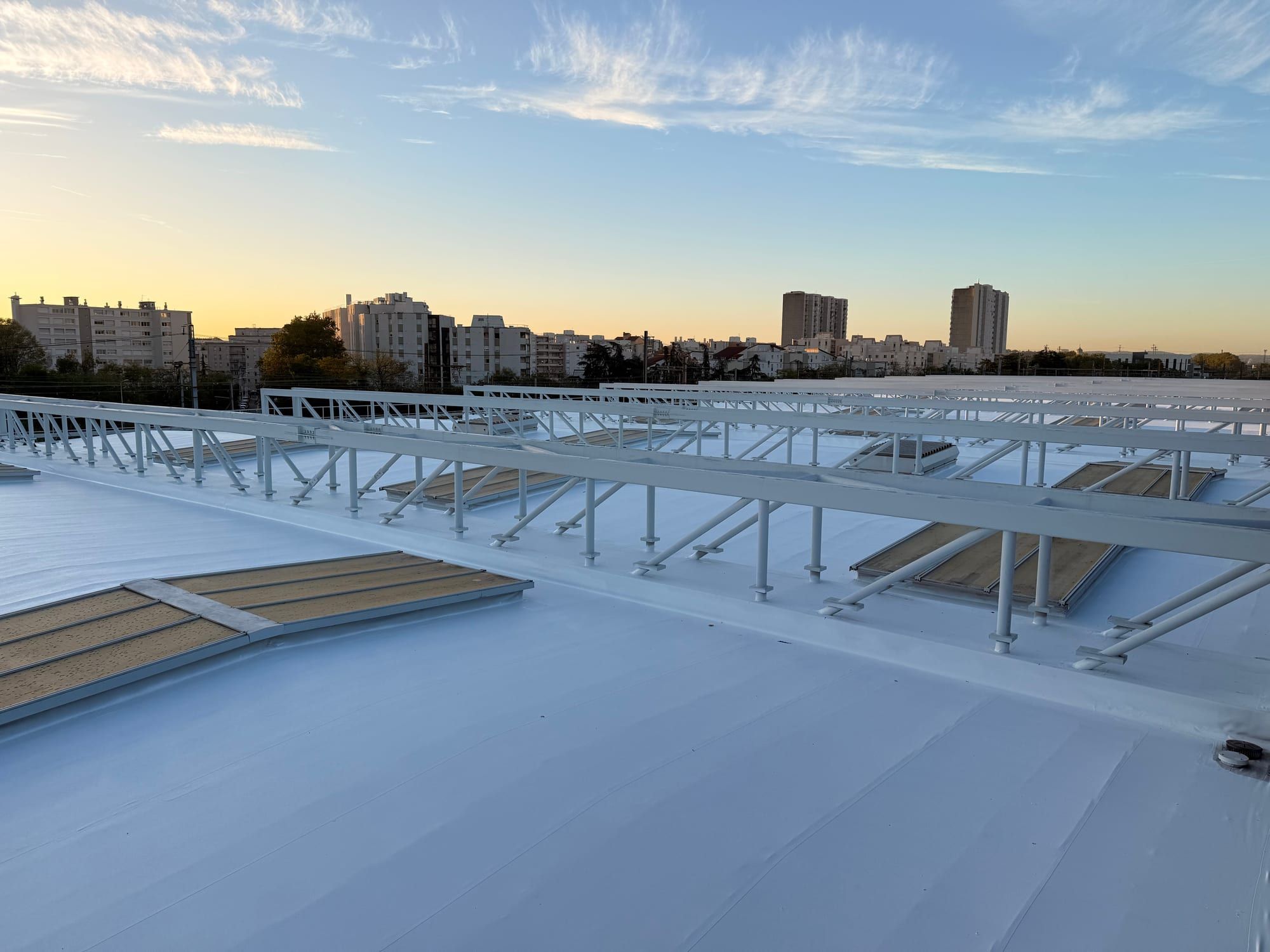
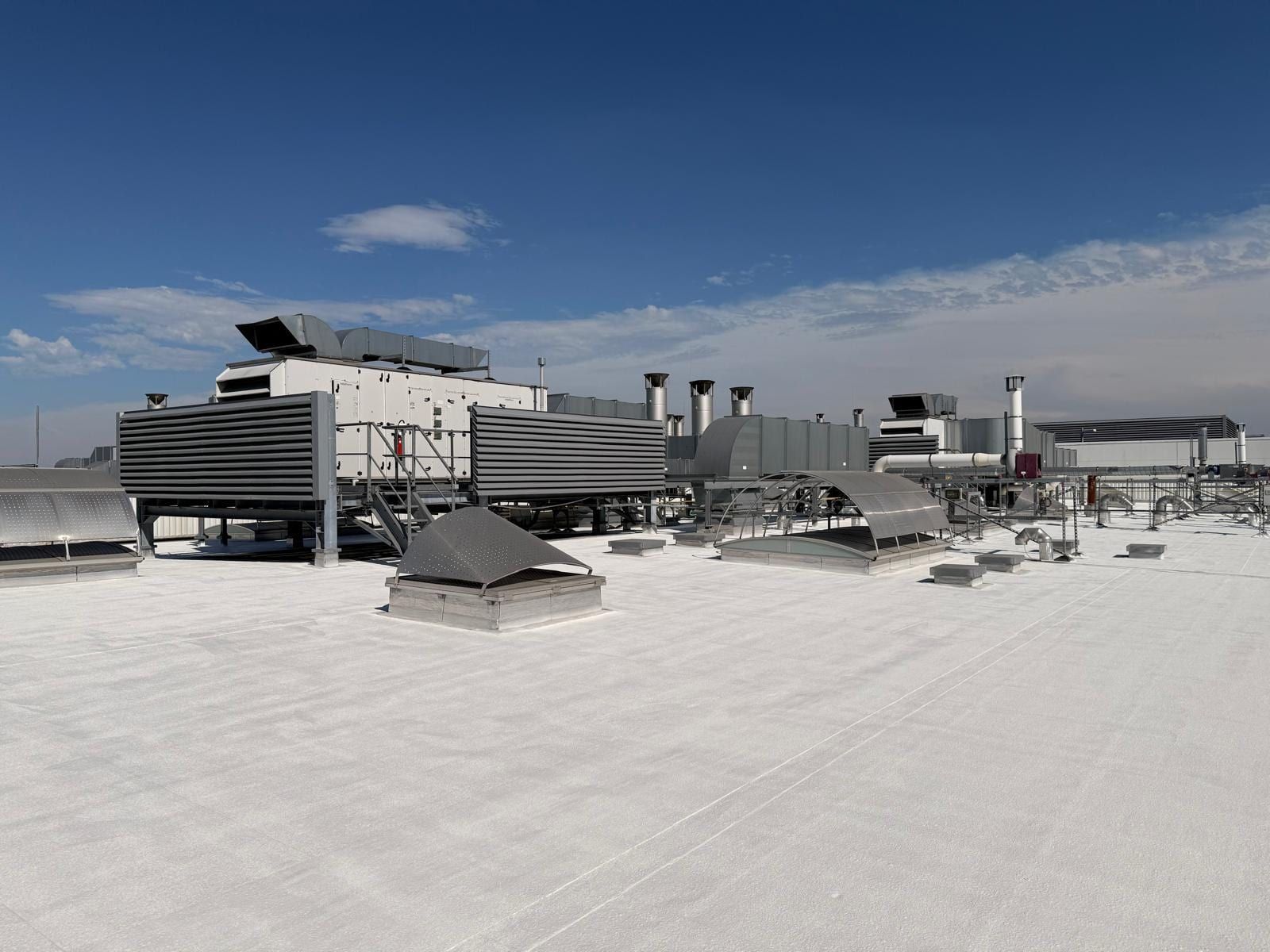
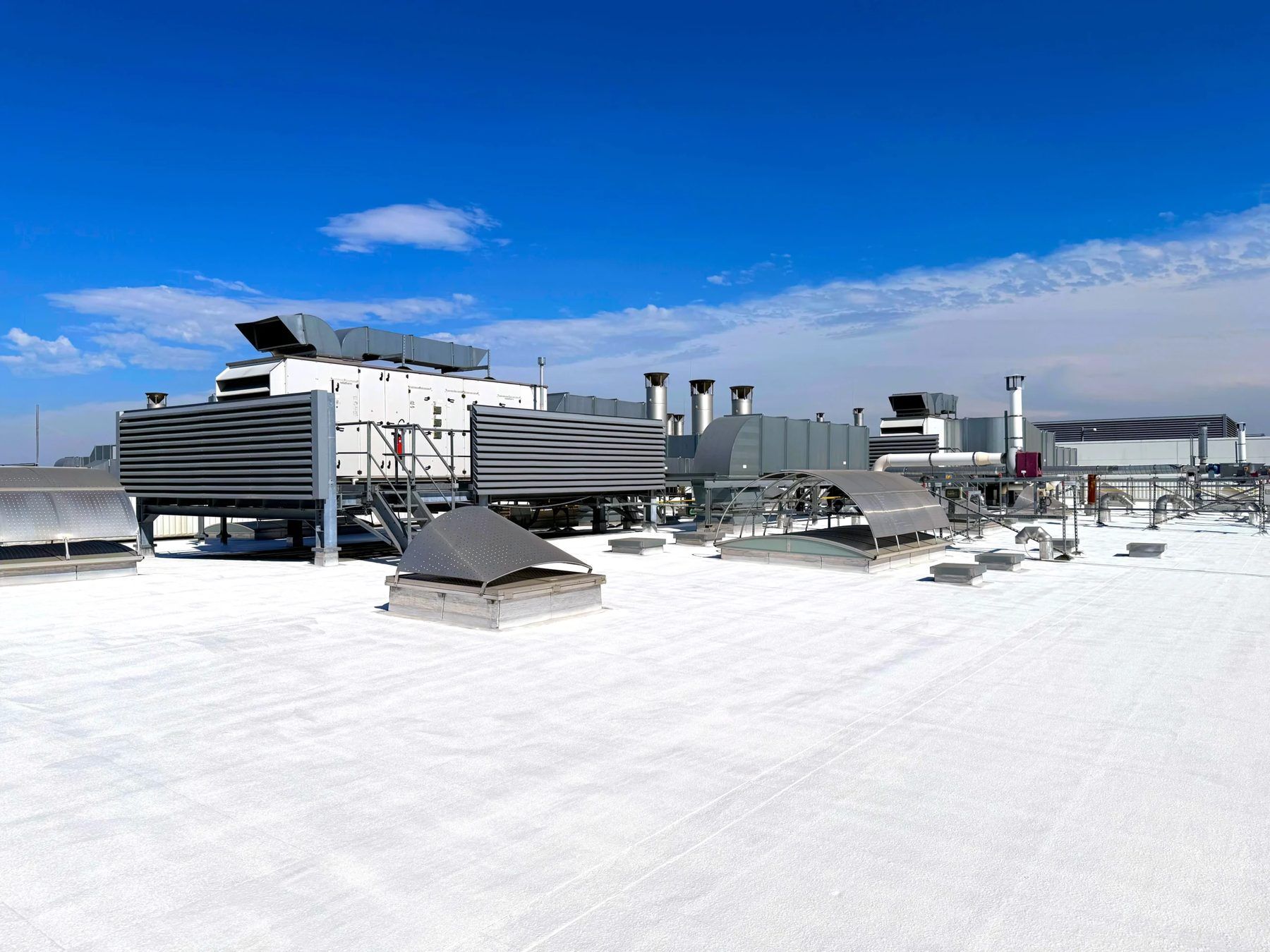
Store roofs are busy: air-handling units, condensers, chillers, extractors from the preparation areas, rooflights, signage, lifelines, sometimes photovoltaic panels. Each piece of equipment is mapped during the technical visit, protected during application and kept in service. Polycarbonate rooflights can receive the PrimaTherm® LT semi-transparent lacquer (one coat: around −25 % heat gain and light; two coats: around −50 %), useful above checkout areas that often overheat. Roofs fitted with solar panels are treated between the rows: see cool roof and solar panels.
Roof types found in retail
- Steel deck, coated or galvanised, the most common on out-of-town stores: PH169 primer at 10 m²/L, medium-pressure cleaning, treatment of corrosion spots. See the cool roof on steel deck roofs guide.
- Bitumen membrane on flat roofs: PH169 primer at 6 m²/L to block bitumen bleed-through. See cool roof on bitumen roofs.
- PVC membrane: only if laid more than 10 years ago, with the PH107PVC bonding base.
- Fibre cement: asbestos-free only, so buildings built after 1997.
Formats concerned
- Hypermarkets and supermarkets: air-conditioned sales floor, food refrigeration, French tertiary decree, CEE possible.
- Click-and-collect units and retailers’ warehouses: pickers under steel deck, fresh produce; for platforms, see cool roof for logistics.
- DIY stores, garden centres, furniture stores: large, poorly insulated volumes, shopping comfort in summer.
- Discount and convenience stores: small roofs treated in two or three days.
- Shopping arcades and retail parks: see the cool roof for shopping centres page.
Property company, retail chain, franchisee: who decides?
In retail, the owner of the walls is not always the operator. The property company protects its waterproofing and enhances the asset; the retail chain or the franchisee reduces its charges and secures its cold chain. For commercial leases over 2,000 m², the environmental annex (mandatory in France) is the natural framework for including a cool roof in a shared action plan. We prepare a file readable by both parties: study, certified values, potential estimated on your consumption, CEE pre-qualification, schedule without closure. On a portfolio of stores, a uniform protocol allows deployment site after site with the same checks and the same as-built file.
How a retail cool roof project runs
- Free study within 48 h: satellite measurement, analysis of the roof type, use of the volumes, CEE pre-qualification.
- Technical visit: survey of rooftop equipment, check of the waterproofing, adhesion tests if needed, schedule compatible with operations, itemised proposal.
- CEE file preparation where applicable, before signature.
- Preparation: cleaning at under 130 bar, anti-moss treatment, spot repairs, 24 to 72 h drying.
- Application without lifting: primer, base coat in two crossed passes, anti-soiling topcoat; weather window between 12 and 35 °C, relative humidity below 80 %, no rain within 4 h of each coat.
- Checks and handover: thickness checks, before/after infrared measurements, site follow-up sheet, as-built file, ten-year insurance, maintenance plan.
The installation process details each step. The cost depends on the area, the roof type, the preparation, the access and the incentives: it exists only in the proposal handed over after the study.
The objections we hear in retail
- “We have already done the LEDs and the doors on the refrigerated cabinets.” Good: the cool roof acts on incoming heat, an item those actions do not touch, and it adds to them in the OPERAT trajectory.
- “A paint does not last.” An off-the-shelf white paint loses its whiteness within two seasons. PrimaTherm® keeps its SRI after 4,000 h of accelerated ageing, under a 4-layer protocol with thickness checks. It is the system chosen by major aerospace and railway clients.
- “What about winter?” The low sun hits the shop windows, not the roofs; the loss of winter solar gain is marginal compared with the summer savings. See cool roof in winter.
- “The roof will get dirty.” The PH107TCL topcoat with PVDF resins limits soiling; a low-pressure wash every 12 to 15 months is enough.
References
Our largest project: 5,900 m² of bitumen membrane on three buildings, treated from April to June 2026 on an industrial site in operation, −29 °C measured at handover. See the Airbus Marignane project. Our projects with the PrimaTherm® system illustrate the case of food refrigeration (Périgny cured-meat plant) and of steel deck in climate zone H3 (Marseille warehouse). All our projects are documented with before/after measurements.
We work throughout France from Saint-Laurent-d’Agny, near Lyon: within the day on the retail zones of the region (Lyon, Saint-Étienne, Villefranche-sur-Saône), with a team accommodated on site for stores in the South, the West or the North (Marseille, Montpellier, Bordeaux, Lille). Launch the study in two minutes or test your roof’s potential with the cool roof simulator (in French).
Frequently asked questions
Is a supermarket eligible for the French CEE bonus BAT-EN-112?
It is the most favourable case, but eligibility remains conditional. The sheet targets a tertiary building for commercial use whose volume is heated and cooled by heat pump; it awards 160, 170 or 270 kWh cumac per m² depending on climate zone H1, H2 or H3. We check the exact conditions (use, equipment, area treated) during the free study and put the file together with you. MaPrimeRénov' does not cover cool roofs.
Does the store have to close during the works?
No. Application takes place exclusively on the roof, with the store open. Our no-lifting method leaves the drums and pumps on the ground in a cordoned-off area; only the hoses go up to the roof. No crane in the car park, no customer parking space out of service, no delivery blocked. Rooftop equipment (air-handling units, condensers, chillers) stays in service.
What effect on refrigerated cabinets and cold rooms?
The compressors work against the heat of the volume and that of the air drawn in by the condensers on the roof. A roof that drops from 50–70 °C to 25–35 °C reduces both. On a 2,000 m² cured-meat plant treated by Hélios with the PrimaTherm® system, the roof space went from 50 to 30 °C and refrigeration consumption fell by 35 %. On a store, the study starts from your consumption records to quantify the potential.
What temperature gain on the sales floor?
On the roof, up to −30 °C on the surface (−29 °C measured by infrared at the handover of a 5,900 m² project in 2026). On the sales floor, the gain depends on insulation: 4 to 6 °C felt under a poorly insulated roof, 1 to 3 °C on a well-insulated building. The air conditioning, for its part, regains its capacity at peak hours and consumes 15 to 40 % less depending on the climate zone.
Who carries the project, the retail chain or the property company?
Both have an interest: the property company protects its waterproofing and enhances the asset, the operator reduces its charges and secures its cold chain. For commercial leases over 2,000 m², the environmental annex is the right framework for recording the action. We prepare a file readable by both parties and can roll out a uniform protocol across a portfolio of stores.
How long does the coating last on a store roof?
The SRI of PrimaTherm® is maintained after 4,000 h of accelerated QUV ageing; the conventional service life used by the French CEE sheet is 20 years. The PH107TCL anti-soiling topcoat preserves the whiteness; a low-pressure wash every 12 to 15 months maintains the reflectance.